Building Blocks
This section contains fundamental products for the synthesis of organic and biological compounds. Building blocks are the essential starting materials used to construct complex molecules through various chemical reactions. They play a critical role in drug discovery, material science, and chemical research. At CymitQuimica, we offer a diverse range of high-quality building blocks to support your innovative research and industrial projects, ensuring you have the essential components for successful synthesis.
Subcategories of "Building Blocks"
- Boronic Acids & Boronic Acid Derivatives(5,756 products)
- Chiral Building Blocks(1,242 products)
- Hydrocarbon Building Blocks(6,095 products)
- Organic Building Blocks(61,038 products)
Found 196817 products of "Building Blocks"
Sort by
Purity (%)
0
100
|
0
|
50
|
90
|
95
|
100
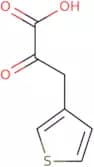
2-Oxo-3-(thiophen-3-yl)propanoic acid
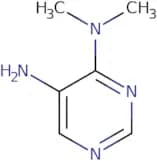
CAS:<p>Versatile small molecule scaffold</p>Formula:C7H6O3SPurity:Min. 95%Molecular weight:170.19 g/mol4-N,4-N-Dimethylpyrimidine-4,5-diamine
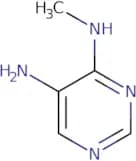
CAS:<p>Versatile small molecule scaffold</p>Formula:C6H10N4Purity:Min. 95%Molecular weight:138.17 g/molN4-Methylpyrimidine-4,5-diamine
CAS:<p>N4-Methylpyrimidine-4,5-diamine is an inhibitor of glycogen synthase kinase-3 (GSK3). It binds to the ATP binding site on GSK3 and inhibits its activity, which leads to a decrease in the phosphorylation of glycogen synthase. This inhibition results in a decrease in glycogen synthesis. N4-Methylpyrimidine-4,5-diamine has been shown to inhibit the catalytic activity of GSK3 with magnesium as a cofactor. It also has been shown to have antiinflammatory effects due to its ability to inhibit nitric oxide production. The compound is formed by reducing purines with sodium borohydride and then reacting it with triazole.</p>Formula:C5H8N4Purity:Min. 95%Molecular weight:124.14 g/mol1H-1,2,4-Triazole-3-sulfonic acid
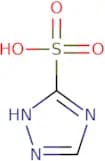
CAS:<p>1H-1,2,4-Triazole-3-sulfonic acid is a selective herbicide that inhibits the growth of plants by inhibiting photosynthesis. This herbicide has been shown to be effective against dicotyledonous plants but not monocotyledons. 1H-1,2,4-Triazole-3-sulfonic acid is used as a selective herbicide for crops such as soybeans and cotton fields. It is also used on lawns and golf courses to control broadleaf weeds such as clover and ragweed. The patent number is US 4,859,739 B2.</p>Formula:C2H3N3O3SPurity:Min. 95%Molecular weight:149.13 g/mol1-Phenyl-2-sulfanylpropan-1-one
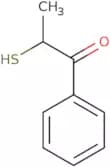
CAS:<p>Versatile small molecule scaffold</p>Formula:C9H10OSPurity:Min. 95%Molecular weight:166.24 g/mol4-Amino-N-(3-hydroxypropyl)benzamide
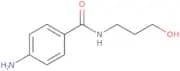
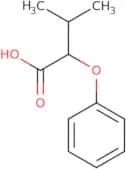
CAS:<p>Versatile small molecule scaffold</p>Formula:C10H14N2O2Purity:Min. 95%Molecular weight:194.23 g/mol3-Methyl-2-phenoxybutanoic acid
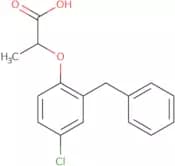
CAS:<p>Versatile small molecule scaffold</p>Formula:C11H14O3Purity:Min. 95%Molecular weight:194.23 g/mol2-(2-Benzyl-4-chlorophenoxy)propanoic acid
CAS:<p>Versatile small molecule scaffold</p>Formula:C16H15ClO3Purity:Min. 95%Molecular weight:290.74 g/mol5-Methoxy[1,3]thiazolo[5,4-b]pyridin-2-amine
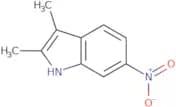
CAS:<p>Versatile small molecule scaffold</p>Formula:C7H7N3OSPurity:Min. 95%Molecular weight:181.21 g/mol2,3-Dimethyl-6-nitro-1H-indole
CAS:<p>2,3-Dimethyl-6-nitro-1H-indole is a formamide that is found in the chromic acid oxidation of indole. It was first synthesized by R. B. Woodward in 1940 and has been used as a reagent for the synthesis of various indoles. 2,3-Dimethyl-6-nitro-1H-indole can be synthesized by reacting formaldehyde with nitroethane in aqueous solution at pH 9 and then adding an aqueous solution of sodium hydroxide. The product precipitates as a crystalline solid that can be filtered off and purified by recrystallization from water or ethanol.</p>Formula:C10H10N2O2Purity:Min. 95%Molecular weight:190.2 g/mol5H,6H,7H,8H,9H-[1,2,4]Triazolo[4,3-a]azepine-3-thiol
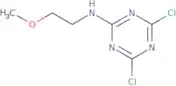
CAS:<p>Versatile small molecule scaffold</p>Formula:C7H11N3SPurity:Min. 95%Molecular weight:169.25 g/mol4,6-Dichloro-N-(2-methoxyethyl)-1,3,5-triazin-2-amine
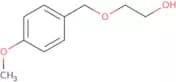
CAS:<p>Versatile small molecule scaffold</p>Formula:C6H8Cl2N4OPurity:Min. 95%Molecular weight:223.06 g/mol2-(4-Methoxybenzyloxy)ethanol
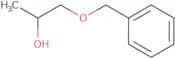
CAS:<p>2-(4-Methoxybenzyloxy)ethanol is a reversible and efficient catalyst for the dehydration of adenine. It is used in chemical synthesis to make 2,4-dibromoacetic acid. This compound has also been shown to be an effective dehydratase for clostridium.</p>Formula:C10H14O3Purity:Min. 95%Molecular weight:182.22 g/mol1-Benzyloxy-2-propanol
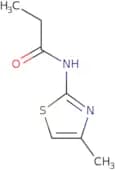
CAS:<p>1-Benzyloxy-2-propanol is a synthetic compound that has been used to synthesize a variety of compounds. It is an alkylating agent that reacts with the nucleophilic centers on DNA, RNA, and proteins, leading to the formation of crosslinks between these molecules. 1-Benzyloxy-2-propanol can be used as a monomer in the synthesis of polymers with perfluorinated side chains. This compound also has anti-inflammatory properties due to its ability to inhibit lipase activity and phosphodiesterase activity.</p>Formula:C10H14O2Purity:Min. 95%Molecular weight:166.22 g/molN-(4-Methylthiazol-2-yl)propionamide
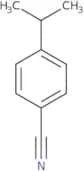
CAS:<p>N-(4-methylthiazol-2-yl)propionamide is an activator of the amp-activated protein kinase (AMPK) signaling pathway, which has been shown to regulate glucose and fatty acid metabolism. In vitro studies have demonstrated that N-(4-methylthiazol-2-yl)propionamide activates AMPK, leading to increased uptake of glucose and fatty acids by cells. This drug has been shown to increase insulin sensitivity in mice by activation of the phosphatidylinositol 3 kinase signaling pathway. N-(4-Methylthiazol-2-yl)propionamide has also been shown to inhibit influenza virus replication in cell culture studies.</p>Formula:C7H10N2OSPurity:Min. 95%Molecular weight:170.23 g/mol4-Isopropylbenzonitrile
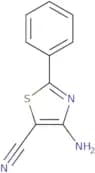
CAS:<p>4-Isopropylbenzonitrile (4IPB) is a reactive molecule that can be used to generate nitro radicals. It is a good candidate for the generation of nitro radicals because it has a redox potential that is near the center of the range encompassed by reactions with hydrogen peroxide. 4IPB also reacts with halogenated compounds, such as haloalkyls, which are efficient methods for generating nitro radicals. The reactivity of 4IPB can be demonstrated through assays using nitro and radical chain reactions. Hyperbolic plots of c1-6 alkyl and c1-4 alkyl in acidic media show that 4IPB is more reactive than other molecules in this class, such as mda-mb-231 cell and tyrosinase.</p>Formula:C10H11NPurity:Min. 95%Molecular weight:145.2 g/mol4-Amino-2-phenyl-1,3-thiazole-5-carbonitrile
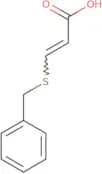
CAS:<p>Versatile small molecule scaffold</p>Formula:C10H7N3SPurity:Min. 95%Molecular weight:201.25 g/mol(2Z)-3-(Benzylsulfanyl)prop-2-enoic acid
CAS:<p>Versatile small molecule scaffold</p>Formula:C10H10O2SPurity:Min. 95%Molecular weight:194.25 g/mol1-(2-Bromoethoxy)-3-nitrobenzene
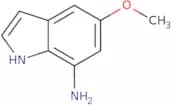
CAS:<p>Versatile small molecule scaffold</p>Formula:C8H8BrNO3Purity:Min. 95%Molecular weight:246.06 g/mol5-Methoxy-1H-indol-7-amine
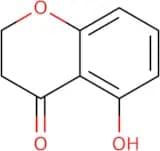
CAS:<p>Versatile small molecule scaffold</p>Formula:C9H10N2OPurity:Min. 95%Molecular weight:162.19 g/mol5-Hydroxy-3,4-dihydro-2H-1-benzopyran-4-one
CAS:<p>5-Hydroxy-3,4-dihydro-2H-1-benzopyran-4-one is a bioactive compound that is produced by microorganisms from indole alkaloids. It has been shown to have antibacterial activity in the form of an enzyme cascade, which can be inhibited by other compounds. The 5-hydroxy group of this compound is believed to be responsible for its inhibitory effects on the enzyme monooxygenase. This compound has not been fully characterized and does not have a known biological function.</p>Formula:C9H8O3Purity:Min. 95%Molecular weight:164.16 g/mol6,6-dimethylbicyclo[3.1.0]hexan-3-one
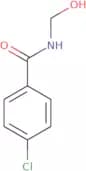
CAS:<p>6,6-dimethylbicyclo[3.1.0]hexan-3-one is a test compound that has been shown to exhibit antidepressant properties in animal models of depression. It is a cyclic ketone that can be synthesized by the scalable method of reacting piperazine with acetyl chloride and diethyl malonate. 6,6-Dimethylbicyclo[3.1.0]hexan-3-one has been shown to produce a statistically significant increase in locomotor activity in mice, but not rats, suggesting its effects are mediated by central nervous system mechanisms. This compound also exhibits antinociceptive and anxiolytic properties in animals.</p>Formula:C8H12OPurity:Min. 95%Molecular weight:124.18 g/mol4-Chloro-N-(hydroxymethyl)benzamide
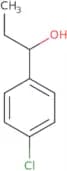
CAS:<p>4-Chloro-N-(hydroxymethyl)benzamide is an electrophilic reactive compound. It can undergo biotransformation to the more reactive 4-chloro-N-(hydroxymethyl)benzoic acid, which has been shown to be mutagenic in bacteria and carcinogenic in rats. This compound reacts with hydronium ions and hydroxide ions to form a reactive electrophile. 4-Chloro-N-(hydroxymethyl)benzamide also reacts with ethanethiol, which may be carcinogenic as well. This compound was incubated with glutathione, an antioxidant that protects cells from oxidative stress caused by free radicals, but it was not able to protect cells from the mutagenicity of this compound.</p>Formula:C8H8ClNO2Purity:Min. 95%Molecular weight:185.61 g/mol1-(4-Chlorophenyl)propan-1-ol
CAS:<p>1-(4-Chlorophenyl)propan-1-ol is a ligand that binds to the active site of enzymes, such as chiral alcohol dehydrogenase and amino alcohol dehydrogenase. It was used to catalyze the synthesis of optically pure products in enantioselective reactions. 1-(4-Chlorophenyl)propan-1-ol has been shown to be an excellent precatalyst for asymmetric catalysis. It also reacts with amino alcohols to form optically pure products in an experiment involving the use of chiral azetidine.</p>Formula:C9H11ClOPurity:Min. 95%Molecular weight:170.64 g/mol1',2'-dihydrospiro[cyclopropane-1,3'-indol]-2'-one
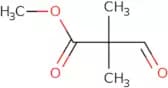
CAS:<p>Versatile small molecule scaffold</p>Formula:C10H9NOPurity:Min. 95%Molecular weight:159.19 g/molmethyl 2,2-dimethyl-3-oxopropanoate
CAS:<p>Methyl 2,2-dimethyl-3-oxopropanoate is an enantioselective propionate with an asymmetric synthesis. The enantiomers of methyl 2,2-dimethyl-3-oxopropanoate are separated by the use of a chiral auxiliary. The enantioselective synthesis of propionates is achieved by crotylboration, a reaction that uses boron and crotyl alcohol as substrates. Methyl 2,2-dimethyl-3-oxopropanoate is an example of a polyketide synthesized via the polyketide pathway. This compound is used in the synthesis of halipeptin, which is an antibiotic that inhibits bacterial growth by inhibiting protein synthesis and cell division.</p>Formula:C6H10O3Purity:Min. 95%Molecular weight:130.1 g/molDodecan-2-amine
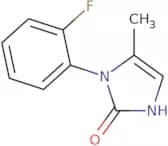
CAS:<p>Versatile small molecule scaffold</p>Formula:C12H27NPurity:Min. 95%Molecular weight:185.35 g/mol1-(2-Fluorophenyl)-5-methyl-2,3-dihydro-1H-imidazol-2-one
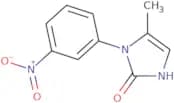
CAS:<p>Versatile small molecule scaffold</p>Formula:C10H9FN2OPurity:Min. 95%Molecular weight:192.19 g/mol5-Methyl-1-(3-nitrophenyl)-2,3-dihydro-1H-imidazol-2-one
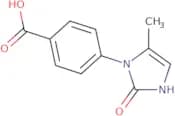
CAS:<p>Versatile small molecule scaffold</p>Formula:C10H9N3O3Purity:Min. 95%Molecular weight:219.2 g/mol4-(5-Methyl-2-oxo-2,3-dihydro-1H-imidazol-1-yl)benzoic acid
CAS:Controlled Product<p>4-(5-Methyl-2-oxo-2,3-dihydro-1H-imidazol-1-yl)benzoic acid is a ligand that binds to ion channels and is used as a research tool in pharmacological studies. It has been shown to activate a number of ion channels, including sodium and potassium channels. This compound has also been shown to bind to the GABA receptor, which regulates chloride levels in the brain. 4-(5-Methyl-2-oxo-2,3-dihydro-1H-imidazol-1y)benzoic acid may be used as an inhibitor for some ion channels and an activator for others.<br>4-(5 -methyl - 2 - oxo - 2 , 3 - dihydro - 1 H - imidazol - 1 yl) benzoic acid can be used in antibody production by conjugating it with other molecules</p>Formula:C11H10N2O3Purity:Min. 95%Molecular weight:218.21 g/mol5-Methyl-1-phenyl-2,3-dihydro-1H-imidazol-2-one
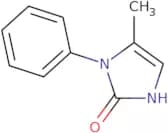
CAS:<p>Versatile small molecule scaffold</p>Formula:C10H10N2OPurity:Min. 95%Molecular weight:174.2 g/mol1H-Pyrazolo[4,3-d]pyrimidin-7-amine
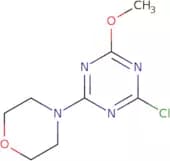
CAS:<p>1H-Pyrazolo[4,3-d]pyrimidin-7-amine is a purine derivative that has been shown to have anti-leishmanial activity. It has been shown to be effective in the treatment of Leishmania donovani infections in mice without causing any adverse effects on the host. The previous studies show that 1H-pyrazolo[4,3-d]pyrimidin-7-amine inhibits the synthesis of purines, which are involved in nucleic acid and protein biosynthesis. This drug also appears to be more potent than other pyrazolopyrimidine derivatives because it targets ribonucleotide reductase. 1H-Pyrazolo[4,3-d]pyrimidin-7-amine is metabolized by cytochrome P450 enzymes and excreted as its metabolites in urine.</p>Formula:C5H5N5Purity:Min. 95%Molecular weight:135.13 g/mol2-Chloro-4-methoxy-6-(4-morpholinyl)-1,3,5-triazine
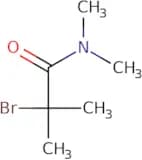
CAS:<p>Versatile small molecule scaffold</p>Formula:C8H11ClN4O2Purity:Min. 95%Molecular weight:230.65 g/mol2-Bromo-N,N,2-trimethylpropanamide
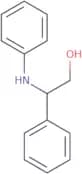
CAS:<p>Versatile small molecule scaffold</p>Formula:C6H12BrNOPurity:Min. 95%Molecular weight:194.07 g/mol2-Phenyl-2-(phenylamino)ethan-1-ol
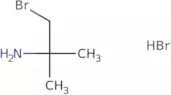
CAS:<p>2-Phenyl-2-(phenylamino)ethan-1-ol is a reagent that can be used in the synthesis of amines, acid catalysts, aldehydes and epoxides. It is used in the conversion of ethyl bromoacetate to an epoxide in high yield and with excellent regioselectivity. This product can also be reused for at least five cycles without significant loss in efficiency. 2-Phenyl-2-(phenylamino)ethan-1-ol has been shown to be useful for the preparation of cyclic, aliphatic and aromatic alcohols from their corresponding phenols with tetrafluoroborate as the base. The nucleophilic nature of this product makes it a suitable candidate for reactions involving anilines.</p>Formula:C14H15NOPurity:Min. 95%Molecular weight:213.27 g/mol1-Bromo-2-methylpropan-2-amine hydrobromide
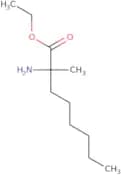
CAS:<p>Versatile small molecule scaffold</p>Formula:C4H11Br2NPurity:Min. 95%Molecular weight:232.94 g/molEthyl 2-amino-2-methyloctanoate
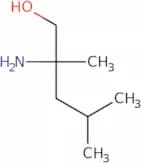
CAS:<p>Versatile small molecule scaffold</p>Formula:C11H23NO2Purity:Min. 95%Molecular weight:201.31 g/mol2-Amino-2,4-dimethylpentan-1-ol
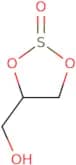
CAS:<p>Versatile small molecule scaffold</p>Formula:C7H17NOPurity:Min. 95%Molecular weight:131.22 g/mol1,3,2-Dioxathiolane-4-methanol 2-oxide
CAS:<p>Versatile small molecule scaffold</p>Formula:C3H6O4SPurity:Min. 95%Molecular weight:138.14 g/mol1H,2H,3H,4H-Benzo[G]quinazoline-2,4-dione
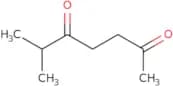
CAS:<p>1H,2H,3H,4H-Benzo[G]quinazoline-2,4-dione is an analog of the purine nucleoside adenine. It has been shown to bind to DNA by interacting with the polymerase and fluorescent probes. In addition to binding to DNA, 1H,2H,3H,4H-Benzo[G]quinazoline-2,4-dione interacts with other dna binding proteins and has been shown to form conformational triplexes with complementary strands of DNA. The compound also binds to ribonucleoprotein and can be used as a fluorescent probe for RNA synthesis. This compound has been shown to have thermal stability as well as denaturation properties that are dependent on pH and ionic strength.</p>Formula:C12H8N2O2Purity:Min. 95%Molecular weight:212.2 g/mol6-Methylheptane-2,5-dione
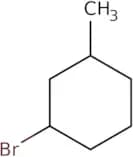
CAS:<p>Versatile small molecule scaffold</p>Formula:C8H14O2Purity:Min. 95%Molecular weight:142.2 g/mol1-Bromo-3-methylcyclohexane
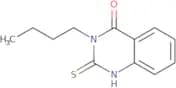
CAS:<p>1-Bromo-3-methylcyclohexane is an organic compound that is used as a catalyst in the petroleum industry. It is activated by heating, which converts it to its active form. 1-Bromo-3-methylcyclohexane is also a precursor for the production of biofuels and other chemicals.<br>1-Bromo-3-methylcyclohexane can be activated by heating it under nitrogen gas, which creates a more stable product. This process can be used to create pyrolysis oil, which can be refined into biofuel or other chemicals.</p>Formula:C7H13BrPurity:Min. 95%Molecular weight:177.08 g/mol3-Butyl-2-sulfanyl-3,4-dihydroquinazolin-4-one
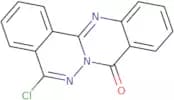
CAS:<p>Versatile small molecule scaffold</p>Formula:C12H14N2OSPurity:Min. 95%Molecular weight:234.32 g/mol10-Chloro-13H-5,11,12-triazatetraphen-13-one
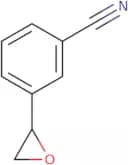
CAS:<p>Versatile small molecule scaffold</p>Formula:C15H8ClN3OPurity:Min. 95%Molecular weight:281.69 g/mol-3(oxiran-2-yl)benzonitrile
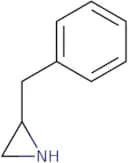
CAS:<p>Versatile small molecule scaffold</p>Formula:C9H7NOPurity:Min. 95%Molecular weight:145.16 g/mol2-Benzylaziridine
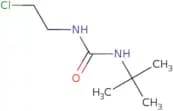
CAS:Controlled Product<p>2-Benzylaziridine is an organic compound that can be synthesized from 2-benzyloxirane and ammonia. It is used as a chromatographic stationary phase, a synthetic intermediate, and a starting material for the synthesis of other aziridines. The reaction rate of this compound depends on the energy of the reaction. Low energy reactions are generally faster than high energy reactions. In addition, ring-opening reactions are faster than aziridine synthesis because they require less activation energy. 2-Benzylaziridine can be produced in two different isomeric forms: cis and trans. This compound has been shown to have impurities such as isosafrole and aziridine which may be difficult to remove by distillation or recrystallization alone.<br>2-Benzylaziridine has been shown to have low toxicity in animal studies.END>></p>Formula:C9H11NPurity:Min. 95%Molecular weight:133.19 g/mol1-tert-Butyl-3-(2-chloroethyl)urea
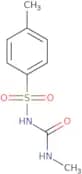
CAS:<p>Versatile small molecule scaffold</p>Formula:C7H15ClN2OPurity:Min. 95%Molecular weight:178.66 g/mol4-Methyl-N-(methylcarbamoyl)benzenesulfonamide
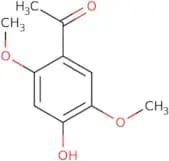
CAS:<p>Versatile small molecule scaffold</p>Formula:C9H12N2O3SPurity:Min. 95%Molecular weight:228.27 g/mol1-(4-Hydroxy-2,5-dimethoxyphenyl)ethan-1-one
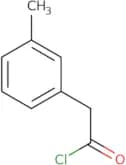
CAS:<p>Versatile small molecule scaffold</p>Formula:C10H12O4Purity:Min. 95%Molecular weight:196.2 g/molm-Tolyl-acetyl chloride
CAS:<p>Versatile small molecule scaffold</p>Formula:C9H9ClOPurity:Min. 95%Molecular weight:168.62 g/mol

![5-Methoxy[1,3]thiazolo[5,4-b]pyridin-2-amine](/_next/image/?url=https%3A%2Fstatic.cymitquimica.com%2Fproducts%2F3D%2Fthumb-webp%2FNAA79777.webp&w=3840&q=75)
![5H,6H,7H,8H,9H-[1,2,4]Triazolo[4,3-a]azepine-3-thiol](/_next/image/?url=https%3A%2Fstatic.cymitquimica.com%2Fproducts%2F3D%2Fthumb-webp%2FNAA80541.webp&w=3840&q=75)
![6,6-dimethylbicyclo[3.1.0]hexan-3-one](/_next/image/?url=https%3A%2Fstatic.cymitquimica.com%2Fproducts%2F3D%2Fthumb-webp%2FNAA85529.webp&w=3840&q=75)
![1',2'-dihydrospiro[cyclopropane-1,3'-indol]-2'-one](/_next/image/?url=https%3A%2Fstatic.cymitquimica.com%2Fproducts%2F3D%2Fthumb-webp%2FNAA86175.webp&w=3840&q=75)

![1H-Pyrazolo[4,3-d]pyrimidin-7-amine](/_next/image/?url=https%3A%2Fstatic.cymitquimica.com%2Fproducts%2F3D%2Fthumb-webp%2FNAA87756.webp&w=3840&q=75)
![1H,2H,3H,4H-Benzo[G]quinazoline-2,4-dione](/_next/image/?url=https%3A%2Fstatic.cymitquimica.com%2Fproducts%2F3D%2Fthumb-webp%2FNAA89860.webp&w=3840&q=75)