Building Blocks
This section contains fundamental products for the synthesis of organic and biological compounds. Building blocks are the essential starting materials used to construct complex molecules through various chemical reactions. They play a critical role in drug discovery, material science, and chemical research. At CymitQuimica, we offer a diverse range of high-quality building blocks to support your innovative research and industrial projects, ensuring you have the essential components for successful synthesis.
Subcategories of "Building Blocks"
- Boronic Acids & Boronic Acid Derivatives(5,756 products)
- Chiral Building Blocks(1,242 products)
- Hydrocarbon Building Blocks(6,095 products)
- Organic Building Blocks(61,037 products)
Found 196200 products of "Building Blocks"
Sort by
Purity (%)
0
100
|
0
|
50
|
90
|
95
|
100
1-Phenyl-1H-pyrazol-5-ol
CAS:<p>1-Phenyl-1H-pyrazol-5-ol is a nitrate that has a polyester, copper, and carbonyl backbone. The ligand in this compound is unidentate, bidentate, or c1-4 alkoxy. This ligand can bind to lanthanide metals with the help of oxygen atoms and phenyl rings. 1-Phenyl-1H-pyrazol-5-ol has many different bonding options because it has two carbonyl groups and two c1-4 alkoxy groups. It also has an anion on the phenyl ring that can be either c1-4 alkyl or O-.</p>Formula:C9H8N2OPurity:Min. 95%Molecular weight:160.17 g/mol1,2,3,4,5-Pentachloro-6-methylbenzene
CAS:<p>Pentachloro-6-methylbenzene is a chlorinated aromatic hydrocarbon that is used as an organic solvent. The chemical has been shown to be mutagenic, carcinogenic, and teratogenic in CD-1 mice. It also has the ability to cause light emission, which can be used for chemiluminescence or mechanoluminescence. Pentachloro-6-methylbenzene also reacts with magnesium oxide and fluorine to form 1,2,3,4,5-pentachloro-6-(4'-fluorophenyl)benzene (PCB), which is a highly chlorinated derivative of PCBM that can be used in organic light emitting diodes.</p>Formula:C7H3Cl5Purity:Min. 95%Color and Shape:PowderMolecular weight:264.4 g/mol3-Mercapto-6-methyl-[1,2,4]triazolo[4,3-b][1,2,4]triazin-7-ol
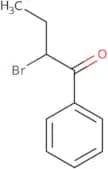
CAS:<p>Versatile small molecule scaffold</p>Formula:C5H5N5OSPurity:Min. 95%Molecular weight:183.19 g/mol2-Bromo-1-phenylbutan-1-one
CAS:<p>2-Bromo-1-phenylbutan-1-one is a copper salt that yields an acceptor in the presence of acetonitrile. It is used as a diagnostic agent, yielding a blue color when reacted with diazonium salt. 2-Bromo-1-phenylbutan-1-one also reacts with dopamine to form the diagnostic dye 2,6 dibromopurpurin. This compound has been shown to be cytotoxic for mammary cancer cells and other cancer cells, but not for healthy cells. The mechanism of action of this compound may involve sulfate and copper ions, which are required for its activity.</p>Formula:C10H11BrOPurity:Min. 95%Molecular weight:227.1 g/mol3-Methyl-5-[2-(methylsulfanyl)ethyl]-2-sulfanylideneimidazolidin-4-one
CAS:<p>Versatile small molecule scaffold</p>Formula:C7H12N2OS2Purity:Min. 95%Molecular weight:204.3 g/molDisodium [4-(sulfanidylmethanethioyl)piperazine-1-carbothioyl]sulfanide
CAS:<p>Disodium [4-(sulfanidylmethanethioyl)piperazine-1-carbothioyl]sulfanide is a dithiocarbamate that has been shown to be an inhibitor of carbonic anhydrase. It has been used in the treatment of cancer and microbial infections. Disodium [4-(sulfanidylmethanethioyl)piperazine-1-carbothioyl]sulfanide is mainly used as a monovalent cation and inhibitor of anhydrase, which can cause eye disease and microbial infection.</p>Formula:C6H8N2Na2S4Purity:Min. 95%Molecular weight:282.4 g/mol2,4,6-Trimethoxy-1,3,5-triazine
CAS:<p>2,4,6-Trimethoxy-1,3,5-triazine is a trimethyl triazine that is used as a polymerization initiator in the production of polyester. It has been shown to be reactive with monocarboxylic acids and ester compounds. The molecular weight of 2,4,6-trimethoxy-1,3,5-triazine increases with increasing temperature. This chemical has also been shown to be an efficient crosslinking agent for both hydrated and linear filaments.</p>Formula:C6H9N3O3Purity:Min. 95%Molecular weight:171.15 g/mol1-Methyl-1,3-diazaspiro[4.5]decane-2,4-dione
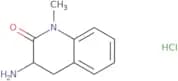
CAS:<p>Versatile small molecule scaffold</p>Formula:C9H14N2O2Purity:Min. 95%Molecular weight:182.22 g/mol3-Amino-1-methyl-1,2,3,4-tetrahydroquinolin-2-one hydrochloride
CAS:<p>Versatile small molecule scaffold</p>Formula:C10H13ClN2OPurity:Min. 95%Molecular weight:212.67 g/molPhenyl(1,3-thiazol-2-yl)methanol
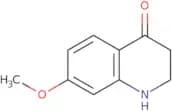
CAS:<p>Versatile small molecule scaffold</p>Formula:C10H9NOSPurity:Min. 95%Molecular weight:191.25 g/mol7-methoxy-2,3-dihydroquinolin-4(1H)-one
CAS:<p>Versatile small molecule scaffold</p>Formula:C10H11NO2Purity:Min. 95%Molecular weight:177.19 g/mol3-(Dimethylamino)propiophenone Hydrochloride
CAS:<p>3-(Dimethylamino)propiophenone hydrochloride is a quaternary ammonium compound that has been used as an antimicrobial agent. 3-(Dimethylamino)propiophenone hydrochloride's antimicrobial activity is due to its ability to inhibit microbial cell wall synthesis. This drug also inhibits the growth of microsporum and other fungi, including dermatophytes. 3-(Dimethylamino)propiophenone hydrochloride's anti-infective properties are believed to be due to its quaternization of acidic groups on the microbial cell membrane, which prevents protonation and therefore prevents the transport of molecules across the membrane. 3-(Dimethylamino)propiophenone hydrochloride may also have an effect on protein synthesis by modifying ribosomes or interfering with RNA transcription or translation. The structural isomers of this drug are propiophenone and 2-dimethylaminopropiophenone, which may have</p>Formula:C11H15NO·HClPurity:Min. 95%Molecular weight:213.71 g/molN'-Methyl(benzyloxy)carbohydrazide hydrochloride
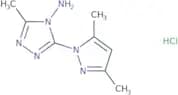
CAS:<p>Versatile small molecule scaffold</p>Formula:C9H13ClN2O2Purity:Min. 95%Molecular weight:216.66 g/mol3-(3,5-Dimethyl-1H-pyrazol-1-yl)-5-methyl-4H-1,2,4-triazol-4-amine hydrochloride
CAS:<p>Versatile small molecule scaffold</p>Formula:C8H13ClN6Purity:Min. 95%Molecular weight:228.68 g/mol2-(1,1-Dioxidotetrahydrothien-3-yl)-5-methyl-2,4-dihydro-3H-pyrazol-3-one
CAS:<p>Versatile small molecule scaffold</p>Formula:C8H12N2O3SPurity:Min. 95%Molecular weight:216.26 g/mol2-Bromo-1-(4-methoxyphenyl)butan-1-one
CAS:<p>Versatile small molecule scaffold</p>Formula:C11H13BrO2Purity:Min. 95%Molecular weight:257.12 g/mol1,3-Bis(trichloromethyl)benzene
CAS:<p>1,3-Bis(trichloromethyl)benzene is a chlorinated hydrocarbon that is used as an intermediate in the industrial production of pharmaceuticals. It is produced by heating chlorine with benzene in the presence of a catalyst, such as cocl2. The reaction produces hydrogen chloride and 1,3-bis(trichloromethyl)benzene. The synthesis process may be carried out in either an organic or aqueous solvent. Hydrogen chloride gas is generated during the process and can be released into the environment during production or processing. Irradiation may also be used to produce 1,3-bis(trichloromethyl)benzene.<br>1,3-Bis(trichloromethyl)benzene is not toxic to humans because it does not react with human tissues and cells. However, it has been shown to cause liver cancer in rats when they were exposed to high doses over</p>Formula:C8H4Cl6Purity:Min. 95%Molecular weight:312.84 g/mol1-[4-(Trifluoromethyl)phenyl]propan-2-amine hydrochloride
CAS:Controlled Product<p>Versatile small molecule scaffold</p>Formula:C10H13ClF3NPurity:Min. 95%Molecular weight:239.66 g/mol1-[2-(Pyridin-1-ium-1-yl)ethyl]pyridin-1-ium dibromide
CAS:<p>Versatile small molecule scaffold</p>Formula:C12H14Br2N2Purity:Min. 95%Molecular weight:346.06 g/mol3-(2-Hydroxyethyl)-1,3-diazaspiro[4.5]decane-2,4-dione
CAS:<p>Versatile small molecule scaffold</p>Formula:C10H16N2O3Purity:Min. 95%Molecular weight:212.25 g/mol1,1-Diethyl 2-formylcyclopropane-1,1-dicarboxylate
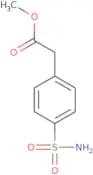
CAS:<p>Versatile small molecule scaffold</p>Formula:C10H14O5Purity:Min. 95%Molecular weight:214.21 g/molMethyl 2-(4-sulfamoylphenyl)acetate
CAS:<p>Versatile small molecule scaffold</p>Formula:C9H11NO4SPurity:Min. 95%Molecular weight:229.26 g/mol1-Methyl-4-oxo-1,4-dihydrocinnoline-3-carboxylic acid
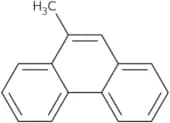
CAS:<p>1-Methyl-4-oxo-1,4-dihydrocinnoline-3-carboxylic acid is a natural product that has been used as an analytical reagent for the determination of various compounds in biological samples. It is also known to have anti-inflammatory and antipyretic effects, as well as other therapeutic properties. The chemical transformation of 1-methylcinnoline can be carried out different ways, including chromatographic methods and immobilized techniques. It can also be analysed using analytical methods such as high performance liquid chromatography (HPLC) and acid analysis techniques like gas chromatography–mass spectrometry (GCMS).</p>Formula:C10H8N2O3Purity:Min. 95%Molecular weight:204.18 g/mol9-Methylphenanthrene
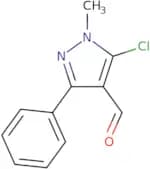
CAS:<p>9-Methylphenanthrene is an aromatic hydrocarbon that has a variety of uses. It is used in the manufacture of dyes, pharmaceuticals, and other organic chemicals. 9-Methylphenanthrene can be synthesized by demethylation of carbon disulphide with ethylene diamine as a test sample. The activation energies for this reaction are 3.2 kcal/mol and 2.5 kcal/mol, respectively. The rate at which 9-methylphenanthrene is eliminated from the body is proportional to body mass index (BMI). This substance has been observed to have low energy levels in NMR spectra and can be detected by nmr spectroscopy.</p>Formula:C15H12Purity:Min. 95%Molecular weight:192.26 g/mol5-Chloro-1-methyl-3-phenyl-1H-pyrazole-4-carbaldehyde
CAS:<p>Versatile small molecule scaffold</p>Formula:C11H9ClN2OPurity:Min. 95%Molecular weight:220.66 g/mol1-Phenyl-1H-benzo[d][1,2,3]triazole
CAS:<p>1-Phenyl-1H-benzo[d][1,2,3]triazole is a conformational chiral organometallic compound. It is a sulfide with kinetic, activated and diacetate isomers. The reaction of 1-phenyl-1H-benzo[d][1,2,3]triazole with peroxide leads to the production of an azobenzene and homodimeric products. The product ions are observed by electron ionization mass spectrometry at m/z=141 (M+), 145 (M+−OCH), and 147 (M−OCH). 1-Phenyl-1H-benzo[d][1,2,3]triazole has molecular weight of 194.1881 g/mol and a melting point of 237 ˚C.</p>Formula:C12H9N3Purity:Min. 95%Molecular weight:195.22 g/mol2-(Propan-2-yloxy)naphthalene-1-carbaldehyde
CAS:<p>Ai Product Descriptions 50 Creative</p>Formula:C14H14O2Purity:Min. 95%Molecular weight:214.26 g/mol2-Propoxynaphthalene-1-carbaldehyde
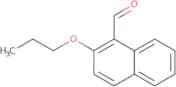
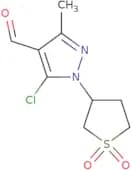
CAS:<p>Versatile small molecule scaffold</p>Formula:C14H14O2Purity:Min. 95%Molecular weight:214.26 g/mol5-Chloro-1-(1,1-dioxidotetrahydrothien-3-yl)-3-methyl-1H-pyrazole-4-carbaldehyde
CAS:<p>Versatile small molecule scaffold</p>Formula:C9H11ClN2O3SPurity:Min. 95%Molecular weight:262.71 g/mol2-Amino-1,2-diphenylethan-1-one hydrochloride
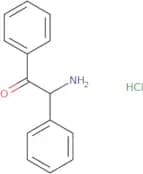
CAS:Controlled Product<p>2-Amino-1,2-diphenylethan-1-one hydrochloride belongs to the class of sulfoxides and is a potent anti-inflammatory agent. It inhibits inflammation by reducing the production of prostaglandins and thiols from arachidonic acid. 2-Amino-1,2-diphenylethan-1-one hydrochloride has been shown to be effective in alleviating inflammatory symptoms caused by arthritis. The compound also has an antagonistic effect on acetylcholine and muscarinic receptors, which may cause side effects such as dry mouth, blurred vision, and difficulty urinating.</p>Formula:C14H14ClNOPurity:Min. 95%Molecular weight:247.72 g/mol7-Methyl-2-phenylimidazo[1,2-a]pyridine
CAS:<p>7-Methyl-2-phenylimidazo[1,2-a]pyridine is a fluorescent compound that has been used as a shift reagent. It is colorless and stable in air and light. The fluorescence of 7-methyl-2-phenylimidazo[1,2-a]pyridine is excited at wavelengths of 315 nm and 380 nm with an emission maximum at 460 nm. This compound can be used to study the conformational changes of proteins and nucleic acids by monitoring the change in fluorescence properties.</p>Formula:C14H12N2Purity:Min. 95%Molecular weight:208.26 g/mol3-tert-Butyl-[1,2,4]triazolo[4,3-a]pyridine-6-carboxylic acid
CAS:<p>Versatile small molecule scaffold</p>Formula:C11H13N3O2Purity:Min. 95%Molecular weight:219.24 g/mol[4-(Methylcarbamoyl)phenyl]methanesulfonyl chloride
CAS:<p>Versatile small molecule scaffold</p>Formula:C9H10ClNO3SPurity:Min. 95%Molecular weight:247.7 g/mol2-{[2-(Dimethylamino)-2-methylpropyl]amino}cyclopentan-1-ol
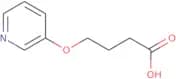
CAS:<p>Versatile small molecule scaffold</p>Formula:C11H24N2OPurity:Min. 95%Molecular weight:200.32 g/mol4-(Pyridin-3-yloxy)butanoic acid
CAS:Controlled Product<p>Versatile small molecule scaffold</p>Formula:C9H11NO3Purity:Min. 95%Molecular weight:181.19 g/mol1-[2-(4-Amino-1H-pyrazol-1-yl)ethyl]pyrrolidin-2-one
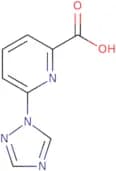
CAS:<p>Versatile small molecule scaffold</p>Formula:C9H14N4OPurity:Min. 95%Molecular weight:194.23 g/mol6-(1H-1,2,4-Triazol-1-yl)pyridine-2-carboxylic acid
CAS:<p>Versatile small molecule scaffold</p>Formula:C8H6N4O2Purity:Min. 95%Molecular weight:190.16 g/mol[(4-Bromo-3-fluorophenyl)methyl](methyl)amine
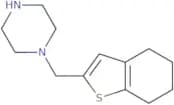
CAS:<p>Versatile small molecule scaffold</p>Formula:C8H9BrFNPurity:Min. 95%Molecular weight:218.07 g/mol1-(4,5,6,7-Tetrahydro-1-benzothiophen-2-ylmethyl)piperazine
CAS:<p>Versatile small molecule scaffold</p>Formula:C13H20N2SPurity:Min. 95%Molecular weight:236.38 g/mol4-[(3-Bromophenyl)methyl]morpholine-3,5-dione
CAS:<p>Versatile small molecule scaffold</p>Formula:C11H10BrNO3Purity:Min. 95%Molecular weight:284.11 g/mol2-Methyl-1-[(1-methyl-1H-imidazol-2-yl)methyl]piperazine
CAS:Controlled Product<p>Versatile small molecule scaffold</p>Formula:C10H18N4Purity:Min. 95%Molecular weight:194.28 g/mol1-[(2-Hydroxyethyl)amino]cyclobutane-1-carbonitrile
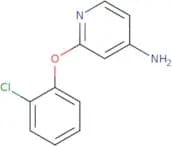
CAS:<p>Versatile small molecule scaffold</p>Formula:C7H12N2OPurity:Min. 95%Molecular weight:140.18 g/mol2-(2-Chlorophenoxy)pyridin-4-amine
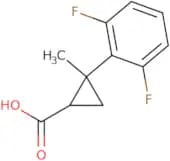
CAS:<p>Versatile small molecule scaffold</p>Formula:C11H9ClN2OPurity:Min. 95%Molecular weight:220.65 g/mol2-(2,6-Difluorophenyl)-2-methylcyclopropane-1-carboxylic acid
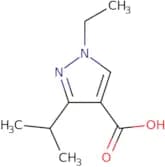
CAS:<p>Versatile small molecule scaffold</p>Formula:C11H10F2O2Purity:Min. 95%Molecular weight:212.19 g/mol1-Ethyl-3-(propan-2-yl)-1H-pyrazole-4-carboxylic acid
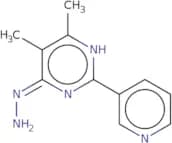
CAS:<p>Versatile small molecule scaffold</p>Formula:C9H14N2O2Purity:Min. 95%Molecular weight:182.22 g/mol4-Hydrazinylidene-5,6-dimethyl-2-(pyridin-3-yl)-1,4-dihydropyrimidine
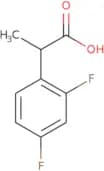
CAS:<p>Versatile small molecule scaffold</p>Formula:C11H13N5Purity:Min. 95%Molecular weight:215.3 g/mol2-(2,4-Difluorophenyl)propanoic acid
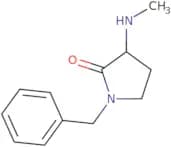
CAS:<p>Versatile small molecule scaffold</p>Formula:C9H8F2O2Purity:Min. 95%Molecular weight:186.15 g/mol1-Benzyl-3-(methylamino)pyrrolidin-2-one
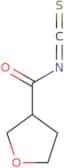
CAS:<p>Versatile small molecule scaffold</p>Formula:C12H16N2OPurity:Min. 95%Molecular weight:204.27 g/molOxolane-3-carbonyl isothiocyanate
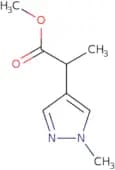
CAS:<p>Versatile small molecule scaffold</p>Formula:C6H7NO2SPurity:Min. 95%Molecular weight:157.19 g/molMethyl 2-(1-methyl-1H-pyrazol-4-yl)propanoate
CAS:<p>Versatile small molecule scaffold</p>Formula:C8H12N2O2Purity:Min. 95%Molecular weight:168.19 g/mol


![3-Mercapto-6-methyl-[1,2,4]triazolo[4,3-b][1,2,4]triazin-7-ol](/_next/image/?url=https%3A%2Fstatic.cymitquimica.com%2Fproducts%2F3D%2Fthumb-webp%2FAAA87728.webp&w=3840&q=75)
![3-Methyl-5-[2-(methylsulfanyl)ethyl]-2-sulfanylideneimidazolidin-4-one](/_next/image/?url=https%3A%2Fstatic.cymitquimica.com%2Fproducts%2F3D%2Fthumb-webp%2FAAA87749.webp&w=3840&q=75)
![Disodium [4-(sulfanidylmethanethioyl)piperazine-1-carbothioyl]sulfanide](/_next/image/?url=https%3A%2Fstatic.cymitquimica.com%2Fproducts%2F3D%2Fthumb-webp%2FAAA87778.webp&w=3840&q=75)

![1-Methyl-1,3-diazaspiro[4.5]decane-2,4-dione](/_next/image/?url=https%3A%2Fstatic.cymitquimica.com%2Fproducts%2F3D%2Fthumb-webp%2FAAA87846.webp&w=3840&q=75)





![1-[4-(Trifluoromethyl)phenyl]propan-2-amine hydrochloride](/_next/image/?url=https%3A%2Fstatic.cymitquimica.com%2Fproducts%2F3D%2Fthumb-webp%2FAAA88200.webp&w=3840&q=75)
![1-[2-(Pyridin-1-ium-1-yl)ethyl]pyridin-1-ium dibromide](/_next/image/?url=https%3A%2Fstatic.cymitquimica.com%2Fproducts%2F3D%2Fthumb-webp%2FAAA88235.webp&w=3840&q=75)
![3-(2-Hydroxyethyl)-1,3-diazaspiro[4.5]decane-2,4-dione](/_next/image/?url=https%3A%2Fstatic.cymitquimica.com%2Fproducts%2F3D%2Fthumb-webp%2FAAA88267.webp&w=3840&q=75)


![1-Phenyl-1H-benzo[d][1,2,3]triazole](/_next/image/?url=https%3A%2Fstatic.cymitquimica.com%2Fproducts%2F3D%2Fthumb-webp%2FAAA88339.webp&w=3840&q=75)

![7-Methyl-2-phenylimidazo[1,2-a]pyridine](/_next/image/?url=https%3A%2Fstatic.cymitquimica.com%2Fproducts%2F3D%2Fthumb-webp%2FAAA88591.webp&w=3840&q=75)
![3-tert-Butyl-[1,2,4]triazolo[4,3-a]pyridine-6-carboxylic acid](/_next/image/?url=https%3A%2Fstatic.cymitquimica.com%2Fproducts%2F3D%2Fthumb-webp%2FAAC54135.webp&w=3840&q=75)
![[4-(Methylcarbamoyl)phenyl]methanesulfonyl chloride](/_next/image/?url=https%3A%2Fstatic.cymitquimica.com%2Fproducts%2F3D%2Fthumb-webp%2FAAC54164.webp&w=3840&q=75)
![2-{[2-(Dimethylamino)-2-methylpropyl]amino}cyclopentan-1-ol](/_next/image/?url=https%3A%2Fstatic.cymitquimica.com%2Fproducts%2F3D%2Fthumb-webp%2FAAC54265.webp&w=3840&q=75)
![1-[2-(4-Amino-1H-pyrazol-1-yl)ethyl]pyrrolidin-2-one](/_next/image/?url=https%3A%2Fstatic.cymitquimica.com%2Fproducts%2F3D%2Fthumb-webp%2FAAC55094.webp&w=3840&q=75)
amine](/_next/image/?url=https%3A%2Fstatic.cymitquimica.com%2Fproducts%2F3D%2Fthumb-webp%2FAAC55528.webp&w=3840&q=75)
![4-[(3-Bromophenyl)methyl]morpholine-3,5-dione](/_next/image/?url=https%3A%2Fstatic.cymitquimica.com%2Fproducts%2F3D%2Fthumb-webp%2FAAC55873.webp&w=3840&q=75)
![2-Methyl-1-[(1-methyl-1H-imidazol-2-yl)methyl]piperazine](/_next/image/?url=https%3A%2Fstatic.cymitquimica.com%2Fproducts%2F3D%2Fthumb-webp%2FAAC56462.webp&w=3840&q=75)
![1-[(2-Hydroxyethyl)amino]cyclobutane-1-carbonitrile](/_next/image/?url=https%3A%2Fstatic.cymitquimica.com%2Fproducts%2F3D%2Fthumb-webp%2FAAC56545.webp&w=3840&q=75)