Building Blocks
This section contains fundamental products for the synthesis of organic and biological compounds. Building blocks are the essential starting materials used to construct complex molecules through various chemical reactions. They play a critical role in drug discovery, material science, and chemical research. At CymitQuimica, we offer a diverse range of high-quality building blocks to support your innovative research and industrial projects, ensuring you have the essential components for successful synthesis.
Subcategories of "Building Blocks"
- Boronic Acids & Boronic Acid Derivatives(5,756 products)
- Chiral Building Blocks(1,242 products)
- Hydrocarbon Building Blocks(6,095 products)
- Organic Building Blocks(61,037 products)
Found 196139 products of "Building Blocks"
Sort by
Purity (%)
0
100
|
0
|
50
|
90
|
95
|
100
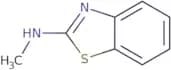
N-Methyl-1,3-benzothiazol-2-amine
CAS:<p>N-Methyl-1,3-benzothiazol-2-amine is a molecule that belongs to the class of isothiocyanates. It can be synthesized by reacting 2-chlorobenzothiazole with primary amines in the presence of a nonpolar solvent. This method is efficient and can provide high yields for this molecule. N-Methyl-1,3-benzothiazol-2-amine has been shown to inhibit the uptake of pesticides by plants. The mechanism is not well understood but it may involve vibrational interactions with molecules in the plant cell membrane or chemical interactions with other molecules in the plant cell. This molecule also has nitrogen atoms and mass spectrometric techniques have shown that it has an nmr spectrum.</p>Formula:C8H8N2SPurity:Min. 95%Molecular weight:164.23 g/mol6-tert-Butylisoquinoline
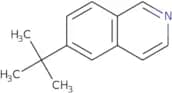
CAS:<p>Versatile small molecule scaffold</p>Formula:C13H15NPurity:Min. 95%Molecular weight:185.26 g/mol3-Amino-1-benzylurea
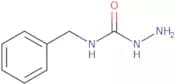
CAS:<p>3-Amino-1-benzylurea is a compound that is used as a reagent in organic chemistry. It is an important starting material for the synthesis of semicarbazides, acetals, and orthoesters. 3-Amino-1-benzylurea can be synthesized from triethyl orthoformate, triethyl orthosilicate, or hexamethyldisilazane. The synthesis proceeds by reacting 3 equivalents of triethyl orthoformate with one equivalent of benzyl chloride to form the corresponding urea. This urea is then hydrolyzed to give the desired product.</p>Formula:C8H11N3OPurity:Min. 95%Molecular weight:165.19 g/mol2-Methyl-2-pentenoic acid
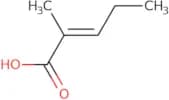
CAS:<p>2-Methyl-2-pentenoic acid (MP) is a synthetic product that is used as a chemical intermediate in the production of pesticides and pharmaceuticals. It can be found in the environment due to its use as an organic solvent, metal surface cleaner, or insecticide. MP has been shown to have mosquito repellent properties and has been used as an additive in some mosquito coils. This compound also has anti-inflammatory effects and can be used as a dietary supplement. The synthesis of MP involves the reaction of cinchonidine with ethyl acetate, which proceeds through an addition reaction mechanism. The reaction rate is dependent on the presence of nucleophiles such as water or methanol, but not alcohols or hydrogen peroxide.</p>Purity:Min. 95%2-Methyl-benzo[b]thiophen-3(2H)-one 1,1-dioxide
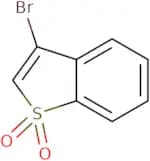
CAS:<p>Versatile small molecule scaffold</p>Formula:C9H8O3SPurity:Min. 95%Molecular weight:196.22 g/mol3-Bromobenzothiophene 1,1-Dioxide
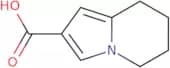
CAS:<p>Versatile small molecule scaffold</p>Formula:C8H5BrO2SPurity:Min. 95%Molecular weight:245.09 g/mol5,6,7,8-Tetrahydroindolizine-2-carboxylic acid
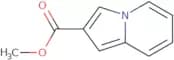
CAS:<p>Versatile small molecule scaffold</p>Formula:C9H11NO2Purity:Min. 95%Molecular weight:165.19 g/molmethyl indolizine-2-carboxylate
CAS:<p>Methyl indolizine-2-carboxylate is a synthesized chemical that belongs to the class of amides and has been shown to have hypoglycemic activity in mice. This compound was synthesized by alkylation of dodecyl with acrylonitrile followed by hydrolysis. Mechanistic studies show that methyl indolizine-2-carboxylate binds to amines, which are an important part of the insulin receptor binding site, and inhibits the kinetics of insulin action. Methyl indolizine-2-carboxylate can also inhibit the synthesis of nitric oxide (NO) at high concentrations. The chemical's affinity for NO is stronger than its affinity for amines, but it has not been shown to inhibit the kinetics of NO production.</p>Formula:C10H9NO2Purity:Min. 95%Molecular weight:175.18 g/molMethyl 2-(benzylamino)propanoate hydrochloride
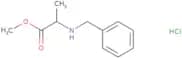
CAS:<p>Versatile small molecule scaffold</p>Formula:C11H16ClNO2Purity:Min. 95%Molecular weight:229.7 g/mol2,3-Dihydrospiro[indene-1,3'-pyrrolidine]
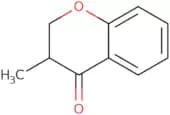
CAS:<p>Versatile small molecule scaffold</p>Formula:C12H15NPurity:Min. 95%Molecular weight:173.25 g/mol3-Methyl-3,4-dihydro-2H-1-benzopyran-4-one
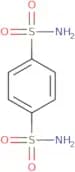
CAS:<p>Versatile small molecule scaffold</p>Formula:C10H10O2Purity:Min. 95%Molecular weight:162.18 g/molBenzene-1,4-disulfonamide
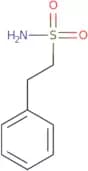
CAS:<p>Benzene-1,4-disulfonamide is a vasodilator that is soluble in water. It has a heterocyclic ring with a nitrogen atom, a chloride group and cyclic nitro groups. The solubility of benzene-1,4-disulfonamide in water makes it suitable for intravenous administration. It also has an effect on the cerebral vasculature and can be used as a vasodilator. Benzene-1,4-disulfonamide is structurally related to sulphonamides and has similar properties to these drugs.</p>Formula:C6H8N2O4S2Purity:Min. 95%Molecular weight:236.3 g/mol2-Phenylethane-1-sulfonamide
CAS:<p>Azd1283 is a potent antagonist of the P2Y12 receptor. It inhibits the proliferation of mammalian cells and has been shown to be effective against hyperproliferative disorders such as cancer. Azd1283 is a quinoline derivative that is supplied as an organic solvent. It binds to the P2Y12 receptor on the cell surface and prevents activation, leading to inhibition of the downstream signalling pathways.</p>Formula:C8H11NO2SPurity:Min. 95%Molecular weight:185.25 g/mol3-Azabicyclo[3.2.1]octan-2-one
CAS:<p>3-Azabicyclo[3.2.1]octan-2-one is an alkenoic, undescribed chemical with a basic structure that includes two oxime groups and a lactam ring. It is used as a photolysis reagent for the conversion of primary amines to secondary amines and vice versa in the presence of methyl groups. Its photochemistry has been studied extensively, including its photoinduced reaction with amides to form isomeric amines and its photoinduced reactions with lactams to form isomeric lactams. 3-Azabicyclo[3.2.1]octan-2-one reacts with primary amines to form secondary amines, which can be converted back into the original primary amine by heating or by treatment with acid or base. The conversion of primary amines to secondary amines may be accomplished through the use of 3-azabicyclo[3.2.1]</p>Formula:C7H11NOPurity:Min. 95%Molecular weight:125.17 g/mol2-Azabicyclo[3.2.1]octane hydrochloride
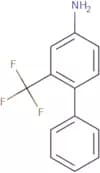
CAS:<p>Versatile small molecule scaffold</p>Formula:C7H14ClNPurity:Min. 95%Molecular weight:147.6 g/mol4-Phenyl-3-(trifluoromethyl)aniline
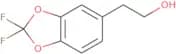
CAS:<p>Versatile small molecule scaffold</p>Formula:C13H10F3NPurity:Min. 95%Molecular weight:237.22 g/mol2-(2,2-Difluoro-1,3-dioxaindan-5-yl)ethan-1-ol
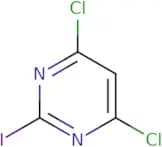
CAS:<p>Versatile small molecule scaffold</p>Formula:C9H8F2O3Purity:Min. 95%Molecular weight:202.15 g/mol4,6-Dichloro-2-iodopyrimidine
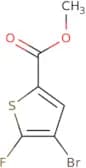
CAS:<p>Versatile small molecule scaffold</p>Formula:C4HCl2IN2Purity:Min. 95%Molecular weight:274.87 g/molMethyl 4-bromo-5-fluorothiophene-2-carboxylate
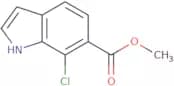
CAS:<p>Versatile small molecule scaffold</p>Formula:C6H4BrFO2SPurity:Min. 95%Molecular weight:239.06 g/molMethyl 7-chloro-1H-indole-6-carboxylate
CAS:<p>Versatile small molecule scaffold</p>Formula:C10H8ClNO2Purity:Min. 95%Molecular weight:209.63 g/mol4-Bromo-1H-benzo[d]imidazol-2-amine
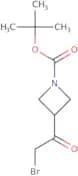
CAS:<p>Versatile small molecule scaffold</p>Formula:C7H6BrN3Purity:Min. 95%Molecular weight:212.05 g/moltert-Butyl 3-(2-bromoacetyl)azetidine-1-carboxylate
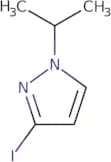
CAS:<p>Versatile small molecule scaffold</p>Formula:C10H16BrNO3Purity:Min. 95%Molecular weight:278.14 g/mol3-Iodo-1-(propan-2-yl)-1H-pyrazole
CAS:<p>Versatile small molecule scaffold</p>Formula:C6H9IN2Purity:Min. 95%Molecular weight:236.05 g/mol6-(Trifluoromethyl)-[1,3]thiazolo[4,5-c]pyridin-2-amine
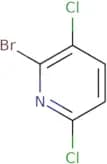
CAS:<p>Versatile small molecule scaffold</p>Formula:C7H4F3N3SPurity:Min. 95%Molecular weight:219.19 g/mol2-Bromo-3,6-dichloropyridine
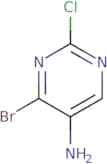
CAS:<p>Versatile small molecule scaffold</p>Formula:C5H2BrCl2NPurity:Min. 95%Molecular weight:226.88 g/mol4-Bromo-2-chloropyrimidin-5-amine
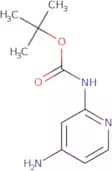
CAS:<p>Versatile small molecule scaffold</p>Formula:C4H3BrClN3Purity:Min. 95%Molecular weight:208.44 g/moltert-butyl N-(4-aminopyridin-2-yl)carbamate
CAS:<p>Versatile small molecule scaffold</p>Formula:C10H15N3O2Purity:Min. 95%Molecular weight:209.2 g/molSpiro[4.5]decan-8-ol
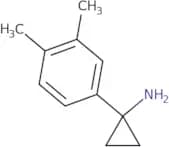
CAS:<p>Spiro[4.5]decan-8-ol is a terpene that has shown to be an anti-cancer agent. It inhibits the population growth of solid tumours in animal models and inhibits the proliferation of human cancer cells by inducing apoptosis. Spiro[4.5]decan-8-ol also has anti-inflammatory effects, which may be due to its ability to inhibit the production of proinflammatory cytokines such as tumor necrosis factor alpha (TNFα) and interleukin 1β (IL1β). Spiro[4.5]decan-8-ol also has been shown to inhibit HIV infection, as well as autoimmune diseases and other infectious diseases, by binding to human proteins involved in transcriptional regulation and gene expression.</p>Formula:C10H18OPurity:Min. 95%Molecular weight:154.25 g/mol1-(3,4-Dimethylphenyl)cyclopropan-1-amine
CAS:<p>Versatile small molecule scaffold</p>Formula:C11H15NPurity:Min. 95%Molecular weight:161.24 g/mol[4-(tert-Butoxy)-3-methoxyphenyl]methanamine
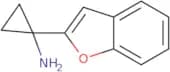
CAS:<p>Versatile small molecule scaffold</p>Formula:C12H19NO2Purity:Min. 95%Molecular weight:209.28 g/mol1-(1-Benzofuran-2-yl)cyclopropan-1-amine
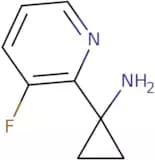
CAS:<p>Versatile small molecule scaffold</p>Formula:C11H11NOPurity:Min. 95%Molecular weight:173.21 g/mol1-(3-Fluoropyridin-2-yl)cyclopropan-1-amine
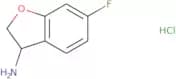
CAS:<p>Versatile small molecule scaffold</p>Formula:C8H9FN2Purity:Min. 95%Molecular weight:152.17 g/mol6-Fluoro-2,3-dihydro-1-benzofuran-3-amine hydrochloride
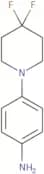
CAS:<p>Versatile small molecule scaffold</p>Formula:C8H9ClFNOPurity:Min. 95%Molecular weight:189.61 g/mol4-(4,4-Difluoro-1-piperidyl)aniline
CAS:<p>Versatile small molecule scaffold</p>Formula:C11H14F2N2Purity:Min. 95%Molecular weight:212.24 g/mol5-bromo-4-chloro-7-methyl-7H-pyrrolo[2,3-d]pyrimidine
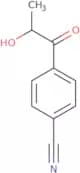
CAS:<p>Versatile small molecule scaffold</p>Formula:C7H5BrClN3Purity:Min. 95%Molecular weight:246.5 g/mol4-(2-Hydroxypropanoyl)benzonitrile
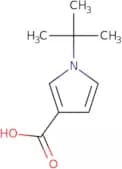
CAS:<p>Versatile small molecule scaffold</p>Formula:C10H9NO2Purity:Min. 95%Molecular weight:175.18 g/mol1-tert-Butyl-1H-pyrrole-3-carboxylic acid
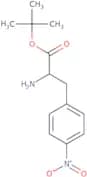
CAS:<p>Versatile small molecule scaffold</p>Formula:C9H13NO2Purity:Min. 95%Molecular weight:167.2 g/moltert-Butyl 2-amino-3-(4-nitrophenyl)propanoate
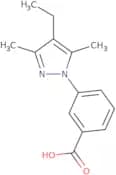
CAS:<p>Versatile small molecule scaffold</p>Formula:C13H18N2O4Purity:Min. 95%Molecular weight:266.29 g/mol3-(4-Ethyl-3,5-dimethyl-1H-pyrazol-1-yl)benzoic acid
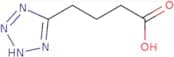
CAS:<p>Versatile small molecule scaffold</p>Formula:C14H16N2O2Purity:Min. 95%Molecular weight:244.29 g/mol4-(1H-1,2,3,4-Tetrazol-5-yl)butanoic acid
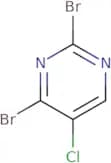
CAS:<p>Versatile small molecule scaffold</p>Formula:C5H8N4O2Purity:Min. 95%Molecular weight:156.14 g/mol2,4-Dibromo-5-chloropyrimidine
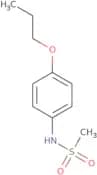
CAS:<p>Versatile small molecule scaffold</p>Formula:C4HBr2ClN2Purity:Min. 95%Molecular weight:272.32 g/molN-(4-Propoxyphenyl)methanesulfonamide
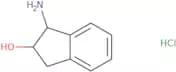
CAS:<p>Versatile small molecule scaffold</p>Formula:C10H15NO3SPurity:Min. 95%Molecular weight:229.3 g/mol(1S,2S)-1-Amino-2,3-dihydro-1H-inden-2-ol hydrochloride
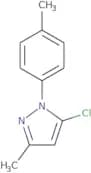
CAS:<p>Versatile small molecule scaffold</p>Formula:C9H12ClNOPurity:Min. 95%Molecular weight:185.65 g/mol5-Chloro-3-methyl-1-(4-methylphenyl)-1H-pyrazole
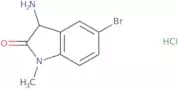
CAS:<p>Versatile small molecule scaffold</p>Formula:C11H11ClN2Purity:Min. 95%Molecular weight:206.67 g/mol3-Amino-5-bromo-1-methyl-2,3-dihydro-1H-indol-2-one hydrochloride
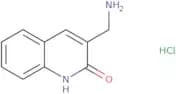
CAS:<p>Versatile small molecule scaffold</p>Formula:C9H10BrClN2OPurity:Min. 95%Molecular weight:277.54 g/mol3-(Aminomethyl)-1,2-dihydroquinolin-2-one hydrochloride
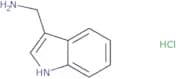
CAS:<p>Versatile small molecule scaffold</p>Formula:C10H11ClN2OPurity:Min. 95%Molecular weight:210.66 g/mol1H-Indol-3-ylmethanamine hydrochloride
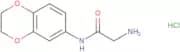
CAS:<p>Versatile small molecule scaffold</p>Formula:C9H11ClN2Purity:Min. 95%Molecular weight:182.65 g/mol2-Amino-N-(2,3-dihydro-1,4-benzodioxin-6-yl)acetamide hydrochloride
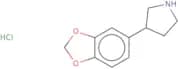
CAS:<p>Versatile small molecule scaffold</p>Formula:C10H13ClN2O3Purity:Min. 95%Molecular weight:244.67 g/mol3-(1,3-Dioxaindan-5-yl)pyrrolidine hydrochloride
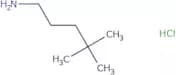
CAS:<p>Versatile small molecule scaffold</p>Formula:C11H14ClNO2Purity:Min. 95%Molecular weight:227.7 g/mol4,4-Dimethylpentan-1-amine hydrochloride
CAS:<p>Versatile small molecule scaffold</p>Formula:C7H18ClNPurity:Min. 95%Molecular weight:151.68 g/mol

![2-Methyl-benzo[b]thiophen-3(2H)-one 1,1-dioxide](/_next/image/?url=https%3A%2Fstatic.cymitquimica.com%2Fproducts%2F3D%2Fthumb-webp%2FRAA95779.webp&w=3840&q=75)
![2,3-Dihydrospiro[indene-1,3'-pyrrolidine]](/_next/image/?url=https%3A%2Fstatic.cymitquimica.com%2Fproducts%2F3D%2Fthumb-webp%2FRAA97698.webp&w=3840&q=75)
![3-Azabicyclo[3.2.1]octan-2-one](/_next/image/?url=https%3A%2Fstatic.cymitquimica.com%2Fproducts%2F3D%2Fthumb-webp%2FRAA99400.webp&w=3840&q=75)
![2-Azabicyclo[3.2.1]octane hydrochloride](/_next/image/?url=https%3A%2Fstatic.cymitquimica.com%2Fproducts%2F3D%2Fthumb-webp%2FRAA99401.webp&w=3840&q=75)
![4-Bromo-1H-benzo[d]imidazol-2-amine](/_next/image/?url=https%3A%2Fstatic.cymitquimica.com%2Fproducts%2F3D%2Fthumb-webp%2FRAC11475.webp&w=3840&q=75)
![6-(Trifluoromethyl)-[1,3]thiazolo[4,5-c]pyridin-2-amine](/_next/image/?url=https%3A%2Fstatic.cymitquimica.com%2Fproducts%2F3D%2Fthumb-webp%2FRAC11894.webp&w=3840&q=75)
![Spiro[4.5]decan-8-ol](/_next/image/?url=https%3A%2Fstatic.cymitquimica.com%2Fproducts%2F3D%2Fthumb-webp%2FRAC12078.webp&w=3840&q=75)
![[4-(tert-Butoxy)-3-methoxyphenyl]methanamine](/_next/image/?url=https%3A%2Fstatic.cymitquimica.com%2Fproducts%2F3D%2Fthumb-webp%2FRAC14950.webp&w=3840&q=75)
![5-bromo-4-chloro-7-methyl-7H-pyrrolo[2,3-d]pyrimidine](/_next/image/?url=https%3A%2Fstatic.cymitquimica.com%2Fproducts%2F3D%2Fthumb-webp%2FRAC34330.webp&w=3840&q=75)