Building Blocks
This section contains fundamental products for the synthesis of organic and biological compounds. Building blocks are the essential starting materials used to construct complex molecules through various chemical reactions. They play a critical role in drug discovery, material science, and chemical research. At CymitQuimica, we offer a diverse range of high-quality building blocks to support your innovative research and industrial projects, ensuring you have the essential components for successful synthesis.
Subcategories of "Building Blocks"
- Boronic Acids & Boronic Acid Derivatives(5,756 products)
- Chiral Building Blocks(1,242 products)
- Hydrocarbon Building Blocks(6,095 products)
- Organic Building Blocks(61,037 products)
Found 196200 products of "Building Blocks"
Sort by
Purity (%)
0
100
|
0
|
50
|
90
|
95
|
100
[(1R,4R)-4-Phenylcyclohexyl]methanol
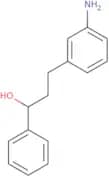
CAS:<p>Versatile small molecule scaffold</p>Formula:C13H18OPurity:Min. 95%Molecular weight:190.28 g/mol3-(3-Aminophenyl)-1-phenylpropan-1-ol
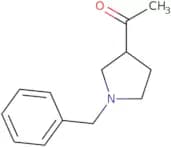
CAS:<p>Versatile small molecule scaffold</p>Formula:C15H17NOPurity:Min. 95%Molecular weight:227.3 g/mol1-(1-Benzylpyrrolidin-3-yl)ethan-1-one
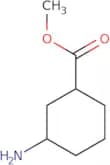
CAS:<p>Versatile small molecule scaffold</p>Formula:C13H17NOPurity:Min. 95%Molecular weight:203.28 g/molMethyl 3-aminocyclohexane-1-carboxylate
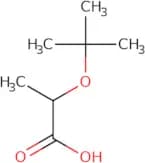
CAS:<p>Versatile small molecule scaffold</p>Formula:C8H15NO2Purity:Min. 95%Molecular weight:157.21 g/mol2-(tert-Butoxy)propanoic acid
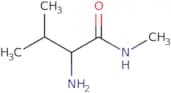
CAS:<p>Versatile small molecule scaffold</p>Formula:C7H14O3Purity:Min. 95%Color and Shape:Clear Viscous LiquidMolecular weight:146.18 g/mol(2S)-2-Amino-N,3-dimethylbutanamide
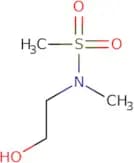
CAS:<p>(2S)-2-Amino-N,3-dimethylbutanamide is a trifunctional molecule with a carbocycle that belongs to the class of chemical substances. It has been shown to be an inhibitor of human serum enzymes and it can also inhibit the production of human immunodeficiency virus (HIV). It binds to the receptor molecule and prevents HIV from binding to CD4 cells. The toxicological studies for this compound have been performed in cell culture and in animals. There are no reports on its effects on humans. This compound is not metabolized in vivo, but it is rapidly hydrolyzed by esterases in vitro, forming ethyl esters.</p>Formula:C6H14N2OPurity:Min. 95%Molecular weight:130.19 g/molN-(2-Hydroxyethyl)-N-methylmethanesulfonamide
CAS:<p>Versatile small molecule scaffold</p>Formula:C4H11NO3SPurity:Min. 95%Molecular weight:153.2 g/mol5,7-Dimethyl-2-phenylpyrazolo[1,5-a]pyrimidine
CAS:<p>5,7-Dimethyl-2-phenylpyrazolo[1,5-a]pyrimidine is an aromatic heterocyclic compound. It can be prepared by the palladium-catalyzed coupling of aryl bromides with 5,7-dimethylpyrazolo[1,5-a]pyrimidines. The yield and synthesis conditions are dependent on the type of aryl bromide used in the reaction. This process has been shown to be a useful methodology for the synthesis of various heterocyclic compounds.</p>Formula:C14H13N3Purity:Min. 95%Molecular weight:223.27 g/moltert-Butyl 4-(2-oxo-2,3-dihydro-1H-benzo[d]imidazol-1-yl)piperidine-1-carboxylate
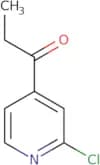
CAS:<p>Versatile small molecule scaffold</p>Formula:C17H23N3O3Purity:Min. 95%Molecular weight:317.38 g/mol1-(2-Chloropyridin-4-yl)propan-1-one
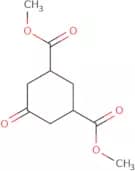
CAS:<p>Versatile small molecule scaffold</p>Formula:C8H8ClNOPurity:Min. 95%Molecular weight:169.61 g/mol1,3-Dimethyl 5-oxocyclohexane-1,3-dicarboxylate
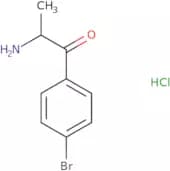
CAS:<p>Versatile small molecule scaffold</p>Formula:C10H14O5Purity:Min. 95%Molecular weight:214.21 g/mol2-Amino-1-(4-bromophenyl)propan-1-one hydrochloride
CAS:Controlled Product<p>Versatile small molecule scaffold</p>Formula:C9H11BrClNOPurity:Min. 95%Molecular weight:264.54 g/mol1-Oxa-spiro[4.5]decan-8-one
CAS:<p>1-Oxa-spiro[4.5]decan-8-one is a pentafluoroethyl derivative of an odorant that has been used as a blood substitute, and it has been shown to be insoluble in solvents. 1-Oxa-spiro[4.5]decan-8-one has a strong odor and is not soluble in water or common organic solvents. It can be found in the blood of mammals, but not humans.</p>Formula:C9H14O2Purity:Min. 95%Molecular weight:154.21 g/mol1-oxaspiro[4.5]decan-8-ol
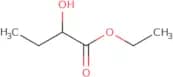
CAS:<p>Versatile small molecule scaffold</p>Formula:C9H16O2Purity:Min. 95%Molecular weight:156.22 g/mol(R)-Ethyl 2-hydroxybutanoate
CAS:<p>Versatile small molecule scaffold</p>Formula:C6H12O3Purity:Min. 95%Molecular weight:132.16 g/mol2-[(tert-Butoxycarbonyl)amino]-3-(3-fluorophenyl)propanoic acid
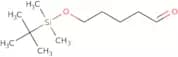
CAS:<p>Versatile small molecule scaffold</p>Formula:C14H18FNO4Purity:Min. 95%Molecular weight:283.29 g/mol5-((tert-Butyldimethylsilyl)oxy)pentanal
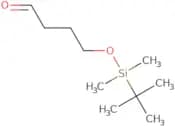
CAS:<p>Versatile small molecule scaffold</p>Formula:C11H24O2SiPurity:Min. 95%Molecular weight:216.39 g/mol4-(tert-Butyldimethylsilyloxy)butanal
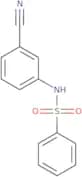
CAS:<p>4-(tert-Butyldimethylsilyloxy)butanal is a molecule that has been shown to have anticancer activity. It is structurally related to paclitaxel and epothilones, which are both derived from the cyclopentenone family of compounds. 4-(tert-Butyldimethylsilyloxy)butanal was found to be effective against a number of cancer cell lines, including leukemias, lymphomas, and breast cancers. The anticancer activity of 4-(tert-Butyldimethylsilyloxy)butanal is due to its ability to stabilize the enolate form of the enzyme alkylation, leading to inhibition of protein synthesis in cancer cells.</p>Formula:C10H22O2SiPurity:Min. 95%Molecular weight:202.37 g/molN-(3-Cyanophenyl)benzenesulfonamide
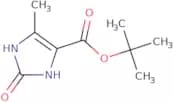
CAS:<p>Versatile small molecule scaffold</p>Formula:C13H10N2O2SPurity:Min. 95%Molecular weight:258.3 g/moltert-Butyl 5-methyl-2-oxo-2,3-dihydro-1H-imidazole-4-carboxylate
CAS:<p>Versatile small molecule scaffold</p>Formula:C9H14N2O3Purity:Min. 95%Molecular weight:198.22 g/mol4-Methyl-5-thia-2,7-diazatricyclo[6.4.0.0,2,6]dodeca-1(12),6,8,10-tetraene
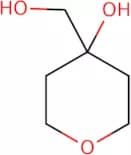
CAS:<p>Versatile small molecule scaffold</p>Formula:C10H10N2SPurity:Min. 95%Molecular weight:190.27 g/mol4-(Hydroxymethyl)oxan-4-ol
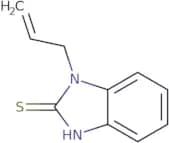
CAS:<p>4-Hydroxymethyloxan-4-ol is a synthetic chemical that is used as a catalyst in the synthesis of citric acid. It is also used to catalyze the hydrogen peroxide oxidation of hydroxylated compounds and to produce citric acid from sugars. 4-Hydroxymethyloxan-4-ol is an acidic compound and can react with metals such as sodium, calcium, and magnesium to form metal oxides. This chemical has been shown to be a good inhibitor of peroxide formation in catalases.</p>Formula:C6H12O3Purity:Min. 95%Molecular weight:132.16 g/mol1-Allyl-1h-benzimidazole-2-thiol
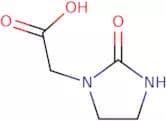
CAS:<p>Versatile small molecule scaffold</p>Formula:C10H10N2SPurity:Min. 95%Molecular weight:190.27 g/mol2-(2-Oxoimidazolidin-1-yl)acetic acid
CAS:<p>Versatile small molecule scaffold</p>Formula:C5H8N2O3Purity:Min. 95%Molecular weight:144.12 g/molMethyl 2-cyano-2-[(trimethylsilyl)oxy]acetate
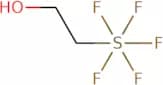
CAS:<p>Versatile small molecule scaffold</p>Formula:C7H13NO3SiPurity:Min. 95%Molecular weight:187.27 g/mol2-(Pentafluoro-λ⁶-sulfanyl)ethan-1-ol
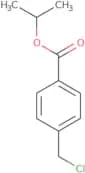
CAS:<p>Versatile small molecule scaffold</p>Formula:C2H5F5OSPurity:Min. 95%Molecular weight:172.12 g/molPropan-2-yl 4-(chloromethyl)benzoate
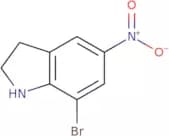
CAS:<p>Versatile small molecule scaffold</p>Formula:C11H13ClO2Purity:Min. 95%Molecular weight:212.67 g/mol7-Bromo-5-nitroindoline
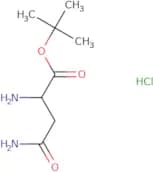
CAS:<p>7-Bromo-5-nitroindoline is a synthetic compound that has been shown to bind to auxin, which is a plant hormone. It has been used in photoaffinity labeling and can be used in the synthesis of other compounds. 7-Bromo-5-nitroindoline binds reversibly and covalently to auxin in the presence of light. The regiospecificity of this binding allows for the determination of specific properties of auxin binding. 7-Bromo-5-nitroindoline is also used as a tritiated label in syntheses and as a deuterated label for photoaffinity labeling.</p>Formula:C8H7BrN2O2Purity:Min. 95%Molecular weight:243.06 g/moltert-Butyl (2R)-2-amino-3-carbamoylpropanoate hydrochloride
CAS:<p>Versatile small molecule scaffold</p>Formula:C8H17ClN2O3Purity:Min. 95%Molecular weight:224.7 g/mol5-Ethoxy-1H-1,2,4-triazol-3-amine
CAS:<p>Versatile small molecule scaffold</p>Formula:C4H8N4OPurity:Min. 95%Molecular weight:128.13 g/mol5,7-Dimethyl-2-thioxo-1,3,4-thiadiazolo[3,2-a]pyrimidin-4-ium
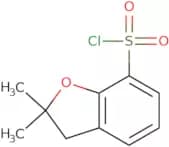
CAS:<p>Versatile small molecule scaffold</p>Formula:C7H7N3S2Purity:Min. 95%Molecular weight:197.3 g/mol2,2-Dimethyl-2,3-dihydro-1-benzofuran-7-sulfonyl chloride
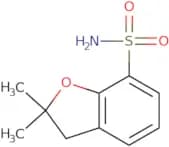
CAS:<p>Versatile small molecule scaffold</p>Formula:C10H11ClO3SPurity:Min. 95%Molecular weight:246.71 g/mol2,2-Dimethyl-2,3-dihydro-1-benzofuran-7-sulfonamide
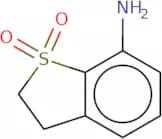
CAS:<p>Versatile small molecule scaffold</p>Formula:C10H13NO3SPurity:Min. 95%Molecular weight:227.28 g/mol7-Amino-2,3-dihydro-1λ⁶-benzothiophene-1,1-dione
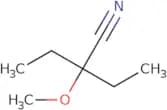
CAS:<p>Versatile small molecule scaffold</p>Formula:C8H9NO2SPurity:Min. 95%Molecular weight:183.2 g/mol2-Ethyl-2-methoxybutanenitrile
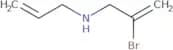
CAS:<p>Versatile small molecule scaffold</p>Formula:C7H13NOPurity:Min. 95%Molecular weight:127.18 g/molN-Allyl-2-bromoprop-2-en-1-amine
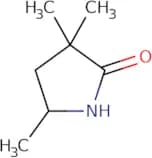
CAS:<p>Versatile small molecule scaffold</p>Formula:C6H10BrNPurity:Min. 95%Molecular weight:176.05 g/mol3,3,5-Trimethyl-2-pyrrolidinone
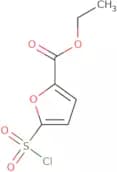
CAS:<p>Versatile small molecule scaffold</p>Formula:C7H13NOPurity:Min. 95%Molecular weight:127.18 g/molEthyl 5-(chlorosulfonyl)furan-2-carboxylate
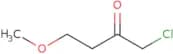
CAS:<p>Versatile small molecule scaffold</p>Formula:C7H7ClO5SPurity:Min. 95%Molecular weight:238.65 g/mol1-Chloro-4-methoxybutan-2-one
CAS:<p>Versatile small molecule scaffold</p>Formula:C5H9ClO2Purity:Min. 95%Molecular weight:136.58 g/mol[1-(4-Bromophenyl)ethyl](methyl)amine
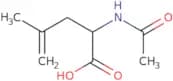
CAS:<p>Versatile small molecule scaffold</p>Formula:C9H12BrNPurity:Min. 95%Molecular weight:214.1 g/mol2-Acetamido-4-methylpent-4-enoic acid
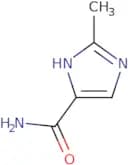
CAS:<p>Versatile small molecule scaffold</p>Formula:C8H13NO3Purity:Min. 95%Molecular weight:171.19 g/mol2-Methyl-1H-imidazole-4-carboxamide
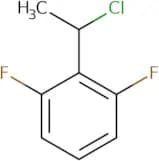
CAS:<p>Versatile small molecule scaffold</p>Formula:C5H7N3OPurity:Min. 95%Molecular weight:125.13 g/mol2-(1-Chloroethyl)-1,3-difluorobenzene
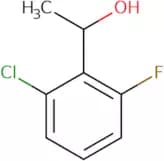
CAS:<p>Versatile small molecule scaffold</p>Formula:C8H7ClF2Purity:Min. 95%Molecular weight:176.59 g/mol1-(2-Chloro-6-fluorophenyl)ethan-1-ol
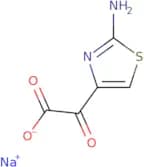
CAS:<p>Versatile small molecule scaffold</p>Formula:C8H8ClFOPurity:Min. 95%Molecular weight:174.6 g/molSodium 2-(2-amino-1,3-thiazol-4-yl)-2-oxoacetate
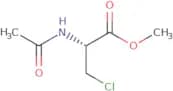
CAS:<p>Versatile small molecule scaffold</p>Formula:C5H3N2NaO3SPurity:Min. 95%Molecular weight:194.15 g/molD,L-N-Acetyl-²-chloroalanine Methyl Ester
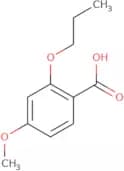
CAS:<p>Versatile small molecule scaffold</p>Formula:C6H10ClNO3Purity:Min. 95%Molecular weight:179.6 g/mol4-Methoxy-2-propoxybenzoic acid
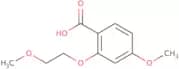
CAS:<p>Versatile small molecule scaffold</p>Formula:C11H14O4Purity:Min. 95%Molecular weight:210.23 g/mol4-Methoxy-2-(2-methoxyethoxy)benzoic acid
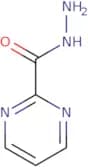
CAS:<p>Versatile small molecule scaffold</p>Formula:C11H14O5Purity:Min. 95%Molecular weight:226.23 g/molPyrimidine-2-carbohydrazide
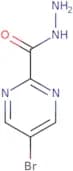
CAS:<p>Pyrimidine-2-carbohydrazide is a bioinorganic compound that has been shown to be active against bacteria, including staphylococcus. It is also effective against tuberculosis and leishmania. Pyrimidine-2-carbohydrazide binds to the bacterial cell membrane and inhibits its growth by preventing the synthesis of essential proteins. This drug's pharmacokinetic properties have been studied using techniques such as bioinorganic and electron paramagnetic resonance spectroscopy. The tetranuclear nature of pyrimidine-2-carbohydrazide makes it an excellent candidate for use with ciprofloxacin in the treatment of leishmaniasis.</p>Formula:C5H6N4OPurity:Min. 95%Molecular weight:138.13 g/mol5-Bromopyrimidine-2-carbohydrazide
CAS:<p>Versatile small molecule scaffold</p>Formula:C5H5BrN4OPurity:Min. 95%Molecular weight:217.02 g/mol
![[(1R,4R)-4-Phenylcyclohexyl]methanol](/_next/image/?url=https%3A%2Fstatic.cymitquimica.com%2Fproducts%2F3D%2Fthumb-webp%2FMDA07390.webp&w=3840&q=75)

![5,7-Dimethyl-2-phenylpyrazolo[1,5-a]pyrimidine](/_next/image/?url=https%3A%2Fstatic.cymitquimica.com%2Fproducts%2F3D%2Fthumb-webp%2FMDA11967.webp&w=3840&q=75)
![tert-Butyl 4-(2-oxo-2,3-dihydro-1H-benzo[d]imidazol-1-yl)piperidine-1-carboxylate](/_next/image/?url=https%3A%2Fstatic.cymitquimica.com%2Fproducts%2F3D%2Fthumb-webp%2FMDA12081.webp&w=3840&q=75)
![1-Oxa-spiro[4.5]decan-8-one](/_next/image/?url=https%3A%2Fstatic.cymitquimica.com%2Fproducts%2F3D%2Fthumb-webp%2FMDA15160.webp&w=3840&q=75)
![1-oxaspiro[4.5]decan-8-ol](/_next/image/?url=https%3A%2Fstatic.cymitquimica.com%2Fproducts%2F3D%2Fthumb-webp%2FMDA15162.webp&w=3840&q=75)
![2-[(tert-Butoxycarbonyl)amino]-3-(3-fluorophenyl)propanoic acid](/_next/image/?url=https%3A%2Fstatic.cymitquimica.com%2Fproducts%2F3D%2Fthumb-webp%2FMDA18423.webp&w=3840&q=75)
![4-Methyl-5-thia-2,7-diazatricyclo[6.4.0.0,2,6]dodeca-1(12),6,8,10-tetraene](/_next/image/?url=https%3A%2Fstatic.cymitquimica.com%2Fproducts%2F3D%2Fthumb-webp%2FMDA21579.webp&w=3840&q=75)
![Methyl 2-cyano-2-[(trimethylsilyl)oxy]acetate](/_next/image/?url=https%3A%2Fstatic.cymitquimica.com%2Fproducts%2F3D%2Fthumb-webp%2FMDA22369.webp&w=3840&q=75)
![5,7-Dimethyl-2-thioxo-1,3,4-thiadiazolo[3,2-a]pyrimidin-4-ium](/_next/image/?url=https%3A%2Fstatic.cymitquimica.com%2Fproducts%2F3D%2Fthumb-webp%2FMDA25383.webp&w=3840&q=75)
amine](/_next/image/?url=https%3A%2Fstatic.cymitquimica.com%2Fproducts%2F3D%2Fthumb-webp%2FMDA31044.webp&w=3840&q=75)