Building Blocks
This section contains fundamental products for the synthesis of organic and biological compounds. Building blocks are the essential starting materials used to construct complex molecules through various chemical reactions. They play a critical role in drug discovery, material science, and chemical research. At CymitQuimica, we offer a diverse range of high-quality building blocks to support your innovative research and industrial projects, ensuring you have the essential components for successful synthesis.
Subcategories of "Building Blocks"
- Boronic Acids & Boronic Acid Derivatives(5,756 products)
- Chiral Building Blocks(1,242 products)
- Hydrocarbon Building Blocks(6,095 products)
- Organic Building Blocks(61,037 products)
Found 196200 products of "Building Blocks"
Sort by
Purity (%)
0
100
|
0
|
50
|
90
|
95
|
100
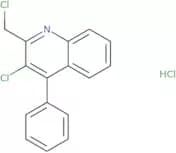
3-Chloro-2-(chloromethyl)-4-phenylquinoline hydrochloride
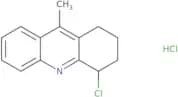
CAS:<p>Versatile small molecule scaffold</p>Formula:C16H12Cl3NPurity:Min. 95%Molecular weight:324.6 g/mol4-Chloro-9-methyl-1,2,3,4-tetrahydroacridine hydrochloride
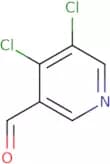
CAS:<p>Versatile small molecule scaffold</p>Formula:C14H15Cl2NPurity:Min. 95%Molecular weight:268.2 g/mol4,5-dichloropyridine-3-carbaldehyde
CAS:<p>Versatile small molecule scaffold</p>Formula:C6H3Cl2NOPurity:Min. 95%Molecular weight:176 g/mol4-Chloro-5-fluoro-3-pyridinecarbonitrile
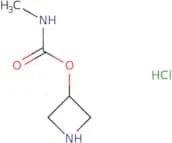
CAS:<p>Versatile small molecule scaffold</p>Formula:C6H2ClFN2Purity:Min. 95%Molecular weight:156.54 g/molAzetidin-3-yl N-methylcarbamate hydrochloride
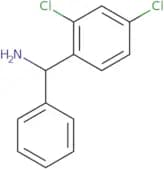
CAS:<p>Versatile small molecule scaffold</p>Formula:C5H11ClN2O2Purity:Min. 95%Molecular weight:166.6 g/mol(2,4-Dichlorophenyl)(phenyl)methanamine
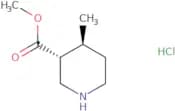
CAS:<p>Versatile small molecule scaffold</p>Formula:C13H11Cl2NPurity:Min. 95%Molecular weight:252.14 g/molmethyl (3R,4R)-rel-4-methylpiperidine-3-carboxylate hydrochloride
CAS:<p>Versatile small molecule scaffold</p>Formula:C8H16ClNO2Purity:Min. 95%Molecular weight:193.67 g/molMethyl 6-methylpiperidine-3-carboxylate hydrochloride
CAS:<p>Versatile small molecule scaffold</p>Formula:C8H15NO2·HClPurity:Min. 95%Molecular weight:193.67 g/molMethyl 3-Iodoimidazo[1,2-a]pyridine-7-carboxylate
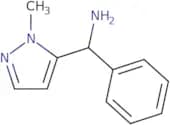
CAS:<p>Versatile small molecule scaffold</p>Formula:C9H7N2O2IPurity:Min. 95%Molecular weight:302.06 g/mol(1-Methyl-1H-pyrazol-5-yl)(phenyl)methanamine
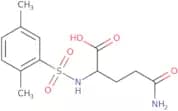
CAS:<p>Versatile small molecule scaffold</p>Formula:C11H13N3Purity:Min. 95%Molecular weight:187.24 g/mol4-Carbamoyl-2-(2,5-dimethylbenzenesulfonamido)butanoic acid
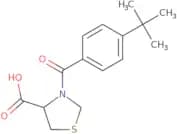
CAS:<p>Versatile small molecule scaffold</p>Formula:C13H18N2O5SPurity:Min. 95%Molecular weight:314.36 g/mol3-(4-tert-Butylbenzoyl)-1,3-thiazolidine-4-carboxylic acid
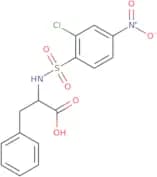
CAS:Controlled Product<p>3-(4-tert-Butylbenzoyl)-1,3-thiazolidine-4-carboxylic acid is a peptide that belongs to the group of inhibitors. It has been used as a research tool in Cell Biology, Ligand and Pharmacology. 3-(4-tert-Butylbenzoyl)-1,3-thiazolidine-4-carboxylic acid has also been shown to be an inhibitor of ion channels and receptors. This compound is a ligand for the beta 2 adrenergic receptor and can activate this receptor in vitro. The CAS number for 3-(4-tert-Butylbenzoyl)-1,3-thiazolidine-4-carboxylic acid is 1009534-13-7.</p>Formula:C15H19NO3SPurity:Min. 95%Molecular weight:293.4 g/mol2-(2-Chloro-4-nitrobenzenesulfonamido)-3-phenylpropanoic acid
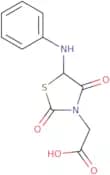
CAS:<p>Versatile small molecule scaffold</p>Formula:C15H13ClN2O6SPurity:Min. 95%Molecular weight:384.8 g/mol(5-Anilino-2,4-dioxo-1,3-thiazolidin-3-yl)acetic acid
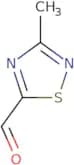
CAS:<p>Versatile small molecule scaffold</p>Formula:C11H10N2O4SPurity:Min. 95%Molecular weight:266.28 g/mol3-Methyl-1,2,4-thiadiazole-5-carbaldehyde
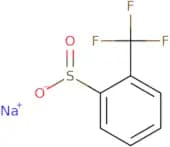
CAS:<p>Versatile small molecule scaffold</p>Formula:C4H4N2OSPurity:Min. 95%Molecular weight:128.15 g/molSodium 2-(trifluoromethyl)benzene-1-sulfinate
CAS:<p>Versatile small molecule scaffold</p>Formula:C7H4F3NaO2SPurity:Min. 95%Molecular weight:232.16 g/mol(1S,5R,6S)-Rel-8-[(tert-butoxy)carbonyl]-8-azabicyclo[3.2.1]octane-6-carboxylic acid
CAS:<p>Versatile small molecule scaffold</p>Formula:C13H21NO4Purity:Min. 95%Molecular weight:255.31 g/mol9-Fluoro-1H,2H,3H,4H,5H,6H-azepino[4,3-b]indol-1-one
CAS:<p>Versatile small molecule scaffold</p>Formula:C12H11FN2OPurity:Min. 95%Molecular weight:218.23 g/mol2-{Bicyclo[3.1.0]hexan-1-yl}acetic acid
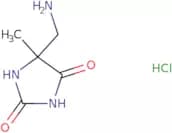
CAS:<p>Versatile small molecule scaffold</p>Formula:C8H12O2Purity:Min. 95%Molecular weight:140.2 g/mol5-(Aminomethyl)-5-methylimidazolidine-2,4-dione hydrochloride
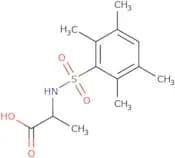
CAS:<p>Versatile small molecule scaffold</p>Formula:C5H10ClN3O2Purity:Min. 95%Molecular weight:179.6 g/mol2-(2,3,5,6-Tetramethylbenzenesulfonamido)propanoic acid
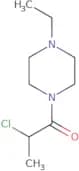
CAS:<p>Versatile small molecule scaffold</p>Formula:C13H19NO4SPurity:Min. 95%Molecular weight:285.36 g/mol2-Chloro-1-(4-ethylpiperazin-1-yl)propan-1-one
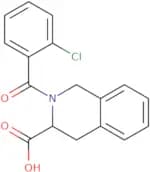
CAS:<p>Versatile small molecule scaffold</p>Formula:C9H17ClN2OPurity:Min. 95%Molecular weight:204.7 g/mol2-(2-Chlorobenzoyl)-1,2,3,4-tetrahydroisoquinoline-3-carboxylic acid
CAS:Controlled Product<p>2-(2-Chlorobenzoyl)-1,2,3,4-tetrahydroisoquinoline-3-carboxylic acid is a potent inhibitor of Ligand binding to Receptor. It has been shown to have a high affinity for the receptor and can be used as a research tool for ligand-receptor interactions. 2-(2-Chlorobenzoyl)-1,2,3,4-tetrahydroisoquinoline-3-carboxylic acid is also an inhibitor of ion channels.</p>Formula:C17H14ClNO3Purity:Min. 95%Molecular weight:315.7 g/molN-([4-(2-Chlorophenoxy)phenyl]sulfonyl)phenylalanine
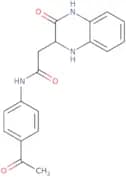
CAS:<p>Versatile small molecule scaffold</p>Formula:C21H18ClNO5SPurity:Min. 95%Molecular weight:431.9 g/molN-(4-Acetylphenyl)-2-(3-oxo-1,2,3,4-tetrahydroquinoxalin-2-yl)acetamide
CAS:<p>Versatile small molecule scaffold</p>Formula:C18H17N3O3Purity:Min. 95%Molecular weight:323.3 g/mol4-(Methylsulfanyl)-2-[3-(trifluoromethyl)benzenesulfonamido]butanoic acid
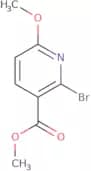
CAS:<p>Versatile small molecule scaffold</p>Formula:C12H14F3NO4S2Purity:Min. 95%Molecular weight:357.4 g/molMethyl 2-Bromo-6-methoxynicotinate
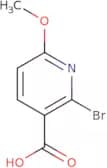
CAS:<p>Versatile small molecule scaffold</p>Formula:C8H8NO3BrPurity:Min. 95%Molecular weight:246.06 g/mol2-Bromo-6-methoxypyridine-3-carboxylic acid
CAS:<p>Versatile small molecule scaffold</p>Formula:C7H6BrNO3Purity:Min. 95%Molecular weight:232.03 g/moltert-Butyl N-[(N'-hydroxycarbamimidoyl)methyl]-N-methylcarbamate
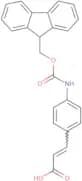
CAS:<p>Versatile small molecule scaffold</p>Formula:C8H17N3O3Purity:Min. 95%Molecular weight:203.24 g/molFmoc-4-aminocinnamic acid
CAS:<p>Versatile small molecule scaffold</p>Formula:C24H19NO4Purity:Min. 95%Molecular weight:385.4 g/mol6-Hydroxy-5-methyl-2-(pyridin-2-yl)-3,4-dihydropyrimidin-4-one
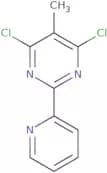
CAS:<p>Versatile small molecule scaffold</p>Formula:C10H9N3O2Purity:Min. 95%Molecular weight:203.2 g/mol4,6-Dichloro-5-methyl-2-(pyridin-2-yl)pyrimidine
CAS:<p>Versatile small molecule scaffold</p>Formula:C10H7Cl2N3Purity:Min. 95%Molecular weight:240.09 g/mol2-Bromo-4-phenylpyrimidine
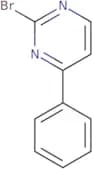
CAS:<p>2-Bromo-4-phenylpyrimidine is a nucleophilic reagent that has been used in the synthesis of heterocyclic compounds. It can act as a scavenger of unsaturated groups, and can be introduced into a molecule by an electrophilic substitution reaction. 2-Bromo-4-phenylpyrimidine is also able to deplete electron density from the heterocyclic ring, which leads to increased yields in reactions with electron deficient molecules such as water. The molecule undergoes oxidation when exposed to air, so it must be stored under nitrogen or argon gas.<br>2-Bromo-4-phenylpyrimidine is not soluble in water, but is soluble in organic solvents such as dichloromethane and chloroform. The compound has been used for optimizing electron deficiency in molecules such as 3,5-dimethoxybenzoic acid and 4-(trifluorometh</p>Formula:C10H7BrN2Purity:Min. 95%Molecular weight:235.08 g/mol1-Methyl-5-phenyl pyrazole-3-carboxylic acid
CAS:<p>Versatile small molecule scaffold</p>Formula:C11H10N2O2Purity:Min. 95%Molecular weight:202.21 g/mol5-Methyl-1-phenyl-1H-pyrazole-3-carboxylic acid
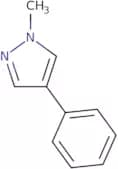
CAS:<p>Versatile small molecule scaffold</p>Formula:C11H10N2O2Purity:Min. 95%Molecular weight:202.21 g/mol1-Methyl-4-phenyl-1H-pyrazole
CAS:<p>1-Methyl-4-phenyl-1H-pyrazole is a regiospecific cross-coupling agent that reacts with alkenes to form pyrazoles. It is typically used in palladium-catalyzed cross-coupling reactions for the synthesis of 1,2,3-triazoles. Pyrazoles are also found as natural products in plants and animals and have been shown to be effective as anti-cancer drugs and against chronic viral infections. They are also involved in iron binding and have been shown to inhibit the activity of isomerases such as glucose 6 phosphate isomerase. 1Methyl-4-phenyl-1H-pyrazole is commercially available, but can be synthesized by reacting benzonitrile with styrene followed by allylation with ethylene or propylene oxide. The compound has been optimized for photocleavage, which makes it useful for generating azadiene derivatives.</p>Formula:C10H10N2Purity:Min. 95%Molecular weight:158.2 g/mol5-Methyl-6-(propan-2-yl)oxan-2-one
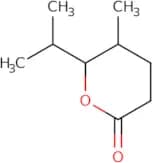
CAS:<p>Versatile small molecule scaffold</p>Formula:C9H16O2Purity:Min. 95%Molecular weight:156.22 g/molEthyl-4-methyl-3,5-oxazolecarboxylate
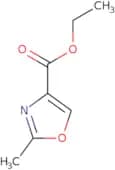
CAS:<p>Versatile small molecule scaffold</p>Formula:C7H9NO3Purity:Min. 95%Molecular weight:155.15 g/mol3-amino-3-methylbutan-2-one hydrochloride
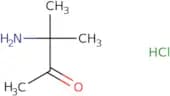
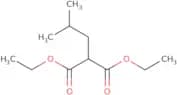
CAS:<p>Versatile small molecule scaffold</p>Formula:C5H12ClNOPurity:Min. 95%Molecular weight:137.61 g/molDiethyl Isobutylmalonate
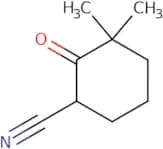
CAS:<p>Diethyl Isobutylmalonate is a solid catalyst that is used in the organic synthesis of ester compounds. This compound is an organometallic compound with a diethyl group bound to an iso-butyl group and malonic acid. The active methylene group of this molecule reacts with carboxylic acids, such as picolinic acid, to form esters. Diethyl Isobutylmalonate can be used with an acid catalyst to cross-link peptides. The hydroxyl group on the molecule can react with amine groups on proteins and also bind to aromatic hydrocarbons.</p>Formula:C11H20O4Purity:Min. 95%Molecular weight:216.27 g/mol3,3-Dimethyl-2-oxocyclohexane-1-carbonitrile
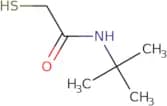
CAS:<p>Versatile small molecule scaffold</p>Formula:C9H13NOPurity:Min. 95%Molecular weight:151.21 g/molN-tert-Butyl-2-sulfanylacetamide
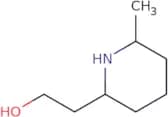
CAS:<p>Versatile small molecule scaffold</p>Formula:C6H13NOSPurity:Min. 95%Molecular weight:147.2 g/mol2-(6-Methylpiperidin-2-yl)ethan-1-ol
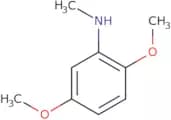
CAS:<p>Versatile small molecule scaffold</p>Formula:C8H17NOPurity:Min. 95%Molecular weight:143.23 g/mol2,5-Dimethoxy-N-methylaniline
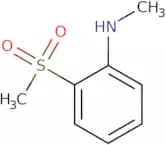
CAS:<p>Versatile small molecule scaffold</p>Formula:C9H13NO2Purity:Min. 95%Molecular weight:167.2 g/mol2-Methanesulfonyl-N-methylaniline
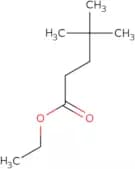
CAS:<p>Versatile small molecule scaffold</p>Formula:C8H11NO2SPurity:Min. 95%Molecular weight:185.25 g/molEthyl 4,4-dimethylpentanoate
CAS:<p>Versatile small molecule scaffold</p>Formula:C9H18O2Purity:Min. 95%Molecular weight:158.24 g/mol4-Phenylbut-3-yn-1-ol
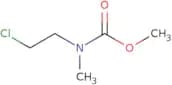
CAS:<p>4-Phenylbut-3-yn-1-ol is a chiral molecule with two stereogenic centers. It is an intermediate in the synthesis of indenes, which are used as pharmaceuticals and pesticides. 4-Phenylbut-3-yn-1-ol can be prepared by reacting diethyl etherate with acetaldehyde and malonate, or by reacting methylethylketone with ethylene oxide and carbon monoxide. The molecule has intramolecular hydrogen bonding due to the electron withdrawing effect of the carbonyl group on the adjacent phenyl ring. This allows for conformation changes that lead to catalytic activity.</p>Formula:C10H10OPurity:Min. 95%Molecular weight:146.19 g/molMethyl N-(2-chloroethyl)-N-methylcarbamate
CAS:<p>Versatile small molecule scaffold</p>Formula:C5H10ClNO2Purity:Min. 95%Molecular weight:151.59 g/mol3-(1,3-Dioxaindan-5-yl)prop-2-ynoic acid
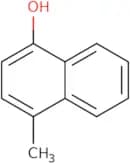
CAS:<p>Versatile small molecule scaffold</p>Formula:C10H6O4Purity:Min. 95%Molecular weight:190.15 g/mol4-Methylnaphthalen-1-ol
CAS:<p>4-Methylnaphthalen-1-ol is a binder that, when mixed with other organic materials, can be used to form a film. It can be used to bind many different types of sensitive material, including those that are heat-sensitive and cannot withstand high temperatures or those that are supercooled at low temperatures. 4-Methylnaphthalen-1-ol has been shown to react with alkylating agents such as diazo and naphthalenesulfonamide in the presence of iron catalyst and produce a high yield of products. These products have potential use in pharmaceuticals, plastics, rubber processing, and other industries.</p>Formula:C11H10OPurity:Min. 95%Molecular weight:158.2 g/mol



![Methyl 3-Iodoimidazo[1,2-a]pyridine-7-carboxylate](/_next/image/?url=https%3A%2Fstatic.cymitquimica.com%2Fproducts%2F3D%2Fthumb-webp%2FJQB37893.webp&w=3840&q=75)
![(1S,5R,6S)-Rel-8-[(tert-butoxy)carbonyl]-8-azabicyclo[3.2.1]octane-6-carboxylic acid](/_next/image/?url=https%3A%2Fstatic.cymitquimica.com%2Fproducts%2F3D%2Fthumb-webp%2FJQB62995.webp&w=3840&q=75)
![9-Fluoro-1H,2H,3H,4H,5H,6H-azepino[4,3-b]indol-1-one](/_next/image/?url=https%3A%2Fstatic.cymitquimica.com%2Fproducts%2F3D%2Fthumb-webp%2FJQB63114.webp&w=3840&q=75)
![2-{Bicyclo[3.1.0]hexan-1-yl}acetic acid](/_next/image/?url=https%3A%2Fstatic.cymitquimica.com%2Fproducts%2F3D%2Fthumb-webp%2FJQB63443.webp&w=3840&q=75)
![N-([4-(2-Chlorophenoxy)phenyl]sulfonyl)phenylalanine](/_next/image/?url=https%3A%2Fstatic.cymitquimica.com%2Fproducts%2F3D%2Fthumb-webp%2FJQB71573.webp&w=3840&q=75)
![4-(Methylsulfanyl)-2-[3-(trifluoromethyl)benzenesulfonamido]butanoic acid](/_next/image/?url=https%3A%2Fstatic.cymitquimica.com%2Fproducts%2F3D%2Fthumb-webp%2FJQB72955.webp&w=3840&q=75)
![tert-Butyl N-[(N'-hydroxycarbamimidoyl)methyl]-N-methylcarbamate](/_next/image/?url=https%3A%2Fstatic.cymitquimica.com%2Fproducts%2F3D%2Fthumb-webp%2FJQB79944.webp&w=3840&q=75)