Building Blocks
This section contains fundamental products for the synthesis of organic and biological compounds. Building blocks are the essential starting materials used to construct complex molecules through various chemical reactions. They play a critical role in drug discovery, material science, and chemical research. At CymitQuimica, we offer a diverse range of high-quality building blocks to support your innovative research and industrial projects, ensuring you have the essential components for successful synthesis.
Subcategories of "Building Blocks"
- Boronic Acids & Boronic Acid Derivatives(5,756 products)
- Chiral Building Blocks(1,242 products)
- Hydrocarbon Building Blocks(6,095 products)
- Organic Building Blocks(61,038 products)
Found 196817 products of "Building Blocks"
Sort by
Purity (%)
0
100
|
0
|
50
|
90
|
95
|
100
4-Sulfamoylcyclohexane-1-carboxylic acid
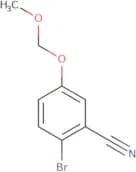
CAS:<p>Versatile small molecule scaffold</p>Formula:C7H13NO4SPurity:Min. 95%Molecular weight:207.25 g/mol2-Bromo-5-(methoxymethoxy)benzonitrile
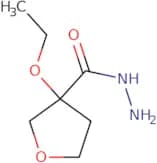
CAS:Versatile small molecule scaffoldFormula:C9H8BrNO2Purity:Min. 95%Molecular weight:242.07 g/mol3-Ethoxyoxolane-3-carbohydrazide
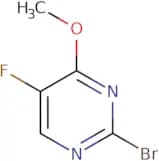
CAS:<p>Versatile small molecule scaffold</p>Formula:C7H14N2O3Purity:Min. 95%Molecular weight:174.2 g/mol2-Bromo-5-fluoro-4-methoxypyrimidine
CAS:<p>Versatile small molecule scaffold</p>Formula:C5H4BrFN2OPurity:Min. 95%Molecular weight:207 g/mol1-(2-Ethyl-5-methyl-2H-1,2,3-triazol-4-yl)ethan-1-one
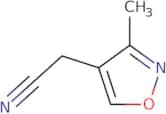
CAS:<p>Versatile small molecule scaffold</p>Formula:C7H11N3OPurity:Min. 95%Molecular weight:153.18 g/mol2-(3-Methyl-1,2-oxazol-4-yl)acetonitrile
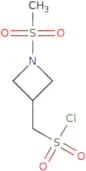
CAS:<p>Versatile small molecule scaffold</p>Formula:C6H6N2OPurity:Min. 95%Molecular weight:122.12 g/mol(1-Methanesulfonylazetidin-3-yl)methanesulfonyl chloride
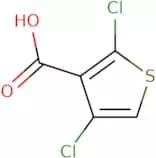
CAS:<p>Versatile small molecule scaffold</p>Formula:C5H10ClNO4S2Purity:Min. 95%Molecular weight:247.7 g/mol2,4-Dichlorothiophene-3-carboxylic acid
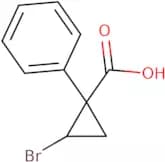
CAS:<p>Versatile small molecule scaffold</p>Formula:C5H2Cl2O2SPurity:Min. 95%Molecular weight:197.04 g/mol2-Bromo-1-phenylcyclopropane-1-carboxylic acid
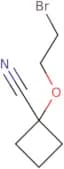
CAS:<p>Versatile small molecule scaffold</p>Formula:C10H9BrO2Purity:Min. 95%Molecular weight:241.08 g/mol1-(2-Bromoethoxy)cyclobutane-1-carbonitrile
CAS:<p>Versatile small molecule scaffold</p>Formula:C7H10BrNOPurity:Min. 95%Molecular weight:204.06 g/moltert-Butyl 7-oxa-2-azaspiro[3.5]nonane-2-carboxylate
CAS:<p>Versatile small molecule scaffold</p>Formula:C12H21NO3Purity:Min. 95%Molecular weight:227.3 g/mol2-Ethoxyethane-1-sulfonyl fluoride
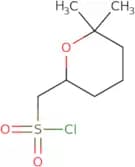
CAS:<p>2-Ethoxyethane-1-sulfonyl fluoride is a fluorinated electrophile. It reacts with electron-rich aromatic compounds to form new ring structures. 2-Ethoxyethane-1-sulfonyl fluoride is used in the synthesis of polyfluoroalkyl, reactive, and pyrrole containing compounds. This compound is also used to prepare n-substituted derivatives from electron rich aromatic compounds by cycloaddition reactions.</p>Formula:C4H9FO3SPurity:Min. 95%Molecular weight:156.18 g/mol(6,6-Dimethyloxan-2-yl)methanesulfonyl chloride
CAS:<p>Versatile small molecule scaffold</p>Formula:C8H15ClO3SPurity:Min. 95%Molecular weight:226.72 g/molMethyl 4-(bromomethyl)bicyclo[2.2.2]octane-1-carboxylate
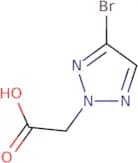
CAS:<p>Versatile small molecule scaffold</p>Formula:C11H17BrO2Purity:Min. 95%Molecular weight:261.15 g/mol2-(4-Bromo-2H-1,2,3-triazol-2-yl)acetic acid
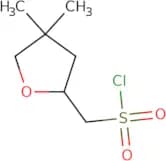
CAS:<p>Versatile small molecule scaffold</p>Formula:C4H4BrN3O2Purity:Min. 95%Molecular weight:206 g/mol(4,4-Dimethyloxolan-2-yl)methanesulfonyl chloride
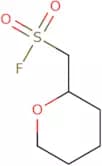
CAS:<p>Versatile small molecule scaffold</p>Formula:C7H13ClO3SPurity:Min. 95%Molecular weight:212.7 g/mol(Oxan-2-yl)methanesulfonyl fluoride
CAS:<p>Versatile small molecule scaffold</p>Formula:C6H11FO3SPurity:Min. 95%Molecular weight:182.22 g/mol1,5,7-Trimethylbicyclo[3.3.1]nonan-3-one
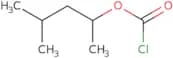
CAS:<p>Versatile small molecule scaffold</p>Formula:C12H20OPurity:Min. 95%Molecular weight:180.3 g/mol4-Methylpentan-2-yl chloroformate
CAS:<p>4-Methylpentan-2-yl chloroformate is an oxytocin antagonist and vasopressin agonist. It binds to oxytocin receptors, blocking the actions of this hormone. 4-Methylpentan-2-yl chloroformate has been used in a number of formulae.</p>Formula:C7H13ClO2Purity:Min. 95%Molecular weight:164.63 g/molEthyl 2-sulfanylbutanoate
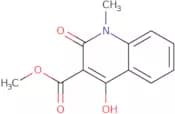
CAS:<p>Versatile small molecule scaffold</p>Formula:C6H12O2SPurity:Min. 95%Molecular weight:148.23 g/molMethyl 4-hydroxy-1-methyl-2-oxo-1,2-dihydroquinoline-3-carboxylate
CAS:<p>Versatile small molecule scaffold</p>Formula:C12H11NO4Purity:Min. 95%Molecular weight:233.22 g/molEthyl 7-hydroxy-5-oxo-2,3-dihydro-1H,5H-pyrido[3,2,1-ij]quinoline-6-carboxylate
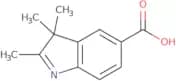
CAS:<p>Ethyl 7-hydroxy-5-oxo-2,3-dihydro-1H,5H-pyrido[3,2,1-ij]quinoline-6-carboxylate (EHTQ) is a structural analog of pyridorin A. It has been shown to have antitubercular activity in vitro and in vivo. EHTQ inhibits the growth of Mycobacterium tuberculosis by inhibiting bacterial DNA synthesis.</p>Formula:C15H15NO4Purity:Min. 95%Molecular weight:273.28 g/mol2,3,3-Trimethyl-5-carboxyindolenine
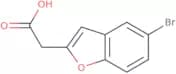
CAS:<p>2,3,3-Trimethyl-5-carboxyindolenine (TMCI) is a fluorescent probe that can be used for the detection of hypoxic tumor tissue. It is a fluorimetric compound that reacts with nucleophilic sites on proteins and other functional groups to form conjugates. TMCI has been shown to react with cyanines, fluoroalkyl esters, and other compounds bearing electron-donating substituents. The optimum concentration of TMCI is between 0.1 and 1 mM in PBS buffer at pH 7.4 at 37°C. This probe is also sensitive to changes in its environment such as pH or temperature. TMCI has been shown to react with 2-nitroimidazole and unsymmetrical indolsium complexes, which are used as optical sensors for oxygen concentration measurements.</p>Formula:C12H13NO2Purity:Min. 95%Molecular weight:203.24 g/mol(5-Bromobenzofuran-2-yl)acetic acid
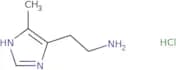
CAS:<p>Versatile small molecule scaffold</p>Formula:C10H7BrO3Purity:Min. 95%Molecular weight:255.06 g/mol2-(5-Methyl-1H-imidazol-4-yl)ethan-1-amine hydrochloride
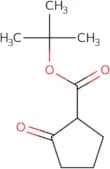
CAS:<p>Versatile small molecule scaffold</p>Formula:C6H12ClN3Purity:Min. 95%Molecular weight:161.63 g/moltert-Butyl 2-Oxocyclopentanecarboxylate
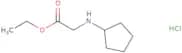
CAS:<p>tert-Butyl 2-oxocyclopentanecarboxylate (BocOcP) is a congener that has been extensively used in palladium-catalyzed asymmetric synthesis. BocOcP is an organocatalyst that can be used to activate electrophiles and nucleophiles. It has also been used in the formation of phosphonium salts and ligands. BocOcP is enantiopure, which means it has a high stereoselectivity in its reactivity. This strategy allows for the production of high-quality compounds. For example, BocOcP can be used to make imidazoles with a high degree of purity.</p>Formula:C10H16O3Purity:Min. 95%Molecular weight:184.23 g/molN-Cyclopentyl-amino-acetic acid ethyl ester HCl
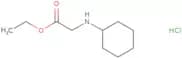
CAS:<p>N-Cyclopentyl-amino-acetic acid ethyl ester HCl is a prophylactic antiviral drug that blocks the synthesis of viral nucleic acids. It prevents the phosphoramidate from binding to the enzyme, preventing production of the antiviral nucleoside. N-Cyclopentyl-amino-acetic acid ethyl ester HCl is used for the treatment and prophylaxis of hepatitis B virus infections. The drug does not inhibit any other type of viral or cellular RNA synthesis, but it inhibits all types of DNA synthesis in cells infected with hepatitis.</p>Formula:C9H18ClNO2Purity:Min. 95%Molecular weight:207.7 g/molEthyl 2-(cyclohexylamino)acetate hydrochloride
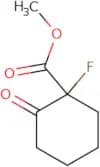
CAS:<p>Versatile small molecule scaffold</p>Formula:C10H20ClNO2Purity:Min. 95%Molecular weight:221.72 g/molMethyl 1-fluoro-2-oxocyclohexane-1-carboxylate
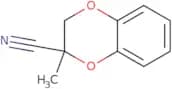
CAS:<p>Versatile small molecule scaffold</p>Formula:C8H11FO3Purity:Min. 95%Molecular weight:174.17 g/mol2-Methyl-2,3-dihydro-1,4-benzodioxine-2-carbonitrile
CAS:<p>Versatile small molecule scaffold</p>Formula:C10H9NO2Purity:Min. 95%Molecular weight:175.18 g/mol3a,4,5,6,7,7a-Hexahydro-1,3-benzothiazol-2-amine
CAS:<p>Versatile small molecule scaffold</p>Formula:C7H12N2SPurity:Min. 95%Molecular weight:156.2 g/mol3-[(2-Methylpropyl)sulfanyl]propan-1-amine
CAS:<p>Versatile small molecule scaffold</p>Formula:C7H17NSPurity:Min. 95%Molecular weight:147.28 g/mol(7-Chloroquinolin-8-yl)methanol
CAS:<p>Versatile small molecule scaffold</p>Formula:C10H8ClNOPurity:Min. 95%Molecular weight:193.63 g/mol[3-(Dimethylamino)propyl](2-methoxyethyl)amine
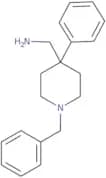
CAS:<p>Versatile small molecule scaffold</p>Formula:C8H20N2OPurity:Min. 95%Molecular weight:160.26 g/mol(1-Benzyl-4-phenylpiperidin-4-yl)methanamine
CAS:<p>Versatile small molecule scaffold</p>Formula:C19H24N2Purity:Min. 95%Molecular weight:280.41 g/molrac-(1S,3S)-3-Aminocyclobutane-1-carboxamide hydrochloride
CAS:<p>Versatile small molecule scaffold</p>Formula:C5H11ClN2OPurity:Min. 95%Molecular weight:150.61 g/moltrans-3-Aminocyclobutanecarboxylic acid hydrochloride
CAS:<p>Versatile small molecule scaffold</p>Formula:C5H10ClNO2Purity:Min. 95%Molecular weight:151.59 g/mol3-[4-(Benzyloxy)phenyl]prop-2-enal
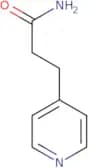
CAS:<p>Versatile small molecule scaffold</p>Formula:C16H14O2Purity:Min. 95%Molecular weight:238.28 g/mol3-(4-Pyridyl)propanamide
CAS:<p>Versatile small molecule scaffold</p>Formula:C8H10N2OPurity:Min. 95%Molecular weight:150.18 g/mol2-Iodoprop-2-en-1-ol
CAS:<p>Versatile small molecule scaffold</p>Formula:C3H5IOPurity:Min. 95%Molecular weight:183.98 g/molMethyl-(4-methylsulfanyl-benzyl)-amine
CAS:<p>Versatile small molecule scaffold</p>Formula:C9H13NSPurity:Min. 95%Molecular weight:167.27 g/mol[4-(Phenylsulfanyl)phenyl]methanamine
CAS:<p>Versatile small molecule scaffold</p>Formula:C13H13NSPurity:Min. 95%Molecular weight:215.32 g/mol4-Hydroxy-2-methoxybenzonitrile
CAS:<p>Versatile small molecule scaffold</p>Formula:C8H7NO2Purity:Min. 95%Molecular weight:149.15 g/mol{2-[(Diethylamino)methyl]phenyl}methanamine
CAS:<p>Versatile small molecule scaffold</p>Formula:C12H20N2Purity:Min. 95%Molecular weight:192.3 g/mol{4-[(Diethylamino)methyl]phenyl}methanamine
CAS:<p>Versatile small molecule scaffold</p>Formula:C12H20N2Purity:Min. 95%Molecular weight:192.3 g/mol1-Oxa-4,9-diazaspiro[5.5]undecan-3-one
CAS:<p>1-Oxa-4,9-diazaspiro[5.5]undecan-3-one is a monoamine inhibitor that has been shown to be an effective treatment for disease conditions such as Parkinson's disease. It inhibits the activity of monoamine oxidase (MAO) and prevents it from breaking down monoamines in the brain. MAO inhibitors have been shown to be effective in treating Parkinson's disease by restoring the balance of neurotransmitters in the brain. 1-Oxa-4,9-diazaspiro[5.5]undecan-3-one is also capable of binding to other receptors involved in modulating neuronal activity, such as serotonin and dopamine receptors.</p>Formula:C8H14N2O2Purity:Min. 95%Molecular weight:170.21 g/mol2-Ethyl-1H-imidazole-4-carboxylic acid
CAS:<p>2-Ethyl-1H-imidazole-4-carboxylic acid is a weak organic acid that is commonly used as an acid catalyst in pharmaceutical formulations. This compound is also used to produce hippuric acid, which is a preservative. The ionization of 2-ethyl-1H-imidazole-4-carboxylic acid depends on its pH. At acidic pH, it has a positive charge and at a neutral pH it has no charge. 2-Ethyl-1H-imidazole-4-carboxylic acid is also an anion at acidic pH and can form complexes with other anions such as citric or phosphoric acids. The functional theory for the formation of these complexes suggest that the carboxyl group coordinates with hydrogen atoms from the other anions, forming covalent bonds.</p>Formula:C6H8N2O2Purity:Min. 95%Molecular weight:140.14 g/mol2,4-Dimethylquinolin-6-amine
CAS:<p>Versatile small molecule scaffold</p>Formula:C11H12N2Purity:Min. 95%Molecular weight:172.23 g/mol1-(4-Formylphenoxy)-N,N-dimethylmethanethioamide
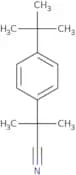
CAS:<p>Versatile small molecule scaffold</p>Formula:C10H11NO2SPurity:Min. 95%Molecular weight:209.27 g/mol2-(4-tert-Butylphenyl)-2-methylpropanenitrile
CAS:<p>Versatile small molecule scaffold</p>Formula:C14H19NPurity:Min. 95%Molecular weight:201.3 g/mol



![tert-Butyl 7-oxa-2-azaspiro[3.5]nonane-2-carboxylate](/_next/image/?url=https%3A%2Fstatic.cymitquimica.com%2Fproducts%2F3D%2Fthumb-webp%2FJCD95079.webp&w=3840&q=75)

![Methyl 4-(bromomethyl)bicyclo[2.2.2]octane-1-carboxylate](/_next/image/?url=https%3A%2Fstatic.cymitquimica.com%2Fproducts%2F3D%2Fthumb-webp%2FJCD96273.webp&w=3840&q=75)
![1,5,7-Trimethylbicyclo[3.3.1]nonan-3-one](/_next/image/?url=https%3A%2Fstatic.cymitquimica.com%2Fproducts%2F3D%2Fthumb-webp%2FJCD98287.webp&w=3840&q=75)

![Ethyl 7-hydroxy-5-oxo-2,3-dihydro-1H,5H-pyrido[3,2,1-ij]quinoline-6-carboxylate](/_next/image/?url=https%3A%2Fstatic.cymitquimica.com%2Fproducts%2F3D%2Fthumb-webp%2FJDA08884.webp&w=3840&q=75)

![3-[(2-Methylpropyl)sulfanyl]propan-1-amine](/_next/image/?url=https%3A%2Fstatic.cymitquimica.com%2Fproducts%2F3D%2Fthumb-webp%2FJDA15546.webp&w=3840&q=75)

amine](/_next/image/?url=https%3A%2Fstatic.cymitquimica.com%2Fproducts%2F3D%2Fthumb-webp%2FJDA17668.webp&w=3840&q=75)


![3-[4-(Benzyloxy)phenyl]prop-2-enal](/_next/image/?url=https%3A%2Fstatic.cymitquimica.com%2Fproducts%2F3D%2Fthumb-webp%2FJDA18453.webp&w=3840&q=75)


![[4-(Phenylsulfanyl)phenyl]methanamine](/_next/image/?url=https%3A%2Fstatic.cymitquimica.com%2Fproducts%2F3D%2Fthumb-webp%2FJDA21205.webp&w=3840&q=75)

![{2-[(Diethylamino)methyl]phenyl}methanamine](/_next/image/?url=https%3A%2Fstatic.cymitquimica.com%2Fproducts%2F3D%2Fthumb-webp%2FJDA22768.webp&w=3840&q=75)
![{4-[(Diethylamino)methyl]phenyl}methanamine](/_next/image/?url=https%3A%2Fstatic.cymitquimica.com%2Fproducts%2F3D%2Fthumb-webp%2FJDA22770.webp&w=3840&q=75)
![1-Oxa-4,9-diazaspiro[5.5]undecan-3-one](/_next/image/?url=https%3A%2Fstatic.cymitquimica.com%2Fproducts%2F3D%2Fthumb-webp%2FJDA24325.webp&w=3840&q=75)