Building Blocks
This section contains fundamental products for the synthesis of organic and biological compounds. Building blocks are the essential starting materials used to construct complex molecules through various chemical reactions. They play a critical role in drug discovery, material science, and chemical research. At CymitQuimica, we offer a diverse range of high-quality building blocks to support your innovative research and industrial projects, ensuring you have the essential components for successful synthesis.
Subcategories of "Building Blocks"
- Boronic Acids & Boronic Acid Derivatives(5,756 products)
- Chiral Building Blocks(1,242 products)
- Hydrocarbon Building Blocks(6,095 products)
- Organic Building Blocks(61,038 products)
Found 196817 products of "Building Blocks"
Sort by
Purity (%)
0
100
|
0
|
50
|
90
|
95
|
100
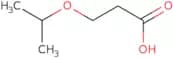
3-(Propan-2-yloxy)propanoic acid
CAS:<p>Versatile small molecule scaffold</p>Formula:C6H12O3Purity:Min. 95%Molecular weight:132.16 g/mol1-[(2-Chloroethyl)sulfanyl]pentane
CAS:<p>Versatile small molecule scaffold</p>Formula:C7H15ClSPurity:Min. 95%Molecular weight:166.71 g/mol1-Methyl-3-[(4-methylphenyl)amino]pyrrolidine-2,5-dione
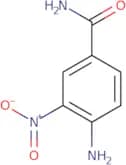
CAS:<p>Versatile small molecule scaffold</p>Formula:C12H14N2O2Purity:Min. 95%Molecular weight:218.25 g/mol4-amino-3-nitrobenzamide
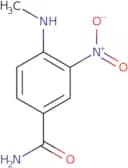
CAS:<p>Versatile small molecule scaffold</p>Formula:C7H7N3O3Purity:Min. 95%Molecular weight:181.15 g/mol4-(Methylamino)-3-nitrobenzamide
CAS:<p>4-(Methylamino)-3-nitrobenzamide is a chemical compound that is synthesized by the reaction of methylamine with sodium chloride in the presence of thionyl chloride. The yield of this product is high and it can be used as a precursor for other compounds, such as pharmaceuticals.</p>Formula:C8H9N3O3Purity:Min. 95%Molecular weight:195.18 g/molN-Methyl-4-(methylao)-3-nitrobenzamide
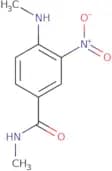
CAS:<p>N-Methyl-4-(methylao)-3-nitrobenzamide is a thionyl chloride derivative that is produced by reacting with methylamine and nitrobenzoyl chloride. It is a synthetic compound that has been used in the synthesis of other organic compounds. The product yield can be increased by reacting the reagents under higher temperature conditions.</p>Formula:C9H11N3O3Purity:Min. 95%Molecular weight:209.2 g/mol(5,7-Dimethyl-[1,2,4]triazolo[4,3-a]pyrimidin-3-ylsulfanyl)-acetic acid
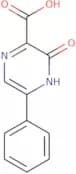
CAS:<p>Versatile small molecule scaffold</p>Formula:C9H10N4O2SPurity:Min. 95%Molecular weight:238.27 g/mol3-Hydroxy-5-phenylpyrazine-2-carboxylic acid
CAS:<p>Versatile small molecule scaffold</p>Formula:C11H8N2O3Purity:Min. 95%Molecular weight:216.19 g/mol2-Chloro-6-phenylpyrazine
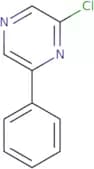
CAS:<p>2-Chloro-6-phenylpyrazine is an organic compound with the formula (C6H5)2ClN. It is a palladium catalyst, used in cross-coupling reactions. It reacts with aryl halides and amides to give substituted pyridines. The reaction mechanism involves initial formation of an arene palladacycle that undergoes nucleophilic attack by the nucleophile, followed by elimination of chloride, to give the product amide. 2-Chloro-6-phenylpyrazine is also a starting material for the synthesis of heterocycles such as pyrazoles and pyridazines, which play important roles in pharmaceuticals and agrochemicals.</p>Formula:C10H7ClN2Purity:Min. 95%Molecular weight:190.63 g/mol2-Chloro-5,6-diphenylpyrazine
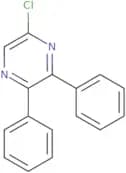
CAS:<p>2-Chloro-5,6-diphenylpyrazine is a potent, selective inhibitor of the prostacyclin receptor (IP). The IC50 is 0.3 μM and it has a Ki value of 4.1 μM. 2-Chloro-5,6-diphenylpyrazine has been shown to inhibit cancer cell proliferation in vitro and in vivo. It inhibits the growth of colon cancer cells HCT116 with an IC50 of 5 μM when used at a concentration of 10 μM or higher. 2-Chloro-5,6-diphenylpyrazine also inhibits the growth of prostate cancer cells PC3 with an IC50 of 7 μM when used at a concentration of 10 μM or higher.</p>Formula:C16H11ClN2Purity:Min. 95%Molecular weight:266.72 g/mol3-Phenylpyrazin-2-amine
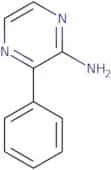
CAS:<p>3-Phenylpyrazin-2-amine is a synthetic compound that has been used in a variety of techniques, such as chromatographic separations and nucleophilic attack. It can be synthesized by dehydrogenative coupling of an aldehyde with an amide. The compound can also be synthesized from 3-phenylpyrazine-2-carboxylic acid and ammonia in the presence of sulfuric acid. The synthesis of 3-phenylpyrazin-2-amine can also be achieved by the reaction of phenylhydrazine with formamide or acetaldehyde. 3-Phenylpyrazin-2-amine has been studied for its receptor binding and was found to bind to dopamine receptors in the bovine serum albumin (BSA). This compound is orally active and effective at doses below 100mg/kg body weight.</p>Formula:C10H9N3Purity:Min. 95%Molecular weight:171.2 g/mol2-Bromo-4-tert-butyl-1-methoxybenzene
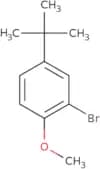
CAS:<p>Versatile small molecule scaffold</p>Formula:C11H15BrOPurity:Min. 95%Molecular weight:243.14 g/mol5-Azido-2-chloropyridine
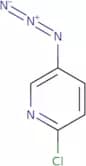
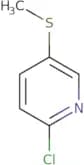
CAS:<p>Versatile small molecule scaffold</p>Formula:C5H3ClN4Purity:Min. 95%Molecular weight:154.56 g/mol2-Chloro-5-(methylthio)pyridine
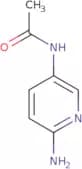
CAS:<p>Versatile small molecule scaffold</p>Formula:C6H6ClNSPurity:Min. 95%Molecular weight:159.64 g/molN-(6-Aminopyridin-3-yl)acetamide
CAS:<p>Versatile small molecule scaffold</p>Formula:C7H9N3OPurity:Min. 95%Molecular weight:151.17 g/mol4-Chloromethyl-7-methoxy-chromen-2-one
CAS:<p>4-Chloromethyl-7-methoxy-chromen-2-one is a chemical compound that is used as a crosslinker in the chemosensor toolkit. It is used to identify aziridinium ions, which are produced by the reaction of picric acid with nucleophiles such as amines. 4-Chloromethyl-7-methoxy-chromen-2-one has been shown to be an effective treatment for inflammatory diseases and neutrophil function. This molecule also has coumarin derivatives that can be used for the treatment of cancer and other diseases.</p>Formula:C11H9ClO3Purity:Min. 95%Molecular weight:224.64 g/mol4-(Chloromethyl)-7,8-dimethyl-2H-chromen-2-one
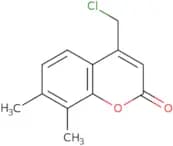
CAS:<p>Versatile small molecule scaffold</p>Formula:C12H11ClO2Purity:Min. 95%Molecular weight:222.67 g/mol1-(Chloromethyl)-3H-benzo[f]chromen-3-one
CAS:<p>Versatile small molecule scaffold</p>Formula:C14H9ClO2Purity:Min. 95%Molecular weight:244.67 g/mol2-[(2Z)-3-Methyl-2-(methylimino)-4-oxo-1,3-thiazolidin-5-yl]acetic acid
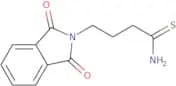
CAS:<p>Versatile small molecule scaffold</p>Formula:C7H10N2O3SPurity:Min. 95%Molecular weight:202.23 g/mol4-(1,3-Dioxo-2,3-dihydro-1H-isoindol-2-yl)butanethioamide
CAS:<p>Versatile small molecule scaffold</p>Formula:C12H12N2O2SPurity:Min. 95%Molecular weight:248.3 g/mol[Diphenyl(sulfanylidene)-λ5-phosphanyl]hydrazine
CAS:<p>Versatile small molecule scaffold</p>Formula:C12H13N2PSPurity:Min. 95%Molecular weight:248.29 g/molpiperazine-1-carboxylic acid dimethylamide
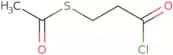
CAS:<p>Piperazine-1-carboxylic acid dimethylamide (PCA) is a 6-membered nitrogen heterocycle that belongs to the group of benzene, furan, and morpholine derivatives. It is an anti-inflammatory agent that blocks the H3 receptor in the central nervous system. PCA has been shown to inhibit abnormal cell growth in cancer cells. PCA inhibits histamine release from mast cells and thiomorpholine release from macrophages, which may be due to its ability to block the H3 receptor.</p>Formula:C7H15N3OPurity:Min. 95%Molecular weight:157.21 g/mol3-(Acetylsulfanyl)propanoyl chloride
CAS:<p>3-Acetylsulfanylpropanoyl chloride is a pharmaceutical intermediate used to synthesize other compounds. This compound is used in the deacetylation of 3-hydroxypropionate and acylation with various alcohols. It can also be used in the synthesis of sulfonyl chlorides, which are often used as building blocks for organic synthesis.</p>Formula:C5H7ClO2SPurity:Min. 95%Molecular weight:166.63 g/mol1-Ethyl-4-isocyanatocyclohexane
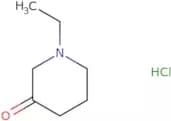
CAS:<p>Versatile small molecule scaffold</p>Formula:C9H15NOPurity:Min. 95%Molecular weight:153.2 g/mol1-Ethyl-3-piperidone hydrochloride
CAS:<p>Versatile small molecule scaffold</p>Formula:C7H13NO·HClPurity:Min. 95%Molecular weight:163.65 g/mol3,3-Diethoxypropanamide
CAS:<p>Versatile small molecule scaffold</p>Formula:C7H15NO3Purity:Min. 95%Molecular weight:161.2 g/mol2-Oxoimidazolidine-4-carboxylic acid
CAS:<p>2-Oxoimidazolidine-4-carboxylic acid is an inhibitor of matrix metalloproteinases. It inhibits the activity of these enzymes by binding to the zinc ion, which is necessary for the enzyme's activity. 2-Oxoimidazolidine-4-carboxylic acid has been shown to inhibit ulceration in rats, and it has also been shown to decrease expression of glutamate receptors in mice. This drug also inhibits amino acid transport by competing with amino acids for transport across the blood brain barrier and binds to serine protease, which prevents proteolytic degradation of proteins in the extracellular matrix. 2-Oxoimidazolidine-4-carboxylic acid also inhibits acid transport and cancer cell proliferation.</p>Formula:C4H6N2O3Purity:Min. 95%Molecular weight:130.1 g/mol1H-Pyrazolo[4,3-c]pyridin-4-ol
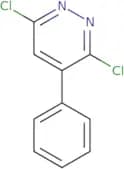
CAS:<p>1H-Pyrazolo[4,3-c]pyridin-4-ol is an allosteric site activator of the metabotropic glutamate receptor (mGluR). It has potent anti-inflammatory effects in animal models and is currently being developed for the treatment of human diseases. The 1H pyrazolo[4,3-c]pyridin-4-ol compound binds at a site on the mGluR where there are no other ligands and it does not activate the receptor through any other mechanism. It has shown efficacy in preclinical studies for treating neuropathic pain and inflammatory bowel disease. No adverse effects were observed in clinical development.</p>Formula:C6H5N3OPurity:Min. 95%Molecular weight:135.13 g/mol3,6-Dichloro-4-phenylpyridazine
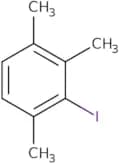
CAS:<p>Versatile small molecule scaffold</p>Formula:C10H6Cl2N2Purity:Min. 95%Molecular weight:225.07 g/mol2-Iodo-1,3,4-trimethylbenzene
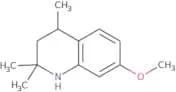
CAS:<p>Versatile small molecule scaffold</p>Formula:C9H11IPurity:Min. 95%Molecular weight:246.09 g/mol7-Methoxy-2,2,4-trimethyl-1,2,3,4-tetrahydroquinoline
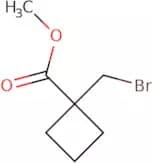
CAS:<p>Versatile small molecule scaffold</p>Formula:C13H19NOPurity:Min. 95%Molecular weight:205.3 g/molMethyl 1-(bromomethyl)cyclobutane-1-carboxylate
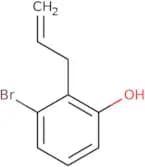
CAS:<p>Versatile small molecule scaffold</p>Formula:C7H11BrO2Purity:Min. 95%Molecular weight:207.06 g/mol3-Bromo-2-(prop-2-en-1-yl)phenol
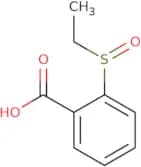
CAS:<p>Versatile small molecule scaffold</p>Formula:C9H9BrOPurity:Min. 95%Molecular weight:213.07 g/mol2-(Ethanesulfinyl)benzoic acid
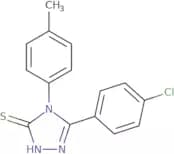
CAS:<p>Versatile small molecule scaffold</p>Formula:C9H10O3SPurity:Min. 95%Molecular weight:198.24 g/mol5-(4-Chlorophenyl)-4-(4-methylphenyl)-4H-1,2,4-triazole-3-thiol
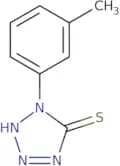
CAS:<p>Versatile small molecule scaffold</p>Formula:C15H12ClN3SPurity:Min. 95%Molecular weight:301.8 g/mol1-(3-Methylphenyl)-1H-1,2,3,4-tetrazole-5-thiol
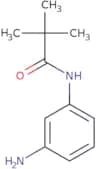
CAS:<p>Versatile small molecule scaffold</p>Formula:C8H8N4SPurity:Min. 95%Molecular weight:192.24 g/molN-(3-Aminophenyl)-2,2-dimethylpropanamide
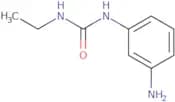
CAS:<p>Versatile small molecule scaffold</p>Formula:C11H16N2OPurity:Min. 95%Molecular weight:192.26 g/mol1-(3-Aminophenyl)-3-ethylurea
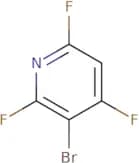
CAS:<p>Versatile small molecule scaffold</p>Formula:C9H13N3OPurity:Min. 95%Molecular weight:179.22 g/mol3-Bromo-2,4,6-trifluoropyridine
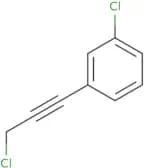
CAS:<p>Versatile small molecule scaffold</p>Formula:C5HBrF3NPurity:Min. 95%Molecular weight:211.97 g/mol1-Chloro-3-(3-chloroprop-1-yn-1-yl)benzene
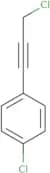
CAS:<p>Versatile small molecule scaffold</p>Formula:C9H6Cl2Purity:Min. 95%Molecular weight:185.05 g/mol1-Chloro-4-(3-chloroprop-1-yn-1-yl)benzene
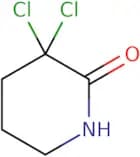
CAS:<p>Versatile small molecule scaffold</p>Formula:C9H6Cl2Purity:Min. 95%Molecular weight:185.05 g/mol3,3-Dichloropiperidin-2-one
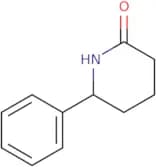
CAS:<p>Versatile small molecule scaffold</p>Formula:C5H7Cl2NOPurity:Min. 95%Molecular weight:168.02 g/mol6-Phenylpiperidin-2-one
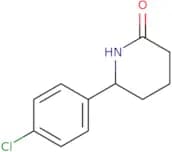
CAS:<p>Versatile small molecule scaffold</p>Formula:C11H13NOPurity:Min. 95%Molecular weight:175.23 g/mol6-(4-Chlorophenyl)piperidin-2-one
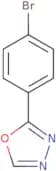
CAS:<p>Versatile small molecule scaffold</p>Formula:C11H12ClNOPurity:Min. 95%Molecular weight:209.67 g/mol2-(4-Bromophenyl)-1,3,4-oxadiazole
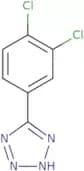
CAS:<p>The present invention relates to a method of fabricating an electrochemical device. The method comprises providing a substrate, depositing on the substrate a polymer matrix comprising poly(ethylene oxide) and 2-(4-bromophenyl)-1,3,4-oxadiazole monomers, and thermally treating the deposited polymer matrix. The device can be used in voltammetry techniques and has optical properties that are marginally affected by the presence of the 2-(4-bromophenyl)-1,3,4-oxadiazole monomers.</p>Formula:C8H5BrN2OPurity:Min. 95%Molecular weight:225.04 g/mol5-(3,4-Dichlorophenyl)-1H-tetrazole
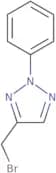
CAS:<p>Versatile small molecule scaffold</p>Formula:C7H4Cl2N4Purity:Min. 95%Molecular weight:215.04 g/mol4-(Bromomethyl)-2-phenyl-2H-1,2,3-triazole
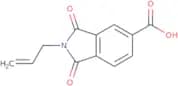
CAS:<p>4-(Bromomethyl)-2-phenyl-2H-1,2,3-triazole (BPT) is a trifluoromethyl sulfone that is stabilized by intramolecular hydrogen bonds. It reacts with amines to form the corresponding sulfones. BPT undergoes an intramolecular hydrogen bond with chloride to form the corresponding sulfonyl chloride. BPT also reacts with sodium trifluoromethanesulfinate to form the corresponding sodium salt.</p>Formula:C9H8BrN3Purity:Min. 95%Molecular weight:238.08 g/mol1,3-Dioxo-2-(prop-2-en-1-yl)-2,3-dihydro-1H-isoindole-5-carboxylic acid
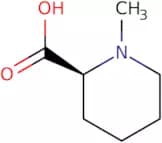
CAS:<p>Versatile small molecule scaffold</p>Formula:C12H9NO4Purity:Min. 95%Molecular weight:231.2 g/mol(S)-1-Methylpiperidine-2-carboxylic acid
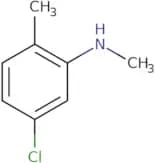
CAS:<p>(S)-1-Methylpiperidine-2-carboxylic acid is an antibiotic that inhibits the growth of bacteria by binding to bacterial ribosomes. It has been shown to have antitumor effects in mice and has been found to be effective against Escherichia coli, methicillin-resistant Staphylococcus aureus, and Mycobacterium tuberculosis. (S)-1-Methylpiperidine-2-carboxylic acid has also shown antibacterial activity in cell culture experiments. This drug binds to the P site of the ribosome, which blocks the binding site for aminoacyl tRNA, preventing protein synthesis. The protonation state of (S)-1-methylpiperidine-2-carboxylic acid is important for its antibacterial activity because it affects its ability to bind to the ribosome. (S)-1-Methylpiperidine-2-carboxy</p>Formula:C7H13NO2Purity:Min. 95%Molecular weight:143.18 g/mol5-Chloro-N,2-dimethylaniline
CAS:<p>Versatile small molecule scaffold</p>Formula:C8H10ClNPurity:Min. 95%Molecular weight:155.62 g/mol

![1-[(2-Chloroethyl)sulfanyl]pentane](/_next/image/?url=https%3A%2Fstatic.cymitquimica.com%2Fproducts%2F3D%2Fthumb-webp%2FRBA25614.webp&w=3840&q=75)
![1-Methyl-3-[(4-methylphenyl)amino]pyrrolidine-2,5-dione](/_next/image/?url=https%3A%2Fstatic.cymitquimica.com%2Fproducts%2F3D%2Fthumb-webp%2FRBA26054.webp&w=3840&q=75)
![(5,7-Dimethyl-[1,2,4]triazolo[4,3-a]pyrimidin-3-ylsulfanyl)-acetic acid](/_next/image/?url=https%3A%2Fstatic.cymitquimica.com%2Fproducts%2F3D%2Fthumb-webp%2FRBA26671.webp&w=3840&q=75)

![1-(Chloromethyl)-3H-benzo[f]chromen-3-one](/_next/image/?url=https%3A%2Fstatic.cymitquimica.com%2Fproducts%2F3D%2Fthumb-webp%2FRBA29562.webp&w=3840&q=75)
![2-[(2Z)-3-Methyl-2-(methylimino)-4-oxo-1,3-thiazolidin-5-yl]acetic acid](/_next/image/?url=https%3A%2Fstatic.cymitquimica.com%2Fproducts%2F3D%2Fthumb-webp%2FRBA30629.webp&w=3840&q=75)
![[Diphenyl(sulfanylidene)-λ5-phosphanyl]hydrazine](/_next/image/?url=https%3A%2Fstatic.cymitquimica.com%2Fproducts%2F3D%2Fthumb-webp%2FRBA30960.webp&w=3840&q=75)



![1H-Pyrazolo[4,3-c]pyridin-4-ol](/_next/image/?url=https%3A%2Fstatic.cymitquimica.com%2Fproducts%2F3D%2Fthumb-webp%2FRBA37313.webp&w=3840&q=75)