


Building Blocks
This section contains fundamental products for the synthesis of organic and biological compounds. Building blocks are the essential starting materials used to construct complex molecules through various chemical reactions. They play a critical role in drug discovery, material science, and chemical research. At CymitQuimica, we offer a diverse range of high-quality building blocks to support your innovative research and industrial projects, ensuring you have the essential components for successful synthesis.
Subcategories of "Building Blocks"
- Boronic Acids & Boronic Acid Derivatives(5,756 products)
- Chiral Building Blocks(1,242 products)
- Hydrocarbon Building Blocks(6,095 products)
- Organic Building Blocks(61,038 products)
Found 196817 products of "Building Blocks"
Sort by
Purity (%)
0
100
|
0
|
50
|
90
|
95
|
100
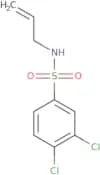
3,4-Dichloro-N-(prop-2-en-1-yl)benzene-1-sulfonamide
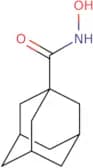
CAS:<p>Versatile small molecule scaffold</p>Formula:C9H9Cl2NO2SPurity:Min. 95%Molecular weight:266.14 g/molN-Hydroxyadamantane-1-carboxamide
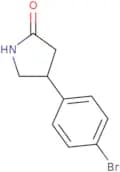
CAS:<p>N-Hydroxyadamantane-1-carboxamide is a research chemical that acts as a growth factor and has various applications in the field of medicine and biology. It has been shown to inhibit tumor necrosis factor-alpha (TNF-α), which plays a role in inflammation and immune response. Additionally, N-Hydroxyadamantane-1-carboxamide can be used as an electrode inhibitor in electrochemical studies.</p>Formula:C11H17NO2Purity:Min. 95%Molecular weight:195.26 g/mol4-(4-Bromophenyl)pyrrolidin-2-one
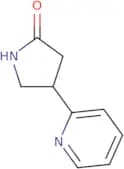
CAS:<p>Versatile small molecule scaffold</p>Formula:C10H10BrNOPurity:Min. 95%Molecular weight:240.1 g/mol4-(Pyridin-2-yl)pyrrolidin-2-one
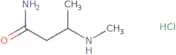
CAS:<p>Versatile small molecule scaffold</p>Formula:C9H10N2OPurity:Min. 95%Molecular weight:162.19 g/mol3-(Methylamino)butanamide hydrochloride
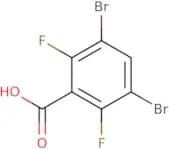
CAS:<p>Versatile small molecule scaffold</p>Formula:C5H13ClN2OPurity:Min. 95%Molecular weight:152.62 g/mol3,5-Dibromo-2,6-difluorobenzoic acid
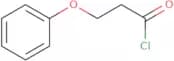
CAS:<p>Versatile small molecule scaffold</p>Formula:C7H2Br2F2O2Purity:Min. 95%Molecular weight:315.89 g/mol3-Phenoxypropanoyl chloride
CAS:<p>3-Phenoxypropanoyl chloride is a phenoxy compound that is metabolized by the liver to form an amide. It has been shown to have therapeutic benefits in a variety of diseases, such as metabolic disorders, autoimmune diseases, cancers, and inflammatory diseases. 3-Phenoxypropanoyl chloride can be used for treating patients with autoimmune diseases and cancer due to its ability to inhibit the synthesis of cytokines and other mediators of inflammation. It also inhibits platelet aggregation at low doses, but has no effect on platelet function at higher doses. This drug is not active against gram-negative bacteria or fungi.</p>Formula:C9H9O2ClPurity:Min. 95%Molecular weight:184.61 g/mol5-Amino-isophthalamide
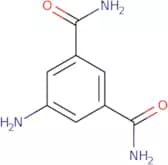
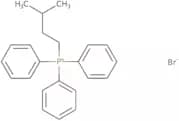
CAS:<p>5-Amino-isophthalamide (5AIP) is a molecule that can be used as a molecular probe for the reticulum. It has been shown to inhibit protein synthesis in vivo and in vitro. 5AIP binds to the 30S ribosomal subunit, preventing the binding of aminoacyl-tRNA and peptidyl-tRNA to the acceptor site on the ribosome. This prevents the formation of a peptide bond between two amino acids, which is required for protein synthesis. The binding of 5AIP to the 30S ribosomal subunit also inhibits translation by preventing peptidyltransferase from transferring tRNA from its A site to P site. In addition, 5AIP binds to lanthanide ions such as terbium and europium, which can be used in diagnostic techniques such as fluorescence spectroscopy or magnetic resonance imaging. 5AIP is also an amide with one chiral carbon</p>Formula:C8H9N3O2Purity:Min. 95%Molecular weight:179.18 g/molIsoamyltriphenylphosphonium bromide
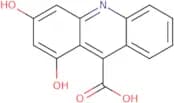
CAS:<p>Isoamyltriphenylphosphonium bromide is a corrosion inhibitor that is used to protect metals, such as steel and aluminum, from damage caused by water and other corrosive substances. It is also an antifungal agent and can be used in pharmaceutical formulations. Isoamyltriphenylphosphonium bromide has been shown to inhibit the activity of thrombin, an enzyme that regulates blood clotting. This drug also inhibits the growth of fungi that cause infections such as athlete's foot (tinea pedis) or ringworm (tinea corporis). In addition, it has been shown to have antimicrobial activity against bacteria such as Escherichia coli and Staphylococcus aureus.</p>Formula:C23H26BrPPurity:Min. 95%Molecular weight:413.33 g/mol1,3-Dihydroxy-9-acridinecarboxylic acid
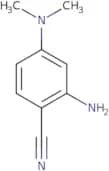
CAS:<p>1,3-Dihydroxy-9-acridinecarboxylic acid is an alkali metal that is used as a tabletting agent. It has been shown to have the potential for pharmacokinetic interactions with metals and other drugs. 1,3-Dihydroxy-9-acridinecarboxylic acid has been shown to be toxic in both animals and humans at high doses. The LD50 of this compound in rats is 4 g/kg, and it can cause death by respiratory failure. This compound also causes severe irritation of the oral cavity and gastrointestinal tract at high doses. 1,3-Dihydroxy-9-acridinecarboxylic acid has been shown to exhibit oxidative activity in vitro, but its activity in vivo is not well known.</p>Formula:C14H9NO4Purity:Min. 95%Molecular weight:255.22 g/mol2-Amino-4-(dimethylamino)benzonitrile
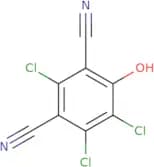
CAS:<p>Versatile small molecule scaffold</p>Formula:C9H11N3Purity:Min. 95%Molecular weight:161.2 g/mol2,4,5-Trichloro-6-hydroxyisophthalonitrile
CAS:<p>2,4,5-Trichloro-6-hydroxyisophthalonitrile is a fungicide. It is used in the control of plant diseases such as powdery mildew, rust and blight. 2,4,5-Trichloro-6-hydroxyisophthalonitrile can be applied to plants through foliar spray or root drenching. It acts by inhibiting the enzyme activities of fungi that are responsible for cell growth. This compound has been shown to have genotoxic activity in vivo and in vitro models and may be carcinogenic to humans. The mechanism of action of 2,4,5-trichloro-6-hydroxyisophthalonitrile remains unclear due to its high resistance to degradation in vivo. 2,4,5-Trichloro-6-hydroxyisophthalonitrile has also shown synergistic effects when combined with zirconium oxide and matrix</p>Formula:C8HCl3N2OPurity:Min. 95%Molecular weight:247.47 g/mol3-(4-Methoxy-2-methylphenyl)propanoic acid
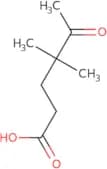
CAS:<p>Versatile small molecule scaffold</p>Formula:C11H14O3Purity:Min. 95%Molecular weight:194.23 g/mol4,4-Dimethyl-5-oxohexanoic acid
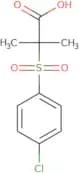
CAS:<p>Versatile small molecule scaffold</p>Formula:C8H14O3Purity:Min. 95%Molecular weight:158.19 g/mol2-(4-Chlorobenzenesulfonyl)-2-methylpropanoic acid
CAS:<p>Versatile small molecule scaffold</p>Formula:C10H11ClO4SPurity:Min. 95%Molecular weight:262.71 g/mol2-[(4-Bromophenyl)amino]acetonitrile
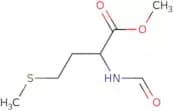
CAS:<p>Versatile small molecule scaffold</p>Formula:C8H7BrN2Purity:Min. 95%Molecular weight:211.06 g/molMethyl (2S)-2-formamido-4-(methylsulfanyl)butanoate
CAS:<p>Methyl (2S)-2-formamido-4-(methylsulfanyl)butanoate is a molecule that hydrolyzes under acidic conditions to form methyl (2S)-2-formamido-4-(methylthio)butanoate. The amine group of this molecule is nucleophilic and can react with various electrophiles, such as aldehydes, ketones, acids, or sulfoxides. It is also chiral and can be used as a ligand in optical applications. Methyl (2S)-2-formamido-4-(methylthio)butanoate has been shown to be an effective buffer at pH 6.5 and 7.0 when in the presence of metal ions.</p>Formula:C7H13NO3SPurity:Min. 95%Molecular weight:191.25 g/moltert-Butyl N-[(3-hydroxyphenyl)methyl]carbamate
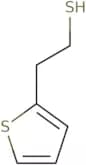
CAS:<p>Versatile small molecule scaffold</p>Formula:C12H17NO3Purity:Min. 95%Molecular weight:223.27 g/mol2-(Thiophen-2-yl)ethane-1-thiol
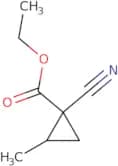
CAS:<p>Versatile small molecule scaffold</p>Formula:C6H8S2Purity:Min. 95%Molecular weight:144.3 g/molEthyl 1-cyano-2-methylcyclopropane-1-carboxylate
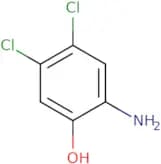
CAS:<p>Versatile small molecule scaffold</p>Formula:C8H11NO2Purity:Min. 95%Molecular weight:153.18 g/mol2-Amino-4,5-dichlorophenol
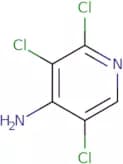
CAS:<p>2-Amino-4,5-dichlorophenol is a chemical that is used as an intermediate in the production of other chemicals. It has shown to be toxic to the bladder and hemolytic, but is not active against tissues. 2-Amino-4,5-dichlorophenol increases urea nitrogen levels in the urine when administered to rats. This compound also has been shown to exhibit immunomodulatory effects.</p>Formula:C6H5Cl2NOPurity:Min. 95%Molecular weight:178.02 g/mol2,3,5-trichloropyridin-4-amine
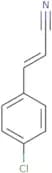
CAS:<p>Versatile small molecule scaffold</p>Formula:C5H3Cl3N2Purity:Min. 95%Molecular weight:197.44 g/mol4-Chlorocinnamonitrile, mixture of cis and trans
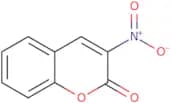
CAS:<p>4-Chlorocinnamonitrile is a deuterium-labeled organic molecule that can be used for the study of hydration. It has been shown to induce apoptosis in cancer cells and to have anti-inflammatory properties. The cis and trans isomers of 4-chlorocinnamonitrile are both able to induce cell death, although the trans isomer is more potent than the cis isomer. The technique of using deuterium atoms to label molecules has been used as a tool in many areas of chemistry, including organometallic and pharmaceutical research.</p>Formula:C9H6ClNPurity:Min. 95%Molecular weight:163.6 g/mol3-Nitro-2H-chromen-2-one
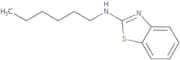
CAS:<p>3-Nitro-2H-chromen-2-one is a ketone that has been found to be an effective inhibitor of the key enzyme in e. coli, cyclopentadiene synthase. This compound was also shown to be a superimposable on the natural product 4-hydroxycoumarin derivatives, which are used as antibiotics and anticancer agents. 3-Nitro-2H-chromen-2-one has a coumarin skeleton and is an organic solvent. It is a stereochemically pure compound with the chemical formula C9H7NO2, and it can be synthesized by reacting cyclopentadiene with nitric acid. 3N2C is an organic chemistry drug candidate for antibiotic development.</p>Formula:C9H5NO4Purity:Min. 95%Molecular weight:191.14 g/molN-Hexyl-1,3-benzothiazol-2-amine
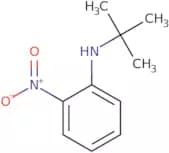
CAS:<p>Versatile small molecule scaffold</p>Formula:C13H18N2SPurity:Min. 95%Molecular weight:234.36 g/molN-tert-Butyl-2-nitroaniline
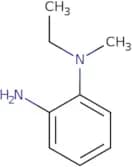
CAS:<p>N-tert-Butyl-2-nitroaniline is a nitrogen containing compound with a dinitroso group. It is used as a precursor for the synthesis of furoxane and nitrosobenzene, which are used in the production of nylon. The nucleophilic nature of the molecule facilitates its reaction with other compounds, such as azoxy and nitro groups. The analogy between this and nitrosobenzene is that both have a similar molecular structure, but differ in their chemical properties. N-tert-Butyl-2-nitroaniline has been shown to be an effective nucleophile for substitution reactions.</p>Formula:C10H14N2O2Purity:Min. 95%Molecular weight:194.23 g/mol1-N-Ethyl-1-N-methylbenzene-1,2-diamine
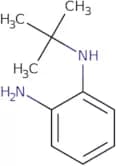
CAS:<p>Versatile small molecule scaffold</p>Formula:C9H14N2Purity:Min. 95%Molecular weight:150.22 g/mol1-N-tert-Butylbenzene-1,2-diamine
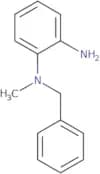
CAS:<p>Versatile small molecule scaffold</p>Formula:C10H16N2Purity:Min. 95%Molecular weight:164.25 g/mol1-N-benzyl-1-N-methylbenzene-1,2-diamine
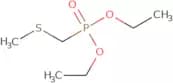
CAS:<p>Versatile small molecule scaffold</p>Formula:C14H16N2Purity:90%MinMolecular weight:212.3 g/molDiethyl (Methylthiomethyl)phosphonate
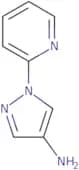
CAS:<p>Diethyl (methylthiomethyl)phosphonate is an exfoliating agent that reacts with proteins to form carbodiimides. Carbodiimides are active in the cleavage of peptide bonds and are used for the synthesis of peptide-based drugs. Diethyl (methylthiomethyl)phosphonate has been shown to inhibit a number of neurodegenerative diseases, such as Alzheimer's, Parkinson's, and Huntington's disease. The phosphonates inhibit protein synthesis by binding to ribosomes and inhibiting translation. Diethyl (methylthiomethyl)phosphonate also inhibits the activation of caspases, which induces apoptosis in cancer cells.</p>Formula:C6H15O3PSPurity:Min. 95%Molecular weight:198.22 g/mol1-(Pyridin-2-yl)-1H-pyrazol-4-amine
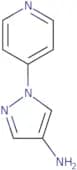
CAS:<p>Versatile small molecule scaffold</p>Formula:C8H8N4Purity:Min. 95%Molecular weight:160.18 g/mol1-(Pyridin-4-yl)-1H-pyrazol-4-amine
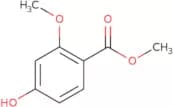
CAS:<p>Versatile small molecule scaffold</p>Formula:C8H8N4Purity:Min. 95%Molecular weight:160.18 g/molMethyl 4-hydroxy-2-methoxybenzoate
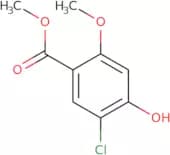
CAS:<p>Methyl 4-hydroxy-2-methoxybenzoate is a cell-based inhibitor of indoles and amides. It is an optimal inhibitor for assays for the inhibition of cellular cytokines, including the inhibition of TNF-α, IL-1β, and IL-6. Methyl 4-hydroxy-2-methoxybenzoate has been shown to be an effective inhibitor of piperidine and oxalyl in the presence of NADPH.<br>Methyl 4-hydroxy-2-methoxybenzoate is also a selective inhibitor of azaindoles and enzymatic reactions. This compound binds to the active site of azaindole synthase, interfering with its activity.</p>Formula:C9H10O4Purity:Min. 95%Molecular weight:182.18 g/molMethyl 5-chloro-4-hydroxy-2-methoxybenzoate
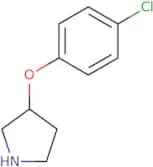
CAS:<p>Versatile small molecule scaffold</p>Formula:C9H9ClO4Purity:Min. 95%Molecular weight:216.62 g/mol3-(4-Chlorophenoxy)pyrrolidine
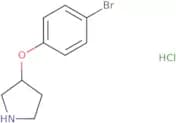
CAS:<p>Versatile small molecule scaffold</p>Formula:C10H12ClNOPurity:Min. 95%Molecular weight:197.66 g/mol3-(4-Bromophenoxy)pyrrolidine hydrochloride
CAS:<p>Versatile small molecule scaffold</p>Formula:C10H13BrClNOPurity:Min. 95%Molecular weight:278.57 g/mol4,6-Dimethyl-1H,2H,3H-pyrazolo[3,4-b]pyridin-3-one
CAS:<p>Versatile small molecule scaffold</p>Formula:C8H9N3OPurity:Min. 95%Molecular weight:163.18 g/mol5-Chloro-3H-indol-2-amine hydrochloride
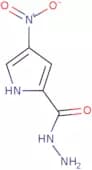
CAS:<p>Versatile small molecule scaffold</p>Formula:C8H8Cl2N2Purity:Min. 95%Molecular weight:203.07 g/mol4-Nitro-1H-pyrrole-2-carbohydrazide
CAS:<p>Versatile small molecule scaffold</p>Formula:C5H6N4O3Purity:Min. 95%Molecular weight:170.13 g/mol5-Amino-[1,2,4]triazolo[1,5-a]pyrimidine-6-carbonitrile
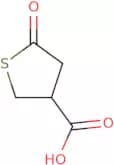
CAS:<p>Versatile small molecule scaffold</p>Formula:C6H4N6Purity:Min. 95%Molecular weight:160.14 g/mol5-Oxothiolane-3-carboxylic acid
CAS:<p>Versatile small molecule scaffold</p>Formula:C5H6O3SPurity:Min. 95%Molecular weight:146.17 g/mol6-(Propan-2-yl)oxan-2-one
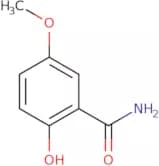
CAS:<p>Versatile small molecule scaffold</p>Formula:C8H14O2Purity:Min. 95%Molecular weight:142.2 g/mol2-Hydroxy-5-methoxybenzamide
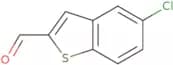
CAS:<p>Versatile small molecule scaffold</p>Formula:C8H9NO3Purity:Min. 95%Molecular weight:167.16 g/mol5-Chloro-1-benzothiophene-2-carboxaldehyde
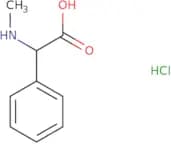
CAS:<p>Versatile small molecule scaffold</p>Formula:C9H5ClOSPurity:Min. 95%Molecular weight:196.65 g/molα-(Methylamino)benzeneacetic acid HCl
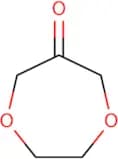
CAS:<p>Versatile small molecule scaffold</p>Formula:C9H12ClNO2Purity:Min. 95%Molecular weight:201.65 g/mol1,4-Dioxepan-6-one
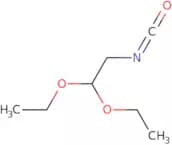
CAS:<p>Versatile small molecule scaffold</p>Formula:C5H8O3Purity:Min. 95%Molecular weight:116.11 g/mol1,1-Diethoxy-2-isocyanatoethane
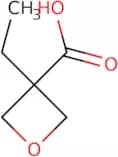
CAS:<p>Versatile small molecule scaffold</p>Formula:C7H13NO3Purity:Min. 95%Molecular weight:159.18 g/mol3-Ethyloxetane-3-carboxylic acid
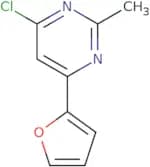
CAS:<p>3-Ethyloxetane-3-carboxylic acid is a cyclic anion that has been found to be a constant feature of the surface of proteins. 3-Ethyloxetane-3-carboxylic acid has been identified as a segmental anion, which means it interacts with the protein backbone through hydrogen bonding and dipole interactions. The introduction of this anion leads to efficient methods for determining amide, coordination, and cycle densities on the protein surface. 3-Ethyloxetane-3-carboxylic acid also participates in dipole interactions with other molecules on the surface of proteins. This interaction is based on charge density and results in highly accurate chemical analyses.</p>Formula:C6H10O3Purity:Min. 95%Molecular weight:130.14 g/mol4-Chloro-6-(2-furyl)-2-methylpyrimidine
CAS:<p>Versatile small molecule scaffold</p>Formula:C9H7ClN2OPurity:Min. 95%Molecular weight:194.62 g/mol7-Chloro-5-phenyl-[1,2,4]triazolo[1,5-a]pyrimidine
CAS:<p>Versatile small molecule scaffold</p>Formula:C11H7ClN4Purity:Min. 95%Molecular weight:230.65 g/mol

![2-[(4-Bromophenyl)amino]acetonitrile](/_next/image/?url=https%3A%2Fstatic.cymitquimica.com%2Fproducts%2F3D%2Fthumb-webp%2FDBA36324.webp&w=3840&q=75)
![tert-Butyl N-[(3-hydroxyphenyl)methyl]carbamate](/_next/image/?url=https%3A%2Fstatic.cymitquimica.com%2Fproducts%2F3D%2Fthumb-webp%2FDBA38766.webp&w=3840&q=75)
![4,6-Dimethyl-1H,2H,3H-pyrazolo[3,4-b]pyridin-3-one](/_next/image/?url=https%3A%2Fstatic.cymitquimica.com%2Fproducts%2F3D%2Fthumb-webp%2FDBA49167.webp&w=3840&q=75)
![5-Amino-[1,2,4]triazolo[1,5-a]pyrimidine-6-carbonitrile](/_next/image/?url=https%3A%2Fstatic.cymitquimica.com%2Fproducts%2F3D%2Fthumb-webp%2FDBA52458.webp&w=3840&q=75)
![7-Chloro-5-phenyl-[1,2,4]triazolo[1,5-a]pyrimidine](/_next/image/?url=https%3A%2Fstatic.cymitquimica.com%2Fproducts%2F3D%2Fthumb-webp%2FDBA56543.webp&w=3840&q=75)