Building Blocks
This section contains fundamental products for the synthesis of organic and biological compounds. Building blocks are the essential starting materials used to construct complex molecules through various chemical reactions. They play a critical role in drug discovery, material science, and chemical research. At CymitQuimica, we offer a diverse range of high-quality building blocks to support your innovative research and industrial projects, ensuring you have the essential components for successful synthesis.
Subcategories of "Building Blocks"
- Boronic Acids & Boronic Acid Derivatives(5,756 products)
- Chiral Building Blocks(1,242 products)
- Hydrocarbon Building Blocks(6,095 products)
- Organic Building Blocks(61,051 products)
Found 199813 products of "Building Blocks"
Sort by
Purity (%)
0
100
|
0
|
50
|
90
|
95
|
100
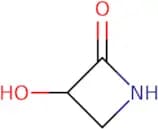
3-Hydroxyazetidin-2-one
CAS:Versatile small molecule scaffoldFormula:C3H5NO2Purity:Min. 95%Molecular weight:87.08 g/mol3-Ethylpiperidine hydrochloride
CAS:<p>Versatile small molecule scaffold</p>Formula:C7H16ClNPurity:Min. 95%Molecular weight:149.66 g/mol2-Chloro-1-ethyl-1H-benzo[d]imidazole
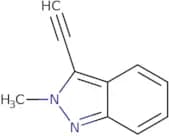
CAS:<p>2-Chloro-1-ethyl-1H-benzo[d]imidazole (2C1EB) is an experimental benzimidazole derivative that has shown antitumor activity in vitro and in vivo. 2C1EB inhibits the growth of cancer cells by inducing cell cycle arrest and apoptosis. It also inhibits the production of reactive oxygen species, which may be a potential mechanism for its anticancer activity. 2C1EB has been shown to inhibit tumor growth in mice models and to have cytotoxic effects against human lung adenocarcinoma A549 cells.</p>Formula:C9H9ClN2Purity:Min. 95%Molecular weight:180.64 g/mol3-Ethynyl-2-methyl-2H-indazole
CAS:<p>Versatile small molecule scaffold</p>Formula:C10H8N2Purity:Min. 95%Molecular weight:156.2 g/mol2-Methoxy-5-propylphenol
CAS:<p>2-Methoxy-5-propylphenol is a chemical compound that belongs to the class of phenols. It is a methoxylated derivative of coniferyl alcohol, which is an intermediate in the biosynthesis of lignin. The monomers formed by 2-methoxy-5-propylphenol are ether linkages with methoxy groups, which are responsible for its photochemical properties and uv absorption. 2-Methoxy-5-propylphenol also has synergistic effects with other chemicals used in papermaking processes such as delignification and stabilization. The functional groups found in this compound include hydroxy and methoxyl groups, which can react with each other under heat or light to form epoxide bonds. This reaction occurs at temperatures below 120°C, making it a good candidate for thermal pulping of unbleached papers.</p>Formula:C10H14O2Purity:Min. 95%Molecular weight:166.22 g/molImidazo[1,2-a]pyrimidin-5-ol
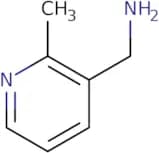
CAS:<p>Imidazo[1,2-a]pyrimidin-5-ol is a pyrrole heterocyclic compound that is used as an anticoagulant. Imidazo[1,2-a]pyrimidin-5-ol binds to the active site of coagulation factor Xa and inhibits its function. It also has been shown to have antidiabetic properties by inhibiting cyclooxygenase and lipoxygenase. Imidazo[1,2-a]pyrimidin-5-ol is metabolized in the liver to form a sulfoxide and organic acids including benzyl alcohol. This drug also can be converted into a naphthalene derivative with c1–6 alkyl groups.</p>Formula:C6H5N3OPurity:Min. 95%Molecular weight:135.12 g/mol(2-Methylpyridin-3-yl)methanamine
CAS:<p>Versatile small molecule scaffold</p>Formula:C7H10N2Purity:Min. 95%Molecular weight:122.17 g/mol3-(Chloromethyl)-2-methylpyridine hydrochloride
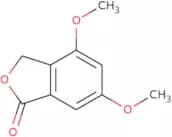
CAS:<p>3-(Chloromethyl)-2-methylpyridine hydrochloride is a lead compound that has potent activity against matrix metalloproteinase-13 (MMP-13) expression. It is structurally modified by the addition of a hydroxyl group and an additional chloromethyl group at the 3 position. The chemical modification of this compound is done in order to increase its potency as a ligand. 3-(Chloromethyl)-2-methylpyridine hydrochloride binds to the ligand binding domain of MMP-13, which suppresses its expression. This inhibition prevents degradation of extracellular matrix proteins, which results in reduced tumor invasion and metastasis.</p>Formula:C7H9Cl2NPurity:Min. 95%Molecular weight:178.06 g/mol4,6-Dimethoxy-1,3-dihydro-2-benzofuran-1-one
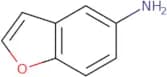
CAS:<p>4,6-Dimethoxy-1,3-dihydro-2-benzofuran-1-one is a phenolic compound that has been isolated from the mycelia of an unidentified fungus. The molecular formula for this compound is C13H14O4. This compound has been found to have an absorption spectrum consistent with a symmetric molecule with two aromatic rings and one oxygenated functional group. It also displays magnetic resonance properties. The chemical structure of this compound consists of three rings: two benzene rings and one furan ring. 4,6-Dimethoxy-1,3-dihydro-2-benzofuran-1-one has been found to be an inhibitor of fatty acid synthesis in Escherichia coli cells.</p>Formula:C10H10O4Purity:Min. 95%Molecular weight:194.18 g/mol1-Benzofuran-5-amine
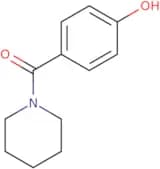
CAS:<p>1-Benzofuran-5-amine is an organic solvent that is used as a synthetic intermediate in the synthesis of quinoline derivatives and methoxy groups. It has been shown to have potent antibacterial activity against Gram-positive bacteria. 1-Benzofuran-5-amine can be used as an antimicrobial agent in oral baths (e.g., foot bath) at concentrations of 15 mg/l or higher, with a contact time of 20 minutes or longer. The drug has also been shown to have long acting properties, which may be due to its ability to inhibit nitric oxide production.</p>Formula:C8H7NOPurity:Min. 95%Molecular weight:133.15 g/mol4-(Piperidine-1-carbonyl)phenol
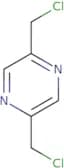
CAS:<p>Versatile small molecule scaffold</p>Formula:C12H15NO2Purity:Min. 95%Molecular weight:205.25 g/mol2,5-Bis(chloromethyl)-pyrazine
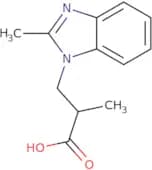
CAS:<p>2,5-Bis(chloromethyl)pyrazine is a coordination complex that contains two pyrazine ligands. The compound is an isomer of 2,5-bis(chloromethyl)pyridine and has the same geometry as the pyridine molecule. This complex exists in two different isomeric forms: one with two chlorines on opposite sides of the pyrazine ring and the other with two chlorines on adjacent positions. The alkoxides are symmetric, polymeric structures that can be made by reacting acetals with acetals or pyridines with ligands.</p>Formula:C6H6Cl2N2Purity:Min. 95%Molecular weight:177.03 g/mol2-Methyl-3-(2-methyl-benzoimidazol-1-yl)-propionic acid
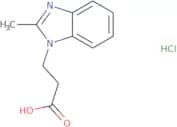
CAS:Controlled Product<p>Versatile small molecule scaffold</p>Formula:C12H14N2O2Purity:Min. 95%Molecular weight:218.25 g/mol3-(2-Methyl-benzoimidazol-1-yl)-propionic acid hydrochloride
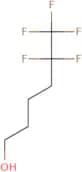
CAS:<p>Versatile small molecule scaffold</p>Formula:C11H13ClN2O2Purity:Min. 95%Molecular weight:240.68 g/mol5,5,6,6,6-Pentafluorohexan-1-ol
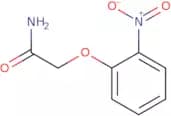
CAS:<p>Versatile small molecule scaffold</p>Formula:C6H9F5OPurity:Min. 95%Molecular weight:192.13 g/mol2-(2-Nitrophenoxy)acetamide
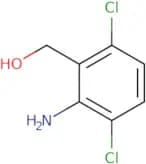
CAS:<p>2-(2-Nitrophenoxy)acetamide (NPA) is a nitro-substituted nitroaromatic compound that has been shown to inhibit the activity of the P-glycoprotein efflux pump. This inhibitory effect may be due to its ability to bind to the ATP binding site on the P-glycoprotein, which prevents ATP hydrolysis and energy transfer. 2-(2-Nitrophenoxy)acetamide also inhibits cancer cells, as it utilizes adenosine triphosphate (ATP) as an energy source. NPA also displays an inhibitory effect on other cellular functions, including transport of substances across membranes and inhibition of DNA synthesis in human cells.</p>Formula:C8H8N2O4Purity:Min. 95%Molecular weight:196.16 g/mol(2-Amino-3,6-dichlorophenyl)methanol
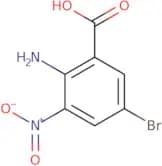
CAS:<p>Versatile small molecule scaffold</p>Formula:C7H7Cl2NOPurity:Min. 95%Molecular weight:192.04 g/mol2-Amino-5-bromo-3-nitrobenzoic acid
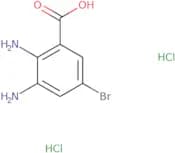
CAS:<p>Versatile small molecule scaffold</p>Formula:C7H5BrN2O4Purity:Min. 95%Molecular weight:261.03 g/mol2,3-Diamino-5-bromobenzoic acid dihydrochloride
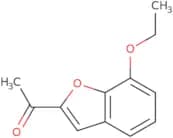
CAS:<p>Versatile small molecule scaffold</p>Formula:C7H9BrCl2N2O2Purity:Min. 95%Molecular weight:303.97 g/mol1-(7-Ethoxy-1-benzofuran-2-yl)ethan-1-one
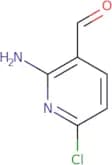
CAS:<p>Versatile small molecule scaffold</p>Formula:C12H12O3Purity:Min. 95%Molecular weight:204.22 g/mol2-Amino-6-chloronicotinaldehyde
CAS:<p>Versatile small molecule scaffold</p>Formula:C6H5ClN2OPurity:Min. 95%Molecular weight:156.57 g/mol2,6-Difluoro-3-methyl-pyridine
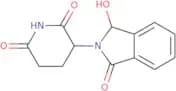
CAS:<p>Versatile small molecule scaffold</p>Formula:C6H5F2NPurity:Min. 95%Molecular weight:129.11 g/mol3-(1-Hydroxy-3-oxo-2,3-dihydro-1H-isoindol-2-yl)piperidine-2,6-dione
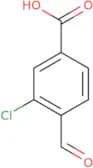
CAS:<p>Versatile small molecule scaffold</p>Formula:C13H12N2O4Purity:Min. 95%Molecular weight:260.2 g/mol3-chloro-4-formylbenzoic acid
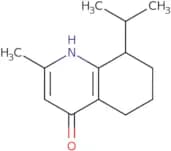
CAS:<p>3-chloro-4-formylbenzoic acid is an aldehyde that can be used as a synthetic intermediate in the production of other molecules. It can be synthesized from 3-chlorobenzoic acid and formaldehyde in one step by heating the two together. This reaction produces the desired product in high yield, with a stereochemical purity of about 98%. The substituent on the chloro group has no effect on this reaction. The diastereoselectivity of this synthesis is also high, with nearly all products being racemic mixtures.</p>Formula:C8H5ClO3Purity:Min. 95%Molecular weight:184.6 g/mol2-Methyl-8-(propan-2-yl)-1,4,5,6,7,8-hexahydroquinolin-4-one
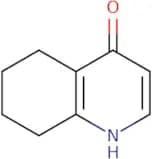
CAS:<p>Versatile small molecule scaffold</p>Formula:C13H19NOPurity:Min. 95%Molecular weight:205.3 g/mol1,4,5,6,7,8-Hexahydroquinolin-4-one
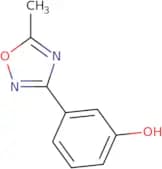
CAS:<p>Versatile small molecule scaffold</p>Formula:C9H11NOPurity:Min. 95%Molecular weight:149.19 g/mol3-(5-Methyl-1,2,4-oxadiazol-3-yl)phenol
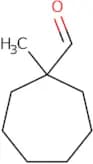
CAS:<p>Versatile small molecule scaffold</p>Formula:C9H8N2O2Purity:Min. 95%Molecular weight:176.17 g/mol1-Methylcycloheptane-1-carbaldehyde
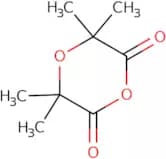
CAS:<p>Versatile small molecule scaffold</p>Formula:C9H16OPurity:Min. 95%Molecular weight:140.22 g/molTetramethyl-1,4-dioxane-2,6-dione
CAS:<p>Versatile small molecule scaffold</p>Formula:C8H12O4Purity:Min. 95%Molecular weight:172.18 g/mol4-(Imidazo[1,2-a]pyrimidin-2-yl)aniline
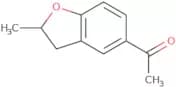
CAS:<p>Versatile small molecule scaffold</p>Formula:C12H10N4Purity:Min. 95%Molecular weight:210.24 g/mol1-(2-Methyl-2,3-dihydro-1-benzofuran-5-yl)ethan-1-one
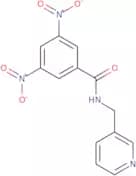
CAS:<p>Versatile small molecule scaffold</p>Formula:C11H12O2Purity:Min. 95%Molecular weight:176.21 g/mol3,5-Dinitro-N-(pyridin-3-ylmethyl)benzamide
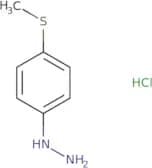
CAS:<p>Versatile small molecule scaffold</p>Formula:C13H10N4O5Purity:Min. 95%Molecular weight:302.24 g/mol(4-Methylsulfanylphenyl)hydrazine hydrochloride
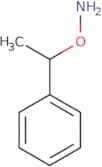
CAS:Versatile small molecule scaffoldFormula:C7H11ClN2SPurity:Min. 95%Molecular weight:190.69 g/molo-(1-Phenylethyl)hydroxylamine
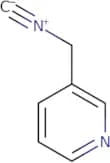
CAS:<p>Versatile small molecule scaffold</p>Formula:C8H11NOPurity:Min. 95%Molecular weight:137.18 g/mol3-(Isocyanomethyl)pyridine
CAS:<p>3-(Isocyanomethyl)pyridine is a nucleophilic amine that is used in organic chemistry as a reagent. It can be used either as a primary amine or as an isocyanide, depending on the desired functionality. 3-(Isocyanomethyl)pyridine reacts with electrophiles such as phenols, alcohols, and carboxylic acids to form reactive intermediates. These intermediates are often useful for generating new molecules. 3-(Isocyanomethyl)pyridine is also capable of reacting with primary and secondary amines to yield multigram quantities of products.<br>3-(Isocyanomethyl)pyridine has been shown to be an innovative chemical that can be used in many different applications.</p>Formula:C7H6N2Purity:Min. 95%Molecular weight:118.14 g/mol3-Methyl-4H,5H-[1,2]thiazolo[5,4-d]pyrimidin-4-one
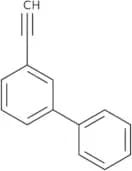
CAS:<p>Versatile small molecule scaffold</p>Formula:C6H5N3OSPurity:Min. 95%Molecular weight:167.19 g/mol1-ethynyl-3-phenylbenzene
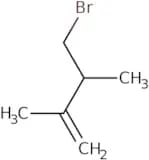
CAS:<p>Versatile small molecule scaffold</p>Formula:C14H10Purity:Min. 95%Molecular weight:178.22 g/mol4-Bromo-2,3-dimethylbut-1-ene
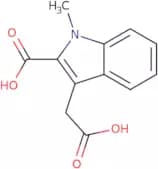
CAS:<p>Versatile small molecule scaffold</p>Formula:C6H11BrPurity:Min. 95%Molecular weight:163.06 g/mol3-(carboxymethyl)-1-methyl-1H-indole-2-carboxylic acid
CAS:<p>Versatile small molecule scaffold</p>Formula:C12H11NO4Purity:Min. 95%Molecular weight:233.22 g/mol2-(1-Methyl-2,3-dihydro-1H-indol-3-yl)acetic acid hydrochloride
CAS:<p>Versatile small molecule scaffold</p>Formula:C11H14ClNO2Purity:Min. 95%Molecular weight:227.7 g/molIsopropyl-pyridin-2-ylmethyl-amine
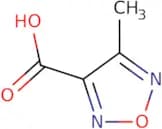
CAS:<p>Isopropyl-pyridin-2-ylmethyl-amine is a carboxylate group that is structurally mediated by an interaction with oxygen. It has a magnetic property, which is due to the presence of ferromagnetic isotopes in the molecule. Isopropyl-pyridin-2-ylmethyl-amine can be coordinated as ligands with metal ions such as Cu(II), Co(II), and Fe(III). This compound also has tetranuclear ligands, which are ligands that bind to one central atom via four atoms or groups.</p>Formula:C9H14N2Purity:Min. 95%Molecular weight:150.23 g/mol4-Methylfurazan-3-carboxylic acid
CAS:<p>4-Methylfurazan-3-carboxylic acid is a cyanogen compound that has been shown to cause vasodilatation of the sinusoid and hepatic steatosis. It is also reactive with lesion sites and can be used as a histological reagent. 4-Methylfurazan-3-carboxylic acid reacts with hydrazide to produce an acid hydrazide, which is also reactive. This compound has been shown to have therapeutic effects on hepatic steatosis in rats, but it does not exhibit any inhibitory effects on intestinal steatosis.</p>Formula:C4H4N2O3Purity:Min. 95%Molecular weight:128.09 g/mol4-Bromo-1,7-naphthyridine
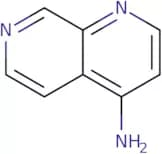
CAS:<p>Versatile small molecule scaffold</p>Formula:C8H5BrN2Purity:Min. 95%Molecular weight:209.04 g/mol1,7-Naphthyridin-4-amine
CAS:<p>Versatile small molecule scaffold</p>Formula:C8H7N3Purity:Min. 95%Molecular weight:145.16 g/mol2-(Dimethylamino)-2-phenylacetic acid hydrochloride
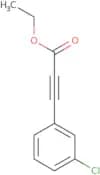
CAS:<p>Versatile small molecule scaffold</p>Formula:C10H14ClNO2Purity:Min. 95%Molecular weight:215.67 g/molEthyl 3-(3-chlorophenyl)prop-2-ynoate
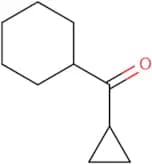
CAS:<p>Versatile small molecule scaffold</p>Formula:C11H9ClO2Purity:Min. 95%Molecular weight:208.64 g/molCyclohexyl(cyclopropyl)methanone
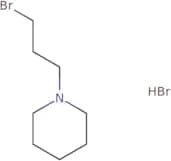
CAS:<p>Versatile small molecule scaffold</p>Formula:C10H16OPurity:Min. 95%Molecular weight:152.23 g/mol1-(3-Bromopropyl)piperidine hydrobromide
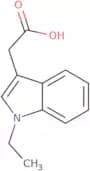
CAS:<p>Versatile small molecule scaffold</p>Formula:C8H16BrN·HBrPurity:Min. 95%Molecular weight:287.04 g/mol2-(1-Ethyl-1H-indol-3-yl)acetic acid
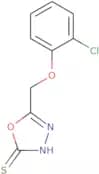
CAS:Controlled Product<p>Versatile small molecule scaffold</p>Formula:C12H13NO2Purity:Min. 95%Molecular weight:203.24 g/mol5-(2-Chlorophenoxymethyl)-1,3,4-oxadiazole-2-thiol
CAS:<p>Versatile small molecule scaffold</p>Formula:C9H7ClN2O2SPurity:Min. 95%Molecular weight:242.68 g/mol


![2-Chloro-1-ethyl-1H-benzo[d]imidazole](/_next/image/?url=https%3A%2Fstatic.cymitquimica.com%2Fproducts%2F3D%2Fthumb-webp%2FICA53315.webp&w=3840&q=75)

![Imidazo[1,2-a]pyrimidin-5-ol](/_next/image/?url=https%3A%2Fstatic.cymitquimica.com%2Fproducts%2F3D%2Fthumb-webp%2FICA53963.webp&w=3840&q=75)

![4-(Imidazo[1,2-a]pyrimidin-2-yl)aniline](/_next/image/?url=https%3A%2Fstatic.cymitquimica.com%2Fproducts%2F3D%2Fthumb-webp%2FICA60993.webp&w=3840&q=75)
![3-Methyl-4H,5H-[1,2]thiazolo[5,4-d]pyrimidin-4-one](/_next/image/?url=https%3A%2Fstatic.cymitquimica.com%2Fproducts%2F3D%2Fthumb-webp%2FICA64895.webp&w=3840&q=75)