Building Blocks
This section contains fundamental products for the synthesis of organic and biological compounds. Building blocks are the essential starting materials used to construct complex molecules through various chemical reactions. They play a critical role in drug discovery, material science, and chemical research. At CymitQuimica, we offer a diverse range of high-quality building blocks to support your innovative research and industrial projects, ensuring you have the essential components for successful synthesis.
Subcategories of "Building Blocks"
- Boronic Acids & Boronic Acid Derivatives(5,778 products)
- Chiral Building Blocks(1,242 products)
- Hydrocarbon Building Blocks(6,098 products)
- Organic Building Blocks(61,034 products)
Found 199601 products of "Building Blocks"
Sort by
Purity (%)
0
100
|
0
|
50
|
90
|
95
|
100
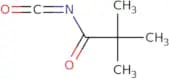
2,2-Dimethylpropanecarbonyl isocyanate
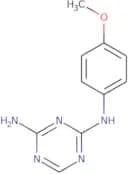
CAS:<p>2,2-Dimethylpropanecarbonyl isocyanate (DMPC) is a metabolite of 2,2-dimethylpropane-1,3-dicarboxylic acid (DMPDCA) that has been shown to have anti-inflammatory properties. DMPC is an oxalyl and may be useful for the treatment of intestinal diseases. It also inhibits chloride secretion in the intestine. DMPC has been shown to exhibit strong inhibitory effects on cycloaliphatic metabolism and to form oxindole derivatives with sulphates. This compound also inhibits nitric oxide synthesis by c1-6 alkyl radicals, and it has been used as an amide precursor in the synthesis of amino acid esters.</p>Formula:C6H9NO2Purity:Min. 95%Molecular weight:127.14 g/mol2-N-(4-Methoxyphenyl)-1,3,5-triazine-2,4-diamine
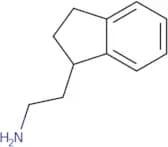
CAS:<p>Versatile small molecule scaffold</p>Formula:C10H11N5OPurity:Min. 95%Molecular weight:217.23 g/mol2-(2,3-Dihydro-1H-inden-1-yl)ethan-1-amine
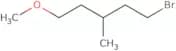
CAS:<p>Versatile small molecule scaffold</p>Formula:C11H15NPurity:Min. 95%Molecular weight:161.24 g/mol1-Bromo-5-methoxy-3-methylpentane
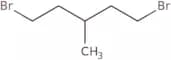
CAS:<p>Versatile small molecule scaffold</p>Formula:C7H15BrOPurity:Min. 95%Molecular weight:195.1 g/mol1,5-dibromo-3-methylpentane
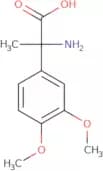
CAS:<p>1,5-Dibromo-3-methylpentane is an organic compound that contains a pyridine ring. It is used in biocontrol to control insects and has been found to be useful against virus, fungi, and protozoa. 1,5-Dibromo-3-methylpentane can act as an antibiotic and antifungal agent by inhibiting the synthesis of fatty acids. The chemical structure of 1,5-dibromo-3-methylpentane is very similar to that of natural pheromones in insects. This similarity allows the chemical to be used for insect biocontrol because it disrupts the reproductive cycle of the insect population.<br>1,5-Dibromo-3-methylpentane also has a conformation that prevents formation of hydrogen bonds with amino groups on other molecules and therefore inhibits biological activity.</p>Formula:C6H12Br2Purity:Min. 95%Molecular weight:243.97 g/mol2-Amino-2-(3,4-dimethoxyphenyl)propanoic acid
CAS:Versatile small molecule scaffoldFormula:C11H15NO4Purity:Min. 95%Molecular weight:225.24 g/molDicyclohexylmethanol
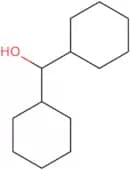
CAS:<p>Dicyclohexylmethanol is a trifunctional compound that contains a hydroxyl group, and can be used as a hydrogen bond donor or acceptor. The chemical structure of dicyclohexylmethanol can be seen in the figure below. Dicyclohexylmethanol has been used for sample preparation for hydrogen chloride gas. It has also been used to determine the concentration of blood ethanol levels and to measure blood pH in humans. Dicyclohexylmethanol is an important reactant in asymmetric synthesis reactions due to its ability to form hydrogen bonds with both reactants.</p>Formula:C13H24OPurity:Min. 95%Molecular weight:196.33 g/molEthyl 5-cyanopentanoate
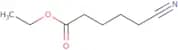
CAS:<p>Ethyl 5-cyanopentanoate is a carbanionic compound that is used as a catalyst in the synthesis of amides, pyridines, and dieckmann condensation products. It can also be used to catalyze the conversion of five-membered heterocycles to six-membered ones. This product yields high yields in reactions involving pressure or temperatures up to 100°C.</p>Formula:C8H13NO2Purity:Min. 95%Molecular weight:155.19 g/mol3-Cycloheptylpropanoic acid
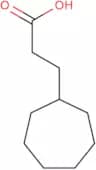
CAS:<p>3-Cycloheptylpropanoic acid is a derivative of cycloaliphatic, piperidine, and carboxylic acids. It is a white crystalline solid with a melting point of 87°C. 3-Cycloheptylpropanoic acid is an intermediate in the synthesis of other compounds, including gastrin and cholecystokinin, which are involved in the regulation of digestive system activity. The receptor ligands for these two hormones are also intermediates in their synthesis. 3-Cycloheptylpropanoic acid has been shown to inhibit gastric acid secretion and increase the production of pancreatic enzymes.</p>Formula:C10H18O2Purity:Min. 95%Molecular weight:170.25 g/molcycloheptylmethanol
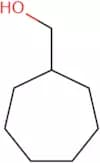
CAS:<p>Cycloheptylmethanol is a compound that activates adrenergic receptors. It has been shown to inhibit the sodium borohydride reduction of cholesterol, which is responsible for the formation of amyloid plaques in Alzheimer's disease. Cycloheptylmethanol also inhibits the synthesis of sclerotic proteins and has been found to be an effective treatment against cancer and neuropathic pain. Due to its chemical structure, cycloheptylmethanol is known as a chiral compound. There are three stereoisomers: (3"R")-cycloheptylmethanol, (3"S")-cycloheptylmethanol, and (3"R",3"S")-cycloheptylmethanol. The 3"R",3"S"-isomer is more potent than the other two stereoisomers because it binds more tightly to opioid receptors and has greater receptor activity.</p>Formula:C8H16OPurity:Min. 95%Molecular weight:128.22 g/mol5-Furan-2-yl-[1,3,4]thiadiazol-2-ylamine
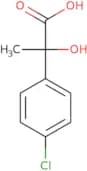
CAS:<p>Versatile small molecule scaffold</p>Formula:C6H5N3OSPurity:Min. 95%Molecular weight:167.19 g/mol2-(4-Chlorophenyl)-2-hydroxypropanoic acid
CAS:<p>Versatile small molecule scaffold</p>Formula:C9H9ClO3Purity:Min. 95%Molecular weight:200.62 g/molN-(Sec-butyl)-1-butanamine
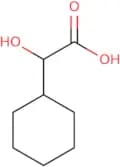
CAS:<p>N-(sec-butyl)-1-butanamine is a switchable cationic surfactant that can be used in a variety of applications. The reaction system consists of amines and imines, which react to form intramolecular hydrogen bonds, resulting in the formation of an antimicrobial agent. N-(sec-butyl)-1-butanamine has been shown to have good absorption properties, as well as being catalytic in the process. This molecule is synthesized from secondary butylamine, which reacts with terminal alkynes, forming an iminium intermediate.</p>Formula:C8H19NPurity:Min. 95%Molecular weight:129.24 g/mol2-Cyclohexyl-2-hydroxyacetic acid
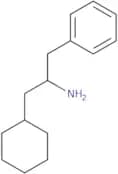
CAS:<p>2-Cyclohexyl-2-hydroxyacetic acid is a linker that is used in the synthesis of pharmaceuticals and agrochemicals. It acts as a polymerization catalyst, which means it can increase the rate at which two molecules join together to form a larger molecule. The active substances in this compound are sodium carbonate and piperidine, which are both found in other compounds. 2-Cyclohexyl-2-hydroxyacetic acid has been shown to be effective in treating bladder conditions such as urinary tract infections and benign prostatic hyperplasia (BPH). This drug also has anti-inflammatory properties.</p>Formula:C8H14O3Purity:Min. 95%Molecular weight:158.19 g/mol1-Cyclohexyl-3-phenylpropan-2-amine
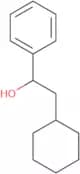
CAS:Controlled Product<p>Versatile small molecule scaffold</p>Formula:C15H23NPurity:Min. 95%Molecular weight:217.35 g/mol2-Cyclohexyl-1-phenylethanol
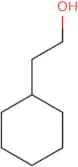
CAS:<p>Versatile small molecule scaffold</p>Formula:C14H20OPurity:Min. 95%Molecular weight:204.31 g/mol2-Cyclohexylethanol
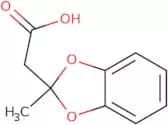
CAS:<p>2-Cyclohexylethanol is a molecule that is used in wastewater treatment. It is a solid phase microextraction (SPME) extraction technique that utilizes cyclohexane rings to adsorb hydrophobic compounds, such as fatty acids and alkoxy radicals, from water samples. 2-Cyclohexylethanol has been shown to be an effective agent for the cleavage of fatty acid molecules and for the synthesis of fatty acid esters. The biodiesel production process uses 2-cyclohexylethanol as a catalyst to remove water from the reaction mixture. This product also has photochemical properties that have been used to synthesize ketones and other organic molecules.</p>Formula:C8H16OPurity:Min. 95%Molecular weight:128.22 g/mol2-(2-Methyl-1,3-dioxaindan-2-yl)acetic acid
CAS:<p>Versatile small molecule scaffold</p>Formula:C10H10O4Purity:Min. 95%Molecular weight:194.18 g/molButyl[(2,3-dihydro-1,4-benzodioxin-2-yl)methyl]amine
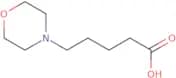
CAS:<p>Butyl[(2,3-dihydro-1,4-benzodioxin-2-yl)methyl]amine is a hydrophobic diluent that is used as a solvent or as a vehicle for drugs. It has been shown to interact with the immune system and is immunogenic. Butyl[(2,3-dihydro-1,4-benzodioxin-2-yl)methyl]amine can be used to reconstitute antigen and targetable molecules in order to increase their concentration and make them more detectable. Butyl[(2,3-dihydro-1,4-benzodioxin-2-yl)methyl]amine has been shown to have effects on blood pressure and can be used as a diagnostic agent for this disease.</p>Formula:C13H19NO2Purity:Min. 95%Molecular weight:221.29 g/mol5-(Morpholin-4-yl)pentanoic acid
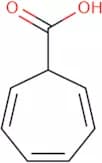
CAS:<p>Versatile small molecule scaffold</p>Formula:C9H17NO3Purity:Min. 95%Molecular weight:187.24 g/molCyclohepta-2,4,6-triene-1-carboxylic acid
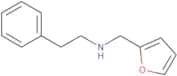
CAS:<p>Versatile small molecule scaffold</p>Formula:C8H8O2Purity:Min. 95%Molecular weight:136.15 g/molFuran-2-ylmethyl-phenethyl-amine
CAS:Controlled Product<p>Versatile small molecule scaffold</p>Formula:C13H15NOPurity:Min. 95%Molecular weight:201.27 g/mol2-[(2-Hydroxyethyl)(pyridin-2-yl)amino]ethan-1-ol
CAS:<p>Versatile small molecule scaffold</p>Formula:C9H14N2O2Purity:Min. 95%Molecular weight:182.22 g/mol3-[(Furan-2-ylmethyl)-amino]-propan-1-ol
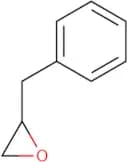
CAS:<p>Versatile small molecule scaffold</p>Formula:C8H13NO2Purity:Min. 95%Molecular weight:155.2 g/mol2-Benzyloxirane
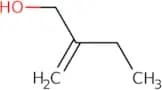
CAS:<p>2-Benzyloxirane is a reactive compound that contains a hydroxyl group and can form covalent adducts with metal hydroxides. It also forms enantiomeric pairs and can react with epoxides to form oxiranes. 2-Benzyloxirane has been shown to have effects on the liver, including symptoms of nausea, vomiting, and jaundice. Chronic oral exposure to 2-benzyloxirane causes an overload of calcium ions in the body. This may lead to symptoms such as muscle spasms, convulsions, and paralysis.</p>Formula:C9H10OPurity:Min. 95%Molecular weight:134.18 g/mol2-Ethyl-2-propen-1-ol
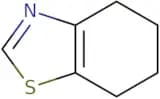
CAS:<p>Versatile small molecule scaffold</p>Formula:C5H10OPurity:Min. 95%Molecular weight:86.13 g/mol4,5,6,7-Tetrahydro-1,3-benzothiazole
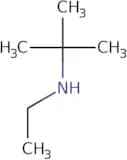
CAS:<p>4,5,6,7-Tetrahydro-1,3-benzothiazole is a synthetic substance that has neuroprotective effects and may be used for the treatment of nervous system diseases. It is synthesized from l-tartaric acid and potassium dichromate with hydrochloric acid as a catalyst. The product is often found in an isomeric mixture or as individual isomers. This chemical study can be used to prepare pharmaceutical preparations or other chemical products.</p>Formula:C7H9NSPurity:Min. 95%Molecular weight:139.22 g/molN-tert-Butylethylamine
CAS:<p>N-tert-Butylethylamine is an organic compound that is the amide of tert-butanol and ethylamine. It can be used as a hydrogen peroxide source in organic synthesis. N-tert-Butylethylamine has been shown to have antioxidant properties, which may be due to its ability to scavenge free radicals. N-tert-Butylethylamine has also been shown to crosslink polymers, such as polyethylene and polypropylene, with high efficiency. The resulting materials are reusable and can be regenerated with acid catalyst. This reusability makes N-tert-Butylethylamine an attractive alternative to conventional crosslinkers that are not easily recycled or reused.</p>Formula:C6H15NPurity:Min. 95%Molecular weight:101.19 g/molDecahydrocyclohepta[C]pyrrole-1,3-dione
CAS:<p>Versatile small molecule scaffold</p>Formula:C9H13NO2Purity:Min. 95%Molecular weight:167.2 g/mol3-Oxaspiro[5.6]dodecane-2,4-dione
CAS:<p>Versatile small molecule scaffold</p>Formula:C11H16O3Purity:Min. 95%Molecular weight:196.24 g/mol2-[1-(Carboxymethyl)cycloheptyl]acetic acid
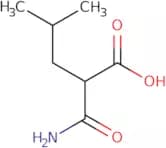
CAS:<p>Versatile small molecule scaffold</p>Formula:C11H18O4Purity:Min. 95%Molecular weight:214.26 g/mol2-Carbamoyl-4-methylpentanoic acid
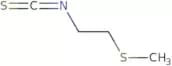
CAS:<p>Versatile small molecule scaffold</p>Formula:C7H13NO3Purity:Min. 95%Molecular weight:159.18 g/mol1-Isothiocyanato-2-(methylsulfanyl)ethane
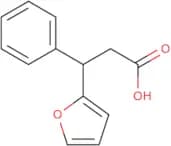
CAS:Versatile small molecule scaffoldFormula:C4H7NS2Purity:Min. 95%Molecular weight:133.2 g/mol3-(2-Furyl)-3-phenylpropanoic acid
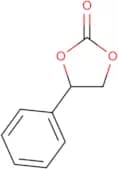
CAS:<p>Versatile small molecule scaffold</p>Formula:C13H12O3Purity:Min. 95%Molecular weight:216.23 g/mol4-Phenyl-1,3-dioxolan-2-one
CAS:<p>4-Phenyl-1,3-dioxolan-2-one is a chemical compound that can be synthesized using styrene and an asymmetric synthesis. It is a nonaqueous reaction with a solid catalyst and has been shown to react with halides. 4-Phenyl-1,3-dioxolan-2-one is an aromatic hydrocarbon that reacts with zirconium oxide in the presence of hydrogen fluoride to produce carbonate. This interaction produces a molecule that can be used as an intermediate in other reactions. 4-Phenyl-1,3-dioxolan-2-one has been shown to have synergistic interactions with other chemicals during experiments involving its use as a catalyst for carbonate production.</p>Formula:C9H8O3Purity:Min. 95%Molecular weight:164.16 g/mol[4-(Propan-2-yl)phenyl]methanethiol
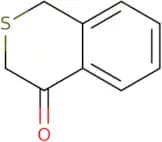
CAS:<p>Versatile small molecule scaffold</p>Formula:C10H14SPurity:Min. 95%Molecular weight:166.29 g/mol2-Thioisochroman-4-one
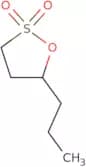
CAS:<p>2-Thioisochroman-4-one is a hydrogen bond inhibitor that binds to the hydroxyl group of the enzyme. It has antiinflammatory activity, and has been shown to inhibit prostaglandin synthesis in vitro. 2-Thioisochroman-4-one also inhibits arachidonic acid release from membrane phospholipids by inhibiting phospholipase A2, and is thought to be an endogenous inhibitor of cyclooxygenase (COX) enzymes. 2-Thioisochroman-4-one is a type of fatty acid that contains a nitro group, which can be reduced to form an intramolecular hydrogen bond with the carbonyl group. 2-Thioisochroman-4-one has been studied using X-ray diffraction data and molecular modeling techniques.</p>Formula:C9H8OSPurity:Min. 95%Molecular weight:164.23 g/mol5-Propyl-1,2-oxathiolane-2,2-dioxide
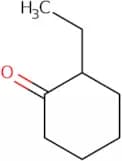
CAS:<p>Versatile small molecule scaffold</p>Formula:C6H12O3SPurity:Min. 95%Molecular weight:164.22 g/mol2-Ethylcyclohexanone
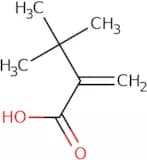
CAS:<p>2-Ethylcyclohexanone is a colorless liquid that has a pungent, sweet odor. It is an alkyl substituent with a conformational isomerization reaction. This process can be catalyzed by sulfide and ethyl bromoacetate. 2-Ethylcyclohexanone also has the ability to form carbonyl groups, which are susceptible to electrophilic substitution reactions with hydroxyl groups. The carbonyl group of 2-ethylcyclohexanone can undergo conformational changes because of its electron donating properties. The carbonyl group in this compound can also react with other nucleophiles that include amines, thiols, and alcohols. 2-Ethylcyclohexanone has been detected in rat brain tissue by nmr spectra and diffraction experiments.</p>Formula:C8H14OPurity:Min. 95%Molecular weight:126.2 g/mol3,3-Dimethyl-2-methylidenebutanoic acid
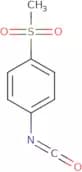
CAS:<p>Versatile small molecule scaffold</p>Formula:C7H12O2Purity:Min. 95%Molecular weight:128.17 g/mol1-Isocyanato-4-methanesulfonylbenzene
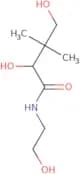
CAS:Versatile small molecule scaffoldFormula:C8H7NO3SPurity:Min. 95%Molecular weight:197.21 g/mol2,4-Dihydroxy-N-(2-hydroxyethyl)-3,3-dimethylbutanamide
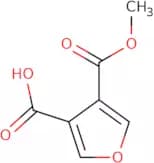
CAS:Versatile small molecule scaffoldFormula:C8H17NO4Purity:Min. 95%Molecular weight:191.22 g/mol4-(Methoxycarbonyl)furan-3-carboxylic acid
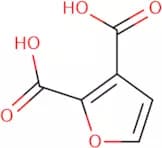
CAS:<p>4-(Methoxycarbonyl)furan-3-carboxylic acid is a fluorescent compound that can be used as an efficient hydrogenation reagent. It is also a versatile and efficient synthetic intermediate for the synthesis of bicyclic and heterocycled amines. 4-(Methoxycarbonyl)furan-3-carboxylic acid is generated from the reduction of 4-(methoxycarbonyl)pyrazole with lithium aluminum hydride, followed by hydrolysis. This method has been shown to yield high yields and functionalized products.</p>Formula:C7H6O5Purity:Min. 95%Molecular weight:170.12 g/molFuran-2,3-dicarboxylic acid
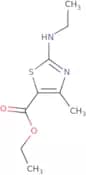
CAS:<p>Furan-2,3-dicarboxylic acid is a fluorogenic probe that reacts with water vapor to form a fluorescent product. The reaction of furan-2,3-dicarboxylic acid with methanol and ethylene glycol yields 2,5-furandicarboxylic acid. This compound is also the product of the reaction of furan-2,3-dicarboxylic acid with magnesium salt in anhydrous sodium carbonate. Furan-2,3-dicarboxylic acid can be oxidized by pyridinium chlorochromate (PCC) to form 5-hydroxymethylfurfural. Furan-2,3-dicarboxylic acid has been shown to react with p-hydroxybenzoic acid in the presence of an oxidation catalyst to yield a furandicarboxyl derivative.</p>Formula:C6H4O5Purity:Min. 95%Molecular weight:156.09 g/molEthyl 2-(ethylamino)-4-methyl-1,3-thiazole-5-carboxylate
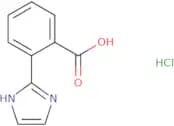
CAS:Versatile small molecule scaffoldFormula:C9H14N2O2SPurity:Min. 95%Molecular weight:214.29 g/mol2-(1H-Imidazol-2-yl)benzoic acid hydrochloride
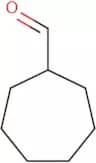
CAS:Versatile small molecule scaffoldFormula:C10H9ClN2O2Purity:Min. 95%Molecular weight:224.64 g/molcycloheptanecarbaldehyde
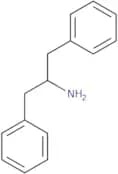
CAS:<p>Cycloheptanecarbaldehyde is a divalent hydrocarbon that is an agonist at the opioid receptor. It also has been shown to react with chlorinated compounds, such as hydrochloric acid or chloramine, which may indicate its presence in the environment. Cycloheptanecarbaldehyde has been found to be reactive with amines and other compounds that have a hydrogen atom attached to a heteroatom such as oxygen or nitrogen. The compound can also react with aliphatic hydrocarbons under certain conditions, thereby forming tropylium ions.</p>Formula:C8H14OPurity:Min. 95%Molecular weight:126.2 g/mol1,3-Diphenylpropan-2-amine
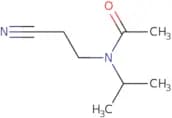
CAS:Controlled Product<p>1,3-Diphenylpropan-2-amine is a molecule with a hydrophobic nature. It has been shown to activate the enzyme monoamine oxidase in the brain, leading to an increase in the production of heat and causing hyperthermia. 1,3-Diphenylpropan-2-amine is metabolized by isozymes in different tissues and organs. 1,3-Diphenylpropan-2-amine interacts with pethidine (meperidine) to produce meperidine analogues, which are active at opioid receptors. These meperidine analogues have been shown to cause respiratory depression and hypotension when administered intravenously. The benzyl groups on this molecule have also been shown to interact with imidazoles such as ketoconazole and clotrimazole.</p>Formula:C15H17NPurity:Min. 95%Molecular weight:211.3 g/molN-(2-Cyanoethyl)-N-(propan-2-yl)acetamide
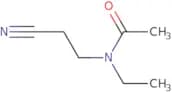
CAS:Versatile small molecule scaffoldFormula:C8H14N2OPurity:Min. 95%Molecular weight:154.21 g/molN-(2-Cyanoethyl)-N-ethylacetamide
CAS:<p>Versatile small molecule scaffold</p>Formula:C7H12N2OPurity:Min. 95%Molecular weight:140.18 g/mol

![5-Furan-2-yl-[1,3,4]thiadiazol-2-ylamine](/_next/image/?url=https%3A%2Fstatic.cymitquimica.com%2Fproducts%2F3D%2Fthumb-webp%2FEAA44745.webp&w=3840&q=75)
![Butyl[(2,3-dihydro-1,4-benzodioxin-2-yl)methyl]amine](/_next/image/?url=https%3A%2Fstatic.cymitquimica.com%2Fproducts%2F3D%2Fthumb-webp%2FEAA44260.webp&w=3840&q=75)
![2-[(2-Hydroxyethyl)(pyridin-2-yl)amino]ethan-1-ol](/_next/image/?url=https%3A%2Fstatic.cymitquimica.com%2Fproducts%2F3D%2Fthumb-webp%2FEAA43934.webp&w=3840&q=75)
![3-[(Furan-2-ylmethyl)-amino]-propan-1-ol](/_next/image/?url=https%3A%2Fstatic.cymitquimica.com%2Fproducts%2F3D%2Fthumb-webp%2FEAA43922.webp&w=3840&q=75)
![Decahydrocyclohepta[C]pyrrole-1,3-dione](/_next/image/?url=https%3A%2Fstatic.cymitquimica.com%2Fproducts%2F3D%2Fthumb-webp%2FEAA43221.webp&w=3840&q=75)
![3-Oxaspiro[5.6]dodecane-2,4-dione](/_next/image/?url=https%3A%2Fstatic.cymitquimica.com%2Fproducts%2F3D%2Fthumb-webp%2FEAA43219.webp&w=3840&q=75)
![2-[1-(Carboxymethyl)cycloheptyl]acetic acid](/_next/image/?url=https%3A%2Fstatic.cymitquimica.com%2Fproducts%2F3D%2Fthumb-webp%2FEAA43218.webp&w=3840&q=75)
![[4-(Propan-2-yl)phenyl]methanethiol](/_next/image/?url=https%3A%2Fstatic.cymitquimica.com%2Fproducts%2F3D%2Fthumb-webp%2FEAA42753.webp&w=3840&q=75)