Building Blocks
This section contains fundamental products for the synthesis of organic and biological compounds. Building blocks are the essential starting materials used to construct complex molecules through various chemical reactions. They play a critical role in drug discovery, material science, and chemical research. At CymitQuimica, we offer a diverse range of high-quality building blocks to support your innovative research and industrial projects, ensuring you have the essential components for successful synthesis.
Subcategories of "Building Blocks"
- Boronic Acids & Boronic Acid Derivatives(5,778 products)
- Chiral Building Blocks(1,243 products)
- Hydrocarbon Building Blocks(6,098 products)
- Organic Building Blocks(61,057 products)
Found 200716 products of "Building Blocks"
Sort by
Purity (%)
0
100
|
0
|
50
|
90
|
95
|
100
[4-(Fluoromethyl)oxan-4-yl]methanamine hydrochloride
CAS:Versatile small molecule scaffoldFormula:C7H15ClFNOPurity:Min. 95%Molecular weight:183.65 g/mol(8-Fluoro-[1,2,4]triazolo[4,3-a]pyridin-3-yl)methanamine hydrochloride
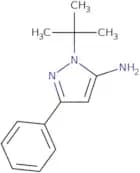
CAS:Versatile small molecule scaffoldFormula:C7H8ClFN4Purity:Min. 95%Molecular weight:202.62 g/mol2-tert-Butyl-5-phenyl-2,3-dihydro-1H-pyrazol-3-imine
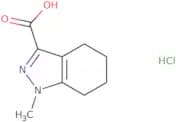
CAS:Versatile small molecule scaffoldFormula:C13H17N3Purity:Min. 95%Molecular weight:215.29 g/mol1-Methyl-4,5,6,7-tetrahydro-1H-indazole-3-carboxylic acid hydrochloride
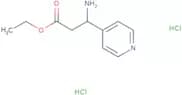
CAS:<p>Versatile small molecule scaffold</p>Formula:C9H13ClN2O2Purity:Min. 95%Molecular weight:216.66 g/molEthyl 3-amino-3-(pyridin-4-yl)propanoate dihydrochloride
CAS:<p>Versatile small molecule scaffold</p>Formula:C10H16Cl2N2O2Purity:Min. 95%Molecular weight:267.15 g/mol3-(tert-Butoxy)-2-cyclopentyl-3-oxopropanoic acid
CAS:Versatile small molecule scaffoldFormula:C12H20O4Purity:Min. 95%Molecular weight:228.28 g/mol4-[2-(tert-Butoxy)-2-oxoethyl]oxane-4-carboxylic acid
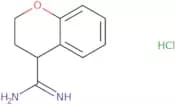
CAS:<p>Versatile small molecule scaffold</p>Formula:C12H20O5Purity:Min. 95%Molecular weight:244.28 g/mol3,4-Dihydro-2H-1-benzopyran-4-carboximidamide hydrochloride
CAS:<p>Versatile small molecule scaffold</p>Formula:C10H13ClN2OPurity:Min. 95%Molecular weight:212.67 g/mol1-[2-(2-Methoxyethoxy)ethyl]piperazine dihydrochloride
CAS:Versatile small molecule scaffoldFormula:C9H22Cl2N2O2Purity:Min. 95%Molecular weight:261.19 g/mol5-(Aminomethyl)-4H,5H,6H,7H-pyrazolo[1,5-a]pyridine-3-carboxylic acid hydrochloride
CAS:<p>Versatile small molecule scaffold</p>Formula:C9H14ClN3O2Purity:Min. 95%Molecular weight:231.68 g/mol{1-Azabicyclo[3.2.1]octan-5-yl}methanol hydrochloride
CAS:Versatile small molecule scaffoldFormula:C8H16ClNOPurity:Min. 95%Molecular weight:177.67 g/mol[4-(Aminomethyl)pyridin-2-yl]methanol dihydrochloride
CAS:Versatile small molecule scaffoldFormula:C7H12Cl2N2OPurity:Min. 95%Molecular weight:211.09 g/moltert-Butyl N-[5-chloro-2-(oxolane-3-carbonyl)phenyl]carbamate
CAS:Versatile small molecule scaffoldFormula:C16H20ClNO4Purity:Min. 95%Molecular weight:325.79 g/mol1-[(1,3-Oxazol-2-yl)methyl]piperazine dihydrochloride
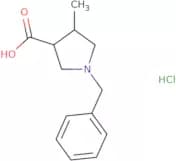
CAS:<p>Versatile small molecule scaffold</p>Formula:C8H15Cl2N3OPurity:Min. 95%Molecular weight:240.13 g/mol1-Benzyl-4-methylpyrrolidine-3-carboxylic acid hydrochloride
CAS:Versatile small molecule scaffoldFormula:C13H18ClNO2Purity:Min. 95%Molecular weight:255.74 g/mol2-(4-Methoxycyclohexyl)-2-[(trimethylsilyl)oxy]propanenitrile
CAS:<p>Versatile small molecule scaffold</p>Formula:C13H25NO2SiPurity:Min. 95%Molecular weight:255.43 g/mol2-Chloro-N-{2-[(3-methylphenyl)methyl]-2,3-dihydro-1H-pyrazol-3-ylidene}acetamide
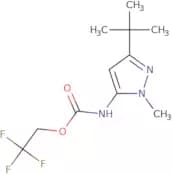
CAS:Versatile small molecule scaffoldFormula:C13H14ClN3OPurity:Min. 95%Molecular weight:263.72 g/mol2,2,2-Trifluoroethyl N-(5-tert-butyl-2-methyl-2,3-dihydro-1H-pyrazol-3-ylidene)carbamate
CAS:Versatile small molecule scaffoldFormula:C11H16F3N3O2Purity:Min. 95%Molecular weight:279.26 g/molN-[2-(3,4-Dihydroxyphenyl)ethyl]octanamide
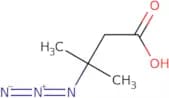
CAS:N-[2-(3,4-Dihydroxyphenyl)ethyl]octanamide (CGP3466B) is a histone deacetylase (HDAC) inhibitor. It is used as a tool to investigate the role of HDACs in various diseases. CGP3466B has been shown to activate inflammatory genes, including NF-κB and TNF-α, which are implicated in inflammatory diseases. CGP3466B has also been shown to inhibit the polymerase chain reaction (PCR), leading to a decreased production of inflammatory molecules such as TNF-α. This drug can be used as a therapeutic agent for patients with nephrology dialysis and those with inflammatory diseases. CGP3466B was shown to have an inhibitory effect on muscle cell proliferation and is being investigated for its use in cancer treatment.Formula:C16H25NO3Purity:Min. 95%Molecular weight:279.37 g/mol3-Azido-3-methylbutanoic acid
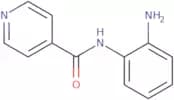
CAS:<p>3-Azido-3-methylbutanoic acid is an azide that is used as a catalyst. It is a homogeneous catalyst that can be used for the organic synthesis of olefins, such as ethylene and propylene oxide, and for the synthesis of silanes. 3-Azido-3-methylbutanoic acid can be formed by treating 3-azidobutane with methanol in the presence of sodium hydroxide or potassium hydroxide. This reaction forms a salt called sodium or potassium 3-azidomethylbutanoate, which is then hydrolyzed to form 3-azido-3-methylbutanoic acid.</p>Formula:C5H9N3O2Purity:Min. 95%Molecular weight:143.14 g/molN-(2-Amino-phenyl)-isonicotinamide
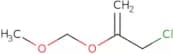
CAS:<p>N-(2-Amino-phenyl)-isonicotinamide is a compound that has various characteristics and potential applications. It has been studied for its interaction with dopamine, as well as its ability to react with methanol and hydrogen atoms. This compound also exhibits amide properties and has been investigated in the development of DNA vaccines. Additionally, it has shown cytotoxic effects on multidrug-resistant cells and demonstrated potential as a catalyst in reactions involving diphenyl ether and guanidine. Furthermore, N-(2-Amino-phenyl)-isonicotinamide has been explored in research related to ornithine, tripterygium, ammonium salts, and tetrachloride. Its diverse characteristics make it an intriguing compound for further study and potential applications.</p>Formula:C12H11N3OPurity:Min. 95%Molecular weight:213.24 g/mol2-(Chloromethyl)-3,5-dioxahex-1-ene
CAS:<p>2-(Chloromethyl)-3,5-dioxahex-1-ene is a synthetic compound that belongs to the group of piperidine compounds. It is a nucleophile and a primary amine that reacts with carbonyl compounds in an efficient method. This reaction is stereoselective and produces the corresponding 2-(chloromethyl)-3,5-dioxahex-1-enes. The chloride ion can be replaced by other nucleophiles such as methoxymethyl or amines. The malonate ester can also be used for this reaction.<br>2-(Chloromethyl)-3,5-dioxahex-1-ene has been shown to react with phenylacetonitrile and chloride ions to produce alkylated products such as 2-(chloromethyl)-3,5-dioxahexanenitrile or 2-(chloromethyl)-4,6-diox</p>Formula:C5H9ClO2Purity:Min. 95%Molecular weight:136.58 g/mol2-[4-(Trifluoroacetamido)phenyl]acetic acid
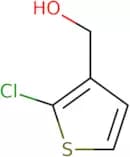
CAS:Versatile small molecule scaffoldFormula:C10H8F3NO3Purity:Min. 95%Molecular weight:247.17 g/mol(2-Chlorothiophen-3-yl)methanol
CAS:<p>Versatile small molecule scaffold</p>Formula:C5H5ClOSPurity:Min. 95%Molecular weight:148.61 g/mol[2,2'-Bipyridin]-3-amine
CAS:<p>Versatile small molecule scaffold</p>Formula:C10H9N3Purity:Min. 95%Molecular weight:171.2 g/mol{4-Aminobicyclo[2.2.2]octan-1-yl}methanol
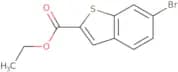
CAS:Versatile small molecule scaffoldFormula:C9H17NOPurity:Min. 95%Molecular weight:155.24 g/molEthyl 6-bromo-1-benzothiophene-2-carboxylate
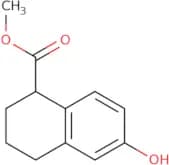
CAS:Versatile small molecule scaffoldFormula:C11H9BrO2SPurity:Min. 95%Molecular weight:285.16 g/molMethyl 6-hydroxy-1,2,3,4-tetrahydronaphthalene-1-carboxylate
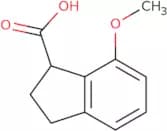
CAS:<p>Versatile small molecule scaffold</p>Formula:C12H14O3Purity:Min. 95%Molecular weight:206.24 g/mol7-Methoxy-2,3-dihydro-1H-indene-1-carboxylic acid
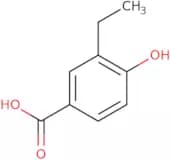
CAS:Versatile small molecule scaffoldFormula:C11H12O3Purity:Min. 95%Molecular weight:192.21 g/mol3-Ethyl-4-hydroxybenzoic acid
CAS:<p>Versatile small molecule scaffold</p>Formula:C9H10O3Purity:Min. 95%Molecular weight:166.17 g/mol1-[(4-Methoxyphenyl)methyl]-1H-1,2,3,4-tetrazole-5-thiol
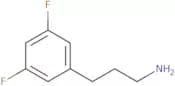
CAS:Versatile small molecule scaffoldFormula:C9H10N4OSPurity:Min. 95%Molecular weight:222.27 g/mol3-(3,5-Difluorophenyl)propan-1-amine
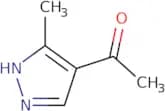
CAS:Versatile small molecule scaffoldFormula:C9H11F2NPurity:Min. 95%Molecular weight:171.19 g/mol1-(5-Methyl-1H-Pyrazol-4-Yl)Ethanone
CAS:<p>Phenylhydrazine is a white crystalline solid with a molecular weight of 150.25, and the molecular formula C6H5NHN. It is soluble in water, alcohol, ether and chloroform. Phenylhydrazine can react with an acid chloride to form a hydrazone; this reaction is used in the synthesis of some pharmaceuticals. The most common use of phenylhydrazine is as a precursor to various pharmaceuticals, such as antipyretics and anti-inflammatory agents. Phenylhydrazine reacts with zinc chloride to form 1-(5-methyl-1H-pyrazol-4-yl)ethanone.</p>Formula:C6H8N2OPurity:Min. 95%Molecular weight:124.14 g/molEthyl 2-[(2-carbamoylphenyl)amino]acetate
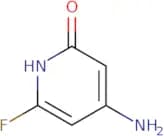
CAS:Versatile small molecule scaffoldFormula:C11H14N2O3Purity:Min. 95%Molecular weight:222.24 g/mol4-Amino-6-fluoropyridin-2(1H)-one
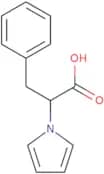
CAS:Versatile small molecule scaffoldFormula:C5H5FN2OPurity:Min. 95%Molecular weight:128.11 g/mol3-Phenyl-2-(1H-pyrrol-1-yl)propanoic acid
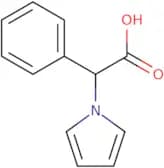
CAS:Versatile small molecule scaffoldFormula:C13H13NO2Purity:Min. 95%Molecular weight:215.25 g/mol2-phenyl-2-(1H-pyrrol-1-yl)acetic acid
CAS:Versatile small molecule scaffoldFormula:C12H11NO2Purity:Min. 95%Molecular weight:201.23 g/mol1-[(Methylamino)methyl]-1,2,3,4-tetrahydronaphthalen-1-ol
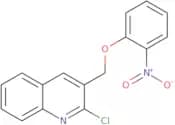
CAS:Versatile small molecule scaffoldFormula:C12H17NOPurity:Min. 95%Molecular weight:191.3 g/mol2-Chloro-3-(2-nitrophenoxymethyl)quinoline
CAS:Versatile small molecule scaffoldFormula:C16H11ClN2O3Purity:Min. 95%Molecular weight:314.72 g/molMethyl 3-[(2-methyl-1,3-thiazolidin-4-yl)formamido]propanoate hydrochloride
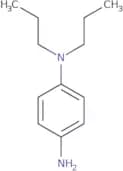
CAS:Versatile small molecule scaffoldFormula:C9H17ClN2O3SPurity:Min. 95%Molecular weight:268.76 g/molN-1-,N-1-Dipropyl-1,4-benzenediamine
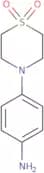
CAS:Versatile small molecule scaffoldFormula:C12H20N2Purity:Min. 95%Molecular weight:192.31 g/mol4-(4-Aminophenyl)thiomorpholine 1,1-Dioxide
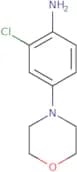
CAS:<p>Versatile small molecule scaffold</p>Formula:C10H14N2O2SPurity:Min. 95%Molecular weight:226.29 g/mol2-Chloro-4-(morpholin-4-yl)aniline
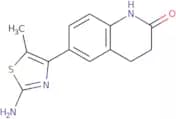
CAS:<p>Versatile small molecule scaffold</p>Formula:C10H13ClN2OPurity:Min. 95%Molecular weight:212.67 g/mol6-(2-Amino-5-methyl-1,3-thiazol-4-yl)-1,2,3,4-tetrahydroquinolin-2-one
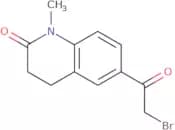
CAS:Versatile small molecule scaffoldFormula:C13H13N3OSPurity:Min. 95%Molecular weight:259.33 g/mol6-(2-Bromoacetyl)-1-methyl-1,2,3,4-tetrahydroquinolin-2-one
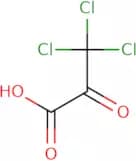
CAS:Versatile small molecule scaffoldFormula:C12H12BrNO2Purity:Min. 95%Molecular weight:282.13 g/mol3,3,3-Trichloro-2-oxopropanoic acid
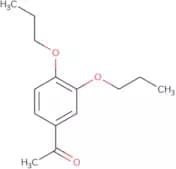
CAS:<p>3,3,3-Trichloro-2-oxopropanoic acid is a photochemical agent that has been used in the synthesis of sulfonamides. It is produced by the reaction of pyruvic acid with sulfuryl chloride or by the reaction of chloroacetic acid with ammonium chloride. The product can be converted to an amine or dichloride using piperidine or chlorine respectively. 3,3,3-Trichloro-2-oxopropanoic acid can also be synthesized from hydroperoxides and amines.</p>Formula:C3HCl3O3Purity:Min. 95%Molecular weight:191.39 g/mol1-(3,4-Dipropoxyphenyl)ethan-1-one
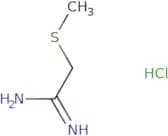
CAS:<p>Versatile small molecule scaffold</p>Formula:C14H20O3Purity:Min. 95%Molecular weight:236.31 g/mol2-(Methylsulfanyl)ethanimidamide hydrochloride
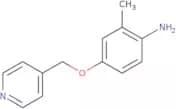
CAS:2-(Methylsulfanyl)ethanimidamide hydrochloride (2MEA) is a pesticide that belongs to the group of esters. It is an alkylating agent that inhibits the growth of fungi by reacting with amino and sulfhydryl groups in proteins. 2MEA has also been shown to be effective against bacteria, specifically those that produce alkoxy or hydroxypyrimidines. The mechanism of action for 2MEA is similar to that of other halogenated alkylating agents, such as chloroacetonitrile. 2MEA is used as a catalyst for the production of mercaptans and alkylthios.Formula:C3H9ClN2SPurity:Min. 95%Molecular weight:140.64 g/mol2-Methyl-4-(pyridin-4-ylmethoxy)aniline
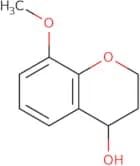
CAS:<p>Versatile small molecule scaffold</p>Formula:C13H14N2OPurity:Min. 95%Molecular weight:214.26 g/mol8-Methoxychroman-4-ol
CAS:<p>Versatile small molecule scaffold</p>Formula:C10H12O3Purity:Min. 95%Molecular weight:180.2 g/mol
![[4-(Fluoromethyl)oxan-4-yl]methanamine hydrochloride](/_next/image/?url=https%3A%2Fstatic.cymitquimica.com%2Fproducts%2F3D%2Fthumb-webp%2FFDD55825.webp&w=3840&q=75)

![(8-Fluoro-[1,2,4]triazolo[4,3-a]pyridin-3-yl)methanamine hydrochloride](/_next/image/?url=https%3A%2Fstatic.cymitquimica.com%2Fproducts%2F3D%2Fthumb-webp%2FFDD55829.webp&w=3840&q=75)

![4-[2-(tert-Butoxy)-2-oxoethyl]oxane-4-carboxylic acid](/_next/image/?url=https%3A%2Fstatic.cymitquimica.com%2Fproducts%2F3D%2Fthumb-webp%2FFDD56088.webp&w=3840&q=75)
![1-[2-(2-Methoxyethoxy)ethyl]piperazine dihydrochloride](/_next/image/?url=https%3A%2Fstatic.cymitquimica.com%2Fproducts%2F3D%2Fthumb-webp%2FFDD56105.webp&w=3840&q=75)
![5-(Aminomethyl)-4H,5H,6H,7H-pyrazolo[1,5-a]pyridine-3-carboxylic acid hydrochloride](/_next/image/?url=https%3A%2Fstatic.cymitquimica.com%2Fproducts%2F3D%2Fthumb-webp%2FFDD56108.webp&w=3840&q=75)
![{1-Azabicyclo[3.2.1]octan-5-yl}methanol hydrochloride](/_next/image/?url=https%3A%2Fstatic.cymitquimica.com%2Fproducts%2F3D%2Fthumb-webp%2FFDD56119.webp&w=3840&q=75)
![[4-(Aminomethyl)pyridin-2-yl]methanol dihydrochloride](/_next/image/?url=https%3A%2Fstatic.cymitquimica.com%2Fproducts%2F3D%2Fthumb-webp%2FFDD56122.webp&w=3840&q=75)
![tert-Butyl N-[5-chloro-2-(oxolane-3-carbonyl)phenyl]carbamate](/_next/image/?url=https%3A%2Fstatic.cymitquimica.com%2Fproducts%2F3D%2Fthumb-webp%2FFDD56151.webp&w=3840&q=75)
![1-[(1,3-Oxazol-2-yl)methyl]piperazine dihydrochloride](/_next/image/?url=https%3A%2Fstatic.cymitquimica.com%2Fproducts%2F3D%2Fthumb-webp%2FFDD56152.webp&w=3840&q=75)
![2-(4-Methoxycyclohexyl)-2-[(trimethylsilyl)oxy]propanenitrile](/_next/image/?url=https%3A%2Fstatic.cymitquimica.com%2Fproducts%2F3D%2Fthumb-webp%2FFDD56194.webp&w=3840&q=75)
![2-Chloro-N-{2-[(3-methylphenyl)methyl]-2,3-dihydro-1H-pyrazol-3-ylidene}acetamide](/_next/image/?url=https%3A%2Fstatic.cymitquimica.com%2Fproducts%2F3D%2Fthumb-webp%2FFDD56418.webp&w=3840&q=75)
![N-[2-(3,4-Dihydroxyphenyl)ethyl]octanamide](/_next/image/?url=https%3A%2Fstatic.cymitquimica.com%2Fproducts%2F3D%2Fthumb-webp%2FFEA02681.webp&w=3840&q=75)
![2-[4-(Trifluoroacetamido)phenyl]acetic acid](/_next/image/?url=https%3A%2Fstatic.cymitquimica.com%2Fproducts%2F3D%2Fthumb-webp%2FFEA11362.webp&w=3840&q=75)
![[2,2'-Bipyridin]-3-amine](/_next/image/?url=https%3A%2Fstatic.cymitquimica.com%2Fproducts%2F3D%2Fthumb-webp%2FFEA16653.webp&w=3840&q=75)
![{4-Aminobicyclo[2.2.2]octan-1-yl}methanol](/_next/image/?url=https%3A%2Fstatic.cymitquimica.com%2Fproducts%2F3D%2Fthumb-webp%2FFEA17666.webp&w=3840&q=75)
![1-[(4-Methoxyphenyl)methyl]-1H-1,2,3,4-tetrazole-5-thiol](/_next/image/?url=https%3A%2Fstatic.cymitquimica.com%2Fproducts%2F3D%2Fthumb-webp%2FFEA21934.webp&w=3840&q=75)
![Ethyl 2-[(2-carbamoylphenyl)amino]acetate](/_next/image/?url=https%3A%2Fstatic.cymitquimica.com%2Fproducts%2F3D%2Fthumb-webp%2FFEA23433.webp&w=3840&q=75)
![1-[(Methylamino)methyl]-1,2,3,4-tetrahydronaphthalen-1-ol](/_next/image/?url=https%3A%2Fstatic.cymitquimica.com%2Fproducts%2F3D%2Fthumb-webp%2FFEA27155.webp&w=3840&q=75)
![Methyl 3-[(2-methyl-1,3-thiazolidin-4-yl)formamido]propanoate hydrochloride](/_next/image/?url=https%3A%2Fstatic.cymitquimica.com%2Fproducts%2F3D%2Fthumb-webp%2FFEA29263.webp&w=3840&q=75)