Building Blocks
Subcategories of "Building Blocks"
- Boronic Acids & Boronic Acid Derivatives(5,778 products)
- Chiral Building Blocks(1,243 products)
- Hydrocarbon Building Blocks(6,099 products)
- Organic Building Blocks(61,038 products)
Found 205376 products of "Building Blocks"
N,N'-Bis(3-aminopropyl)ethylenediamine
CAS:N,N'-Bis(3-aminopropyl)ethylenediamine is a molecule that contains an amine and a nitro group. The nitro group is electron-rich and can be reduced to the corresponding amino function by reduction with metal ions. In addition, N,N'-Bis(3-aminopropyl)ethylenediamine can bind to chloride ions through their respective amines. This process is called ion pairing or salt bridge formation, which stabilizes the pH of the solution. N,N'-Bis(3-aminopropyl)ethylenediamine has been shown to be effective in titration calorimetry experiments as an indicator of drug binding.
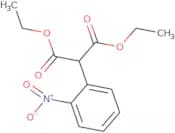
Formula:C8H22N4Purity:Min. 95%Molecular weight:174.29 g/mol1,3-diethyl 2-(2-nitrophenyl)propanedioate
CAS:Versatile small molecule scaffoldFormula:C13H15NO6Purity:Min. 95%Molecular weight:281.26 g/molMethyl 3-carbamimidoylpropanoate hydrochloride
CAS:Versatile small molecule scaffoldFormula:C5H11ClN2O2Purity:Min. 95%Molecular weight:166.6 g/mol4-Ethyl-2,6-dimethylphenol
CAS:Versatile small molecule scaffold
Formula:C10H14OPurity:Min. 95%Molecular weight:150.22 g/mol4-(Ethylsulfanyl)-3-methylbut-1-yne
CAS:Versatile small molecule scaffold
Formula:C7H12SPurity:Min. 95%Molecular weight:128.2 g/mol1H-Thieno[3,2-c]pyrazole
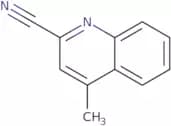
CAS:1H-Thieno[3,2-c]pyrazole is a fatty acid analog that inhibits the production of epidermal growth factor (EGF) in cells. It has been shown to have high resistance and is used as an antimicrobial agent against a variety of bacteria, including Escherichia coli and Salmonella typhimurium. 1H-Thieno[3,2-c]pyrazole also blocks the activity of angiogenic factors such as vascular endothelial growth factor (VEGF) and basic fibroblast growth factor (bFGF), which are involved in the proliferation of cancer cells. In addition, 1H-thieno[3,2-c]pyrazole has been shown to inhibit the production of prostate cancer cells.Formula:C5H4N2SPurity:Min. 95%Molecular weight:124.17 g/mol4-Methylquinoline-2-carbonitrile
CAS:4-Methylquinoline-2-carbonitrile is an organic compound that is used in the synthesis of natural products. It has been shown to be a highly efficient oxidant, with a singlet oxygen quantum yield of 0.5. This compound can be used in the catalytic oxidation of hydrazines and amines. 4-Methylquinoline-2-carbonitrile has also been shown to be sensitive to light, which makes it useful for photoinduced reactions.
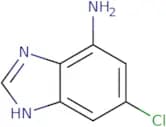
Formula:C11H8N2Purity:Min. 95%Molecular weight:168.19 g/mol6-Chloro-1H-1,3-benzodiazol-4-amine
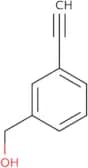
CAS:Versatile small molecule scaffoldFormula:C7H6ClN3Purity:Min. 95%Molecular weight:167.59 g/mol(3-Ethynylphenyl)methanol
CAS:(3-Ethynylphenyl)methanol is a colorless, volatile liquid with a chloroform-like odor. It is soluble in organic solvents and insoluble in water. It has a boiling point of 114°C and a melting point of -37°C. (3-Ethynylphenyl)methanol can be found as an impurity in polyester resins and polyurethane foams. This compound is also used to produce polymers such as polycondensation, polyesters, and dimethylformamide. (3-Ethynylphenyl)methanol is produced by the direct chlorination of phenol. The compound can be polymerized to form polymers that are resistant to uv light and heat, such as terephthaloyl chloride.
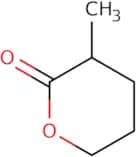
Formula:C9H8OPurity:Min. 95%Molecular weight:132.16 g/molTetrahydro-3-methylpyran-2-one
CAS:Versatile small molecule scaffold
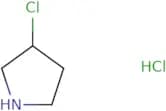
Formula:C6H10O2Purity:Min. 95%Molecular weight:114.14 g/mol3-Chloropyrrolidine hydrochloride
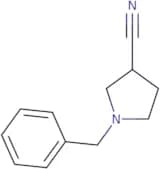
CAS:Versatile small molecule scaffoldFormula:C4H9Cl2NPurity:Min. 95%Molecular weight:142.02 g/mol1-Benzyl-pyrrolidine-3-carbonitrile
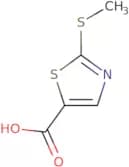
CAS:Versatile small molecule scaffoldFormula:C12H14N2Purity:Min. 95%Molecular weight:186.25 g/mol2-(Methylsulfanyl)-1,3-thiazole-5-carboxylic acid
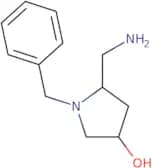
CAS:Versatile small molecule scaffoldFormula:C5H5NO2S2Purity:Min. 95%Molecular weight:175.2 g/mol(3R,5R)-5-(Aminomethyl)-1-benzylpyrrolidin-3-ol
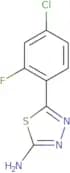
CAS:Versatile small molecule scaffoldFormula:C12H18N2OPurity:Min. 95%Molecular weight:206.3 g/mol5-(4-Chloro-2-fluorophenyl)-1,3,4-thiadiazol-2-amine
CAS:Versatile small molecule scaffold
Formula:C8H5ClFN3SPurity:Min. 95%Molecular weight:229.66 g/mol(S)-Octahydro-1H-pyrido[1,2-a]pyrazine dihydrochlorde
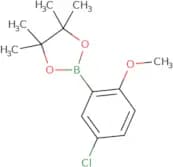
CAS:Versatile small molecule scaffoldFormula:C8H18Cl2N2Purity:Min. 95%Molecular weight:213.15 g/mol2-(5-Chloro-2-methoxyphenyl)-4,4,5,5-tetramethyl-1,3,2-dioxaborolane
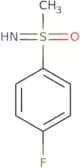
CAS:Versatile small molecule scaffoldFormula:C13H18BClO3Purity:Min. 95%Molecular weight:268.54 g/molS-(4-Fluorophenyl)-S-methyl-sulfoximine
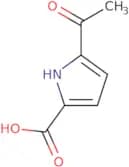
CAS:Versatile small molecule scaffoldFormula:C7H8FNOSPurity:Min. 95%Molecular weight:173.21 g/mol5-Acetyl-1H-pyrrole-2-carboxylic acid
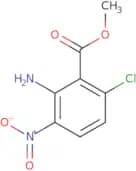
CAS:Versatile small molecule scaffoldFormula:C7H7NO3Purity:Min. 95%Color and Shape:PowderMolecular weight:153.14 g/molMethyl 2-amino-6-chloro-3-nitrobenzoate
CAS:Versatile small molecule scaffoldFormula:C8H7ClN2O4Purity:Min. 95%Molecular weight:230.6 g/mol1-[(tert-butoxy)carbonyl]cyclopent-3-ene-1-carboxylic acid
CAS:Versatile small molecule scaffold
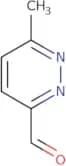
Formula:C11H16O4Purity:Min. 95%Molecular weight:212.2 g/mol6-methylpyridazine-3-carbaldehyde
CAS:Versatile small molecule scaffold
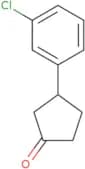
Formula:C6H6N2OPurity:Min. 95%Molecular weight:122.12 g/mol3-(3-Chlorophenyl)cyclopentan-1-one
CAS:Versatile small molecule scaffold
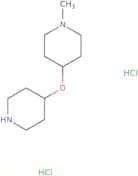
Formula:C11H11ClOPurity:Min. 95%Molecular weight:194.66 g/mol1-Methyl-4-(piperidin-4-yloxy)piperidine dihydrochloride
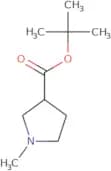
CAS:Versatile small molecule scaffoldFormula:C11H24Cl2N2OPurity:Min. 95%Molecular weight:271.22 g/moltert-Butyl 1-methylpyrrolidine-3-carboxylate
CAS:Versatile small molecule scaffoldFormula:C10H19NO2Purity:Min. 95%Molecular weight:185.27 g/mol4-[(Propane-2-sulfonyl)methyl]aniline
CAS:Versatile small molecule scaffold
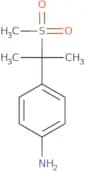
Formula:C10H15NO2SPurity:Min. 95%Molecular weight:213.3 g/mol4-(2-(Methylsulfonyl)propan-2-yl)aniline
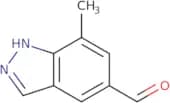
CAS:Versatile small molecule scaffoldFormula:C10H15NO2SPurity:Min. 95%Molecular weight:213.3 g/mol7-Methyl-1H-indazole-5-carbaldehyde
CAS:Versatile small molecule scaffold
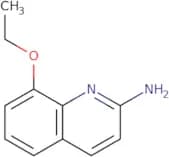
Formula:C9H8N2OPurity:Min. 95%Molecular weight:160.17 g/mol8-Ethoxyquinolin-2-amine
CAS:Versatile small molecule scaffold
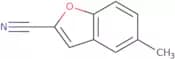
Formula:C11H12N2OPurity:Min. 95%Molecular weight:188.23 g/mol5-Methyl-1-benzofuran-2-carbonitrile
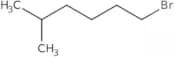
CAS:5-Methyl-1-benzofuran-2-carbonitrile is a synthetic compound that is used for the efficient synthesis of bromobenzofuran. It is a byproduct in the synthesis of 5,5′-dibromo-1,1′-bi(benzofuran) and benzofurans. The product can be utilized to synthesize pharmaceuticals such as diazepam and anesthetics such as nitrous oxide.Formula:C10H7NOPurity:Min. 95%Molecular weight:157.17 g/mol1-Bromo-5-methyl-hexane
CAS:1-Bromo-5-methyl-hexane is a volatile organic chemical that is used in the synthesis of pheromones and attractants. It has been shown to be an effective transport agent for other substances, such as aldehydes. This product has been used to study the effects of chemical ionization on the production of stereoisomers, which are molecules with the same molecular formula but different arrangements of atoms in space.
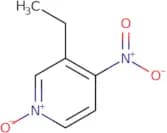
Formula:C7H15BrPurity:Min. 95%Molecular weight:179.1 g/mol3-Ethyl-4-nitropyridin-1-ium-1-olate
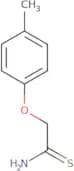
CAS:Versatile small molecule scaffoldFormula:C7H8N2O3Purity:Min. 95%Molecular weight:168.15 g/mol2-(4-Methylphenoxy)ethanethioamide
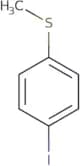
CAS:Versatile small molecule scaffoldFormula:C9H11NOSPurity:Min. 95%Molecular weight:181.26 g/mol4-Iodothioanisole
CAS:4-Iodothioanisole is a synthetic molecule that is used in organic chemistry as a reagent for the formation of carbon-carbon bonds. It reacts with electrophiles to form carbon-iodine bonds and can be used to make cross-coupling reactions. 4-Iodothioanisole also enhances the fluorescence of some molecules and has been used in supramolecular chemistry. The optical properties of 4-iodothioanisole depend on its environment. In solution, it shows a yellowish color due to intramolecular excitation of the cyclopentene system, while in the solid state it is orange because of free rotation around the carbon-iodine bond.
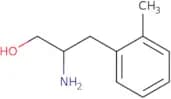
Formula:C7H7ISPurity:Min. 95%Molecular weight:250.09 g/mol2-Amino-3-(2-methylphenyl)propan-1-ol
CAS:Versatile small molecule scaffold
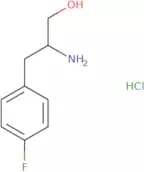
Formula:C10H15NOPurity:Min. 95%Molecular weight:165.23 g/mol2-Amino-3-(4-fluorophenyl)propan-1-ol
CAS:Versatile small molecule scaffoldFormula:C9H13ClFNOPurity:Min. 95%Molecular weight:205.66 g/molMethyl 7-oxoheptanoate
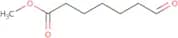
CAS:Methyl 7-oxoheptanoate is a synthetic anticancer agent that inhibits cell growth. It has been shown to inhibit cancer cells and induce apoptosis in HL-60 human leukemia cells. Methyl 7-oxoheptanoate is converted to methyl heptanoate by the enzyme enantiopure, which is then hydrolyzed into diacid and cyclopentenone. The cyclopentenones are synthesized from the diacid and cyclopentenone and are used as pharmaceuticals.
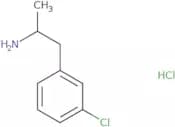
Formula:C8H14O3Purity:Min. 95%Molecular weight:158.19 g/mol1-(3-Chlorophenyl)propan-2-amine hydrochloride
CAS:Controlled ProductVersatile small molecule scaffold
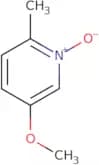
Formula:C9H13Cl2NPurity:Min. 95%Molecular weight:206.11 g/mol2-Methyl-5-methoxypyridine-N-oxide
CAS:Versatile small molecule scaffoldFormula:C7H9NO2Purity:Min. 95%Molecular weight:139.15 g/molMethyl 2-[4-(acetyloxy)phenyl]acetate
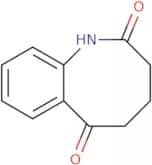
CAS:Versatile small molecule scaffoldFormula:C11H12O4Purity:Min. 95%Molecular weight:208.21 g/mol1,2,3,4,5,6-Hexahydro-1-benzazocine-2,6-dione
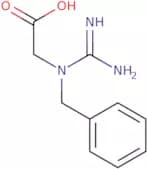
CAS:Versatile small molecule scaffoldFormula:C11H11NO2Purity:Min. 95%Molecular weight:189.21 g/mol2-(1-Benzylcarbamimidamido)acetic acid
CAS:Versatile small molecule scaffold
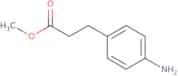
Formula:C10H13N3O2Purity:Min. 95%Molecular weight:207.23 g/molmethyl 3-(4-aminophenyl)propanoate
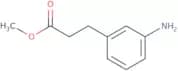
CAS:Versatile small molecule scaffoldFormula:C10H13NO2Purity:Min. 95%Molecular weight:179.2 g/molMethyl 3-(3-aminophenyl)propanoate
CAS:Versatile small molecule scaffoldFormula:C10H13NO2Purity:Min. 95%Molecular weight:179.22 g/molN-[(Hydrazinecarbonyl)methyl]pyridine-3-carboxamide
CAS:Versatile small molecule scaffoldFormula:C8H10N4O2Purity:Min. 95%Molecular weight:194.19 g/mol2-Bromoethyl ethyl sulfide
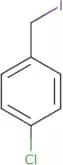
CAS:2-Bromoethyl ethyl sulfide (2BEES) is a colorless liquid with a strong, sulfur-like odor. It is soluble in water, but not in organic solvents. 2BEES is a nucleophilic reagent that reacts with electrophiles at the carbon atom adjacent to the electron-donating group. The reaction of 2BEES with an electron-deficient aromatic ring can lead to substitution or elimination reactions. 2BEES has a boiling point of 108°C and its spectral data corresponds to that of chlorine. The activation energy for this reaction is 29 kJ/mol.Formula:C4H9BrSPurity:Min. 95%Molecular weight:169.08 g/mol1-Chloro-4-(iodomethyl)benzene
CAS:1-Chloro-4-(iodomethyl)benzene (1CI) is a chlorinating agent that is used to produce aliphatic chlorinated compounds. It can be used for the alkylation of alcohols, as well as the chlorination of halides. 1CI has been shown to react with benzene in a synergistic manner when irradiated. In addition, it can be used for the preparation of iodides by reacting with sodium or potassium iodide in the presence of an alcohol and a catalyst. 1CI reacts with chloride ions to produce cyclic compounds in the microwave region. The reaction requires an electron transfer agent, such as copper chloride or silver nitrate, and yields are dependent on the type of alcohol used, which can be either aliphatic or cyclic.
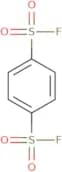
Formula:C7H6ClIPurity:Min. 95%Molecular weight:252.48 g/molBenzene-1,4-disulfonyl difluoride
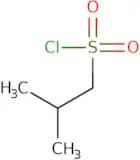
CAS:Versatile small molecule scaffoldFormula:C6H4F2O4S2Purity:Min. 95%Molecular weight:242.2 g/mol2-Methylpropane-1-sulfonyl chloride
CAS:2-Methylpropane-1-sulfonyl chloride is a ligand that binds to anilinoquinoline derivatives, such as the triazoles. It is also used in pharmaceuticals and as an antibacterial agent. 2-Methylpropane-1-sulfonyl chloride has been shown to inhibit Alzheimer's disease by preventing the accumulation of beta amyloid protein. This drug also inhibits bacterial growth by binding to the hydroxyl group on the outside of thiols, which are sulfur-containing compounds found in bacteria. 2-Methylpropane-1-sulfonyl chloride is structurally similar to pyridazine, a heterocyclic compound that acts as an inhibitor of DNA synthesis and protein synthesis in bacteria.
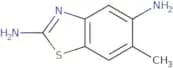
Formula:C4H9ClO2SPurity:Min. 95%Molecular weight:156.63 g/mol6-Methyl-1,3-benzothiazole-2,5-diamine
CAS:Versatile small molecule scaffoldFormula:C8H9N3SPurity:Min. 95%Molecular weight:179.24 g/mol



![1H-Thieno[3,2-c]pyrazole](/_next/image/?url=https%3A%2Fstatic.cymitquimica.com%2Fproducts%2F3D%2Fthumb-webp%2FKAA58859.webp&w=3840&q=75)
![(S)-Octahydro-1H-pyrido[1,2-a]pyrazine dihydrochlorde](/_next/image/?url=https%3A%2Fstatic.cymitquimica.com%2Fproducts%2F3D%2Fthumb-webp%2FKAB30345.webp&w=3840&q=75)
![1-[(tert-butoxy)carbonyl]cyclopent-3-ene-1-carboxylic acid](/_next/image/?url=https%3A%2Fstatic.cymitquimica.com%2Fproducts%2F3D%2Fthumb-webp%2FKAB31861.webp&w=3840&q=75)
![4-[(Propane-2-sulfonyl)methyl]aniline](/_next/image/?url=https%3A%2Fstatic.cymitquimica.com%2Fproducts%2F3D%2Fthumb-webp%2FKAB70261.webp&w=3840&q=75)
![Methyl 2-[4-(acetyloxy)phenyl]acetate](/_next/image/?url=https%3A%2Fstatic.cymitquimica.com%2Fproducts%2F3D%2Fthumb-webp%2FKBA40015.webp&w=3840&q=75)
![N-[(Hydrazinecarbonyl)methyl]pyridine-3-carboxamide](/_next/image/?url=https%3A%2Fstatic.cymitquimica.com%2Fproducts%2F3D%2Fthumb-webp%2FKBA41823.webp&w=3840&q=75)