


Building Blocks
This section contains fundamental products for the synthesis of organic and biological compounds. Building blocks are the essential starting materials used to construct complex molecules through various chemical reactions. They play a critical role in drug discovery, material science, and chemical research. At CymitQuimica, we offer a diverse range of high-quality building blocks to support your innovative research and industrial projects, ensuring you have the essential components for successful synthesis.
Subcategories of "Building Blocks"
- Boronic Acids & Boronic Acid Derivatives(5,778 products)
- Chiral Building Blocks(1,243 products)
- Hydrocarbon Building Blocks(6,098 products)
- Organic Building Blocks(61,057 products)
Found 200710 products of "Building Blocks"
Sort by
Purity (%)
0
100
|
0
|
50
|
90
|
95
|
100
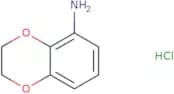
2,3-Dihydro-1,4-benzodioxin-5-amine hydrochloride
CAS:Versatile small molecule scaffoldFormula:C8H10ClNO2Purity:Min. 95%Molecular weight:187.62 g/mol7-Bromo-2,3-dihydro-1,4-benzodioxine-5-carboxylic acid
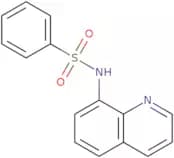
CAS:<p>Versatile small molecule scaffold</p>Formula:C9H7BrO4Purity:Min. 95%Molecular weight:259.05 g/mol8-(4-Benzenesulfonylamino)quinoline
CAS:<p>8-(4-Benzenesulfonylamino)quinoline is an anti-diabetic agent that inhibits the release of glucose from liver cells. It has been shown to be effective in hamsters with alloxan-induced diabetes. 8-(4-Benzenesulfonylamino)quinoline blocks the production of glucose by inhibiting the activity of pancreatic beta cells, which produce insulin and secrete it into the bloodstream. The drug binds specifically to these cells and prevents insulin secretion, thereby decreasing blood glucose levels. This agent can also interact with ascorbate (vitamin C), an extractant used to purify 8-(4-benzenesulfonylamino)quinoline, forming hydrogen peroxide (H2O2). The H2O2 formed may cause some damage to animal tissues when used for extraction purposes.</p>Formula:C15H12N2O2SPurity:Min. 95%Molecular weight:284.3 g/mol3-azabicyclo[3.2.0]heptane hydrochloride
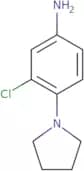
CAS:<p>Versatile small molecule scaffold</p>Formula:C6H11N·HClPurity:Min. 95%Molecular weight:133.62 g/mol3-Chloro-4-(1-pyrrolidinyl)aniline
CAS:Versatile small molecule scaffoldFormula:C10H13ClN2Purity:Min. 95%Molecular weight:196.68 g/mol3-Aminobenzanilide
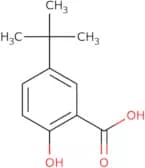
CAS:3-Aminobenzanilide is a reactive chemical substance that belongs to the class of amides. It is a hydrochloride salt, which is soluble in water and has the ability to form an amide bond with a variety of compounds. 3-Aminobenzanilide reacts with hydrochloric acid to create photochemical properties. The reactivity can be decreased by adding an amine to the molecule or by substituting it with chloride ions. 3-Aminobenzanilide has been shown to have lipid-lowering effects and may be used as a drug for this purpose. It also inhibits tyrosine kinase activity and may be used for this purpose as well. 3-Aminobenzanilide is found in anilines, which are chemicals that are usually made from benzene and ammonia. This compound can also be used as a model system for other molecules that contain nitro groups, such as nitroglycerin.Formula:C13H12N2OPurity:Min. 95%Molecular weight:212.25 g/mol5-tert-Butyl-2-hydroxybenzoic acid
CAS:5-tert-Butyl-2-hydroxybenzoic acid (5BHB) is a synthetic, hydrophobic and polyvalent compound that can reversibly activate xenobiotic metabolizing enzymes. 5BHB has been shown to induce CYP1A2 activity in human liver cells, as well as increase the activity of other xenobiotic metabolizing enzymes such as CYP3A4, CYP2D6, and CYP2C19. This activation occurs through the direct binding of 5BHB to nuclear receptors, which are proteins embedded within the cell membrane that bind with specific hormones or other molecules. A cavity within the receptor binds with the hydrophobic 5BHB molecule. The activation of these enzymes leads to increased metabolism of foreign compounds in the body and may be beneficial in reducing drug toxicity.Formula:C11H14O3Purity:Min. 98 Area-%Color and Shape:PowderMolecular weight:194.23 g/mol5-(Benzyloxy)-2-hydroxybenzoic acid
CAS:Versatile small molecule scaffoldFormula:C14H12O4Purity:Min. 95%Molecular weight:244.25 g/mol2-Methanesulfonylcyclohexan-1-one
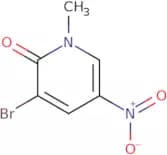
CAS:<p>Versatile small molecule scaffold</p>Formula:C7H12O3SPurity:Min. 95%Molecular weight:176.24 g/mol3-Bromo-1-methyl-5-nitropyridin-2(1H)-one
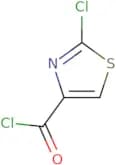
CAS:Versatile small molecule scaffoldFormula:C6H5BrN2O3Purity:Min. 95%Molecular weight:233.02 g/mol2-Chloro-1,3-thiazole-4-carbonyl chloride
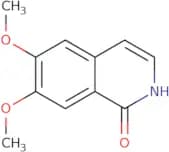
CAS:<p>Versatile small molecule scaffold</p>Formula:C4HCl2NOSPurity:Min. 95%Molecular weight:182.03 g/mol6,7-Dimethoxy-1,2-dihydroisoquinolin-1-one
CAS:<p>Versatile small molecule scaffold</p>Formula:C11H11NO3Purity:Min. 95%Molecular weight:205.21 g/molEthyl 3-hydroxy-1H-indazole-1-carboxylate
CAS:Versatile small molecule scaffoldFormula:C10H10N2O3Purity:Min. 95%Molecular weight:206.2 g/mol1-(2-Hydroxy-4,6-dimethylphenyl)ethan-1-one
CAS:<p>1-(2-Hydroxy-4,6-dimethylphenyl)ethan-1-one is an experimental molecule that is a hydrogen bond acceptor. It has a C3v conformation with the H atom in the hydroxymethyl group in a trans position and the methyl group on the opposite side of the ring. The experimentally determined frequencies for this molecule are in good agreement with those predicted by theory. This molecule has been observed to have a conformational change when it is protonated or deprotonated. In addition, this molecule can be used as an intermediate for polyhalogenating benzonitrile derivatives and carboxylic acids.</p>Formula:C10H12O2Purity:Min. 95%Molecular weight:164.2 g/mol1-[Amino(phenyl)methyl]cyclohexan-1-ol hydrochloride
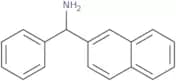
CAS:Versatile small molecule scaffoldFormula:C13H20ClNOPurity:Min. 95%Molecular weight:241.8 g/molNaphthalen-2-yl(phenyl)methanamine
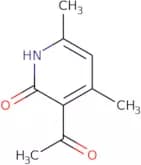
CAS:<p>Versatile small molecule scaffold</p>Formula:C17H15NPurity:Min. 95%Molecular weight:233.31 g/mol3-Acetyl-4,6-dimethyl-1,2-dihydropyridin-2-one
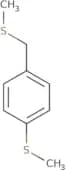
CAS:3-Acetyl-4,6-dimethyl-1,2-dihydropyridin-2-one is an organic compound with the chemical formula CHNO. It is a white crystalline solid that is soluble in water and polar organic solvents. The molecule features a cyclic amide group that can be cleaved to give three equivalents of ammonia. This acid has been shown to react with morpholine to form an acidic, basic isomeric mixture of 3-(morpholinomethyl)pyridine (3MP). The structure of the 3MP was determined by x-ray structural analysis and found to have a similar structure to pyridine.Formula:C9H11NO2Purity:Min. 95%Molecular weight:165.19 g/mol4-(Methylsulfanyl)benzyl methyl sulfide
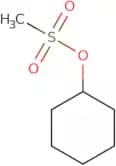
CAS:Versatile small molecule scaffoldFormula:C9H12S2Purity:Min. 95%Molecular weight:184.3 g/molCyclohexyl methanesulfonate
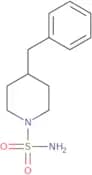
CAS:<p>Cyclohexyl methanesulfonate is a synthetic compound that acts as an inhibitor of the CCR5 receptor. It blocks the binding of HIV-1 to cells and prevents infection. Cyclohexyl methanesulfonate has been shown to be effective in preventing inflammatory diseases, such as Crohn's disease, and autoimmune diseases such as type 1 diabetes mellitus. Cyclohexyl methanesulfonate is a low-energy radical that can be synthesized using hydrochloric acid or sodium carbonate in the presence of trifluoroacetic acid. The synthesis requires a hydroxybenzoic acid and a trifluoromethanesulfonic acid for the formation of cyclohexane.</p>Formula:C7H14O3SPurity:Min. 95%Molecular weight:178.25 g/mol4-Benzylpiperidine-1-sulfonamide
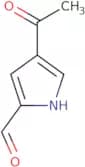
CAS:<p>Versatile small molecule scaffold</p>Formula:C12H18N2O2SPurity:Min. 95%Molecular weight:254.35 g/mol4-Acetyl-1H-pyrrole-2-carboxaldehyde
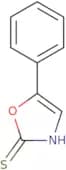
CAS:4-Acetyl-1H-pyrrole-2-carboxaldehyde is a molecule that can be used to regulate proton transfer. It has been shown to have a photophysical effect, in which it absorbs light and transfers the energy to a nearby acceptor. 4-Acetyl-1H-pyrrole-2-carboxaldehyde also facilitates the transfer of protons from one compound to another. The thermodynamics of this reaction are dependent on substituent effects as well as pyrazole ring geometry. 4-Acetyl-1H-pyrrole-2-carboxaldehyde is able to undergo Friedel–Crafts reactions, where it forms an ethoxycarbonyl group by attacking a double bond with carbon monoxide and hydrogen chloride. This can be done in two ways: the dihedral or syn orientation, which results in different products.Formula:C7H7NO2Purity:Min. 95%Molecular weight:137.14 g/mol5-Phenyl-1,3-oxazole-2-thiol
CAS:<p>Versatile small molecule scaffold</p>Formula:C9H7NOSPurity:Min. 95%Molecular weight:177.22 g/mol4-(Piperidin-3-yl)-1H-indole
CAS:Versatile small molecule scaffoldFormula:C13H16N2Purity:Min. 95%Molecular weight:200.3 g/mol1-Bromo-4-[(2-chloroethyl)sulfanyl]benzene
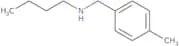
CAS:Versatile small molecule scaffoldFormula:C8H8BrClSPurity:Min. 95%Molecular weight:251.57 g/molN-(4-Methylbenzyl)butan-1-amine
CAS:Versatile small molecule scaffoldFormula:C12H19NPurity:Min. 95%Molecular weight:177.29 g/molButyl[(2-chlorophenyl)methyl]amine
CAS:<p>Versatile small molecule scaffold</p>Formula:C11H16ClNPurity:Min. 95%Molecular weight:197.7 g/mol2-[(4-Methanesulfonylphenyl)sulfanyl]benzoic acid
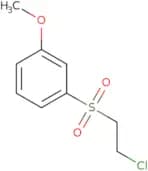
CAS:<p>Versatile small molecule scaffold</p>Formula:C14H12O4S2Purity:Min. 95%Molecular weight:308.4 g/mol1-(2-Chloroethanesulfonyl)-3-methoxybenzene
CAS:<p>Versatile small molecule scaffold</p>Formula:C9H11ClO3SPurity:Min. 95%Molecular weight:234.7 g/mol1-Chloro-4-[(2-chloroethyl)sulfonyl]benzene
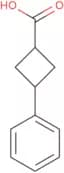
CAS:Versatile small molecule scaffoldFormula:C8H8Cl2O2SPurity:Min. 95%Molecular weight:239.12 g/molrac-(1S,3S)-3-Phenylcyclobutane-1-carboxylic acid
CAS:<p>Rac-1-phenylcyclobutane-1-carboxylic acid is a carbanion that contains a cyclopropylcarbinyl group. It can be prepared by the reaction of ketones with lithium diisopropylamide. Rac-1-phenylcyclobutane-1-carboxylic acid is used as an intermediate in the synthesis of drugs such as ampicillin and erythromycin.</p>Formula:C11H12O2Purity:Min. 95%Molecular weight:176.21 g/mol7-Methylpyrazolo[1,5-a]pyridine-3-carboxylic acid
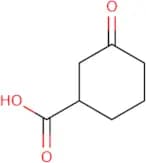
CAS:<p>Versatile small molecule scaffold</p>Formula:C9H8N2O2Purity:Min. 95%Molecular weight:176.17 g/mol3-Oxo-1-cyclohexanecarboxylic acid
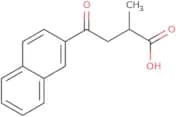
CAS:<p>3-Oxo-1-cyclohexanecarboxylic acid is a structural isomer of cyclohexanecarboxylic acid. It is a white crystalline solid that can react with monoxide to form 3-oxocyclohexane carboxylic acid or with chlorine to form 3-chlorocyclohexane carboxylic acid. The reaction rate and regioselectivity are dependent on the catalyst used. With catalytic amounts of copper and air, 3-oxocyclohexane carboxylic acid is formed preferentially, but when using an excess of copper, the chlorinated product is obtained in higher yields. This reaction occurs because the orthoformic carbon atom has a greater electron density than the meta formic carbon atom. The reaction mechanism begins with oxidation of the metal to form a metal oxide which then reacts with CO to produce CO2 and H2O.</p>Formula:C7H10O3Purity:Min. 95%Molecular weight:142.15 g/mol2-Methyl-4-(naphthalen-2-yl)-4-oxobutanoic acid
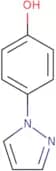
CAS:<p>Versatile small molecule scaffold</p>Formula:C15H14O3Purity:Min. 95%Molecular weight:242.27 g/mol4-(1H-Pyrazol-1-yl)phenol
CAS:<p>Versatile small molecule scaffold</p>Formula:C9H8N2OPurity:Min. 95%Molecular weight:160.17 g/molethyl 3-[(propan-2-yl)amino]propanoate
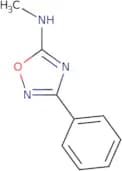
CAS:<p>Versatile small molecule scaffold</p>Formula:C8H17NO2Purity:Min. 95%Molecular weight:159.2 g/molN-Methyl-3-phenyl-1,2,4-oxadiazol-5-amine
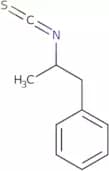
CAS:<p>Versatile small molecule scaffold</p>Formula:C9H9N3OPurity:Min. 95%Molecular weight:175.19 g/mol(2-Isothiocyanatopropyl)benzene
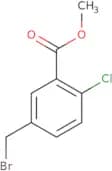
CAS:Versatile small molecule scaffoldFormula:C10H11NSPurity:Min. 95%Molecular weight:177.27 g/molMethyl 5-bromomethyl-2-chlorobenzoate
CAS:Methyl 5-bromomethyl-2-chlorobenzoate is a cytotoxic agent that inhibits tumor growth. It is a potent inhibitor of the enzyme PARP-1, which is involved in DNA repair, and inhibits tumor growth in vivo. Methyl 5-bromomethyl-2-chlorobenzoate is also able to complex with temozolomide and potentiate its antitumor activity. This drug has been shown to inhibit tumor growth in xenograft models, including xenografts of human non-small cell lung cancer cells transplanted into mice.Formula:C9H8BrClO2Purity:Min. 95%Molecular weight:263.52 g/molThieno[3,2-d]pyrimidine-4-thiol
CAS:<p>Versatile small molecule scaffold</p>Formula:C6H4N2S2Purity:Min. 95%Molecular weight:168.2 g/mol4-Hydrazinothieno[3,2-d]pyrimidine
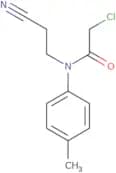
CAS:<p>Versatile small molecule scaffold</p>Formula:C6H6N4SPurity:Min. 95%Molecular weight:166.21 g/mol2-Chloro-N-(2-cyanoethyl)-N-(4-methylphenyl)acetamide
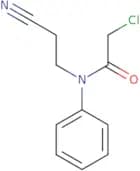
CAS:Versatile small molecule scaffoldFormula:C12H13ClN2OPurity:Min. 95%Molecular weight:236.7 g/mol2-Chloro-N-(2-cyanoethyl)-N-phenylacetamide
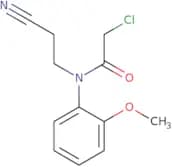
CAS:Versatile small molecule scaffoldFormula:C11H11ClN2OPurity:Min. 95%Molecular weight:222.67 g/mol2-Chloro-N-(2-cyanoethyl)-N-(2-methoxyphenyl)acetamide
CAS:<p>Versatile small molecule scaffold</p>Formula:C12H13ClN2O2Purity:Min. 95%Molecular weight:252.69 g/molThieno[3,2-d]pyrimidin-4(1H)-one
CAS:<p>Thieno[3,2-d]pyrimidin-4(1H)-one is a synthetic compound that has been shown to inhibit cancer cell proliferation. It has an amination reaction at the 2' position of the pyrimidine ring and this pharmacophore is responsible for its anticancer activity. Thieno[3,2-d]pyrimidin-4(1H)-one inhibits leukemia HL-60 cells with a potency similar to that of imatinib. It also inhibits hepg2 cells, which are tumor cells derived from hepatocytes. The kinase selectivity profile of thieno[3,2-d]pyrimidin-4(1H)-one does not show any toxicity towards normal cells such as human skin fibroblasts or human umbilical vein endothelial cells. Thieno[3,2-d]pyrimidin-4(1H)-one exhibits a safety profile similar</p>Formula:C6H4N2OSPurity:Min. 95%Molecular weight:152.17 g/mol1-{Thieno[3,2-d]pyrimidin-4-yl}pyrrolidine
CAS:<p>Versatile small molecule scaffold</p>Formula:C10H11N3SPurity:Min. 95%Molecular weight:205.28 g/mol3-Amino-8-methyl-1,3-diazaspiro[4.5]decane-2,4-dione
CAS:Versatile small molecule scaffoldFormula:C9H15N3O2Purity:Min. 95%Molecular weight:197.23 g/mol2-Methyl-2-[(propan-2-yl)amino]propanenitrile
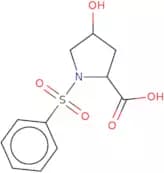
CAS:Versatile small molecule scaffoldFormula:C7H14N2Purity:Min. 95%Molecular weight:126.2 g/mol1-(Benzenesulfonyl)-4-hydroxypyrrolidine-2-carboxylic acid
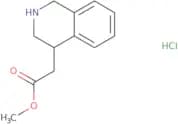
CAS:Versatile small molecule scaffoldFormula:C11H13NO5SPurity:Min. 95%Molecular weight:271.3 g/molMethyl 2-(1,2,3,4-tetrahydroisoquinolin-4-yl)acetate hydrochloride
CAS:<p>Versatile small molecule scaffold</p>Formula:C12H16ClNO2Purity:Min. 95%Molecular weight:241.71 g/mol3,5-Dichlorobenzo[d]isoxazole
CAS:<p>Versatile small molecule scaffold</p>Formula:C7H3Cl2NOPurity:Min. 95%Molecular weight:188.01 g/mol


![3-azabicyclo[3.2.0]heptane hydrochloride](/_next/image/?url=https%3A%2Fstatic.cymitquimica.com%2Fproducts%2F3D%2Fthumb-webp%2FRAA08457.webp&w=3840&q=75)





![1-[Amino(phenyl)methyl]cyclohexan-1-ol hydrochloride](/_next/image/?url=https%3A%2Fstatic.cymitquimica.com%2Fproducts%2F3D%2Fthumb-webp%2FRAA11293.webp&w=3840&q=75)

![1-Bromo-4-[(2-chloroethyl)sulfanyl]benzene](/_next/image/?url=https%3A%2Fstatic.cymitquimica.com%2Fproducts%2F3D%2Fthumb-webp%2FRAA18114.webp&w=3840&q=75)
![Butyl[(2-chlorophenyl)methyl]amine](/_next/image/?url=https%3A%2Fstatic.cymitquimica.com%2Fproducts%2F3D%2Fthumb-webp%2FRAA18339.webp&w=3840&q=75)
![2-[(4-Methanesulfonylphenyl)sulfanyl]benzoic acid](/_next/image/?url=https%3A%2Fstatic.cymitquimica.com%2Fproducts%2F3D%2Fthumb-webp%2FRAA18513.webp&w=3840&q=75)
![1-Chloro-4-[(2-chloroethyl)sulfonyl]benzene](/_next/image/?url=https%3A%2Fstatic.cymitquimica.com%2Fproducts%2F3D%2Fthumb-webp%2FRAA19184.webp&w=3840&q=75)
![7-Methylpyrazolo[1,5-a]pyridine-3-carboxylic acid](/_next/image/?url=https%3A%2Fstatic.cymitquimica.com%2Fproducts%2F3D%2Fthumb-webp%2FRAA20547.webp&w=3840&q=75)
![ethyl 3-[(propan-2-yl)amino]propanoate](/_next/image/?url=https%3A%2Fstatic.cymitquimica.com%2Fproducts%2F3D%2Fthumb-webp%2FRAA21722.webp&w=3840&q=75)
![Thieno[3,2-d]pyrimidine-4-thiol](/_next/image/?url=https%3A%2Fstatic.cymitquimica.com%2Fproducts%2F3D%2Fthumb-webp%2FRAA22924.webp&w=3840&q=75)
![4-Hydrazinothieno[3,2-d]pyrimidine](/_next/image/?url=https%3A%2Fstatic.cymitquimica.com%2Fproducts%2F3D%2Fthumb-webp%2FRAA22926.webp&w=3840&q=75)
![Thieno[3,2-d]pyrimidin-4(1H)-one](/_next/image/?url=https%3A%2Fstatic.cymitquimica.com%2Fproducts%2F3D%2Fthumb-webp%2FRAA23410.webp&w=3840&q=75)
![1-{Thieno[3,2-d]pyrimidin-4-yl}pyrrolidine](/_next/image/?url=https%3A%2Fstatic.cymitquimica.com%2Fproducts%2F3D%2Fthumb-webp%2FRAA23448.webp&w=3840&q=75)
![3-Amino-8-methyl-1,3-diazaspiro[4.5]decane-2,4-dione](/_next/image/?url=https%3A%2Fstatic.cymitquimica.com%2Fproducts%2F3D%2Fthumb-webp%2FRAA25293.webp&w=3840&q=75)
![2-Methyl-2-[(propan-2-yl)amino]propanenitrile](/_next/image/?url=https%3A%2Fstatic.cymitquimica.com%2Fproducts%2F3D%2Fthumb-webp%2FRAA25647.webp&w=3840&q=75)
![3,5-Dichlorobenzo[d]isoxazole](/_next/image/?url=https%3A%2Fstatic.cymitquimica.com%2Fproducts%2F3D%2Fthumb-webp%2FRAA26353.webp&w=3840&q=75)