Building Blocks
Subcategories of "Building Blocks"
- Boronic Acids & Boronic Acid Derivatives(5,805 products)
- Chiral Building Blocks(1,248 products)
- Hydrocarbon Building Blocks(6,122 products)
- Organic Building Blocks(61,462 products)
Found 208441 products of "Building Blocks"
[2-(4-Chlorophenyl)phenyl]methanamine
CAS:Versatile small molecule scaffoldFormula:C13H12ClNPurity:Min. 95%Molecular weight:217.69 g/mol4-[Methyl(phenyl)carbamoyl]benzoic acid
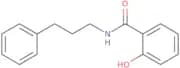
CAS:Versatile small molecule scaffoldFormula:C15H13NO3Purity:Min. 95%Molecular weight:255.27 g/mol2-Hydroxy-N-(3-phenylpropyl)benzamide
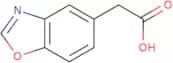
CAS:Versatile small molecule scaffoldFormula:C16H17NO2Purity:Min. 95%Molecular weight:255.31 g/mol1,3-Benzoxazol-5-ylacetic acid
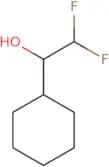
CAS:Versatile small molecule scaffoldFormula:C9H7NO3Purity:Min. 95%Molecular weight:177.16 g/mol1-Cyclohexyl-2,2-difluoroethan-1-ol
CAS:Versatile small molecule scaffold
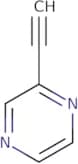
Formula:C8H14F2OPurity:Min. 95%Molecular weight:164.19 g/mol2-Ethynylpyrazine
CAS:Versatile small molecule scaffold
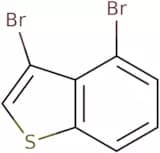
Formula:C6H4N2Purity:Min. 95%Molecular weight:104.11 g/mol3,4-Dibromo-1-benzothiophene
CAS:Versatile small molecule scaffold
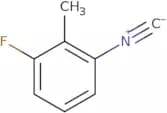
Formula:C8H4Br2SPurity:Min. 95%Molecular weight:291.99 g/mol1-Fluoro-3-isocyano-2-methylbenzene
CAS:Versatile small molecule scaffoldFormula:C8H6FNPurity:Min. 95%Molecular weight:135.14 g/mol2-{[2-(4-Chlorophenyl)-2-oxoethyl]sulfanyl}acetic acid
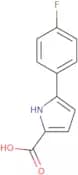
CAS:Versatile small molecule scaffoldFormula:C10H9ClO3SPurity:Min. 95%Molecular weight:244.69 g/mol5-(4-Fluorophenyl)-1H-pyrrole-2-carboxylic acid
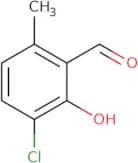
CAS:Versatile small molecule scaffoldFormula:C11H8FNO2Purity:Min. 95%Molecular weight:205.18 g/mol3-Chloro-2-hydroxy-6-methylbenzaldehyde
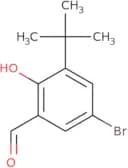
CAS:Versatile small molecule scaffoldFormula:C8H7ClO2Purity:Min. 95%Molecular weight:170.59 g/mol5-Bromo-3-(tert-butyl)-2-hydroxybenzaldehyde
CAS:5-Bromo-3-(tert-butyl)-2-hydroxybenzaldehyde is a chromophore that has been shown to be an antioxidant. It has been shown to inhibit the polymerase activity of the hepatitis C virus, which is important for the viral infection process. This compound also inhibits the polymerase activity of the influenza A virus, which may be due to its ability to bind to carbon nanotubes and ns5b polymerase, a non-nucleoside inhibitor. 5-Bromo-3-(tert-butyl)-2-hydroxybenzaldehyde has been used in nature as a natural dye for textiles, leathers, and hair.Formula:C11H13BrO2Purity:Min. 95%Molecular weight:257.13 g/mol2-Ethyloxolane-3-carboxylic acid
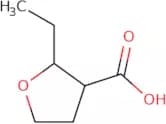
CAS:Versatile small molecule scaffold
Formula:C7H12O3Purity:Min. 95%Molecular weight:144.17 g/mol5-Bromo-2-[4-(N-boc)piperazin-1-yl]pyridine
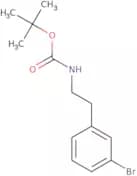
CAS:Versatile small molecule scaffoldFormula:C14H20BrN3O2Purity:Min. 95%Molecular weight:342.23 g/moltert-Butyl 3-bromophenethylcarbamate
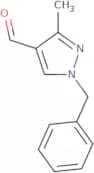
CAS:Versatile small molecule scaffoldFormula:C13H18BrNO2Purity:Min. 95%Molecular weight:300.19 g/mol1-Benzyl-3-methyl-1H-pyrazole-4-carbaldehyde
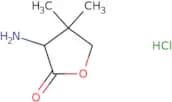
CAS:Versatile small molecule scaffoldFormula:C12H12N2OPurity:Min. 95%Molecular weight:200.24 g/mol(3R)-3-Amino-4,4-dimethyloxolan-2-one hydrochloride
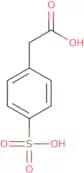
CAS:Versatile small molecule scaffoldFormula:C6H12ClNO2Purity:Min. 95%Molecular weight:165.62 g/mol2-(4-Sulfophenyl)acetic acid
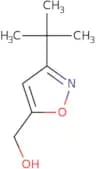
CAS:2-(4-Sulfophenyl)acetic acid (2-SPAA) is a sulfonate that has been used in the calibration of butyric acid. 2-SPAA has a redox potential of -0.87 V and can be used to measure the concentration of butyric acid by HPLC analysis. This compound is biodegradable and environmentally friendly. 2-SPAA has also been found to have homologous properties, which make it suitable for use as an industrial chemical or for calibration purposes. It is also fluorescent and can be detected with polyclonal antibodies. High concentrations of this compound are toxic to humans, causing high values in blood pressure and heart rate.Formula:C8H8O5SPurity:Min. 95%Molecular weight:216.21 g/mol(3-tert-Butyl-1,2-oxazol-5-yl)methanol
CAS:Versatile small molecule scaffoldFormula:C8H13NO2Purity:Min. 95%Molecular weight:155.19 g/mol1-[3-(Chloromethyl)-4-ethoxyphenyl]ethan-1-one
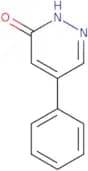
CAS:Versatile small molecule scaffoldFormula:C11H13ClO2Purity:Min. 95%Molecular weight:212.67 g/mol5-Phenyl-2,3-dihydropyridazin-3-one
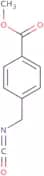
CAS:Versatile small molecule scaffoldFormula:C10H8N2OPurity:Min. 95%Molecular weight:172.18 g/molMethyl 4-(isocyanatomethyl)benzoate
CAS:Versatile small molecule scaffold
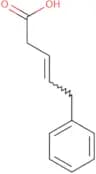
Formula:C10H9NO3Purity:Min. 95%Molecular weight:191.18 g/mol(3E)-5-Phenylpent-3-enoic acid
CAS:Versatile small molecule scaffold
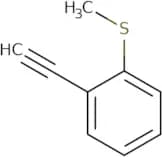
Formula:C11H12O2Purity:Min. 95%Molecular weight:176.21 g/mol1-Ethynyl-2-(methylsulfanyl)benzene
CAS:1-Ethynyl-2-(methylsulfanyl)benzene is a potent antioxidant. It has been shown to have antimicrobial activity against both Gram-positive and Gram-negative bacteria, as well as antifungal activity against both mold and yeast. 1-Ethynyl-2-(methylsulfanyl)benzene has been shown to inhibit the growth of S. aureus and E. coli in vitro, having an IC50 of less than 0.1 μg/mL. This compound also inhibits the growth of Bacillus subtilis and B. cereus, with IC50 values of 0.5 and 0.06 μg/mL respectively, but is not active against Escherichia coli or Pseudomonas aeruginosa at concentrations up to 200 μg/mL.Formula:C9H8SPurity:Min. 95%Molecular weight:148.23 g/molMethyl 5-methyl-1H-imidazole-4-carboxylate hydrochloride
CAS:Versatile small molecule scaffoldFormula:C6H9ClN2O2Purity:Min. 95%Molecular weight:176.6 g/mol4-[(2,6-Dimethylphenyl)methyl]-1H-imidazole hydrochloride
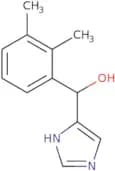
CAS:Versatile small molecule scaffoldFormula:C12H15ClN2Purity:Min. 95%Molecular weight:222.71 g/mol(2,3-dimethylphenyl)(1H-imidazol-5-yl)methanol
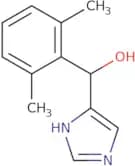
CAS:Versatile small molecule scaffoldFormula:C12H14N2OPurity:Min. 95%Molecular weight:202.25 g/mol(2,6-Dimethylphenyl)(1H-imidazol-4-yl)methanol
CAS:Versatile small molecule scaffold
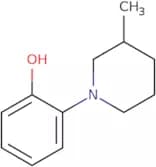
Formula:C12H14N2OPurity:Min. 95%Molecular weight:202.26 g/mol2-(3-Methylpiperidin-1-yl)phenol
CAS:Versatile small molecule scaffold
Formula:C12H17NOPurity:Min. 95%Molecular weight:191.27 g/mol3-[5-(4-Chlorophenyl)-1,3,4-oxadiazol-2-yl]propanoic acid
CAS:Versatile small molecule scaffoldFormula:C11H9ClN2O3Purity:Min. 95%Molecular weight:252.65 g/mol2-Chloro-6-(chloromethyl)pyridine
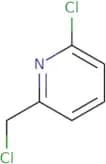
CAS:2-Chloro-6-(chloromethyl)pyridine (2C6CP) is a chloride precursor that can be used for the synthesis of metal chlorides, such as copper chlorides. 2C6CP is synthesized by reacting thionyl chloride with the substituted pyridine under anhydrous conditions at -78°C. The resultant 2C6CP is then hydrolyzed to produce the desired chloride.
2C6CP has been shown to act as a ligand in coordination chemistry. It was first synthesized by reacting 3-chloropyridine with thionyl chloride and then hydrolyzing it to 2-chloropyridine. This method was later modified to use 4-chlorobenzoyl chloride instead of 3-chloropyridine, producing 2,4-dichloropyridine.Formula:C6H5Cl2NPurity:Min. 95%Molecular weight:162.02 g/mol4-(Benzylsulfanyl)benzaldehyde
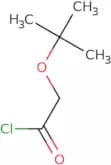
CAS:Benzylsulfanylbenzaldehyde is a benzyl derivative that has been studied for its optical properties and electronic structures. The sulfur atom in this molecule is replaced with an electron-donating group, which gives the molecule a positive charge. This change also makes the substituent more polar and thus increases its ability to interact with other molecules. Substituents are groups attached to benzene rings in order to modify their chemical or physical properties. Chromophores are groups of atoms that absorb light and can be used to identify substances by their color. Electron withdrawing groups cause the dipole moment of the molecule to increase, while electron donating groups have the opposite effect on the dipole moment.Formula:C14H12OSPurity:Min. 95%Molecular weight:228.31 g/mol2-(tert-Butoxy)acetyl chloride
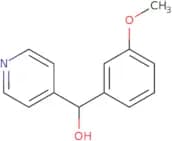
CAS:Versatile small molecule scaffoldFormula:C6H11ClO2Purity:Min. 95%Molecular weight:150.6 g/mol(3-Methoxyphenyl)(pyridin-4-yl)methanol
CAS:Versatile small molecule scaffold
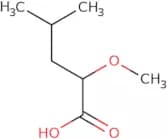
Formula:C13H13NO2Purity:Min. 95%Molecular weight:215.25 g/mol2-Methoxy-4-methylpentanoic acid
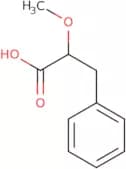
CAS:Versatile small molecule scaffoldFormula:C7H14O3Purity:Min. 95%Molecular weight:146.18 g/mol2-Methoxy-3-phenylpropanoic acid
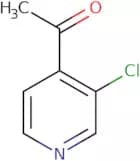
CAS:2-Methoxy-3-phenylpropanoic acid is an ester with a carboxylic acid group at its end. It is a chiral molecule that has two enantiomers, which are mirror images of each other. The stereochemical conformations of these molecules can be determined by the weighting of their conformational energies. This compound is used in the synthesis of various pharmaceuticals and pesticides, such as carbamates and herbicides. The nmr spectroscopic data for this compound show that it has two conformers, A and B, which have different chemical shifts in their nmr spectra. The experimental data show that the equilibrium between these two conformers is weighted heavily to conformer A because it has a lower energy barrier than conformer B.Formula:C10H12O3Purity:Min. 95%Molecular weight:180.2 g/mol1-(3-chloropyridin-4-yl)ethan-1-one
CAS:Versatile small molecule scaffold
Formula:C7H6ClNOPurity:Min. 95%Molecular weight:155.58 g/mol3-Chloro-6-pyridin-3-ylpyridazine
CAS:Versatile small molecule scaffold
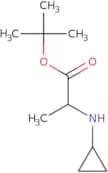
Formula:C9H6ClN3Purity:Min. 95%Molecular weight:191.62 g/moltert-Butyl 2-(cyclopropylamino)propanoate
CAS:Versatile small molecule scaffold
Formula:C10H19NO2Purity:Min. 95%Molecular weight:185.26 g/mol5-Methyl-5-(naphthalen-2-yl)imidazolidine-2,4-dione
CAS:Versatile small molecule scaffold
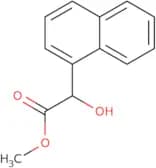
Formula:C14H12N2O2Purity:Min. 95%Molecular weight:240.26 g/molMethyl 2-hydroxy-2-(naphthalen-1-yl)acetate
CAS:Versatile small molecule scaffoldFormula:C13H12O3Purity:Min. 95%Molecular weight:216.23 g/mol2-methyl-3,5-dinitrothiophene
CAS:2-methyl-3,5-dinitrothiophene is an organic solvent with a nonlinear optical response. It has been used as a monomer for the preparation of polymers. 2-Methyl-3,5-dinitrothiophene has shown thermal stability and hydroxy groups that can be used to solvate other molecules. This compound is also soluble in organic solvents such as acetone and chloroform. The chromophore present in 2-methyl-3,5-dinitrothiophene gives it a yellow color at low concentrations and a reddish color at high concentrations.Formula:C5H4N2O4SPurity:Min. 95%Molecular weight:188.16 g/mol4-Chloro-2,7-dimethyl-7H-pyrrolo[2,3-d]pyrimidine
CAS:Versatile small molecule scaffoldFormula:C8H8ClN3Purity:Min. 95%Molecular weight:181.62 g/mol8-Bromo-5,6-dihydro-5-methyl-6-oxo-4H-imidazo[1,5-a][1,4]benzodiazepine-3-carboxylic acid ethyl ester
CAS:8-Bromo-5,6-dihydro-5-methyl-6-oxo-4H-imidazo[1,5a][1,4]benzodiazepine-3-carboxylic acid ethyl ester is a palladium catalyzed reaction that converts aryl bromides to bromides. The optimized yields and functionalized products are the result of optimizing the catalyst and reagents. This reaction can be used to produce triflates from bromides.Formula:C15H14BrN3O3Purity:Min. 95%Molecular weight:364.19 g/mol7-Bromo-4-methyl-3,4-dihydro-1H-benzo[E][1,4]diazepine-2,5-dione
CAS:Versatile small molecule scaffold
Formula:C10H9BrN2O2Purity:Min. 95%Molecular weight:269.09 g/mol1h,2h,4h-Thieno[3,2-d][1,3]oxazine-2,4-dione
CAS:Thieno[3,2-d][1,3]oxazin-2,4-dione is a bicyclic organic compound with the chemical formula C6H4N2O. It is an analog of oxazole and it has been shown to react in a nucleophilic fashion. This reactivity makes it useful for synthesizing other compounds. Thieno[3,2-d][1,3]oxazin-2,4-dione is commercially available as an optically pure powder or as a combinatorial library.
Formula:C6H3NO3SPurity:Min. 95%Molecular weight:169.16 g/mol5-fluoro-1H-benzo[d][1,3]oxazine-2,4-dione
CAS:Versatile small molecule scaffold
Formula:C8H4NO3FPurity:Min. 95%Molecular weight:181.12 g/mol5-Amino-1,2-dimethyl-1H-imidazole-4-carboxamide
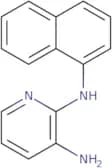
CAS:Versatile small molecule scaffoldFormula:C6H10N4OPurity:Min. 95%Molecular weight:154.17 g/mol2-N-(Naphthalen-1-yl)pyridine-2,3-diamine
CAS:Versatile small molecule scaffoldFormula:C15H13N3Purity:Min. 95%Molecular weight:235.28 g/mol2-N-(4-Bromophenyl)pyridine-2,3-diamine
CAS:Versatile small molecule scaffold
Formula:C11H10BrN3Purity:Min. 95%Molecular weight:264.12 g/mol
![[2-(4-Chlorophenyl)phenyl]methanamine](/_next/image/?url=https%3A%2Fstatic.cymitquimica.com%2Fproducts%2F3D%2Fthumb-webp%2FDGA85088.webp&w=3840&q=75)

![4-[Methyl(phenyl)carbamoyl]benzoic acid](/_next/image/?url=https%3A%2Fstatic.cymitquimica.com%2Fproducts%2F3D%2Fthumb-webp%2FDGA84957.webp&w=3840&q=75)
![2-{[2-(4-Chlorophenyl)-2-oxoethyl]sulfanyl}acetic acid](/_next/image/?url=https%3A%2Fstatic.cymitquimica.com%2Fproducts%2F3D%2Fthumb-webp%2FDGA78386.webp&w=3840&q=75)
![5-Bromo-2-[4-(N-boc)piperazin-1-yl]pyridine](/_next/image/?url=https%3A%2Fstatic.cymitquimica.com%2Fproducts%2F3D%2Fthumb-webp%2FDGA74797.webp&w=3840&q=75)
![1-[3-(Chloromethyl)-4-ethoxyphenyl]ethan-1-one](/_next/image/?url=https%3A%2Fstatic.cymitquimica.com%2Fproducts%2F3D%2Fthumb-webp%2FDDA92773.webp&w=3840&q=75)

![4-[(2,6-Dimethylphenyl)methyl]-1H-imidazole hydrochloride](/_next/image/?url=https%3A%2Fstatic.cymitquimica.com%2Fproducts%2F3D%2Fthumb-webp%2FDDA89245.webp&w=3840&q=75)
![3-[5-(4-Chlorophenyl)-1,3,4-oxadiazol-2-yl]propanoic acid](/_next/image/?url=https%3A%2Fstatic.cymitquimica.com%2Fproducts%2F3D%2Fthumb-webp%2FDDA85861.webp&w=3840&q=75)




![4-Chloro-2,7-dimethyl-7H-pyrrolo[2,3-d]pyrimidine](/_next/image/?url=https%3A%2Fstatic.cymitquimica.com%2Fproducts%2F3D%2Fthumb-webp%2FDDA75680.webp&w=3840&q=75)
![8-Bromo-5,6-dihydro-5-methyl-6-oxo-4H-imidazo[1,5-a][1,4]benzodiazepine-3-carboxylic acid ethyl es…](/_next/image/?url=https%3A%2Fstatic.cymitquimica.com%2Fproducts%2F3D%2Fthumb-webp%2FDDA75637.webp&w=3840&q=75)
![7-Bromo-4-methyl-3,4-dihydro-1H-benzo[E][1,4]diazepine-2,5-dione](/_next/image/?url=https%3A%2Fstatic.cymitquimica.com%2Fproducts%2F3D%2Fthumb-webp%2FDDA75636.webp&w=3840&q=75)
![1h,2h,4h-Thieno[3,2-d][1,3]oxazine-2,4-dione](/_next/image/?url=https%3A%2Fstatic.cymitquimica.com%2Fproducts%2F3D%2Fthumb-webp%2FDDA75628.webp&w=3840&q=75)
![5-fluoro-1H-benzo[d][1,3]oxazine-2,4-dione](/_next/image/?url=https%3A%2Fstatic.cymitquimica.com%2Fproducts%2F3D%2Fthumb-webp%2FDDA75594.webp&w=3840&q=75)