Building Blocks
Subcategories of "Building Blocks"
- Boronic Acids & Boronic Acid Derivatives(5,786 products)
- Chiral Building Blocks(1,246 products)
- Hydrocarbon Building Blocks(6,107 products)
- Organic Building Blocks(61,080 products)
Found 205478 products of "Building Blocks"
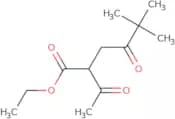
Ethyl 2-acetyl-5,5-dimethyl-4-oxohexanoate
CAS:Versatile small molecule scaffoldFormula:C12H20O4Purity:Min. 95%Molecular weight:228.28 g/mol10-Undecenoyl chloride
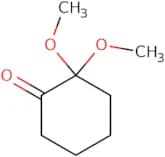
CAS:10-Undecenoyl chloride is a fatty acid that is used as a chemical modifier. It has been shown to increase the efficiency of borohydride reduction, which can be used for the synthesis of pharmaceuticals, such as morphine and codeine. 10-Undecenoyl chloride is also stable in basic conditions, making it suitable for use in reactive environments. In addition, 10-undecenoyl chloride has been shown to be effective against HIV and other viruses by interfering with the virus's ability to bind to cells.Formula:C11H19ClOPurity:Min. 95%Molecular weight:202.72 g/mol2,2-Dimethoxycyclohexan-1-one
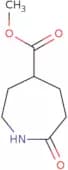
CAS:2,2-Dimethoxycyclohexan-1-one is a ketoxime used as an intermediate in the synthesis of lysine. It can be used to chlorinate and oxime, or halogenate aromatic compounds.Formula:C8H14O3Purity:Min. 95%Molecular weight:158.19 g/molMethyl 7-oxoazepane-4-carboxylate
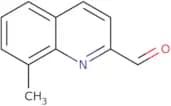
CAS:Versatile small molecule scaffoldFormula:C8H13NO3Purity:Min. 95%Molecular weight:171.19 g/mol8-Methylquinoline-2-carbaldehyde
CAS:Versatile small molecule scaffoldFormula:C11H9NOPurity:Min. 95%Molecular weight:171.19 g/mol6-Methyl-2-quinolinecarboxaldehyde
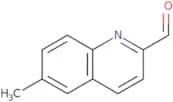
CAS:Versatile small molecule scaffold
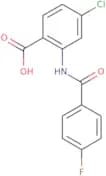
Formula:C11H9NOPurity:Min. 95%Molecular weight:171.19 g/mol4-Chloro-2-(4-fluorobenzamido)benzoic acid
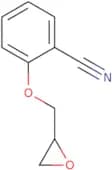
CAS:Versatile small molecule scaffoldFormula:C14H9ClFNO3Purity:Min. 95%Molecular weight:293.68 g/mol2-(Oxiran-2-ylmethoxy)benzonitrile
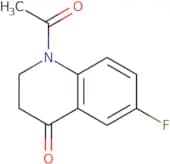
CAS:Versatile small molecule scaffoldFormula:C10H9NO2Purity:Min. 95%Molecular weight:175.18 g/mol1-Acetyl-6-fluoro-1,2,3,4-tetrahydroquinolin-4-one
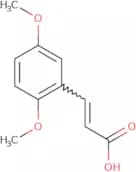
CAS:Versatile small molecule scaffoldFormula:C11H10FNO2Purity:Min. 95%Molecular weight:207.2 g/mol(2E)-3-(2,5-Dimethoxyphenyl)acrylic acid
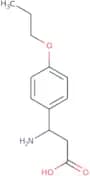
CAS:2E-3-(2,5-Dimethoxyphenyl)acrylic acid is a molecule that has been synthesised. It has an unsymmetrical carboxylic acid group, and is not a natural product. 2E-3-(2,5-Dimethoxyphenyl)acrylic acid can be made by irradiation of vanillic acid and epigallocatechin. The molecule is the chromophore in the profile of irradiated (2E)-3-(2,5-dimethoxyphenyl)acrylic acid. The compound was synthesised using nitrogen atoms and uv irradiation to break down the vanillic acid and epigallocatechin molecules into smaller fragments of molecules. This process takes around 24 hours to complete.Formula:C11H12O4Purity:Min. 95%Molecular weight:208.21 g/mol3-Amino-3-(4-propoxyphenyl)propanoic acid
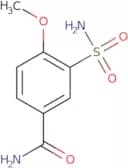
CAS:Versatile small molecule scaffoldFormula:C12H17NO3Purity:Min. 95%Molecular weight:223.27 g/mol4-Methoxy-3-sulfamoylbenzamide
CAS:Versatile small molecule scaffold
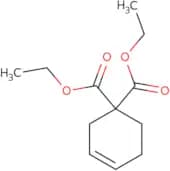
Formula:C8H10N2O4SPurity:Min. 95%Molecular weight:230.24 g/mol1,1-Diethyl cyclohex-3-ene-1,1-dicarboxylate
CAS:Versatile small molecule scaffoldFormula:C12H18O4Purity:Min. 95%Molecular weight:226.27 g/mol4-[2-(Diethylamino)ethoxy]aniline
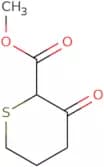
CAS:Controlled Product4-[2-(Diethylamino)ethoxy]aniline is a probe used in the detection of nicotinamide. It is a potent inhibitor of protein kinases and can be used as an antiemetic agent. 4-[2-(Diethylamino)ethoxy]aniline has been shown to inhibit the activity of multiple types of protein kinases, including serine/threonine, tyrosine, and dual-specificity kinases. This probe also inhibits the activity of chloride channels and has been shown to induce intramolecular hydrogen bonding.Formula:C12H20N2OPurity:Min. 95%Molecular weight:208.31 g/molMethyl 3-oxothiane-2-carboxylate
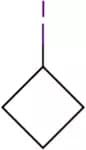
CAS:Versatile small molecule scaffoldFormula:C7H10O3SPurity:Min. 95%Molecular weight:174.22 g/molIodocyclobutane
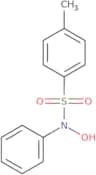
CAS:Iodocyclobutane is an aryl halide that is used in the synthesis of retinoic acid. It is synthesized by reacting iodine with cyclobutane and a magnesium salt. Iodocyclobutane has been shown to have potent anti-cancer activity in cell culture experiments, which may be due to its ability to inhibit the production of retinoic acid receptors α (RAR). Iodocyclobutane is synthesized by reacting iodine with cyclobutane and a magnesium salt. Iodocyclobutane has been shown to have potent anti-cancer activity in cell culture experiments, which may be due to its ability to inhibit the production of retinoic acid receptors α (RAR).Formula:C4H7IPurity:Min. 95%Molecular weight:182 g/molN-Hydroxy-4-methyl-N-phenylbenzene-1-sulfonamide
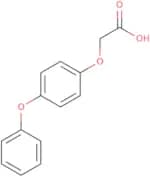
CAS:Versatile small molecule scaffoldFormula:C13H13NO3SPurity:Min. 95%Molecular weight:263.31 g/mol2-(4-Phenoxyphenoxy)acetic acid
CAS:Versatile small molecule scaffoldFormula:C14H12O4Purity:Min. 95%Molecular weight:244.24 g/mol2-[4-(benzyloxy)phenoxy]acetic acid
CAS:GW7647 is a novel compound that has been shown to activate Peroxisome proliferator-activated receptor gamma (PPARγ), which is a nuclear hormone receptor involved in lipid metabolism and the development of insulin resistance. GW7647 activates PPARγ by binding to the ligand-binding domain of the receptor and activating transcriptional activity. This activation was observed in human cells, as well as subtypes of human PPARγ. It has been shown to be selective for PPARγ over other receptors, such as Peroxisome proliferator-activated receptor delta (PPARδ). GW7647 acts on dyslipidemia by lowering triglyceride levels and increasing HDL cholesterol levels without affecting LDL cholesterol levels. This drug has also been shown to have lipid-lowering effects in mice fed a high-fat diet.Formula:C15H14O4Purity:Min. 95%Molecular weight:258.27 g/molrac-(2R,6S)-2,4,6-Trimethylmorpholine
CAS:Versatile small molecule scaffold
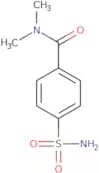
Formula:C7H15NOPurity:Min. 95%Molecular weight:129.2 g/molN,N-Dimethyl-4-sulfamoylbenzamide
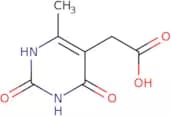
CAS:Versatile small molecule scaffoldFormula:C9H12N2O3SPurity:Min. 95%Molecular weight:228.27 g/mol(6-Methyl-2,4-dioxo-1,2,3,4-tetrahydropyrimidin-5-yl)acetic acid
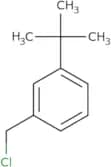
CAS:Versatile small molecule scaffoldFormula:C7H8N2O4Purity:Min. 95%Molecular weight:184.15 g/mol1-tert-Butyl-3-(chloromethyl)benzene
CAS:Versatile small molecule scaffold
Formula:C11H15ClPurity:Min. 95%Molecular weight:182.69 g/mol3-[(2-Nitrophenyl)amino]propanoic acid
CAS:Versatile small molecule scaffold
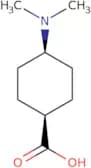
Formula:C9H10N2O4Purity:Min. 95%Molecular weight:210.19 g/molrac-(1S,4S)-4-(Dimethylamino)cyclohexane-1-carboxylic acid
CAS:Versatile small molecule scaffoldFormula:C9H17NO2Purity:Min. 95%Molecular weight:171.2 g/mol1-(Aminocarbonyl)-L-proline
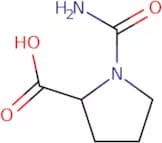
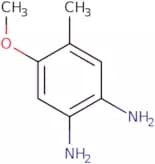
CAS:1-(Aminocarbonyl)-L-proline is a molecule that contains an aminocarbonyl group, which is a nucleophilic functional group. It is a cyclic compound with a ring structure consisting of three carbons and two amino groups. The 1-(aminocarbonyl)-L-proline molecule has been studied using Raman spectroscopy, vibrational spectroscopy, X-ray diffraction, and other techniques. This molecule has been shown to have the potential to be used as an anti-cancer drug by inhibiting the synthesis of DNA and RNA in cells. The conformation of this compound may also be important for understanding its reactivity.Formula:C6H10N2O3Purity:Min. 95%Molecular weight:158.16 g/mol4-Methoxy-5-methylbenzene-1,2-diamine
CAS:Versatile small molecule scaffold
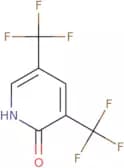
Formula:C8H12N2OPurity:90%MinMolecular weight:152.19 g/mol3,5-Bis(trifluoromethyl)pyridin-2-ol
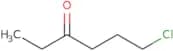
CAS:Versatile small molecule scaffoldFormula:C7H3F6NOPurity:Min. 95%Molecular weight:231.09 g/mol6-Chlorohexan-3-one
CAS:6-Chlorohexan-3-one is a pyrrole, which is an organic compound that has a six-membered ring. It can be found as the potassium salt and can be used to synthesize indole alkaloids. 6-Chlorohexan-3-one also reacts with potassium and Wittig reagent to form a 1:1 mixture of cis and trans isomers. The insecticide, pyrethrin, is produced from this reaction. This compound can also be used in the synthesis of alkylates when reacted with potassium hydride in an incompletely known manner.
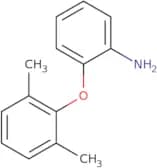
Formula:C6H11ClOPurity:Min. 95%Molecular weight:134.6 g/mol2-(2,6-Dimethylphenoxy)aniline
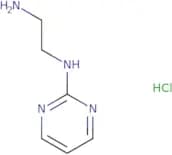
CAS:Versatile small molecule scaffoldFormula:C14H15NOPurity:Min. 95%Molecular weight:213.27 g/molN-(2-Aminoethyl)pyrimidin-2-amine hydrochloride
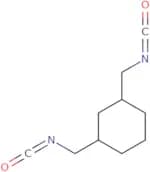
CAS:Versatile small molecule scaffoldFormula:C6H11ClN4Purity:Min. 95%Molecular weight:174.63 g/mol1,3-Bis(isocyanatomethyl)cyclohexane (cis- and trans- mixture)
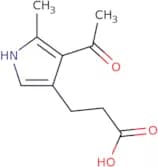
CAS:1,3-Bis(isocyanatomethyl)cyclohexane is an organic compound that belongs to the group of isocyanates. It has a molecular weight of 208.1 and is soluble in water and alcohols. 1,3-Bis(isocyanatomethyl)cyclohexane has a maximum absorbance at uv wavelength of 265 nm and a maximum absorption coefficient at uv wavelength of 3.2×10⁴ M-1 cm-1. This compound has been shown to be toxic to rats when administered in high doses (greater than 100 mg/kg). The toxicity studies have shown that the compound causes eye irritation, skin irritation, and respiratory tract irritation in rats. These effects are more pronounced when the chemical is mixed with trimethylolpropane, which is a polyol used as an additive for polyurethanes.Formula:C10H14N2O2Purity:Min. 95%Color and Shape:Clear LiquidMolecular weight:194.23 g/mol3-(4-Acetyl-5-methyl-1H-pyrrol-3-yl)propanoic acid
CAS:3-(4-Acetyl-5-methyl-1H-pyrrol-3-yl)propanoic acid is a protonated form of 3-(4-acetyl-5-methyl-1H-pyrrol-3-yl)acrylic acid. It has been shown to be more stable than the neutral form, which can be degraded by chemical reactions. This compound is used in polymer matrices as a transition metal ion chelator and has been shown to increase the uptake of vinyl alcohol monomers. The structural parameters of this compound are discussed in relation to thermodynamic calculations at different temperatures.Formula:C10H13NO3Purity:Min. 95%Molecular weight:195.21 g/mol5H,6H,7H,8H-Imidazo[1,5-a]pyridine
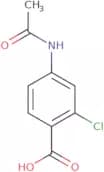
CAS:Imidazo[1,5-a]pyridine is a medicament that is used to treat pediatric patients and humans. It has been shown to be effective in the treatment of hyperaldosteronism and has a low risk of side effects. Imidazo[1,5-a]pyridine inhibits the enzymes farnesyltransferase and geranylgeranyltransferase I, which are involved in cholesterol biosynthesis. This inhibition leads to lower levels of cholesterol and other sterols. The drug also has an intramolecular ring system that stabilizes its conformation. A phosphate salt form of imidazo[1,5-a]pyridine is available for oral administration.Formula:C7H10N2Purity:Min. 95%Molecular weight:122.17 g/mol2-Chloro-4-acetamidobenzoic acid
CAS:2-Chloro-4-acetamidobenzoic acid is a nonsteroidal anti-inflammatory drug that binds to cyclooxygenase, thereby inhibiting the production of prostaglandins. 2-Chloro-4-acetamidobenzoic acid has been shown to be cytotoxic in vitro, eliciting DNA damage and cell death in some cells. This effect may be due to inhibition of mitochondrial function by 2-chloro-4-acetamidobenzoic acid. The drug has also been found to inhibit the growth of human leukemia cells and mouse mammary tumor cells in vitro. 2-Chloro-4-acetamidobenzoic acid is used as a research tool for studying the effects of cyclooxygenase inhibitors on cell cycle analysis, because it does not cause erythrocyte hemolysis.
Formula:C9H8ClNO3Purity:Min. 95%Molecular weight:213.62 g/mol1,9,10,11,12,12-Hexachloro-5-oxatetracyclo[7.2.1.0²,⁸.0⁴,⁶]dodec-10-ene-3,7-dione
CAS:Versatile small molecule scaffoldFormula:C11H4Cl6O3Purity:Min. 95%Molecular weight:396.9 g/mol1-Oxa-7-azaspiro[3.5]nonane
CAS:Versatile small molecule scaffold
Formula:C7H13NOPurity:Min. 95%Molecular weight:127.19 g/mol4-phenylpyrimidin-2-ol
CAS:4-phenylpyrimidin-2-ol is a synthetic compound that was originally developed to study the effects of bradykinin on the brain. This drug has been shown to have a number of other effects in cells, including stimulation of photosynthetic activity and promotion of hydrogen bond formation. 4-phenylpyrimidin-2-ol also has an effect on vaginal atrophy in women, as well as symptoms such as profuse sweating, insomnia, and headache. It is thought that these effects are due to 4-phenylpyrimidin-2-ol's ability to bind with brain cells, which results in increased levels of serotonin.
Formula:C10H8N2OPurity:Min. 95%Molecular weight:172.18 g/molCyclopropyl(3,4-dimethylphenyl)methanone
CAS:Cyclopropyl(3,4-dimethylphenyl)methanone (CPM) is a synthetic cannabinoid that has been shown to have similar effects to the natural cannabinoids found in cannabis. CPM binds to and activates the CB2 receptor, which is found on cells of the immune system, brain, and other organs. It has been studied for its ability to reduce glioma tumor growth in mice by inhibiting glutamate release. The molecular modeling study showed that CPM binds to the receptor with a geometry similar to other CB2 agonists like JWH-133. In addition, CPM inhibits locomotor activity in rats and has been shown to produce some symptoms of anxiety in mice. A receptor knockout study with mice showed that CPM can bind to CB2 receptors without activating them. X-ray diffraction data indicated that CPM is an achiral molecule with an idealized molecular geometry of "s".
Formula:C12H14OPurity:Min. 95%Molecular weight:174.24 g/molN-Benzyl-2-chloro-N-(3-methylphenyl)acetamide
CAS:Versatile small molecule scaffold
Formula:C16H16ClNOPurity:Min. 95%Molecular weight:273.75 g/mol4-Amino-N-cyclohexyl-N-methylbenzamide
CAS:Versatile small molecule scaffoldFormula:C14H20N2OPurity:Min. 95%Molecular weight:232.33 g/mol3-Bromotetrahydro-2H-thiopyran 1,1-dioxide
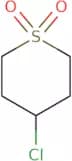
CAS:Versatile small molecule scaffoldFormula:C5H9BrO2SPurity:Min. 95%Molecular weight:213.1 g/mol4-Cchlorotetrahydro-2H-thiopyran 1,1-dioxide
CAS:4-chlorotetrahydro-2H-thiopyran 1,1-dioxide is an experimental heterocyclic compound. It has a dipole and a methylcyclohexane ring with an axial orientation. The density of the molecule is 1.499 g/cm3. This compound has conformational energies and substituents that are stable at room temperature. Theory predicts that this compound will have 3 conformers, all of which are energetically favorable, with one being more stable than the others. The energies and conformers are influenced by the steric interactions between substituents and cyclohexanes in the molecule. 4-chlorotetrahydro-2H-thiopyran 1,1-dioxide has no electrostatic interactions because it does not have any electronegative atoms or groups.
Formula:C5H9ClO2SPurity:Min. 95%Molecular weight:168.64 g/mol5-Bromo-2-hydroxyphenylacetic acid
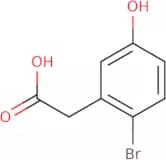
CAS:Versatile small molecule scaffoldFormula:C8H7BrO3Purity:Min. 95%Molecular weight:231.04 g/mol2-(2-Bromo-5-hydroxyphenyl)acetic acid
CAS:2-(2-Bromo-5-hydroxyphenyl)acetic acid is a hydroxylation product of melatonin. It has been shown to be a potent and selective agonist for the melatonin receptor, with an EC50 of 0.4 nM. 2-(2-Bromo-5-hydroxyphenyl)acetic acid is also a potent microbial sodium hydrogen (MSH) receptor antagonist with an IC50 of 9 nM.Formula:C8H7BrO3Purity:Min. 95%Molecular weight:231.04 g/mol3-Methanesulfonylthiophene
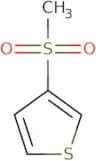
CAS:Versatile small molecule scaffoldFormula:C5H6O2S2Purity:Min. 95%Molecular weight:162.2 g/mol2-Methylsulfonylthiophene
CAS:2-Methylsulfonylthiophene is a modulating agent that can inhibit the activity of carbonic anhydrase, adenosine receptors and 5-membered heteroaryl. It has been shown to have affinity for CB1 receptor antagonists and is used to treat cardiovascular diseases. 2-Methylsulfonylthiophene also inhibits the enzymatic activity of anhydrase in the eye, which leads to suppression of intraocular pressure (IOP). The drug also has anti-glaucoma effects by reducing the production of aqueous humour. 2-Methylsulfonylthiophene is used as a dyestuff intermediate and as an organic solvent.
Formula:C5H6O2S2Purity:Min. 95%Molecular weight:162.23 g/mol(2-methoxypyrimidin-4-yl)methanol
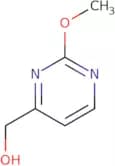
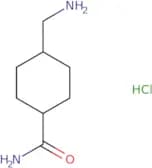
CAS:(2-Methoxypyrimidin-4-yl)methanol is a photoreactive molecule that can be synthesized by the dehalogenation of diethylamine and methylated with methanol. The reaction produces a derivative of pyrimidine, which is an important precursor for pharmaceuticals. When irradiated with UV light, (2-methoxypyrimidin-4-yl)methanol undergoes a series of reactions to form the desired pyrimidine product. This reaction proceeds through electron transfer from the amine nitrogen to the methoxy group on the pyrimidine ring. This process yields a 5 membered ring with two oxygen atoms and one nitrogen atom, in contrast to the 6 membered ring formed by other methods.Formula:C6H8N2O2Purity:Min. 95%Molecular weight:140.14 g/mol4-(Aminomethyl)cyclohexane-1-carboxamide hydrochloride
CAS:Versatile small molecule scaffoldFormula:C8H17ClN2OPurity:Min. 95%Molecular weight:192.68 g/moltert-Butyl (1R,4R)-4-(aminomethyl)cyclohexane-1-carboxylate hydrochloride
CAS:Versatile small molecule scaffoldFormula:C12H24ClNO2Purity:Min. 95%Molecular weight:249.78 g/mol


![4-[2-(Diethylamino)ethoxy]aniline](/_next/image/?url=https%3A%2Fstatic.cymitquimica.com%2Fproducts%2F3D%2Fthumb-webp%2FNBA51963.webp&w=3840&q=75)
![2-[4-(benzyloxy)phenoxy]acetic acid](/_next/image/?url=https%3A%2Fstatic.cymitquimica.com%2Fproducts%2F3D%2Fthumb-webp%2FNBA55992.webp&w=3840&q=75)
![3-[(2-Nitrophenyl)amino]propanoic acid](/_next/image/?url=https%3A%2Fstatic.cymitquimica.com%2Fproducts%2F3D%2Fthumb-webp%2FNBA58458.webp&w=3840&q=75)
![5H,6H,7H,8H-Imidazo[1,5-a]pyridine](/_next/image/?url=https%3A%2Fstatic.cymitquimica.com%2Fproducts%2F3D%2Fthumb-webp%2FNBA66630.webp&w=3840&q=75)
![1,9,10,11,12,12-Hexachloro-5-oxatetracyclo[7.2.1.0²,⁸.0⁴,⁶]dodec-10-ene-3,7-dione](/_next/image/?url=https%3A%2Fstatic.cymitquimica.com%2Fproducts%2F3D%2Fthumb-webp%2FNBA66780.webp&w=3840&q=75)
![1-Oxa-7-azaspiro[3.5]nonane](/_next/image/?url=https%3A%2Fstatic.cymitquimica.com%2Fproducts%2F3D%2Fthumb-webp%2FNBA67421.webp&w=3840&q=75)