


Building Blocks
Subcategories of "Building Blocks"
- Boronic Acids & Boronic Acid Derivatives(5,781 products)
- Chiral Building Blocks(1,242 products)
- Hydrocarbon Building Blocks(6,101 products)
- Organic Building Blocks(61,033 products)
Found 205320 products of "Building Blocks"
3,5-Dimethyl-4H,5H,6H,7H-pyrazolo[1,5-a]pyrimidine
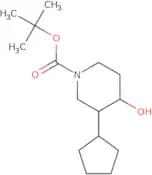
CAS:Versatile small molecule scaffoldFormula:C8H13N3Purity:Min. 95%Molecular weight:151.21 g/moltert-Butyl 3-cyclopentyl-4-hydroxypiperidine-1-carboxylate
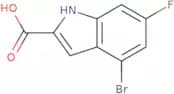
CAS:Versatile small molecule scaffoldFormula:C15H27NO3Purity:Min. 95%Molecular weight:269.38 g/mol4-Bromo-6-fluoro-1H-indole-2-carboxylic acid
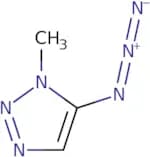
CAS:Versatile small molecule scaffoldFormula:C9H5BrFNO2Purity:Min. 95%Molecular weight:258.04 g/mol5-Azido-1-methyl-1H-1,2,3-triazole
CAS:Versatile small molecule scaffoldFormula:C3H4N6Purity:Min. 95%Molecular weight:124.1 g/mol3-Chloro-4-fluoroaniline
CAS:3-Chloro-4-fluoroaniline is a versatile building block that can be used in the synthesis of many different compounds. It is a reagent that is used in research, where it can be used as a reactant or an intermediate. This chemical has been shown to have high quality and can be used as a starting material for the synthesis of other chemicals. 3-Chloro-4-fluoroaniline has been shown to react with various functional groups such as amines and acid chlorides. It is also useful for the construction of scaffolds, which are three dimensional structures that are built from small molecules and organic compounds. 3-Chloro-4-fluoroaniline is classified as a speciality chemical and its CAS number is 367-21-5.Formula:C6H5ClFNMolecular weight:145.56 g/mol6-Cyanoindole
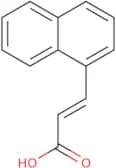
CAS:6-Cyanoindole is a reactive intermediate in organic synthesis. It is used as a building block for the synthesis of other chemical compounds.Formula:C9H6N2Molecular weight:142.16 g/mol(E)-3-(Naphthalen-1-yl)acrylic Acid
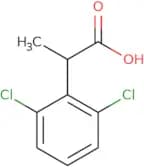
CAS:(E)-3-(Naphthalen-1-yl)acrylic acid is an organic compound that belongs to the class of cinnamic acids derivatives. It is a white crystalline solid that has a melting point of 124 degrees Celsius. This molecule can be hydrolyzed in alkaline solution and is soluble in water. (E)-3-(Naphthalen-1-yl)acrylic acid has been shown to have antimicrobial properties, which may be due to its ability to inhibit propiolic acid synthesis by nitrite. The functional theory suggests that this molecule will react with a nucleophile on the target cell's surface and form an ion pair, which leads to an increased permeability of the cell membrane and the release of cytoplasmic contents.Formula:C13H10O2Purity:Min. 95%Molecular weight:198.22 g/mol2-(2,6-Dichlorophenyl)propanoic acid
CAS:Versatile small molecule scaffold
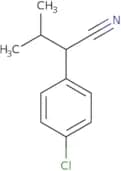
Formula:C9H8Cl2O2Purity:Min. 95%Molecular weight:219.06 g/mol2-(4-Chlorophenyl)-3-methylbutanenitrile
CAS:2-(4-Chlorophenyl)-3-methylbutanenitrile is a substrate for copper and copper salts, which are used in preparations to inhibit gram-negative bacteria. This compound is a nucleophile that form a covalent bond with the copper ion. The reaction proceeds through an intermediate molecule called chloroformate. 2-(4-Chlorophenyl)-3-methylbutanenitrile is stereoselective, meaning that it reacts preferentially with one of two enantiomers of the same compound. It has been shown to be effective against some strains of Escherichia coli and Pseudomonas aeruginosa, but not against Enterobacteriaceae and Klebsiella pneumoniae.Formula:C11H12ClNPurity:Min. 95%Molecular weight:193.67 g/molN-[2-(Phenylthio)ethyl]-acetamide
CAS:Versatile small molecule scaffoldFormula:C10H13NOSPurity:Min. 95%Molecular weight:195.28 g/mol[(1-Aminopropan-2-yl)sulfanyl]benzene
CAS:Versatile small molecule scaffoldFormula:C9H13NSPurity:Min. 95%Molecular weight:167.27 g/mol{[amino(phenoxy)phosphoryl]oxy}benzene
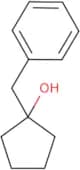
CAS:{[amino(phenoxy)phosphoryl]oxy}benzene is an anti-inflammatory compound. It has been shown to inhibit the activity of epoxidases and aminopeptidases, which are enzymes that break down key inflammatory compounds. This compound has also been shown to be effective against autoimmune diseases such as alopecia areata. It inhibits the growth of cancer cells and stimulates hair growth in cases of alopecia areata. {[amino(phenoxy)phosphoryl]oxy}benzene has been shown to be effective against infectious diseases such as Herpes simplex virus type 1 (HSV-1) and HIV-1 and inflammatory diseases such as arthritis. The most effective dose for anti-inflammatory properties is 100 mg/kg body weight in mice, which is equivalent to 4 mg/kg body weight in humans. {[amino(phenoxy)phosphoryl]oxy}benFormula:C12H12NO3PPurity:Min. 95%Molecular weight:249.21 g/mol1-Benzylcyclopentan-1-ol
CAS:1-Benzylcyclopentan-1-ol is a cyclic alcohol that can be prepared by hydrogenolysis of the corresponding carbinols. It has been shown to react with chlorine, chloroform, and halides to produce amines and residuals. The reaction product can be used as an analgesic.Formula:C12H16OPurity:Min. 95%Molecular weight:176.25 g/mol2-(2-Naphthyl)ethanamine hydrochloride
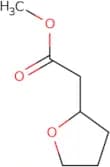
CAS:Controlled ProductVersatile small molecule scaffoldFormula:C12H13N·HClPurity:Min. 95%Molecular weight:207.7 g/molmethyl 2-(tetrahydrofuran-2-yl)acetate
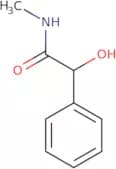
CAS:Versatile small molecule scaffoldFormula:C7H12O3Purity:Min. 95%Molecular weight:144.17 g/mol2-Hydroxy-N-methyl-2-phenylacetamide
CAS:2-Hydroxy-N-methyl-2-phenylacetamide is a hydroxamic acid, which is an organic compound that contains both a hydroxymethyl and an acyl group. It has been shown to be efficient in the catalyzed production of activated carbonyls from aliphatic amides. This molecule also has electron donating properties, which are demonstrated by its protonation. 2-Hydroxy-N-methyl-2-phenylacetamide is an inorganic molecule that contains a hydroxamic acid moiety with a carbonyl group. The hydroxamic acid moiety can act as an electron acceptor, resulting in the formation of an oxocarbenium ion intermediate. The carbonyl group can act as an electron donor, leading to the formation of a ketone or enolate intermediate after protonation.
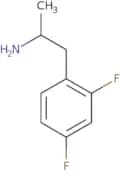
Formula:C9H11NO2Purity:Min. 95%Molecular weight:165.19 g/mol1-(2,4-Difluorophenyl)propan-2-amine
CAS:Controlled ProductVersatile small molecule scaffoldFormula:C9H11F2NPurity:Min. 95%Molecular weight:171.19 g/mol2,2,8-Trimethyl-2H,4H-[1,3]dioxino[4,5-c]pyridine-5-carboxylic acid
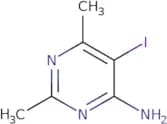
CAS:Versatile small molecule scaffoldFormula:C11H13NO4Purity:Min. 95%Molecular weight:223.22 g/mol5-Iodo-2,6-dimethylpyrimidin-4-amine
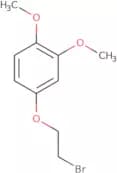
CAS:Versatile small molecule scaffoldFormula:C6H8IN3Purity:Min. 95%Molecular weight:249.05 g/mol4-(2-Bromoethoxy)-1,2-dimethoxybenzene
CAS:Versatile small molecule scaffold
Formula:C10H13BrO3Purity:Min. 95%Molecular weight:261.11 g/mol4,4-Dimethyl-5-oxohexanenitrile
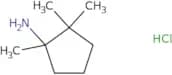
CAS:Versatile small molecule scaffoldFormula:C8H13NOPurity:Min. 95%Molecular weight:139.2 g/mol1,2,2-Trimethylcyclopentan-1-amine hydrochloride
CAS:Versatile small molecule scaffoldFormula:C8H18ClNPurity:Min. 95%Molecular weight:163.7 g/mol6-(Methylsulfanyl)pyrimidin-4-amine
CAS:Versatile small molecule scaffoldFormula:C5H7N3SPurity:Min. 95%Molecular weight:141.2 g/mol3-Bromo-9H-fluorene
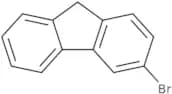
CAS:3-Bromo-9H-fluorene is a chemical compound that is used as an intermediate in the synthesis of other chemicals. The acylation reaction of 3-bromo-9H-fluorene with an alkyl halide, such as ethyl bromide, results in the formation of an ester. This reaction can be done in either aqueous or organic solvents and requires hydrochloric acid as a catalyst. The optimal reaction temperature is between 0°C and 20°C, while the optimal pH is between 1 and 2. The redox potentials of 3-bromo-9H-fluorene are +0.77 V for the one electron reduction and -1.33 V for the two electron reduction. This compound has been shown to be toxic to bacteria, plants, and animals due to its ability to cause oxidative stress. Control experiments confirm that 3-bromo-9H-fluFormula:C13H9BrPurity:Min. 95%Molecular weight:245.11 g/mol2,2-Dimethyl-3,4-dihydro-2H-1-benzopyran-6-carboxylic acid
CAS:Versatile small molecule scaffold
Formula:C12H14O3Purity:Min. 95%Molecular weight:206.24 g/mol1-(4-Methoxyphenyl)-2-methylpropan-1-one
CAS:1-(4-Methoxyphenyl)-2-methylpropan-1-one is an organic compound with the chemical formula CH3COCH(OCH2CH3). It is a colorless liquid that is soluble in water, ether, and most organic solvents. It has a boiling point of 154 °C at 1 atm and its density is 0.921 g/mL at 25 °C. This compound can be used as an alkylating agent for aromatic compounds, acyl halides, carbonyls, and other reactive groups. The reaction mechanism for this compound begins with a nucleophilic attack on the electrophilic carbon atom by the oxygen atom of the methoxy group to form an acetal intermediate. The intermediate then undergoes hydrolysis to form a new c–h bond and a methyl ether product.
Formula:C11H14O2Purity:Min. 95%Molecular weight:178.23 g/mol2-Methyl-1-(2-methylphenyl)propan-1-one
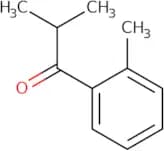
CAS:Versatile small molecule scaffold
Formula:C11H14OPurity:Min. 95%Molecular weight:162.23 g/mol1-(4-Methoxyphenyl)-2,2-dimethylpropan-1-one
CAS:1-(4-Methoxyphenyl)-2,2-dimethylpropan-1-one is a bioorganic compound with the formula CHClO. It is an aromatic ketone that is used in organic synthesis. The compound is prepared by acylation of 4-methoxybenzaldehyde with chloroacetyl chloride in the presence of aluminum chloride as a catalyst. The reaction is catalyzed by light and proceeds quantitatively at room temperature, affording 1-(4-methoxyphenyl)-2,2-dimethylpropan-1-one in nearly quantitative yield. Friedel–Crafts acylation can be used to synthesize derivatives of this compound, such as benzoyl derivatives. The reaction takes place at room temperature under mild conditions and typically gives products in high yields. The reaction time for Friedel–Crafts acylation depends on the reactivity of the substrate but typically ranges from one to several hours,Formula:C12H16O2Purity:Min. 95%Molecular weight:192.25 g/mol2',2,2-trimethylpropiophenone
CAS:Versatile small molecule scaffoldFormula:C12H16OPurity:Min. 95%Molecular weight:176.26 g/mol[1-(aminomethyl)cyclohexyl]methanol
CAS:Versatile small molecule scaffold
Formula:C8H17NOPurity:Min. 95%Molecular weight:143.23 g/mol2-pyridylethylmercaptan
CAS:2-pyridylethylmercaptan is a heterocyclic compound that is used as an adsorbent for the preparation of samples for surface-enhanced Raman spectroscopy. It is also used in cancer research to study the effects of acidic conditions on cancer cells. 2-pyridylethylmercaptan has been shown to be effective in the treatment of myeloma, leukemia, and breast cancer when administered orally. It binds to thiol groups on proteins and forms a covalent bond with sulfur atoms. The formation of this covalent bond leads to the protonation of 2-pyridylethylmercaptan and results in a change in its chemical properties. This covalent bond with sulfur atoms also inhibits the growth of bacteria by interfering with their ability to synthesize proteins.Formula:C7H9NSPurity:Min. 95%Molecular weight:139.22 g/mol2-(Sulphanylmethyl)pyridine
CAS:2-(Sulphanylmethyl)pyridine is a stabilizer that can be used in fatty acids. It is a reversible covalent bond that can stabilize the sample by reacting with the phosphorothioates of nucleic acids and other nucleophiles, such as sulphydryl groups. 2-(Sulphanylmethyl)pyridine reacts with glycerides to form reaction products, which may be used as additives for oils or fats. This product has been shown to have potential for use in X-ray crystallography studies of phosphorothioates. 2-(Sulphanylmethyl)pyridine stabilizes metal ions and can be used orally as acetyl derivatives.Formula:C6H7NSPurity:Min. 95%Molecular weight:125.19 g/mol4-Cyclopropylbutan-2-one
CAS:Versatile small molecule scaffoldFormula:C7H12OPurity:Min. 95%Molecular weight:112.17 g/mol1-(3-Phenylisoxazol-5yl)ethanone
CAS:Versatile small molecule scaffoldFormula:C11H9NO2Purity:Min. 95%Molecular weight:187.2 g/mol4-(2-Methylbutan-2-yl)aniline
CAS:Versatile small molecule scaffoldFormula:C11H17NPurity:Min. 95%Molecular weight:163.26 g/mol(3-Methylbutyl)benzene
CAS:(3-Methylbutyl)benzene is a chemical that undergoes alkylation in the presence of an acid. It is an aromatic hydrocarbon that has been shown to be able to react with a number of other chemicals. (3-Methylbutyl)benzene has been used as a catalyst in the synthesis of peptide hormones and solid catalysts for chemical reactions. This product also has the ability to emit light when heated, which makes it useful for research purposes.
Formula:C11H16Purity:Min. 95%Molecular weight:148.25 g/moltert-Amylbenzene
CAS:tert-Amylbenzene is an organic solvent that is a colorless liquid. This compound has been shown to react with hydrochloric acid in the presence of a chloride salt to form three isomers: ortho-, meta-, and para-tert-amylbenzene. The chemical reaction proceeds through Friedel-Crafts alkylation, which consists of two steps. In the first step, tert-amylbenzene reacts with hydrogen chloride to produce chlorides and tert-amylbenzenes. In the second step, these tert-amylbenzenes react with the chloride salt to produce the desired products.Formula:C11H16Purity:Min. 95%Molecular weight:148.25 g/mol2²,4²-Dimethylacetanilide
CAS:2,4-DMA is an organic amide that has been used as a solvent and chemical intermediate. It has been shown to be tumorigenic in animals and may also have carcinogenic properties. 2,4-DMA is metabolized to form peroxides which can damage cells by causing lipid peroxidation and DNA strand breakage. It is also an irritant to the skin, eyes, and respiratory tract. The oral LD50 of 2,4-DMA in rats is greater than 1 g/kg body weight.Formula:C10H13NOPurity:Min. 95%Molecular weight:163.22 g/molN-(3,5-Dimethylphenyl)acetamide
CAS:N-(3,5-Dimethylphenyl)acetamide is a reactive agent that has been shown to cause cancer in mammalian cells and bladder tissue. It is genotoxic and can cause mutations in DNA and chromosomes. N-(3,5-Dimethylphenyl)acetamide is also an hallucinogenic drug that acts as a serotonin antagonist. This compound has been shown to inhibit protein synthesis in cell culture.Formula:C10H13NOPurity:Min. 95%Molecular weight:163.22 g/mol1-(Chloromethyl)-4-isopropylbenzene
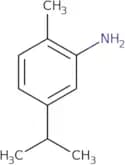
CAS:1-(Chloromethyl)-4-isopropylbenzene is an oxidising agent that is used to produce polyurethanes. It has been shown to be a potent inhibitor of thrombin receptor, which may make it useful in the treatment of infectious diseases. 1-(Chloromethyl)-4-isopropylbenzene can also be used as a catalyst for polymerisation reactions and helps to increase the molecular weight of polymers. This compound is not considered hazardous to the environment, although it may cause skin irritation.Formula:C10H13ClPurity:Min. 95%Molecular weight:168.66 g/mol2-Methyl-5-isopropylaniline
CAS:2-Methyl-5-isopropylaniline is a chemical that has been shown to have an antiproliferative effect, inducing cell apoptosis. It has also been shown to inhibit the growth of tumor cells by inducing cell death in human fibroblasts and colorectal carcinoma cells. The mechanism of action appears to be due to 2-methyl-5-isopropylaniline binding to DNA. This binding inhibits the synthesis of RNA and protein, inhibiting cancer cell proliferation. 2-Methyl-5-isopropylaniline has also been shown to induce DNA strand breaks and inhibit the repair process, which leads to rapid cellular death.
Formula:C10H15NPurity:Min. 95%Molecular weight:149.24 g/mol3-(Pyridin-2-yl)propanal
CAS:3-(Pyridin-2-yl)propanal is a heteroaromatic compound that undergoes photolysis to produce oxetane. It has been identified as a sensitizer, which means it can cause the skin to react to UV light. 3-(Pyridin-2-yl)propanal is also an alkyne, meaning it reacts with nucleophiles such as acetonitrile to form adducts. 3-(Pyridin-2-yl)propanal is produced by irradiation of pyridine and is used in the synthesis of oxetanes.Formula:C8H9NOPurity:Min. 95%Molecular weight:135.16 g/mol3-Bromoprop-2-yn-1-ol
CAS:3-Bromoprop-2-yn-1-ol is a useful intermediate in the synthesis of allylamine, which is used in the production of pharmaceuticals. It can be prepared by the stereoselective, organometallic, asymmetric synthesis of propargylamine and bromination of 3-bromopropene. The cross coupling reaction between propargylamine and allylamine with hypophosphorous acid and phenyl groups as well as polymerization are also possible methods to synthesize 3-bromoprop-2-yn-1-ol. The optical properties of this chemical make it suitable for use as an ultraviolet absorber in plastics or dyes. 3-Bromopropane has been shown to be a monomer that polymerizes under acidic conditions to form polymers with significant commercial value. It has been used in the production of polypropylene, polyethylene, and polystyrene.Formula:C3H3BrOPurity:Min. 95%Molecular weight:134.96 g/mol2,2-Bithiophene-5-carboxylic acid
CAS:2,2-Bithiophene-5-carboxylic acid is an organic compound that has a carboxylate group. It is used as a monomer in the preparation of polymers and plastics. It absorbs light in the visible region and fluoresces with a blue color when irradiated with ultraviolet light. The nature of this compound's absorption spectrum changes depending on whether it is in the solid or liquid state. 2,2-Bithiophene-5-carboxylic acid has been shown to have significant anti-inflammatory activity. This may be due to its ability to inhibit cyclooxygenase enzymes, which are responsible for producing prostaglandins from arachidonic acid.
Formula:C9H6O2S2Purity:Min. 95%Molecular weight:210.27 g/mol4-Bromo-2-methylbut-3-yn-2-ol
CAS:Versatile small molecule scaffoldFormula:C5H7BrOPurity:Min. 95%Molecular weight:163.01 g/mol3-(Benzyloxy)-2,2-dimethylcyclobutan-1-one
CAS:Versatile small molecule scaffoldFormula:C13H16O2Purity:Min. 95%Molecular weight:204.26 g/mol2,2-Dimethyl-3-(2-methylpropoxy)cyclobutan-1-one
CAS:Versatile small molecule scaffoldFormula:C10H18O2Purity:Min. 95%Molecular weight:170.25 g/mol3-Methoxy-2,2-dimethylcyclobutan-1-one
CAS:Versatile small molecule scaffoldFormula:C7H12O2Purity:Min. 95%Molecular weight:128.17 g/mol{Bicyclo[2.2.1]heptan-1-yl}methanol
CAS:Versatile small molecule scaffold
Formula:C8H14OPurity:Min. 95%Molecular weight:126.2 g/mol2-Bromo-1,4-naphthoquinone
CAS:2-Bromo-1,4-naphthoquinone is an organic compound with a hydroxyl group. In vitro studies have shown that it has minimal toxicity and redox potentials similar to those of water. 2-Bromo-1,4-naphthoquinone has been found to be reactive and nucleophilic in biological studies. It is also anticancer active when used in tissue culture and has been shown to inhibit the growth of cancer cells by interfering with cellular metabolism. The mechanism of action includes reactions with amines at the C2 position of the naphthoquinone ring, which leads to a release of bromine radicals that react with DNA and other cell components.Formula:C10H5BrO2Purity:Min. 95%Molecular weight:237.05 g/mol
![3,5-Dimethyl-4H,5H,6H,7H-pyrazolo[1,5-a]pyrimidine](/_next/image/?url=https%3A%2Fstatic.cymitquimica.com%2Fproducts%2F3D%2Fthumb-webp%2FBTC49461.webp&w=3840&q=75)



![N-[2-(Phenylthio)ethyl]-acetamide](/_next/image/?url=https%3A%2Fstatic.cymitquimica.com%2Fproducts%2F3D%2Fthumb-webp%2FCAA01472.webp&w=3840&q=75)
![[(1-Aminopropan-2-yl)sulfanyl]benzene](/_next/image/?url=https%3A%2Fstatic.cymitquimica.com%2Fproducts%2F3D%2Fthumb-webp%2FCAA01476.webp&w=3840&q=75)
![{[amino(phenoxy)phosphoryl]oxy}benzene](/_next/image/?url=https%3A%2Fstatic.cymitquimica.com%2Fproducts%2F3D%2Fthumb-webp%2FCAA01556.webp&w=3840&q=75)

![2,2,8-Trimethyl-2H,4H-[1,3]dioxino[4,5-c]pyridine-5-carboxylic acid](/_next/image/?url=https%3A%2Fstatic.cymitquimica.com%2Fproducts%2F3D%2Fthumb-webp%2FCAA02766.webp&w=3840&q=75)





![[1-(aminomethyl)cyclohexyl]methanol](/_next/image/?url=https%3A%2Fstatic.cymitquimica.com%2Fproducts%2F3D%2Fthumb-webp%2FCAA04157.webp&w=3840&q=75)




![{Bicyclo[2.2.1]heptan-1-yl}methanol](/_next/image/?url=https%3A%2Fstatic.cymitquimica.com%2Fproducts%2F3D%2Fthumb-webp%2FCAA06402.webp&w=3840&q=75)
