Building Blocks
Subcategories of "Building Blocks"
- Boronic Acids & Boronic Acid Derivatives(5,780 products)
- Chiral Building Blocks(1,239 products)
- Hydrocarbon Building Blocks(6,100 products)
- Organic Building Blocks(61,005 products)
Found 205234 products of "Building Blocks"
Cyclopentanecarboximidamide hydrochloride
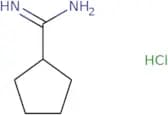
CAS:Cyclopentanecarboximidamide hydrochloride is a prodrug that is metabolized to its active form, pyridoxamine. The active form inhibits the enzyme histone deacetylase, which plays a role in viral infections. Cyclopentanecarboximidamide hydrochloride has been shown to be effective against chronic liver disease and other diseases of the central nervous system. The drug also has anti-inflammatory properties and may have antiviral effects. It also inhibits the production of inflammatory mediators such as nitric oxide and prostaglandin E2 by inhibiting cyclooxygenase activity.Formula:C6H13ClN2Purity:Min. 95%Molecular weight:148.63 g/mol(1S)-1-(2-Chlorophenyl)ethan-1-amine
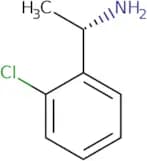
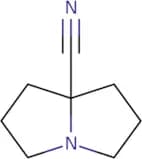
CAS:Versatile small molecule scaffoldFormula:C8H10ClNPurity:Min. 95%Molecular weight:155.62 g/molHexahydro-1H-pyrrolizine-7a-carbonitrile
CAS:Hexahydro-1H-pyrrolizine-7a-carbonitrile is an experimental drug that belongs to the class of medicines. It has a six-membered ring and is stable, with a molecular weight of 204. Hexahydro-1H-pyrrolizine-7a-carbonitrile has been shown to have antihistamine or anticholinergic properties, which may be due to its ability to inhibit the release of histamine from mast cells or block acetylcholine receptors in nerve endings. The mechanism for this action is unknown, but it may be related to the equilibrium between two diastereomers: one with an electron withdrawing group on nitrogen and another with electron donating groups on nitrogen. This equilibrium can be controlled by changes in temperature or pH levels.Formula:C8H12N2Purity:Min. 95%Molecular weight:136.19 g/mol4-N,4-N,6-Trimethylpyrimidine-2,4-diamine
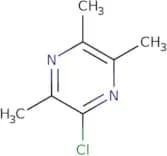
CAS:4-N,4-N,6-Trimethylpyrimidine-2,4-diamine is a solvate of 4-N,4-N,6-trimethylpyrimidine and dimethyl sulfoxide. It has been characterized by X-ray diffraction analysis and the cocrystal structure with dimethyl sulfoxide. The crystal belongs to space group P2 1 2 1 2 1 2 1 . The chains are linked by hydrogen bonds. There are two hydroxy groups on the solvate molecule, as well as two cyano groups.Formula:C7H12N4Purity:Min. 95%Molecular weight:152.2 g/mol2-Chloro-3,5,6-trimethylpyrazine
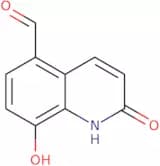
CAS:Versatile small molecule scaffoldFormula:C7H9ClN2Purity:Min. 95%Molecular weight:156.61 g/mol8-Hydroxy-2-oxo-1,2-dihydroquinoline-5-carbaldehyde
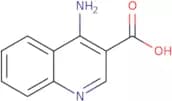
CAS:8-Hydroxy-2-oxo-1,2-dihydroquinoline-5-carbaldehyde is a cyclic compound that has been identified as a metabolite of quinolones such as ciprofloxacin. It is also found in human urine and faeces. The structure of 8-hydroxy-2-oxo-1,2-dihydroquinoline 5'-carbaldehyde can be determined by spectrometric methods. This compound is the product of metabolism of ciprofloxacin and other quinolones. Ciprofloxacin is a fluoroquinolone antibiotic that inhibits bacterial DNA gyrase, leading to inhibition of RNA synthesis and protein synthesis. Quinolones are also metabolized to 8-hydroxy 2 -oxo 1,2 -dihydroquinoline 5'-carbaldehyde by glucuronic acid conjugation and hydrolysis. TheFormula:C10H7NO3Purity:Min. 95%Molecular weight:189.17 g/mol4-Aminoquinoline-3-carboxylic acid
CAS:4-Aminoquinoline-3-carboxylic acid is a linker that can be used to modify the structure of other molecules. It is used in the synthesis of dopamine conjugates, which are used as inhibitors for neurodegenerative diseases. 4-Aminoquinoline-3-carboxylic acid has been shown to inhibit dopamine uptake at nanomolar concentrations. These compounds have also been shown to inhibit the growth factor activity of nerve growth factor and brain derived neurotrophic factor.
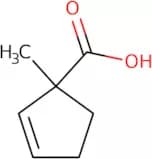
Formula:C10H8N2O2Purity:Min. 95%Molecular weight:188.19 g/mol1-Methylcyclopent-2-ene-1-carboxylic acid
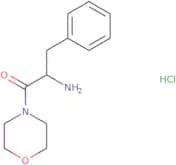
CAS:1-Methylcyclopent-2-ene-1-carboxylic acid is a biodegradable, neutral compound that inhibits the activity of enzymes. It is used as a preservative in cosmetics and pharmaceuticals. This product is also used to prevent the formation of hippuric acid, which can be synthesized by the enzyme methyl esterification. 1-Methylcyclopent-2-ene-1-carboxylic acid is often used in conjunction with other organic acids such as citric or lactic acid to make them more effective.Formula:C7H10O2Purity:Min. 95%Molecular weight:126.15 g/mol2-Amino-1-(4-morpholinyl)-3-phenyl-1-propanone hydrochloride
CAS:Versatile small molecule scaffoldFormula:C13H19ClN2O2Purity:Min. 95%Molecular weight:270.76 g/mol5-[(4-Nitrophenyl)methyl]imidazolidine-2,4-dione
CAS:Versatile small molecule scaffoldFormula:C10H9N3O4Purity:Min. 95%Molecular weight:235.2 g/mol5-Bromo-2-ethoxyaniline
CAS:Versatile small molecule scaffold
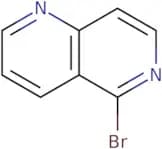
Formula:C8H10BrNOPurity:Min. 95%Molecular weight:216.07 g/mol5-Bromo-1,6-naphthyridine
CAS:Versatile small molecule scaffoldFormula:C8H5BrN2Purity:Min. 95%Molecular weight:209.04 g/mol(6,7-Dimethoxy-1,2,3,4-tetrahydro-isoquinolin-1-yl)-acetic acid
CAS:Versatile small molecule scaffoldFormula:C13H17NO4Purity:Min. 95%Molecular weight:251.28 g/mol2-{6-Methylimidazo[2,1-b][1,3]thiazol-3-yl}acetic acid
CAS:Versatile small molecule scaffoldFormula:C8H8N2O2SPurity:Min. 95%Molecular weight:196.23 g/mol2-{6-Phenylimidazo[2,1-b][1,3]thiazol-3-yl}acetic acid
CAS:Versatile small molecule scaffold
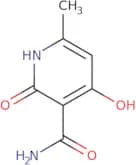
Formula:C13H10N2O2SPurity:Min. 95%Molecular weight:258.3 g/mol4-Hydroxy-6-methyl-2-oxo-1,2-dihydropyridine-3-carboxamide
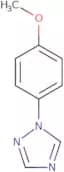
CAS:Versatile small molecule scaffoldFormula:C7H8N2O3Purity:Min. 95%Molecular weight:168.15 g/mol1-(4-Methoxyphenyl)-1H-1,2,4-triazole
CAS:Versatile small molecule scaffold
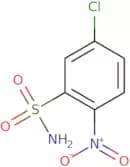
Formula:C9H9N3OPurity:Min. 95%Molecular weight:175.19 g/mol5-Chloro-2-nitrobenzenesulfonamide
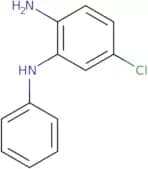
CAS:Versatile small molecule scaffoldFormula:C6H5ClN2O4SPurity:Min. 95%Molecular weight:236.63 g/mol5-Chloro-1-N-phenylbenzene-1,2-diamine
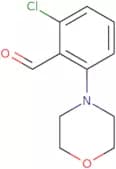
CAS:Versatile small molecule scaffoldFormula:C12H11ClN2Purity:Min. 95%Molecular weight:218.68 g/mol2-Chloro-6-(morpholin-4-yl)benzaldehyde
CAS:Versatile small molecule scaffoldFormula:C11H12ClNO2Purity:Min. 95%Molecular weight:225.67 g/mol6-Methylquinolin-8-amine
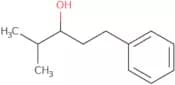
CAS:Versatile small molecule scaffoldFormula:C10H10N2Purity:Min. 95%Molecular weight:158.2 g/mol4-Methyl-1-phenylpentan-3-ol
CAS:Versatile small molecule scaffoldFormula:C12H18OPurity:Min. 95%Molecular weight:178.27 g/mol2-Chloro-benzenebutanoic acid
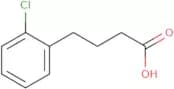
CAS:Versatile small molecule scaffold
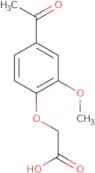
Formula:C10H11ClO2Purity:Min. 95%Molecular weight:198.65 g/mol2-(4-Acetyl-2-methoxyphenoxy)acetic acid
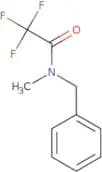
CAS:Versatile small molecule scaffoldFormula:C11H12O5Purity:Min. 95%Molecular weight:224.21 g/molN-Benzyl-2,2,2-trifluoro-N-methylacetamide
CAS:Versatile small molecule scaffoldFormula:C10H10F3NOPurity:Min. 95%Molecular weight:217.19 g/mol3-Amino-5,6-dimethyl-1H,4H,5H-pyrazolo[4,3-c]pyridin-4-one
CAS:Versatile small molecule scaffoldFormula:C8H10N4OPurity:Min. 95%Molecular weight:178.19 g/mol1-[2-(2-Methoxyethoxy)ethyl]piperazine
CAS:Versatile small molecule scaffoldFormula:C9H20N2O2Purity:Min. 95%Molecular weight:188.27 g/mol5-Bromo-1H-benzo[d]imidazole-2(3H)-thione
CAS:Versatile small molecule scaffoldFormula:C7H5BrN2SPurity:Min. 95%Molecular weight:229.1 g/mol3-Bromo-1-methyl-1H-pyrazolo[4,3-d]pyrimidin-7-ol
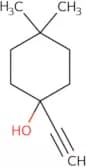
CAS:Versatile small molecule scaffoldFormula:C6H5BrN4OPurity:Min. 95%Molecular weight:229.03 g/mol1-Ethynyl-4,4-dimethylcyclohexan-1-ol
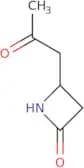
CAS:Versatile small molecule scaffoldFormula:C10H16OPurity:Min. 95%Molecular weight:152.23 g/mol4-(2-Oxopropyl)azetidin-2-one
CAS:Versatile small molecule scaffoldFormula:C6H9NO2Purity:Min. 95%Molecular weight:127.14 g/mol(2-Aminoethyl)(benzyloxy)amine dihydrochloride
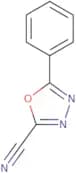
CAS:Versatile small molecule scaffoldFormula:C9H16Cl2N2OPurity:Min. 95%Molecular weight:239.14 g/mol5-Phenyl-1,3,4-oxadiazole-2-carbonitrile
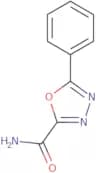
CAS:Versatile small molecule scaffoldFormula:C9H5N3OPurity:Min. 95%Molecular weight:171.16 g/mol5-Phenyl-1,3,4-oxadiazole-2-carboxamide
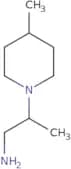
CAS:5-Phenyl-1,3,4-oxadiazole-2-carboxamide (PDC) is a quaternary ammonium salt that has been shown to inhibit the growth of methicillin-resistant Staphylococcus aureus and other gram-negative bacteria. PDC inhibits the synthesis of proteins by binding to ribosomes in the bacterial cell wall. This binding prevents the formation of an antibiotic-inhibitor complex with the enzyme ribosome that is required for protein synthesis and cell division. PDC also has antimicrobial properties and can be used as an antibacterial agent.Formula:C9H7N3O2Purity:Min. 95%Molecular weight:189.17 g/mol2-(4-Methylpiperidin-1-yl)propan-1-amine
CAS:Versatile small molecule scaffoldFormula:C9H20N2Purity:Min. 95%Molecular weight:156.27 g/mol4-Hydrazinoquinoline hydrochloride
CAS:4-Hydrazinoquinoline hydrochloride is a cation with a molecular weight of 176.2. It is cytotoxic and inhibits cancer cell growth. 4-Hydrazinoquinoline hydrochloride has been shown to be effective against lymphoid, breast, colon, and prostate cancer cells in vitro with IC50 values of 0.5 to 2 μM. This drug has been shown to bind to DNA by forming a Schiff base with the amine group of guanine residues in the DNA backbone. This binding leads to changes in DNA conformation that inhibit transcription and replication as well as protein synthesis and cell division.Formula:C9H10ClN3Purity:Min. 95%Molecular weight:195.65 g/mol4-(5-Formylfuran-2-yl)-N-methylbenzene-1-sulfonamide
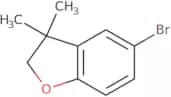
CAS:4-(5-Formylfuran-2-yl)-N-methylbenzene-1-sulfonamide is a synthetic, antiparasitic and antibiotic drug that has been shown to possess antiviral and antifungal properties. It is an inhibitor of DNA synthesis and RNA transcription by blocking the enzyme RNA polymerase II, and also inhibits protein synthesis by inhibiting the enzyme ribosomal protein S12. 4-(5-Formylfuran-2-yl)-N-methylbenzene-1-sulfonamide is effective against both Gram positive and Gram negative bacteria, as well as yeast. The compound has been shown to be active against bacteria such as Escherichia coli, Pseudomonas aeruginosa, Salmonella enterica serovar Typhi, Staphylococcus aureus (MRSA), Mycobacterium tuberculosis, Mycobacterium avium complex, Candida albFormula:C12H11NO4SPurity:Min. 95%Molecular weight:265.29 g/mol5-Bromo-3,3-dimethyl-2,3-dihydro-1-benzofuran
CAS:Versatile small molecule scaffoldFormula:C10H11BrOPurity:Min. 95%Molecular weight:227.1 g/mol5-(4-Ethoxyphenyl)-5-methylimidazolidine-2,4-dione
CAS:Versatile small molecule scaffoldFormula:C12H14N2O3Purity:Min. 95%Molecular weight:234.25 g/mol5-Methyl-5-[4-(3-methylbutoxy)phenyl]imidazolidine-2,4-dione
CAS:Versatile small molecule scaffoldFormula:C15H20N2O3Purity:Min. 95%Molecular weight:276.33 g/mol6-chloro-8-nitroquinoline
CAS:6-Chloro-8-nitroquinoline is an indian nitro compound that yields a greenish yellow liquid when reacted with quinaldine, which is an aromatic amino compound. The 8-nitroquinoline group in this compound has an amino group and reacts with the fungitoxicant guanidine. This class of compounds is used to control fungi such as Aspergillus and Myrothecium verrucaria. 6-Chloro-8-nitroquinoline can be hydrolyzed by strong acids or bases, yielding chloro formates.
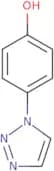
Formula:C9H5ClN2O2Purity:Min. 95%Molecular weight:208.6 g/mol4-(1H-1,2,3-Triazol-1-yl)phenol
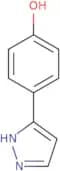
CAS:4-(1H-1,2,3-Triazol-1-yl)phenol is a small molecule that has been shown to enhance the efficiency of diagnosing certain conditions. It can be used in microwells as a sensor for measuring the concentration of analytes such as antibodies, enzymes, proteins, and other compounds. This compound is immobilized on a solid surface and reacts with light to produce chemiluminescence. 4-(1H-1,2,3-Triazol-1-yl)phenol can be used as an immobilization agent for magnetic beads and also has fluorescent properties. It has been shown to inhibit hepatitis B virus replication by binding to the viral antigen. 4-(1H-1,2,3-Triazol-1-yl)phenol is also able to detect peroxide in biological fluids or luminol in animal tissue.Formula:C8H7N3OPurity:Min. 95%Molecular weight:161.16 g/mol4-(1H-Pyrazol-3-yl)phenol
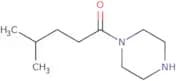
CAS:Versatile small molecule scaffoldFormula:C9H8N2OPurity:Min. 95%Molecular weight:160.17 g/mol4-Methyl-1-(piperazin-1-yl)pentan-1-one
CAS:Versatile small molecule scaffoldFormula:C10H20N2OPurity:Min. 95%Molecular weight:184.28 g/mol[4-(2-Amino-ethyl)-phenyl]-methanol hydrochloride
CAS:Versatile small molecule scaffoldFormula:C9H13NO·HClPurity:Min. 95%Molecular weight:187.67 g/mol6-(Methylthio)benzo[D][1,3]dioxol-5-amine
CAS:Versatile small molecule scaffold
Formula:C8H9NO2SPurity:Min. 95%Molecular weight:183.23 g/molIsoxazolo[5,4-d]pyrimidin-4(5H)-one, 3-methyl-
CAS:Versatile small molecule scaffoldFormula:C6H5N3O2Purity:Min. 95%Molecular weight:151.12 g/mol2-(3,5-Dichlorophenyl)propene
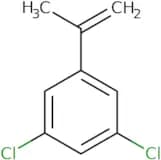
CAS:2-(3,5-Dichlorophenyl)propene is a dehydrating agent that is used in the production of pharmaceuticals, dyestuffs, and other chemicals. It can be used to produce chloride by the reaction with hydrogen chloride. 2-(3,5-Dichlorophenyl)propene can also be used to prepare oxalyl or tetrahydrofuran through dehydration reactions. This chemical is a reaction product of silicon and particle and can be used as a reaction system for the synthesis of thionyl chloride, which is an important reagent in organic chemistry.Formula:C9H8Cl2Purity:Min. 95%Molecular weight:187.06 g/mol5-Chloro-2-methyl-2,3-dihydro-1H-indole
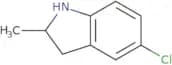
CAS:Versatile small molecule scaffoldFormula:C9H10ClNPurity:Min. 95%Molecular weight:167.63 g/molMethyl(nonyl)amine hydrochloride
CAS:Versatile small molecule scaffoldFormula:C10H24ClNPurity:Min. 95%Molecular weight:193.76 g/mol


![5-[(4-Nitrophenyl)methyl]imidazolidine-2,4-dione](/_next/image/?url=https%3A%2Fstatic.cymitquimica.com%2Fproducts%2F3D%2Fthumb-webp%2FTCA31944.webp&w=3840&q=75)


![2-{6-Methylimidazo[2,1-b][1,3]thiazol-3-yl}acetic acid](/_next/image/?url=https%3A%2Fstatic.cymitquimica.com%2Fproducts%2F3D%2Fthumb-webp%2FTCA34790.webp&w=3840&q=75)
![2-{6-Phenylimidazo[2,1-b][1,3]thiazol-3-yl}acetic acid](/_next/image/?url=https%3A%2Fstatic.cymitquimica.com%2Fproducts%2F3D%2Fthumb-webp%2FTCA34791.webp&w=3840&q=75)

![3-Amino-5,6-dimethyl-1H,4H,5H-pyrazolo[4,3-c]pyridin-4-one](/_next/image/?url=https%3A%2Fstatic.cymitquimica.com%2Fproducts%2F3D%2Fthumb-webp%2FTCA46491.webp&w=3840&q=75)
![1-[2-(2-Methoxyethoxy)ethyl]piperazine](/_next/image/?url=https%3A%2Fstatic.cymitquimica.com%2Fproducts%2F3D%2Fthumb-webp%2FTCA46566.webp&w=3840&q=75)
![5-Bromo-1H-benzo[d]imidazole-2(3H)-thione](/_next/image/?url=https%3A%2Fstatic.cymitquimica.com%2Fproducts%2F3D%2Fthumb-webp%2FTCA46839.webp&w=3840&q=75)
![3-Bromo-1-methyl-1H-pyrazolo[4,3-d]pyrimidin-7-ol](/_next/image/?url=https%3A%2Fstatic.cymitquimica.com%2Fproducts%2F3D%2Fthumb-webp%2FTCA47927.webp&w=3840&q=75)




![5-Methyl-5-[4-(3-methylbutoxy)phenyl]imidazolidine-2,4-dione](/_next/image/?url=https%3A%2Fstatic.cymitquimica.com%2Fproducts%2F3D%2Fthumb-webp%2FTCA52421.webp&w=3840&q=75)

![[4-(2-Amino-ethyl)-phenyl]-methanol hydrochloride](/_next/image/?url=https%3A%2Fstatic.cymitquimica.com%2Fproducts%2F3D%2Fthumb-webp%2FTCA55971.webp&w=3840&q=75)
![6-(Methylthio)benzo[D][1,3]dioxol-5-amine](/_next/image/?url=https%3A%2Fstatic.cymitquimica.com%2Fproducts%2F3D%2Fthumb-webp%2FTCA56013.webp&w=3840&q=75)
![Isoxazolo[5,4-d]pyrimidin-4(5H)-one, 3-methyl-](/_next/image/?url=https%3A%2Fstatic.cymitquimica.com%2Fproducts%2F3D%2Fthumb-webp%2FTCA57174.webp&w=3840&q=75)