Building Blocks
This section contains fundamental products for the synthesis of organic and biological compounds. Building blocks are the essential starting materials used to construct complex molecules through various chemical reactions. They play a critical role in drug discovery, material science, and chemical research. At CymitQuimica, we offer a diverse range of high-quality building blocks to support your innovative research and industrial projects, ensuring you have the essential components for successful synthesis.
Subcategories of "Building Blocks"
- Boronic Acids & Boronic Acid Derivatives(5,778 products)
- Chiral Building Blocks(1,243 products)
- Hydrocarbon Building Blocks(6,098 products)
- Organic Building Blocks(61,057 products)
Found 200716 products of "Building Blocks"
Sort by
Purity (%)
0
100
|
0
|
50
|
90
|
95
|
100
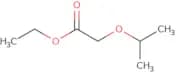
Ethyl 2-(propan-2-yloxy)acetate
CAS:<p>Ethyl 2-(propan-2-yloxy)acetate is a high concentration organometallic compound that is an active substance. The organometallic compound consists of a magnesium atom, an aliphatic hydrocarbon group, and a polyolefin. It has been shown to have a blood pressure lowering effect in rats. Ethyl 2-(propan-2-yloxy)acetate is an ester compound that acts as an intermediate in the production of other substances with therapeutic properties.</p>Formula:C7H14O3Purity:Min. 95%Molecular weight:146.18 g/molEthyl 2-(tert-butoxy)acetate
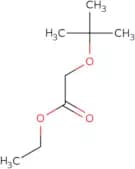
CAS:Versatile small molecule scaffoldFormula:C8H16O3Purity:Min. 95%Molecular weight:160.21 g/mol3-Amino-4,4-dimethyloxolan-2-one hydrochloride
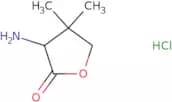
CAS:<p>Versatile small molecule scaffold</p>Formula:C6H12ClNO2Purity:Min. 95%Molecular weight:165.62 g/mol1-Bromo-4-(but-1-en-2-yl)benzene
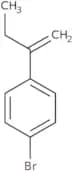
CAS:Versatile small molecule scaffoldFormula:C10H11BrPurity:Min. 95%Molecular weight:211.1 g/mol1-(3-Bromoprop-1-en-1-yl)-4-chlorobenzene
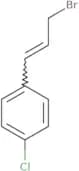
CAS:<p>Versatile small molecule scaffold</p>Formula:C9H8BrClPurity:Min. 95%Molecular weight:231.51 g/mol2-Methyl-2-[2-(trifluoromethyl)phenyl]oxirane
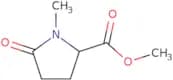
CAS:<p>Versatile small molecule scaffold</p>Formula:C10H9F3OPurity:Min. 95%Molecular weight:202.17 g/molMethyl (2S)-1-methyl-5-oxopyrrolidine-2-carboxylate
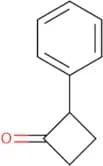
CAS:Methyl (2S)-1-methyl-5-oxopyrrolidine-2-carboxylate is a metabolite of histone deacetylase inhibitors that can be used as a biomarker for the activity of these drugs. It has been shown to act as an effector protein and inhibit histone methylation, which is involved in DNA replication and cell division. Methyl (2S)-1-methyl-5-oxopyrrolidine-2-carboxylate is also involved in the regulation of lysine methylation, which is important for gene expression and cellular growth. Methyl (2S)-1-methyl-5-oxopyrrolidine-2-carboxylate can be used to measure the effect of histone deacetylase inhibitors on cells by measuring the uptake of this metabolite into cells. This metabolite can also be used to measure the activity of histone deacetylase inhibitors in bioreFormula:C7H11NO3Purity:Min. 95%Molecular weight:157.17 g/mol2-Phenylcyclobutanone
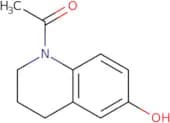
CAS:<p>2-Phenylcyclobutanone is an organic compound that contains a carbonyl group. It is used as a building block in the synthesis of organic compounds. 2-Phenylcyclobutanone has been shown to be effective in the stereoselective synthesis of enantiopure biomolecules, such as amino acids and peptides. This compound can also be used for the production of chiral cyclic molecules by ring opening. The success of this strategy relies on the availability of both stereoisomers to be able to form diastereomers. This process can be expanded to produce larger rings using different strategies.</p>Formula:C10H10OPurity:Min. 95%Molecular weight:146.19 g/mol1-(6-Hydroxy-1,2,3,4-tetrahydroquinolin-1-yl)ethan-1-one
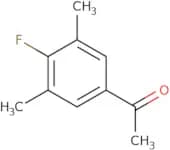
CAS:Versatile small molecule scaffoldFormula:C11H13NO2Purity:Min. 95%Molecular weight:191.23 g/mol4'-Fluoro-3',5'-dimethylacetophenone
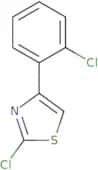
CAS:<p>Versatile small molecule scaffold</p>Formula:C10H11OFPurity:Min. 95%Molecular weight:166.19 g/mol2-Chloro-4-(2-chlorophenyl)-1,3-thiazole
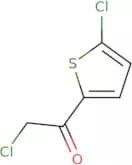
CAS:Versatile small molecule scaffoldFormula:C9H5Cl2NSPurity:Min. 95%Molecular weight:230.11 g/mol2-Chloro-1-(5-chlorothiophen-2-yl)ethan-1-one
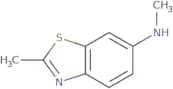
CAS:<p>Versatile small molecule scaffold</p>Formula:C6H4Cl2OSPurity:Min. 95%Molecular weight:195.07 g/molN,2-Dimethyl-1,3-benzothiazol-6-amine
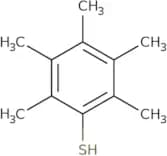
CAS:<p>Versatile small molecule scaffold</p>Formula:C9H10N2SPurity:Min. 95%Molecular weight:178.26 g/molPentamethylbenzene-1-thiol
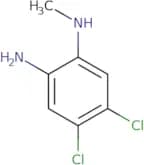
CAS:<p>Pentamethylbenzene-1-thiol is a synthetic, sulfide-containing compound. The molecular weight of the compound is 230.07. It has been shown to be an excellent lubricant and has a high sulfur content. Pentamethylbenzene-1-thiol can be used as a surfactant in the synthesis of organic compounds and as an intermediate for fluorinating agents. This compound is soluble in water and other polar solvents and insoluble in nonpolar solvents such as hexane or benzene. Pentamethylbenzene-1-thiol has been shown to react with nitro groups under acidic conditions, which may be useful for synthesizing pentafluorides. The methodologies that are available for this synthesis include methylation, chlorination, hydrolysis, or oxidation with nitrous acid.</p>Formula:C11H16SPurity:Min. 95%Molecular weight:180.31 g/mol4,5-Dichloro-1-N-methylbenzene-1,2-diamine
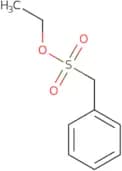
CAS:<p>Versatile small molecule scaffold</p>Formula:C7H8Cl2N2Purity:Min. 95%Molecular weight:191.05 g/molEthyl phenylmethanesulfonate
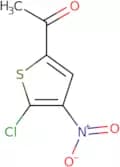
CAS:<p>Ethyl phenylmethanesulfonate (EPM) is an organic solvent that can be injected into the ground to aid in the recovery of petroleum. EPM is a rechargeable organic solvent that is used as a backup to propanediol and ethylene, which are more expensive solvents. It has been shown that injecting EPM into the ground at high concentrations can optimize the production of oil and gas. This organic solvent can also be used for extracting difluoro, vinylene, and other hydrocarbons from natural gas or petroleum.</p>Formula:C9H12O3SPurity:Min. 95%Molecular weight:200.26 g/mol1-(5-chloro-4-nitrothiophen-2-yl)ethan-1-one
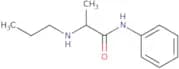
CAS:<p>1-(5-chloro-4-nitrothiophen-2-yl)ethan-1-one is a thiophene that has shown to have pharmacological activity in animal models. It has been shown to be a bifunctional compound, with the ability to serve as an amine and an alcohol. This functional group makes 1-(5-chloro-4-nitrothiophen-2-yl)ethan-1-one useful in the synthesis of benzodiazepines, which are important drugs for the treatment of anxiety.</p>Formula:C6H4ClNO3SPurity:Min. 95%Molecular weight:205.61 g/molN-Phenyl-2-(propylamino)propanamide
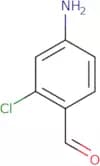
CAS:<p>Versatile small molecule scaffold</p>Formula:C12H18N2OPurity:Min. 95%Molecular weight:206.28 g/mol4-Amino-2-chlorobenzaldehyde
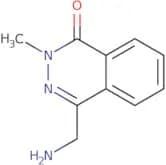
CAS:<p>Versatile small molecule scaffold</p>Formula:C7H6ClNOPurity:Min. 95%Molecular weight:155.58 g/mol4-(Aminomethyl)-2-methyl-1,2-dihydrophthalazin-1-one
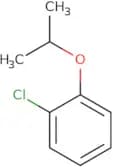
CAS:Versatile small molecule scaffoldFormula:C10H11N3OPurity:Min. 95%Molecular weight:189.21 g/mol1-Chloro-2-(propan-2-yloxy)benzene
CAS:Versatile small molecule scaffoldFormula:C9H11ClOPurity:Min. 95%Molecular weight:170.63 g/mol(2S)-3-{[(Benzyloxy)carbonyl]amino}-2-hydroxypropanoic acid
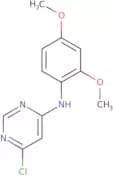
CAS:<p>Versatile small molecule scaffold</p>Formula:C11H13NO5Purity:Min. 95%Molecular weight:239.22 g/mol6-Chloro-N-(2,4-dimethoxyphenyl)pyrimidin-4-amine
CAS:Versatile small molecule scaffoldFormula:C12H12ClN3O2Purity:Min. 95%Molecular weight:265.69 g/molMethyl 3-amino-4-([2-(dimethylcarbamoyl)ethyl]amino)benzoate
CAS:Versatile small molecule scaffoldFormula:C13H19N3O3Purity:Min. 95%Molecular weight:265.31 g/mol3-[(4-Bromothiophen-2-yl)methyl]-1,3-diazaspiro[4.4]nonane-2,4-dione
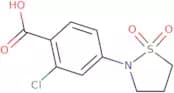
CAS:Versatile small molecule scaffoldFormula:C12H13BrN2O2SPurity:Min. 95%Molecular weight:329.21 g/mol2-Chloro-4-(1,1-dioxo-1,2-thiazolidin-2-yl)benzoic acid
CAS:<p>Versatile small molecule scaffold</p>Formula:C10H10ClNO4SPurity:Min. 95%Molecular weight:275.71 g/mol3-[(5-Bromo-2-methoxyphenyl)methyl]imidazolidine-2,4-dione
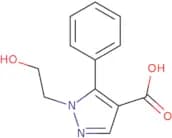
CAS:Versatile small molecule scaffoldFormula:C11H11BrN2O3Purity:Min. 95%Molecular weight:299.12 g/mol1-(2-Hydroxyethyl)-5-phenyl-1H-pyrazole-4-carboxylic acid
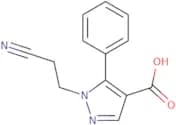
CAS:Versatile small molecule scaffoldFormula:C12H12N2O3Purity:Min. 95%Molecular weight:232.23 g/mol1-(2-Cyanoethyl)-5-phenyl-1H-pyrazole-4-carboxylic acid
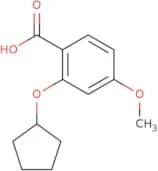
CAS:Versatile small molecule scaffoldFormula:C13H11N3O2Purity:Min. 95%Molecular weight:241.24 g/mol2-(Cyclopentyloxy)-4-methoxybenzoic acid
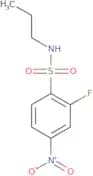
CAS:<p>Versatile small molecule scaffold</p>Formula:C13H16O4Purity:Min. 95%Molecular weight:236.26 g/mol2-Fluoro-4-nitro-N-propylbenzene-1-sulfonamide
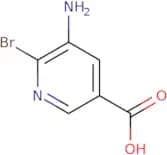
CAS:<p>Versatile small molecule scaffold</p>Formula:C9H11FN2O4SPurity:Min. 95%Molecular weight:262.26 g/mol5-Amino-6-bromopyridine-3-carboxylic acid
CAS:<p>Versatile small molecule scaffold</p>Formula:C6H5BrN2O2Purity:Min. 95%Molecular weight:217.02 g/mol1-{[(tert-Butoxy)carbonyl]amino}-2-methylcyclohexane-1-carboxylic acid
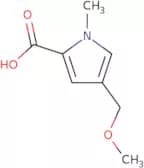
CAS:Versatile small molecule scaffoldFormula:C13H23NO4Purity:Min. 95%Molecular weight:257.33 g/mol4-(Methoxymethyl)-1-methyl-1H-pyrrole-2-carboxylic acid
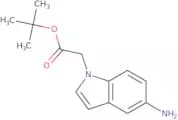
CAS:<p>Versatile small molecule scaffold</p>Formula:C8H11NO3Purity:Min. 95%Molecular weight:169.18 g/moltert-Butyl 2-(5-amino-1H-indol-1-yl)acetate
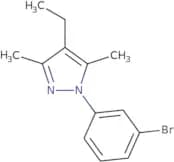
CAS:<p>Versatile small molecule scaffold</p>Formula:C14H18N2O2Purity:Min. 95%Molecular weight:246.3 g/mol1-(3-Bromophenyl)-4-ethyl-3,5-dimethyl-1H-pyrazole
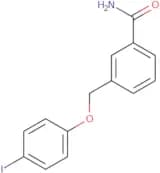
CAS:Versatile small molecule scaffoldFormula:C13H15BrN2Purity:Min. 95%Molecular weight:279.18 g/mol3-(4-Iodophenoxymethyl)benzamide
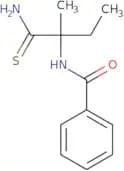
CAS:<p>Versatile small molecule scaffold</p>Formula:C14H12INO2Purity:Min. 95%Molecular weight:353.15 g/molN-(1-Carbamothioyl-1-methylpropyl)benzamide
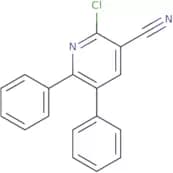
CAS:<p>Versatile small molecule scaffold</p>Formula:C12H16N2OSPurity:Min. 95%Molecular weight:236.34 g/mol2-Chloro-5,6-diphenylpyridine-3-carbonitrile
CAS:<p>Versatile small molecule scaffold</p>Formula:C18H11ClN2Purity:Min. 95%Molecular weight:290.7 g/mol(6-(2-(2-(2-Methoxyethoxy)ethoxy)ethoxy)pyridin-2-yl)methanol
CAS:Versatile small molecule scaffoldFormula:C13H21NO5Purity:Min. 95%Molecular weight:271.31 g/mol2-[(4-Bromophenyl)methyl]-6-methoxyhexanoic acid
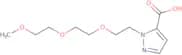
CAS:Versatile small molecule scaffoldFormula:C14H19BrO3Purity:Min. 95%Molecular weight:315.2 g/mol1-(2-(2-(2-Methoxyethoxy)ethoxy)ethyl)-1H-pyrazole-5-carboxylic acid
CAS:Versatile small molecule scaffoldFormula:C11H18N2O5Purity:Min. 95%Molecular weight:258.27 g/mol3-Ethyl-2-phenylimidazo[1,2-a]pyrazine
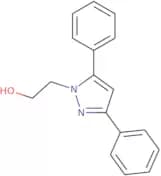
CAS:<p>Versatile small molecule scaffold</p>Formula:C14H13N3Purity:Min. 95%Molecular weight:223.27 g/mol2-(3,5-Diphenyl-1H-pyrazol-1-yl)ethan-1-ol
CAS:<p>2-(3,5-Diphenyl-1H-pyrazol-1-yl)ethan-1-ol is a synthetic ligand that binds to proton receptors. It has been shown to be hypoglycemic in rats and to have hypotensive effects in rabbits. This drug also has antiarrhythmic properties, which may be due to its ability to inhibit platelet aggregation. 2-(3,5-Diphenyl-1H-pyrazol-1-yl)ethan-1-ol can be used as an analytical method for the determination of chalcone and bond cleavage products in epoxide analysis.</p>Formula:C17H16N2OPurity:Min. 95%Molecular weight:264.32 g/mol1,1-Dibromo-2-(chloromethyl)cyclopropane
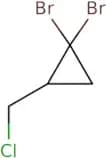
CAS:<p>Versatile small molecule scaffold</p>Formula:C4H5Br2ClPurity:Min. 95%Molecular weight:248.34 g/mol4-[(Methylsulfanyl)methyl]benzoic acid
CAS:<p>4-[(Methylsulfanyl)methyl]benzoic acid is a chiral compound with a sulfur atom. It can be prepared by the reaction between methylsulfonyl chloride and benzoyl chloride in chloroform or by the reaction of methoxysulfur trifluoride with benzoic acid. 4-[(Methylsulfanyl)methyl]benzoic acid can also be synthesized by the reaction of sulfone and carboxylic acid derivatives, such as benzyl or cyano. 4-[(Methylsulfanyl)methyl]benzoic acid is used as a fungicide, insecticide, and herbicide. The substituents on this molecule are able to form bonds with other molecules to create an array of different structures. The most common substitution is for methoxy, which has a hydroxy group attached to it. This substitution is found in many different types of molecules including some drugs, hormones, vitamins,</p>Formula:C9H10O2SPurity:Min. 95%Molecular weight:182.24 g/mol8-(4-Methoxyphenyl)-1,4-dioxaspiro[4.5]decan-8-ol
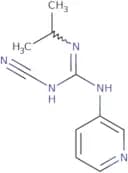
CAS:Versatile small molecule scaffoldFormula:C15H20O4Purity:Min. 95%Molecular weight:264.32 g/molN''-Cyano-N'-(propan-2-yl)-N-(pyridin-3-yl)guanidine
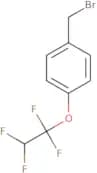
CAS:N-Cyano-N'-(propan-2-yl)-N-(pyridin-3-yl)guanidine is an experimental drug that has been shown to have a therapeutic effect in children with autoimmune diseases. It inhibits the uptake of bacteria by monocytes and macrophages, thereby preventing them from entering the bloodstream. N-Cyano-N'-(propan-2-yl)-N-(pyridin-3-yl)guanidine also has antimicrobial activity against Gram negative and Gram positive bacteria. The drug has been tested in patients with urothelial carcinoma, adrenocortical carcinoma, and bacterial vaginosis.br> br> This medication is not approved for use in the United States.Formula:C10H13N5Purity:Min. 95%Molecular weight:203.24 g/mol1-(Bromomethyl)-4-(1,1,2,2-tetrafluoroethoxy)benzene
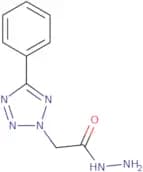
CAS:<p>Versatile small molecule scaffold</p>Formula:C9H7BrF4OPurity:Min. 95%Molecular weight:287.05 g/mol(5-Phenyl-tetrazol-2-yl)-acetic acid hydrazide
CAS:<p>Versatile small molecule scaffold</p>Formula:C9H10N6OPurity:Min. 95%Molecular weight:218.22 g/mol

![2-Methyl-2-[2-(trifluoromethyl)phenyl]oxirane](/_next/image/?url=https%3A%2Fstatic.cymitquimica.com%2Fproducts%2F3D%2Fthumb-webp%2FSBA43233.webp&w=3840&q=75)
![(2S)-3-{[(Benzyloxy)carbonyl]amino}-2-hydroxypropanoic acid](/_next/image/?url=https%3A%2Fstatic.cymitquimica.com%2Fproducts%2F3D%2Fthumb-webp%2FSBA49179.webp&w=3840&q=75)
![Methyl 3-amino-4-([2-(dimethylcarbamoyl)ethyl]amino)benzoate](/_next/image/?url=https%3A%2Fstatic.cymitquimica.com%2Fproducts%2F3D%2Fthumb-webp%2FSBC58933.webp&w=3840&q=75)
![3-[(4-Bromothiophen-2-yl)methyl]-1,3-diazaspiro[4.4]nonane-2,4-dione](/_next/image/?url=https%3A%2Fstatic.cymitquimica.com%2Fproducts%2F3D%2Fthumb-webp%2FSBC60712.webp&w=3840&q=75)
![3-[(5-Bromo-2-methoxyphenyl)methyl]imidazolidine-2,4-dione](/_next/image/?url=https%3A%2Fstatic.cymitquimica.com%2Fproducts%2F3D%2Fthumb-webp%2FSBC62995.webp&w=3840&q=75)
![1-{[(tert-Butoxy)carbonyl]amino}-2-methylcyclohexane-1-carboxylic acid](/_next/image/?url=https%3A%2Fstatic.cymitquimica.com%2Fproducts%2F3D%2Fthumb-webp%2FSBC81811.webp&w=3840&q=75)

![2-[(4-Bromophenyl)methyl]-6-methoxyhexanoic acid](/_next/image/?url=https%3A%2Fstatic.cymitquimica.com%2Fproducts%2F3D%2Fthumb-webp%2FSBD42050.webp&w=3840&q=75)
![3-Ethyl-2-phenylimidazo[1,2-a]pyrazine](/_next/image/?url=https%3A%2Fstatic.cymitquimica.com%2Fproducts%2F3D%2Fthumb-webp%2FSBD70961.webp&w=3840&q=75)
![4-[(Methylsulfanyl)methyl]benzoic acid](/_next/image/?url=https%3A%2Fstatic.cymitquimica.com%2Fproducts%2F3D%2Fthumb-webp%2FSCA00348.webp&w=3840&q=75)
![8-(4-Methoxyphenyl)-1,4-dioxaspiro[4.5]decan-8-ol](/_next/image/?url=https%3A%2Fstatic.cymitquimica.com%2Fproducts%2F3D%2Fthumb-webp%2FSCA01951.webp&w=3840&q=75)