Building Blocks
This section contains fundamental products for the synthesis of organic and biological compounds. Building blocks are the essential starting materials used to construct complex molecules through various chemical reactions. They play a critical role in drug discovery, material science, and chemical research. At CymitQuimica, we offer a diverse range of high-quality building blocks to support your innovative research and industrial projects, ensuring you have the essential components for successful synthesis.
Subcategories of "Building Blocks"
- Boronic Acids & Boronic Acid Derivatives(5,778 products)
- Chiral Building Blocks(1,242 products)
- Hydrocarbon Building Blocks(6,098 products)
- Organic Building Blocks(61,059 products)
Found 199580 products of "Building Blocks"
Sort by
Purity (%)
0
100
|
0
|
50
|
90
|
95
|
100
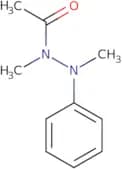
N,N'-Dimethyl-N'-phenylacetohydrazide
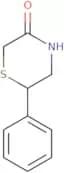
CAS:<p>Versatile small molecule scaffold</p>Formula:C10H14N2OPurity:Min. 95%Molecular weight:178.23 g/mol6-Phenylthiomorpholin-3-one
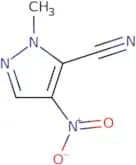
CAS:<p>Versatile small molecule scaffold</p>Formula:C10H11NOSPurity:Min. 95%Molecular weight:193.27 g/mol1-Methyl-4-nitro-1H-pyrazole-5-carbonitrile
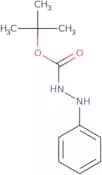
CAS:<p>Versatile small molecule scaffold</p>Formula:C5H4N4O2Purity:Min. 95%Molecular weight:152.11 g/mol1-Boc-2-phenylhydrazine
CAS:1-Boc-2-phenylhydrazine is an organic compound that belongs to the group of azides. It is used as a reagent for the synthesis of biochemicals and pharmaceuticals. The yield of 1-Boc-2-phenylhydrazine can be increased by diluting it with tetrahydrofuran or diethylether, which are solvents that dissolve both hydrazines and amines. The reaction temperature must be controlled in order to avoid the formation of unsymmetrical azides, such as 2,4,6-trinitrophenylhydrazine. If the reaction temperature exceeds 60° C, then phenylhydrazine will be consumed and not produce 1-Boc-2-phenylhydrazine.Formula:C11H16N2O2Purity:Min. 95%Molecular weight:208.26 g/moltert-Butyl N-benzylcarbamate
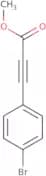
CAS:Tert-Butyl N-benzylcarbamate is a synthetic compound that is being developed for the treatment of cancer. It is an analog of carmustine, a drug used for the treatment of brain tumors, and has been shown to be effective against cell lines in vitro. Tert-Butyl N-benzylcarbamate binds to DNA and inhibits protein synthesis, leading to cancer cell death. The drug also inhibits the growth of cancer cells by inhibiting chloride channels and blocking the influx of hydrogen chloride into cells. Tert-Butyl N-benzylcarbamate has not been tested in humans yet, but it has shown promising results in animal models.Formula:C12H17NO2Purity:Min. 95%Molecular weight:207.27 g/molMethyl 3-(4-bromophenyl)prop-2-ynoate
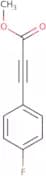
CAS:Versatile small molecule scaffoldFormula:C10H7BrO2Purity:Min. 95%Molecular weight:239.06 g/molMethyl 3-(4-fluorophenyl)prop-2-ynoate
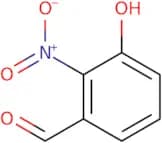
CAS:<p>Methyl 3-(4-fluorophenyl)prop-2-ynoate is an organic compound with the formula CHFO. It is a colorless liquid that is soluble in most organic solvents. Methyl 3-(4-fluorophenyl)prop-2-ynoate has been synthesized and characterized by x-ray crystallography. The compound belongs to the class of esters, which are typically derived from carboxylic acids and alcohols. This ester has a β-unsaturated carbonyl group, which allows for its reactivity with other organic compounds. Methyl 3-(4-fluorophenyl)prop-2-ynoate has been shown to react with primary amides to form isoquinoline amides in nature. The anion of methyl 3-(4-fluorophenyl)prop -2-ynoate is nitrile, which can be detected by XRD.</p>Formula:C10H7FO2Purity:Min. 95%Molecular weight:178.16 g/mol3-Hydroxy-2-nitrobenzaldehyde
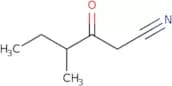
CAS:<p>3-Hydroxy-2-nitrobenzaldehyde (3HNB) is a potent inhibitor of glucose uptake. This compound inhibits the activity of glucose transporter 2 (GLUT2), which is responsible for transporting glucose across the cell membrane into the cell. In addition, 3HNB has been shown to inhibit the activity of other glucose transporters and enzymes involved in glycolysis and gluconeogenesis, leading to reduced rates of glucose production and increased rates of glucose consumption. The hypoglycemic effect of 3HNB is due to its inhibition of key enzymes involved in carbohydrate metabolism, as well as its ability to block GLUT2 from transporting glucose into cells. It has also been shown that 3HNB can cause weight loss by decreasing appetite and increasing energy expenditure in mice fed high fat diets.</p>Formula:C7H5NO4Purity:Min. 95%Molecular weight:167.12 g/mol4-Methyl-3-oxohexanenitrile
CAS:<p>Versatile small molecule scaffold</p>Formula:C7H11NOPurity:Min. 95%Molecular weight:125.17 g/mol4-Ethyl-3-oxohexanenitrile
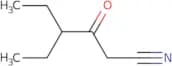
CAS:<p>Versatile small molecule scaffold</p>Formula:C8H13NOPurity:Min. 95%Molecular weight:139.19 g/mol3-Cyclohexylprop-2-yn-1-ol
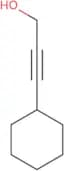
CAS:3-Cyclohexylprop-2-yn-1-ol is a carboxylic acid that has been used as an intermediate for the preparation of esters and heterocycles. It reacts with sulfoxide to give amylene and with sulfide to give heterocycles. 3-Cyclohexylprop-2-yn-1-ol can be prepared by reacting propargyl alcohol with cyclohexene oxide in the presence of a base.Formula:C9H14OPurity:Min. 95%Molecular weight:138.21 g/mol3-Amino-1-(3-methoxyphenyl)thiourea
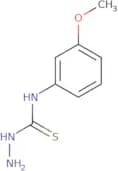
CAS:<p>Versatile small molecule scaffold</p>Formula:C8H11N3OSPurity:Min. 95%Molecular weight:197.26 g/mol3-amino-1-(2-chlorophenyl)thiourea
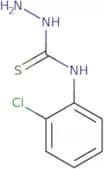
CAS:<p>3-Amino-1-(2-chlorophenyl)thiourea is a hematological agent that has no effect on serum albumin or human serum transferrin. It has an affinity for the residue of lysine and arginine and can be used in the titration of these amino acids. 3-Amino-1-(2-chlorophenyl)thiourea also has a conformational property, which is responsible for its fluorescence. 3-Amino-1-(2-chlorophenyl)thiourea has been shown to have a constant molecular weight of 514.</p>Formula:C7H8ClN3SPurity:Min. 95%Molecular weight:201.67 g/mol4-(3-Chlorophenyl)-3-thiosemicarbazide
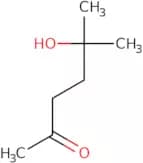
CAS:<p>4-(3-Chlorophenyl)-3-thiosemicarbazide is a hydrazone that has been shown to have antibacterial and anticancer activities. This compound binds to DNA, which leads to the inhibition of bacterial growth and cancer cell proliferation. 4-(3-Chlorophenyl)-3-thiosemicarbazide has been shown to inhibit the growth of P. aeruginosa in vitro by binding to the DNA gyrase and topoisomerase IV enzymes, preventing them from maintaining the integrity of bacterial DNA. Molecular modeling studies have shown that this compound binds preferentially to human astrocytes rather than cancer cells. It is also an anhydrous potassium carbonate salt that is soluble in water, alcohols, ethers, and acetones.</p>Formula:C7H8ClN3SPurity:Min. 95%Molecular weight:201.68 g/mol5-Hydroxy-5-methylhexan-2-one
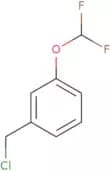
CAS:<p>Versatile small molecule scaffold</p>Formula:C7H14O2Purity:Min. 95%Molecular weight:130.18 g/mol1-(Chloromethyl)-3-(difluoromethoxy)benzene
CAS:<p>Versatile small molecule scaffold</p>Formula:C8H7ClF2OPurity:Min. 95%Molecular weight:192.59 g/mol2-Chloroethyl Propyl Ether
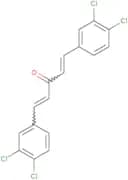
CAS:<p>2-Chloroethyl propyl ether is a chlorinated hydrocarbon that is used in the production of propionate. It reacts with hydrochloric acid and propionic acid to form 2-chloroethyl propionate. 2-Chloroethyl propyl ether can also be used as a solvent and has been shown to work well in wastewater treatment. This chemical has an acidic reaction with chloride and has been shown to be effective at treating wastewater, although it has not been studied for its effects on bacterial strains.</p>Formula:C5H11ClOPurity:Min. 95%Molecular weight:122.59 g/mol1,5-Bis(3,4-dichlorophenyl)penta-1,4-dien-3-one
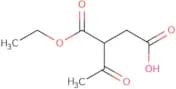
CAS:<p>Versatile small molecule scaffold</p>Formula:C17H10Cl4OPurity:Min. 95%Molecular weight:372.1 g/mol3-(Ethoxycarbonyl)-4-oxopentanoic acid
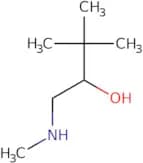
CAS:<p>Versatile small molecule scaffold</p>Formula:C8H12O5Purity:Min. 95%Molecular weight:188.18 g/mol3,3-Dimethyl-1-(methylamino)butan-2-ol
CAS:<p>Versatile small molecule scaffold</p>Formula:C7H17NOPurity:Min. 95%Molecular weight:131.2 g/molN-(1-Aminopropan-2-yl)aniline
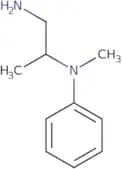
CAS:<p>Versatile small molecule scaffold</p>Formula:C9H14N2Purity:Min. 95%Molecular weight:150.22 g/molN-(1-Aminopropan-2-yl)-N-methylaniline
CAS:<p>Versatile small molecule scaffold</p>Formula:C10H16N2Purity:Min. 95%Molecular weight:164.25 g/mol2-hydroxy-2-(3-nitrophenyl)acetic acid
CAS:Versatile small molecule scaffoldFormula:C8H7NO5Purity:Min. 95%Molecular weight:197.1 g/molBicyclo[2.2.2]octan-2-amine hydrochloride
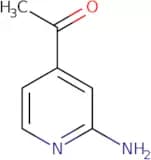
CAS:Versatile small molecule scaffoldFormula:C8H16ClNPurity:Min. 95%Molecular weight:161.67 g/mol1-(2-aminopyridin-4-yl)ethanone
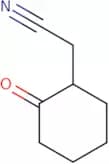
CAS:<p>Versatile small molecule scaffold</p>Formula:C7H8N2OPurity:Min. 95%Molecular weight:136.15 g/mol(2-Oxocyclohexyl)acetonitrile
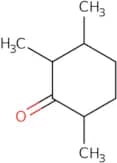
CAS:2-Oxocyclohexyl)acetonitrile is an indole that has been shown to catalyze the reaction of a metal compound and hydrogen. It also has been shown to inhibit the production of skatole, a toxic metabolite of tryptophan found in feces. 2-Oxocyclohexyl)acetonitrile binds to indoles through hydrogen bonding, which can be reduced by metal catalysts.Formula:C8H11NOPurity:Min. 95%Molecular weight:137.18 g/mol2,3,6-Trimethylcyclohexan-1-one
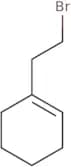
CAS:<p>Versatile small molecule scaffold</p>Formula:C9H16OPurity:Min. 95%Molecular weight:140.22 g/mol1-(2-Bromoethyl)cyclohex-1-ene
CAS:<p>Versatile small molecule scaffold</p>Formula:C8H13BrPurity:Min. 95%Molecular weight:189.09 g/mol1-Cyclopropylhex-5-en-1-one
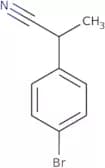
CAS:<p>Versatile small molecule scaffold</p>Formula:C9H14OPurity:Min. 95%Molecular weight:138.2 g/mol2-(4-Bromophenyl)propanenitrile
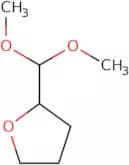
CAS:<p>Versatile small molecule scaffold</p>Formula:C9H8BrNPurity:Min. 95%Molecular weight:210.07 g/mol2-(Dimethoxymethyl)oxolane
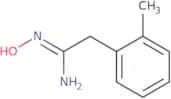
CAS:<p>2-(Dimethoxymethyl)oxolane is a polyol that is used as a surface active agent in the manufacture of styrene. It has been shown to have viscosity-increasing properties, which are desirable for use as an emulsifier or dispersant in cyclic, aliphatic hydrocarbon solvents. 2-(Dimethoxymethyl)oxolane can be polymerized and gaseous, with a boiling point of approximately 67 °C (152 °F). It has an expansion coefficient of 1.5 × 10⁻² at 25 °C (77 °F), and a surface tension of about 44 mN/m at 25 °C (77 °F).</p>Formula:C7H14O3Purity:Min. 95%Molecular weight:146.18 g/molN-Hydroxy-2-(o-tolyl)acetimidamide
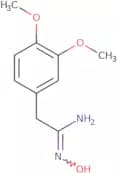
CAS:<p>Versatile small molecule scaffold</p>Formula:C9H12N2OPurity:Min. 95%Molecular weight:164.21 g/mol2-(3,4-Dimethoxyphenyl)-N-hydroxyacetimidamide
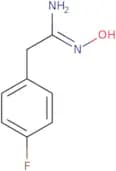
CAS:<p>Versatile small molecule scaffold</p>Formula:C10H14N2O3Purity:Min. 95%Molecular weight:210.23 g/mol-2(4-Fluorophenyl)-N-Hydroxyethanimidamide
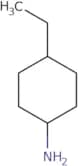
CAS:<p>Versatile small molecule scaffold</p>Formula:C8H9FN2OPurity:Min. 95%Molecular weight:168.17 g/mol4-Ethylcyclohexylamine (cis- and trans- mixture)
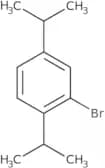
CAS:4-Ethylcyclohexylamine is a nitroarene compound that is used as an analgesic agent. It is also used as a catalyst for the synthesis of other compounds, such as quinoxalines and benzamides. 4-Ethylcyclohexylamine is synthesized from nitrobenzene and cyclohexylamine. The cis-isomer (4-ethylcyclohexanamine) has the highest potency of the two isomers, but both are effective catalysts for chemical reactions. In addition to its use in organic chemistry, 4-ethylcyclohexylamine has been shown to have anti-inflammatory activity in rats by inhibiting prostaglandin synthesis.Formula:C8H17NPurity:Min. 95%Molecular weight:127.23 g/mol2-Bromo-1,4-bis(propan-2-yl)benzene
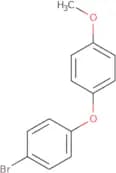
CAS:Versatile small molecule scaffoldFormula:C12H17BrPurity:Min. 95%Molecular weight:241.17 g/mol1-Bromo-4-(4-methoxyphenoxy)benzene
CAS:<p>Versatile small molecule scaffold</p>Formula:C13H11BrO2Purity:Min. 95%Molecular weight:279.13 g/molrac-(2R,4S)-4-tert-Butylpiperidine-2-carboxylic acid hydrochloride
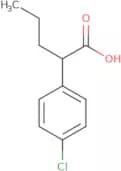
CAS:Versatile small molecule scaffoldFormula:C10H20ClNO2Purity:Min. 95%Molecular weight:221.7 g/mol2-(4-Chlorophenyl)pentanoic acid
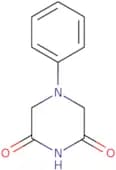
CAS:Versatile small molecule scaffoldFormula:C11H13ClO2Purity:Min. 95%Molecular weight:212.67 g/mol4-Phenylpiperazine-2,6-dione
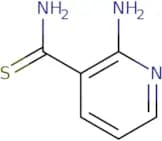
CAS:<p>Versatile small molecule scaffold</p>Formula:C10H10N2O2Purity:Min. 95%Molecular weight:190.2 g/mol2-Aminopyridine-3-carbothioamide
CAS:Versatile small molecule scaffoldFormula:C6H7N3SPurity:Min. 95%Molecular weight:153.21 g/mol3-Aminoisothiazolo[3,4-b]pyridine
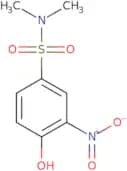
CAS:<p>Versatile small molecule scaffold</p>Formula:C6H5N3SPurity:Min. 95%Molecular weight:151.19 g/mol4-Hydroxy-N,N-dimethyl-3-nitrobenzene-1-sulfonamide
CAS:Versatile small molecule scaffoldFormula:C8H10N2O5SPurity:Min. 95%Molecular weight:246.24 g/mol2-Bromo-1-(1-methylcyclopentyl)ethan-1-one
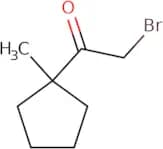
CAS:Versatile small molecule scaffoldFormula:C8H13BrOPurity:Min. 95%Molecular weight:205.09 g/mol2-Chloro-3-{[4-(dimethylamino)phenyl]amino}-1,4-dihydronaphthalene-1,4-dione
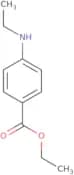
CAS:<p>Versatile small molecule scaffold</p>Formula:C18H15ClN2O2Purity:Min. 95%Molecular weight:326.8 g/molEthyl 4-(ethylamino)benzoate
CAS:<p>Ethyl 4-(ethylamino)benzoate is a chemical compound with two ester groups. It is used as an alkylating agent in organic synthesis. Ethyl 4-(ethylamino)benzoate is prepared by the reaction of methanol and ethyl acetoacetate, which occurs via catalysis with palladium on charcoal or platinum on charcoal. The nitro group in ethyl 4-(ethylamino)benzoate can be substituted with other substituents such as chloro, bromo, hydroxy, carboxylic acid, sulfonic acid and amino groups. This reaction mechanism can also be applied to aromatic amines and nitro compounds.</p>Formula:C11H15NO2Purity:Min. 95%Molecular weight:193.24 g/mol4-Chloro-N-methyl-3-(trifluoromethyl)aniline
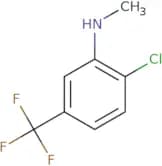
CAS:<p>Versatile small molecule scaffold</p>Formula:C8H7ClF3NPurity:Min. 95%Molecular weight:209.59 g/mol2-Chloro-N-methyl-5-(trifluoromethyl)aniline
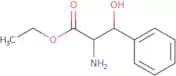
CAS:<p>Versatile small molecule scaffold</p>Formula:C8H7ClF3NPurity:Min. 95%Molecular weight:209.59 g/molEthyl 2-amino-3-hydroxy-3-phenylpropanoate hydrochloride
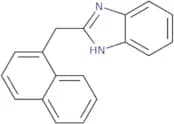
CAS:<p>Versatile small molecule scaffold</p>Formula:C11H15NO3Purity:Min. 95%Molecular weight:209.24 g/mol2-(Naphthalen-1-ylmethyl)-1H-1,3-benzodiazole
CAS:2-(Naphthalen-1-ylmethyl)-1H-1,3-benzodiazole is a compound that belongs to the class of benzimidazoles. It has been found to be expressed in many bacteria and yeast, including gram positive and gram negative bacteria. The heat resistance of 2-(Naphthalen-1-ylmethyl)-1H-1,3-benzodiazole has been shown by its ability to maintain activity after exposure to boiling water for 10 minutes at 100°C. This compd binds to copper ions and forms a dihedral angle of 180° with a methyl group. Hydrogen bonds are formed between the planar molecule and a hydrogen atom in the hydroxyl group from the solvent. Crystal structures have been determined for both the soluble form and the solid form of this compd.Formula:C18H14N2Purity:Min. 95%Molecular weight:258.3 g/mol




![Bicyclo[2.2.2]octan-2-amine hydrochloride](/_next/image/?url=https%3A%2Fstatic.cymitquimica.com%2Fproducts%2F3D%2Fthumb-webp%2FSBA16664.webp&w=3840&q=75)
![3-Aminoisothiazolo[3,4-b]pyridine](/_next/image/?url=https%3A%2Fstatic.cymitquimica.com%2Fproducts%2F3D%2Fthumb-webp%2FSBA24206.webp&w=3840&q=75)
![2-Chloro-3-{[4-(dimethylamino)phenyl]amino}-1,4-dihydronaphthalene-1,4-dione](/_next/image/?url=https%3A%2Fstatic.cymitquimica.com%2Fproducts%2F3D%2Fthumb-webp%2FSBA26296.webp&w=3840&q=75)