Building Blocks
Subcategories of "Building Blocks"
- Boronic Acids & Boronic Acid Derivatives(5,805 products)
- Chiral Building Blocks(1,248 products)
- Hydrocarbon Building Blocks(6,122 products)
- Organic Building Blocks(61,463 products)
Found 208442 products of "Building Blocks"
4H-Imidazo[4,5-c]pyridin-4-one
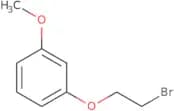
CAS:4H-Imidazo[4,5-c]pyridin-4-one is a water soluble compound that is soluble in water. It is a sulphonic acid that can be found in acid salts and deazaguanine. 4H-Imidazo[4,5-c]pyridin-4-one is used as a pharmaceutical dosage.Formula:C6H3N3OPurity:Min. 95%Molecular weight:133.11 g/mol1-(2-Bromoethoxy)-3-methoxybenzene
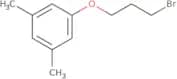
CAS:Versatile small molecule scaffoldFormula:C9H11BrO2Purity:Min. 95%Molecular weight:231.1 g/mol1-(3-Bromopropoxy)-3,5-dimethylbenzene
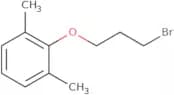
CAS:Versatile small molecule scaffoldFormula:C11H15BrOPurity:Min. 95%Molecular weight:243.14 g/mol2-(3-Bromopropoxy)-1,3-dimethylbenzene
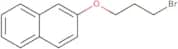
CAS:Versatile small molecule scaffoldFormula:C11H15BrOPurity:Min. 95%Molecular weight:243.14 g/mol2-(3-Bromopropoxy)naphthalene
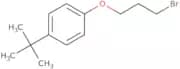
CAS:Versatile small molecule scaffoldFormula:C13H13BrOPurity:Min. 95%Molecular weight:265.14 g/mol1-(3-Bromopropoxy)-4-tert-butylbenzene
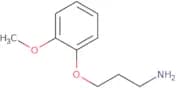
CAS:Versatile small molecule scaffoldFormula:C13H19BrOPurity:Min. 95%Molecular weight:271.19 g/mol3-(2-Methoxyphenoxy)propan-1-amine
CAS:Versatile small molecule scaffold
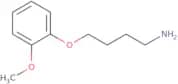
Formula:C10H15NO2Purity:Min. 95%Molecular weight:181.23 g/mol4-(2-Methoxyphenoxy)butan-1-amine
CAS:Versatile small molecule scaffold
Formula:C11H17NO2Purity:Min. 95%Molecular weight:195.26 g/molEthyl 4-oxohexanoate
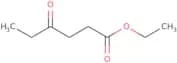
CAS:Ethyl 4-oxohexanoate is an organic compound that is a dicarboxylic acid. It is used in the synthesis of esters and lactones. Ethyl 4-oxohexanoate undergoes decarboxylation to produce diethyl succinate. This reaction can be accelerated by heating ethyl 4-oxohexanoate with a catalyst such as calcium oxide, giving evolution of carbon dioxide gas. Hydrolysis of ethyl 4-oxohexanoate produces ethyl acetate as well as ethanol, which are both volatile liquids at room temperature.
Formula:C8H14O3Purity:Min. 95%Molecular weight:158.19 g/mol5-(3-Pyridyl)-1H-tetrazole
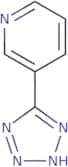
CAS:5-(3-Pyridyl)-1H-tetrazole is a heterocyclic compound that belongs to the class of isomeric compounds. The nitrogen atoms are located in a plane and are separated by three carbon atoms, forming a trigonal planar structure. 5-(3-Pyridyl)-1H-tetrazole has been shown to activate plasma cholesterol levels through the generation of fatty acid hydroperoxides and oxidation products, which can lead to cell apoptosis. It also has the ability to catalyze reactions and form supramolecular complexes with other molecules. One such complex is formed with annexin, which may be due to hydrogen bonding interactions between the two molecules.Formula:C6H5N5Purity:Min. 95%Molecular weight:147.14 g/mol3-Oxa-1-azaspiro[4.4]nonane-2,4-dione
CAS:Versatile small molecule scaffold
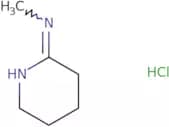
Formula:C7H9NO3Purity:Min. 95%Molecular weight:155.15 g/molN-Methyl-3,4,5,6-tetrahydropyridin-2-amine hydrochloride
CAS:Versatile small molecule scaffold
Formula:C6H13ClN2Purity:Min. 95%Molecular weight:148.63 g/mol[4-(Hexyloxy)phenyl]methanol
CAS:4-(Hexyloxy)phenyl]methanol (4-HPMA) is a liquid crystal and crystalline compound that is synthesized from an aryl group. 4-HPMA has been used in the production of devices such as liquid crystal displays, and is currently being investigated for use in crystalline compounds. Its mesogenic properties have made it useful for the production of crystalline materials with a high melting point, and its aryl ring structure makes it suitable for use in organic crystals.
Formula:C13H20O2Purity:Min. 95%Molecular weight:208.3 g/mol[4-(Prop-2-en-1-yloxy)phenyl]methanol
CAS:4-(Prop-2-en-1-yloxy)phenol is a divalent model compound that has been used in the study of fossil fuel and polymerized oils. It is also used for the synthesis of polymers, as well as monomers and compounds with phenyl groups. 4-(Prop-2-en-1-yloxy)phenol has two functional groups: a phenyl group and a propoxy group. This compound has been shown to have excellent thermal stability, which makes it an ideal candidate for use in high temperatures.Formula:C10H12O2Purity:Min. 95%Molecular weight:164.2 g/mol2-Hydroxy-2-[3-(trifluoromethyl)phenyl]propanoic acid
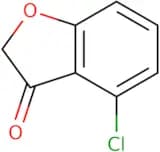
CAS:Versatile small molecule scaffoldFormula:C10H9F3O3Purity:Min. 95%Molecular weight:234.17 g/mol4-Chloro-2,3-dihydro-1-benzofuran-3-one
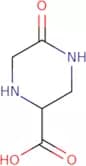
CAS:Versatile small molecule scaffoldFormula:C8H5ClO2Purity:Min. 95%Molecular weight:168.57 g/mol5-Oxopiperazine-2-carboxylic acid
CAS:Versatile small molecule scaffoldFormula:C5H8N2O3Purity:Min. 95%Molecular weight:144.13 g/mol1-{Bicyclo[4.2.0]octa-1,3,5-trien-7-yl}ethan-1-amine
CAS:Versatile small molecule scaffold
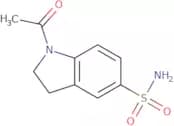
Formula:C10H13NPurity:Min. 95%Molecular weight:147.22 g/mol1-Acetyl-5-indolinesulfonamide
CAS:Versatile small molecule scaffold
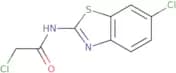
Formula:C10H12N2O3SPurity:Min. 95%Molecular weight:240.28 g/mol2-Chloro-N-(6-chloro-benzothiazol-2-yl)-acetamide
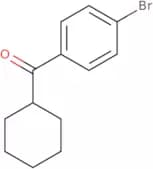
CAS:Versatile small molecule scaffoldFormula:C9H6Cl2N2OSPurity:Min. 95%Molecular weight:261.13 g/mol4-Bromophenyl cyclohexyl ketone
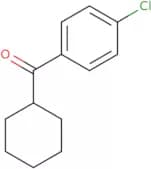
CAS:Versatile small molecule scaffoldFormula:C13H15BrOPurity:Min. 95%Molecular weight:267.16 g/mol4-Chlorophenyl cyclohexyl ketone
CAS:Versatile small molecule scaffoldFormula:C13H15ClOPurity:Min. 95%Molecular weight:222.71 g/mol1,8,8-Trimethylbicyclo[3.2.1]octane-2,4-dione
CAS:Versatile small molecule scaffoldFormula:C11H16O2Purity:Min. 95%Molecular weight:180.24 g/mol2-Chloro-5-formylbenzene-1-sulfonamide
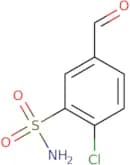
CAS:2-Chloro-5-formylbenzene-1-sulfonamide is a substance that belongs to the group of sulfonamides. It is a white powder that can be synthesized from 2,4,6-trinitrobenzenesulfonic acid and chlorobenzene. The substance has been shown to form an alkaline hydrolysis product when reacted with indapamide in a 1:1 ratio. This reaction was analyzed using LC/MS/MS and the product ions were quantified. The LC/MS/MS method used for this analysis was harmonization of the data collected on two different instruments, which is called synergi. The LC/MS/MS method consisted of three steps: (i) elution with acetonitrile and water, (ii) electrospray ionization, and (iii) quantification by selected reaction monitoring.Formula:C7H6ClNO3SPurity:Min. 95%Molecular weight:219.65 g/mol6-Bromo-3,4-dihydro-1H-2,1-benzothiazine 2,2-dioxide
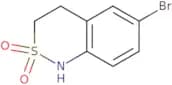
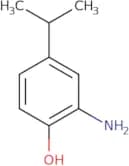
CAS:Versatile small molecule scaffoldFormula:C8H8BrNO2SPurity:Min. 95%Molecular weight:262.13 g/mol2-Amino-4-isopropylphenol
CAS:Versatile small molecule scaffold
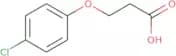
Formula:C9H13NOPurity:Min. 95%Molecular weight:151.21 g/mol3-(4-Chloro-phenoxy)-propionic acid
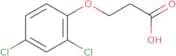
CAS:3-(4-Chloro-phenoxy)-propionic acid is a synthetic tyrosinase inhibitor. It has been shown to be effective in the treatment of hyperpigmentation disorders in humans, including melasma and solar lentigo. 3-(4-Chloro-phenoxy)-propionic acid inhibits tyrosinase activity by binding to its active site. This prevents the production of melanin and leads to lightening of skin pigmentation. The extraction process is efficient and can be scaled up for clinical use. The analyte can be easily quantified using a potent assay with high recovery rates and low detection limits.Formula:C9H9ClO3Purity:Min. 95%Molecular weight:200.62 g/mol3-(2,4-Dichlorophenoxy)propanoic acid
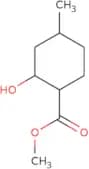
CAS:Versatile small molecule scaffoldFormula:C9H8Cl2O3Purity:Min. 95%Molecular weight:235.06 g/molMethyl 2-hydroxy-4-methylcyclohexane-1-carboxylate
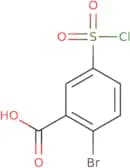
CAS:Versatile small molecule scaffoldFormula:C9H16O3Purity:Min. 95%Molecular weight:172.2 g/mol2-Bromo-5-(chlorosulfonyl)benzoic acid
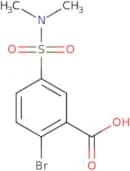
CAS:Versatile small molecule scaffoldFormula:C7H4BrClO4SPurity:Min. 95%Molecular weight:299.53 g/mol2-Bromo-5-(dimethylsulfamoyl)benzoic acid
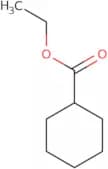
CAS:Versatile small molecule scaffoldFormula:C9H10BrNO4SPurity:Min. 95%Molecular weight:308.15 g/molEthyl Cyclohexanecarboxylate
CAS:Ethyl cyclohexanecarboxylate is an anti-inflammatory drug that belongs to the class of hydroxylated glycol ethers. It has been shown to have a significant effect on autoimmune diseases, such as multiple sclerosis and rheumatoid arthritis. The active form of ethyl cyclohexanecarboxylate is metabolized through nitro reduction by cytochrome P450 enzymes, which are present in most mammalian tissues. This drug also has a high phase transition temperature and can be used as a catalyst for organic reactions at low temperatures. Ethyl cyclohexanecarboxylate has been shown to inhibit dpp-iv (dipeptidyl peptidase IV), which is an enzyme that cleaves the dipeptides from the N-terminal ends of proteins, leading to increased levels of fatty acids and other alkanoic acids in the blood.
Formula:C9H16O2Purity:Min. 95%Molecular weight:156.22 g/mol2-Chloro-N-(4-phenylphenyl)acetamide
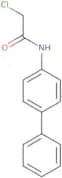
CAS:Versatile small molecule scaffoldFormula:C14H12ClNOPurity:Min. 95%Molecular weight:245.7 g/mol9-Methylfluorene-9-carboxylic acid
CAS:9-Methylfluorene-9-carboxylic acid is an organic compound that has a benzyl group attached to the 9th carbon of the fluorene ring. It is a colorless solid with a melting point of -78.5 °C. The synthesis of this compound involves the reaction of 9-fluorenone with diethyl ether in the presence of formic acid and phosphorous pentoxide. This reaction results in the formation of 9-methylene-9-fluorene, which is then oxidized to form 9-methylanthracene. Finally, methanol is added to form 9-methylfluorene-9-carboxylic acid. The molecular weight for this compound is 152 g/mol and it has an mp at -78.5 °C and bp at 138 °C. This compound can be used as a fingerprinting agent due to its characteristic UV absorption spectrum, which peaks
Formula:C15H12O2Purity:Min. 95%Molecular weight:224.25 g/mol6-Ethyltetrahydro-2H-pyran-2-one
CAS:6-Ethyltetrahydro-2H-pyran-2-one is a monatomic chemical in the diptera family. It is used as a detection method for host plants, and has been found to be present in fatty acids of coatings and analytical chemistry. 6-Ethyltetrahydro-2H-pyran-2-one can also be found in cuticular hydrocarbons and viscosity. The fluorescence of this compound is an analytical method that can be used to identify it. This chemical has also been shown to have antiviral properties, which are due to its ability to induce the expression of genes involved in the production of aldolases.
Formula:C7H12O2Purity:Min. 95%Molecular weight:128.17 g/moltert-Butyl N-[(3S,4S)-rel-3-(hydroxymethyl)-4-piperidyl]carbamate
CAS:Versatile small molecule scaffoldFormula:C11H22N2O3Purity:Min. 95%Molecular weight:230.31 g/molrac-Methyl 2-[(1R,2R)-2-{[(tert-butoxy)carbonyl]amino}cyclohexyl]acetate
CAS:Versatile small molecule scaffoldFormula:C14H25NO4Purity:Min. 95%Molecular weight:271.4 g/molrac-(3aR,6aS)-Hexahydro-1H-5λ6-thieno[3,4-b]pyrrole-2,5,5-trione
CAS:Versatile small molecule scaffoldFormula:C6H9NO3SPurity:Min. 95%Molecular weight:175.2 g/mol1-Oxo-1,2-dihydroisoquinoline-4-carbonitrile
CAS:Versatile small molecule scaffoldFormula:C10H6N2OPurity:Min. 95%Molecular weight:170.17 g/mol3-(3-Methylbutyl)cyclopentan-1-one
CAS:Versatile small molecule scaffold
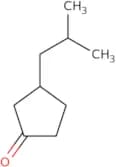
Formula:C10H18OPurity:Min. 95%Molecular weight:154.25 g/mol3-(2-Methylpropyl)cyclopentan-1-one
CAS:Versatile small molecule scaffold
Formula:C9H16OPurity:Min. 95%Molecular weight:140.22 g/mol7-Hydroxy-3,4-dimethyl-2,3-dihydro-1H-inden-1-one
CAS:Versatile small molecule scaffold
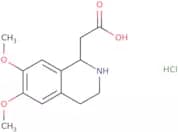
Formula:C11H12O2Purity:Min. 95%Molecular weight:176.21 g/mol2-(6,7-Dimethoxy-1,2,3,4-tetrahydroisoquinolin-1-yl)acetic acid hydrochloride
CAS:Versatile small molecule scaffoldFormula:C13H18ClNO4Purity:Min. 95%Molecular weight:287.74 g/mol3-(Bromomethyl)-1,2,5-thiadiazole
CAS:Versatile small molecule scaffoldFormula:C3H3BrN2SPurity:Min. 95%Molecular weight:179.04 g/molMethyl 2-formyl-4,5-dimethoxybenzoate
CAS:Versatile small molecule scaffoldFormula:C11H12O5Purity:Min. 95%Molecular weight:224.21 g/mol2-(1,2,3,4-Tetrahydroisoquinolin-1-yl)acetic acid hydrochloride
CAS:Versatile small molecule scaffoldFormula:C11H14ClNO2Purity:Min. 95%Molecular weight:227.69 g/mol(3-Methylcyclohexyl)methanol
CAS:Methylcyclohexanol is an esterification product that can be used in the production of isophthalate and hydrogenated products. It is produced through the reaction of methanol with isophthalic acid, which is a monomer in the production of polyester. The esterification reaction produces methylcyclohexyl methanoate, which reacts with hydrogen gas to form methylcyclohexylmethanol. This process also produces water as a by-product.Formula:C8H16OPurity:Min. 95%Molecular weight:128.21 g/molMethyl 2-(chloromethyl)furan-3-carboxylate
CAS:Methyl 2-(chloromethyl)furan-3-carboxylate is a heterocyclic compound that can be synthesized by cyclization of methyl 2-chlorobenzoylacetate with nitroethane and formaldehyde. It is a heterocyclic system with a six-membered ring containing two double bonds.
Formula:C7H7ClO3Purity:Min. 95%Molecular weight:174.58 g/molMethyl 2-(bromomethyl)-3-furoate
CAS:Methyl 2-(bromomethyl)-3-furoate is a muscarinic acetylcholine receptor agonist. It has been shown to bind to the M1 and M3 subtypes of the muscarinic acetylcholine receptors, but is not active against the M2 subtype. This drug has been shown to be an allosteric modulator of the acetylcholine receptors and will decrease the rate at which they are desensitized after binding to acetylcholine. Methyl 2-(bromomethyl)-3-furoate binds to a different site on the receptor than other agonists, such as carbachol and bethanechol, and offers advantages in terms of selectivity and optimization for both chemotypes and profiles.Formula:C7H7BrO3Purity:Min. 95%Molecular weight:219.03 g/molEthyl 2-(chloromethyl)furan-3-carboxylate
CAS:Versatile small molecule scaffoldFormula:C8H9ClO3Purity:Min. 95%Molecular weight:188.61 g/mol
![4H-Imidazo[4,5-c]pyridin-4-one](/_next/image/?url=https%3A%2Fstatic.cymitquimica.com%2Fproducts%2F3D%2Fthumb-webp%2FDAA24324.webp&w=3840&q=75)

![3-Oxa-1-azaspiro[4.4]nonane-2,4-dione](/_next/image/?url=https%3A%2Fstatic.cymitquimica.com%2Fproducts%2F3D%2Fthumb-webp%2FDAA25344.webp&w=3840&q=75)
![[4-(Hexyloxy)phenyl]methanol](/_next/image/?url=https%3A%2Fstatic.cymitquimica.com%2Fproducts%2F3D%2Fthumb-webp%2FDAA25638.webp&w=3840&q=75)
![[4-(Prop-2-en-1-yloxy)phenyl]methanol](/_next/image/?url=https%3A%2Fstatic.cymitquimica.com%2Fproducts%2F3D%2Fthumb-webp%2FDAA25645.webp&w=3840&q=75)
![2-Hydroxy-2-[3-(trifluoromethyl)phenyl]propanoic acid](/_next/image/?url=https%3A%2Fstatic.cymitquimica.com%2Fproducts%2F3D%2Fthumb-webp%2FDAA25938.webp&w=3840&q=75)
![1-{Bicyclo[4.2.0]octa-1,3,5-trien-7-yl}ethan-1-amine](/_next/image/?url=https%3A%2Fstatic.cymitquimica.com%2Fproducts%2F3D%2Fthumb-webp%2FDAA26433.webp&w=3840&q=75)
![1,8,8-Trimethylbicyclo[3.2.1]octane-2,4-dione](/_next/image/?url=https%3A%2Fstatic.cymitquimica.com%2Fproducts%2F3D%2Fthumb-webp%2FDAA27894.webp&w=3840&q=75)

![tert-Butyl N-[(3S,4S)-rel-3-(hydroxymethyl)-4-piperidyl]carbamate](/_next/image/?url=https%3A%2Fstatic.cymitquimica.com%2Fproducts%2F3D%2Fthumb-webp%2FDBD84004.webp&w=3840&q=75)
![rac-Methyl 2-[(1R,2R)-2-{[(tert-butoxy)carbonyl]amino}cyclohexyl]acetate](/_next/image/?url=https%3A%2Fstatic.cymitquimica.com%2Fproducts%2F3D%2Fthumb-webp%2FDBD85721.webp&w=3840&q=75)
![rac-(3aR,6aS)-Hexahydro-1H-5λ6-thieno[3,4-b]pyrrole-2,5,5-trione](/_next/image/?url=https%3A%2Fstatic.cymitquimica.com%2Fproducts%2F3D%2Fthumb-webp%2FDBD87285.webp&w=3840&q=75)