Building Blocks
This section contains fundamental products for the synthesis of organic and biological compounds. Building blocks are the essential starting materials used to construct complex molecules through various chemical reactions. They play a critical role in drug discovery, material science, and chemical research. At CymitQuimica, we offer a diverse range of high-quality building blocks to support your innovative research and industrial projects, ensuring you have the essential components for successful synthesis.
Subcategories of "Building Blocks"
- Boronic Acids & Boronic Acid Derivatives(5,778 products)
- Chiral Building Blocks(1,242 products)
- Hydrocarbon Building Blocks(6,098 products)
- Organic Building Blocks(61,098 products)
Found 199594 products of "Building Blocks"
Sort by
Purity (%)
0
100
|
0
|
50
|
90
|
95
|
100
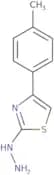
(4-p-Tolyl-thiazol-2-yl)-hydrazine
CAS:<p>Versatile small molecule scaffold</p>Formula:C10H11N3SPurity:Min. 95%Molecular weight:205.28 g/mol1,3-Dimethyl-1,3-diazinane-2,4-dione
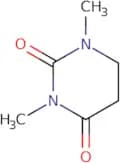
CAS:<p>1,3-Dimethyl-1,3-diazinane-2,4-dione (CDD) is an analog of ribulose that has been shown to inhibit the synthesis of both human immunodeficiency virus (HIV) and hepatitis B virus. CDD inhibits the activity of viral reverse transcriptase and protease enzymes. CDD was found to be a potent inhibitor in vitro for HIV and hepatitis B virus. CDD also has pharmacokinetic properties that make it a good candidate for drug development.</p>Formula:C6H10N2O2Purity:Min. 95%Molecular weight:142.16 g/mol3-(Methylamino)propanamide
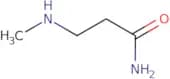
CAS:<p>Versatile small molecule scaffold</p>Formula:C4H10N2OPurity:Min. 95%Molecular weight:138.6 g/mol4-(4-Chlorophenyl)-4,5,6,7-tetrahydro-3H-imidazo[4,5-c]pyridine
CAS:Versatile small molecule scaffoldFormula:C12H12ClN3Purity:Min. 95%Molecular weight:233.7 g/mol4-(4-Methylphenyl)-4,5,6,7-tetrahydro-3H-imidazo[4,5-c]pyridine
CAS:<p>Versatile small molecule scaffold</p>Formula:C13H15N3Purity:Min. 95%Molecular weight:213.28 g/mol4,4-Dimethylazetidin-2-one
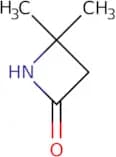
CAS:<p>Versatile small molecule scaffold</p>Formula:C5H9NOPurity:Min. 95%Molecular weight:99.13 g/mol2-Nitrocyclohexanone
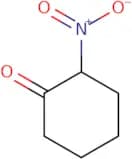
CAS:<p>2-Nitrocyclohexanone (2NCH) is a clinical drug that is used in the synthesis of pharmaceuticals. It can be synthesized by dinitrogen tetroxide, hydrochloric acid and magnesium oxide. 2NCH reacts with amines to form lactams. The reaction is catalyzed by organocatalysts such as copper chromite or 5-ht2c. The kinetic of this reaction has been studied extensively and it has been found that the addition of inorganic acids, such as HCl or HNO3, may increase the rate of the reaction.<br>The molecular formula for 2NCH is C8H8O3N2 and its structural formula is shown below:</p>Formula:C6H9NO3Purity:Min. 95%Molecular weight:143.14 g/mol2-Cyclopentylcyclopentanone
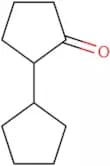
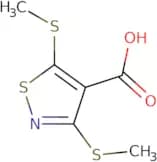
CAS:<p>2-Cyclopentylcyclopentanone (2-CPC) is a cyclopentenone that is produced by the oxidation of 2-cyclohexenylcyclopentanone. 2-CPC has been shown to be genotoxic and can cause damage to DNA, proteins, or cell membranes. This chemical is used in the manufacture of insecticides and herbicides. It also has used as a solvent for polymers, plastics, and coatings. 2-CPC has been found to be toxic at high doses and should not be handled without proper protection.</p>Formula:C10H16OPurity:Min. 95%Molecular weight:152.24 g/molBis(methylsulfanyl)-1,2-thiazole-4-carboxylic acid
CAS:<p>Versatile small molecule scaffold</p>Formula:C6H7NO2S3Purity:Min. 95%Molecular weight:221.3 g/mol4-Methylbenzimidazole
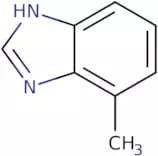
CAS:<p>4-Methylbenzimidazole is a non-polar molecule that is found in nature and is related to the flavonoid rutin. 4-Methylbenzimidazole has been shown to inhibit DNA replication and synthesis, as well as protein synthesis. It binds to the polymerase, which prevents it from forming the complementary strand of DNA. This inhibition leads to thermal denaturation of DNA, which prevents the polymerase from binding with the dna template. The low affinity of 4-methylbenzimidazole for dna makes it a potential candidate for anti-HIV drugs.</p>Formula:C8H8N2Purity:Min. 95%Molecular weight:132.17 g/mol1-Phenylpropane-1,3-diamine
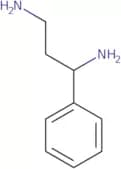
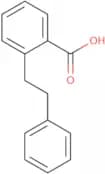
CAS:<p>Versatile small molecule scaffold</p>Formula:C9H14N2Purity:Min. 95%Molecular weight:150.22 g/mol2-Bibenzylcarboxylic acid
CAS:<p>2-Bibenzylcarboxylic acid is a synthetic retinoid that has been shown to have potent antagonistic effects against the activity of various pro-inflammatory enzymes. It blocks the integrin receptor, which prevents leukocyte adhesion and migration. 2-Bibenzylcarboxylic acid also inhibits protease activity by binding to the active site of the enzyme and preventing substrate binding, as well as dextran sulfate-induced inflammation. 2-Bibenzylcarboxylic acid has been shown to be effective in reducing disease activity in animal models of inflammatory diseases such as rheumatoid arthritis.</p>Formula:C15H14O2Purity:Min. 95%Molecular weight:226.27 g/molDispiro[3.1.3.1]decane-5,10-dione
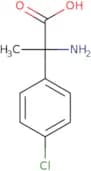
CAS:<p>Dispiro[3.1.3.1]decane-5,10-dione is a compound that has not yet been synthesized and its chemical structure is unknown. This product is not available in any catalogues or databases.</p>Formula:C10H12O2Purity:Min. 95%Molecular weight:164.2 g/mol2-Amino-2-(4-chlorophenyl)propanoic acid
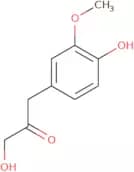
CAS:<p>Versatile small molecule scaffold</p>Formula:C9H10ClNO2Purity:Min. 95%Molecular weight:199.63 g/mol1-Hydroxy-3-(4-hydroxy-3-methoxyphenyl)propan-2-one
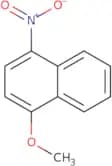
CAS:<p>1-Hydroxy-3-(4-hydroxy-3-methoxyphenyl)propan-2-one is a chemical compound that belongs to the group of phenols. It is an intermediate in the production of lignin, which is used in the manufacture of paper and other products. The chemical structure of 1-hydroxy-3-(4-hydroxy-3 methoxyphenyl)propan-2-one can be found in coniferous plants such as pine trees, where it is generated by oxidative coupling of 4 hydroxycinnamaldehyde and 3 hydroxybenzaldehyde.</p>Formula:C10H12O4Purity:Min. 95%Molecular weight:196.2 g/mol1-Methoxy-4-nitronaphthalene
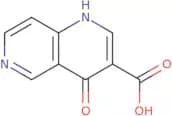
CAS:<p>1-Methoxy-4-nitronaphthalene is a yellow crystalline solid that belongs to the group of naphthalenes. It reacts with deionized water to give nitronaphthalene, which can be detected by ultrafast spectroscopy at constant temperature or by second-order rate constants. The nitro group can be reduced to an amine on treatment with phosphite or diphosphorylated. Nitro groups are also susceptible to nucleophilic attack by acetonitrile and ammonium nitrate, and can be photoreduced to the corresponding amino compound.</p>Formula:CH3OC10H6NO2Purity:Min. 95%Molecular weight:203.19 g/mol4-Oxo-1,4-dihydro-1,6-naphthyridine-3-carboxylic acid
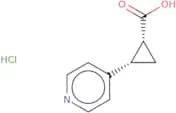
CAS:<p>Versatile small molecule scaffold</p>Formula:C9H6N2O3Purity:Min. 95%Molecular weight:190.16 g/molrac-(1R,2R)-2-(Pyridin-4-yl)cyclopropane-1-carboxylic acid hydrochloride
CAS:<p>Versatile small molecule scaffold</p>Formula:C9H10ClNO2Purity:Min. 95%Molecular weight:199.6 g/molrac-(1R,2S)-2-(Pyridin-4-yl)cyclopropane-1-carboxylic acid hydrochloride
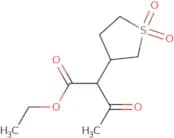
CAS:<p>Versatile small molecule scaffold</p>Formula:C9H10ClNO2Purity:Min. 95%Molecular weight:199.6 g/molα-Acetyltetrahydro-3-thiopheneacetic acid ethyl ester 1,1-dioxide
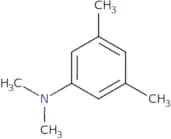
CAS:Versatile small molecule scaffoldFormula:C10H16O5SPurity:Min. 95%Molecular weight:248.3 g/molN,N,3,5-Tetramethylaniline
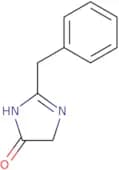
CAS:<p>N,N,3,5-Tetramethylaniline is a colorless liquid that is soluble in water. It has an aromatic odor and is used as a solvent. N,N,3,5-Tetramethylaniline has been shown to react with 4-dimethylaminobenzoic acid to form a thioxanthone by an irreversible oxidation process. This reaction requires activation energies of 34.2 kcal/mol for the initiation step and 17.1 kcal/mol for termination. The reaction mechanism can be described as:</p>Formula:C10H15NPurity:Min. 95%Molecular weight:149.24 g/mol2-Benzyl-1H-imidazol-4(5H)-one
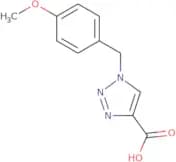
CAS:<p>Versatile small molecule scaffold</p>Formula:C10H10N2OPurity:Min. 95%Molecular weight:174.2 g/mol1-(4-Methoxyphenyl)-1H-1,2,3-triazole-4-carboxylic acid
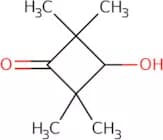
CAS:<p>Versatile small molecule scaffold</p>Formula:C11H11N3O3Purity:Min. 95%Molecular weight:233.22 g/mol3-Hydroxy-2,2,4,4-tetramethylcyclobutan-1-one
CAS:<p>3-Hydroxy-2,2,4,4-tetramethylcyclobutan-1-one is a monomer that is soluble in organic solvents. It can be isolated by centrifugation of the reaction mixture and purified by filtration or recrystallization. 3-Hydroxy-2,2,4,4-tetramethylcyclobutan-1-one has been used as a catalyst for the polymerization of ethylene oxide to polyethers. 3-Hydroxy-2,2,4,4-tetramethylcyclobutan-1-one is also an excellent solvent for ruthenium metal and can be used as a reaction solvent for reactions involving this metal.</p>Formula:C8H14O2Purity:Min. 95%Molecular weight:142.2 g/mol2-(3-Methylcyclohexyl)ethan-1-ol
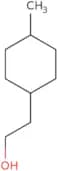
CAS:<p>Versatile small molecule scaffold</p>Formula:C9H18OPurity:Min. 95%Molecular weight:142.24 g/mol2-(4-Methylcyclohexyl)ethan-1-ol
CAS:<p>Versatile small molecule scaffold</p>Formula:C9H18OPurity:Min. 95%Color and Shape:Clear LiquidMolecular weight:142.24 g/mol2-(Cyclopropylamino)-1-phenylethan-1-ol hydrochloride
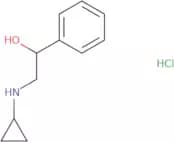
CAS:<p>Versatile small molecule scaffold</p>Formula:C11H16ClNOPurity:Min. 95%Molecular weight:213.7 g/molDimenhydrinate Related Compound E
CAS:Controlled Product<p>Dimenhydrinate Related Compound E is a test compound that has shown potentiation of the inhibitory properties of hydrochloric acid against a variety of enzymes. This compound inhibits the enzyme activity of cyclooxygenase-1 (COX-1) and COX-2, which are important in the production of prostaglandins. Dimenhydrinate Related Compound E also has anticancer activity, which may be due to its ability to cause DNA damage by inhibiting the synthesis of proteins needed for cell replication. The use of this compound may have genotoxic effects and chronic exposure should be avoided.</p>Formula:C8H9ClN4O2Purity:Min. 95%Molecular weight:228.64 g/mol3,7-Dimethyl-2,6-dioxo-2,3,6,7-tetrahydro-1H-purine-8-carbaldehyde
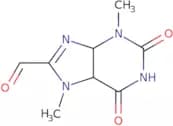
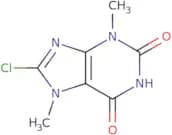
CAS:Versatile small molecule scaffoldFormula:C8H10N4O3Purity:Min. 95%Molecular weight:210.19 g/mol8-Chloro-3,7-dimethyl-2,3,6,7-tetrahydro-1H-purine-2,6-dione
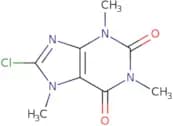
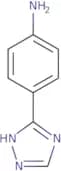
CAS:Controlled Product<p>Versatile small molecule scaffold</p>Formula:C7H7ClN4O2Purity:Min. 95%Molecular weight:214.61 g/mol4-(4H-1,2,4-Triazol-3-yl)aniline
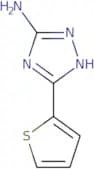
CAS:<p>Versatile small molecule scaffold</p>Formula:C8H8N4Purity:Min. 95%Molecular weight:160.18 g/mol5-(Thiophen-2-yl)-4H-1,2,4-triazol-3-amine
CAS:<p>Versatile small molecule scaffold</p>Formula:C6H6N4SPurity:Min. 95%Molecular weight:166.21 g/mol2-Chloro-3-nitroimidazo[1,2-a]pyridine
CAS:<p>2-Chloro-3-nitroimidazo[1,2-a]pyridine is a chlorinated derivative of imidazo[1,2-a]pyridine. The nitro group gives the molecule two sites for functionalization and enables it to undergo Suzuki coupling reactions with anilines. The chloro substituent provides the molecule with a high degree of chemical diversity. This compound can be used in cross-coupling reactions with anilines and other heterocycles, such as thiophenes and furans. In addition, this compound has been shown to react with nucleophiles in a nucleophilic substitution reaction to form 2-chloro-5-(substituted)imidazo[1,2-a]pyridinium ions.</p>Formula:C7H4ClN3O2Purity:Min. 95%Molecular weight:197.58 g/mol5-Bromo-3-methylimidazo[1,2-a]pyridine
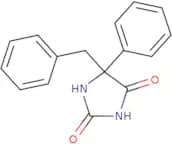
CAS:Versatile small molecule scaffoldFormula:C8H7BrN2Purity:Min. 95%Molecular weight:211.06 g/mol5-Benzyl-5-phenylimidazolidine-2,4-dione
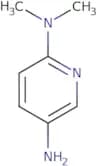
CAS:<p>Versatile small molecule scaffold</p>Formula:C16H14N2O2Purity:Min. 95%Molecular weight:266.3 g/molN2,N2-Dimethylpyridine-2,5-diamine
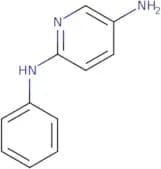
CAS:<p>N2,N2-Dimethylpyridine-2,5-diamine is a gadolinium complex that is used as a contrast agent in magnetic resonance imaging. N2,N2-Dimethylpyridine-2,5-diamine has been shown to be effective in the treatment of cancers and can be used for both diagnostic and therapeutic purposes. The drug can be conjugated with monoclonal antibodies or other drugs to target specific cancer cells. It can also be used to monitor the effectiveness of chemotherapy treatments. The salt form of this drug is soluble in water and stable at acid pH levels. When administered intravenously, it has a high degree of biodistribution and is excreted through the kidneys.</p>Formula:C7H11N3Purity:Min. 95%Molecular weight:137.18 g/molN2-Phenylpyridine-2,5-diamine
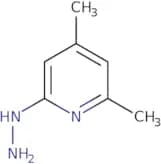
CAS:<p>Versatile small molecule scaffold</p>Formula:C11H11N3Purity:Min. 95%Molecular weight:185.22 g/mol2-Hydrazinyl-4,6-dimethylpyridine
CAS:<p>Versatile small molecule scaffold</p>Formula:C7H11N3Purity:Min. 95%Molecular weight:137.18 g/mol1',2'-Dihydrospiro[cyclohexane-1,3'-indole]-2'-one
CAS:<p>Versatile small molecule scaffold</p>Formula:C13H15NOPurity:Min. 95%Molecular weight:201.26 g/mol5H,6H,7H-Pyrrolo[3,4-b]pyrazine-5,7-dione
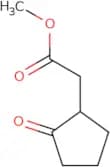
CAS:<p>Versatile small molecule scaffold</p>Formula:C6H3N3O2Purity:Min. 95%Molecular weight:149.11 g/molMethyl 2-(2-oxocyclopentyl)acetate
CAS:<p>Versatile small molecule scaffold</p>Formula:C8H12O3Purity:Min. 95%Molecular weight:156.18 g/mol1H,3H,4H,5H,6H,7H,8H,9H-Cycloocta[C]furan-1,3-dione
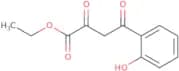
CAS:Versatile small molecule scaffoldFormula:C10H12O3Purity:Min. 95%Molecular weight:180.2 g/molEthyl 4-(2-hydroxyphenyl)-2,4-dioxobutanoate
CAS:<p>Sildenafil is a drug that is used for the treatment of erectile dysfunction. It belongs to the class of phosphodiesterase inhibitors and inhibits the enzyme phosphodiesterase type 5 (PDE-5). This enzyme functions to breakdown cyclic guanosine monophosphate (cGMP), which causes blood vessels in the penis to relax, leading to an erection. Sildenafil has been shown to be well tolerated with oral bioavailability of more than 70%. Sildenafil can be taken orally, but has also been studied for pulmonary administration. The pharmacokinetic properties of sildenafil have been optimized for oral administration in humans and it has been shown that sildenafil does not inhibit human liver cytochrome P450 enzymes. Sildenafil also shows inhibitory potency against other phosphodiesterases such as PDE-2, PDE-3, and PDE-6.</p>Formula:C12H12O5Purity:Min. 95%Molecular weight:236.22 g/mol5-Methyl-1H-pyrrolo[3,2-b]pyridine
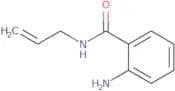
CAS:<p>5-Methyl-1H-pyrrolo[3,2-b]pyridine is a versatile compound that has various applications in different industries. It is commonly used in the production of polyvinyl and interferon, as well as in the synthesis of glycine and glutamate. This compound also finds its use in biomass production, where it acts as a catalyst for the growth of nanofibers. Additionally, 5-Methyl-1H-pyrrolo[3,2-b]pyridine has been studied for its potential therapeutic properties, including its ability to inhibit cytochalasin activity and the synthesis of oligosaccharides. Its unique chemical structure also makes it suitable for the development of copolymers and styrenic electrode materials.</p>Formula:C8H8N2Purity:Min. 95%Molecular weight:132.16 g/molN-Allyl-2-aminobenzamide
CAS:<p>2-Bromobenzaldehyde (2BA) is a reactive chemical that can be used as a building block for the synthesis of many other chemicals. It is also an efficient catalyst for reactions such as the reduction of amines to amides, and the conversion of nitroarenes to amines. 2BA has been shown to be cytotoxic in vitro and in vivo against human cancer cell lines when attached to magnetic nanoparticles and immobilized on different surfaces. The cytotoxic activity of 2BA was analyzed by using intramolecular cycloaddition reactions with electron-deficient olefins, which led to valuable insights into the mechanism of this reaction.</p>Formula:C10H12N2OPurity:Min. 95%Molecular weight:176.22 g/molEthyl 3-amino-2-methylbutanoate
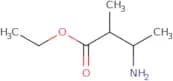
CAS:<p>Versatile small molecule scaffold</p>Formula:C7H15NO2Purity:Min. 95%Molecular weight:145.2 g/mol9-Azabicyclo[6.2.0]decan-10-one
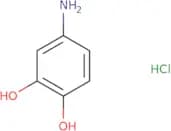
CAS:<p>9-Azabicyclo[6.2.0]decan-10-one is a lactam that can be synthesized by reacting diisopropyl with β-amino acid. 9-Azabicyclo[6.2.0]decan-10-one has been shown to have high enantioselectivity and enantiopurity, which is due to the use of a chiral catalyst in the synthesis process. This compound is also an intermediate for the synthesis of β-lactams such as penicillin, cephalosporin, and carbapenem antibiotics, which are used to treat bacterial infections. The enzymes in these β-lactams are inhibited by binding to their active site, preventing them from breaking down peptidoglycan during cell wall synthesis.</p>Formula:C9H15NOPurity:Min. 95%Molecular weight:153.22 g/mol4-Aminobenzene-1,2-diol hydrochloride
CAS:<p>4-Aminobenzene-1,2-diol hydrochloride (4ABAH) is a cox-2 inhibitor that has been shown to inhibit the activity of human cell factor and x-ray diffraction data. It has also been shown to possess anti-inflammatory properties by inhibiting the production of prostaglandins. The prodrug ester hydrochloride is converted to 4ABAH in vivo and undergoes hydrolysis by esterases to release 4ABAH. This conversion may be limited by the rate constant, which may decrease with time due to enzyme inactivation or competition with other substrates. 4ABAH inhibits cell proliferation in carcinoma cell lines, but not in normal cells. The drug is water soluble and therefore can be administered orally or intravenously.</p>Formula:C6H8ClNO2Purity:Min. 95%Molecular weight:161.58 g/mol1-Methoxy-2-(3-methylbut-2-en-1-yl)benzene
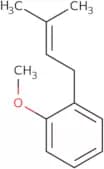
CAS:Versatile small molecule scaffoldFormula:C12H16OPurity:Min. 95%Molecular weight:176.25 g/mol3-Bromo-4,4-dimethylpentan-2-one
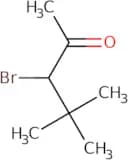
CAS:<p>Versatile small molecule scaffold</p>Formula:C7H13BrOPurity:Min. 95%Molecular weight:193.08 g/mol

![4-(4-Chlorophenyl)-4,5,6,7-tetrahydro-3H-imidazo[4,5-c]pyridine](/_next/image/?url=https%3A%2Fstatic.cymitquimica.com%2Fproducts%2F3D%2Fthumb-webp%2FEAA87541.webp&w=3840&q=75)
![4-(4-Methylphenyl)-4,5,6,7-tetrahydro-3H-imidazo[4,5-c]pyridine](/_next/image/?url=https%3A%2Fstatic.cymitquimica.com%2Fproducts%2F3D%2Fthumb-webp%2FEAA87543.webp&w=3840&q=75)
![Dispiro[3.1.3.1]decane-5,10-dione](/_next/image/?url=https%3A%2Fstatic.cymitquimica.com%2Fproducts%2F3D%2Fthumb-webp%2FEAA89300.webp&w=3840&q=75)

![2-Chloro-3-nitroimidazo[1,2-a]pyridine](/_next/image/?url=https%3A%2Fstatic.cymitquimica.com%2Fproducts%2F3D%2Fthumb-webp%2FEAA92652.webp&w=3840&q=75)
![5-Bromo-3-methylimidazo[1,2-a]pyridine](/_next/image/?url=https%3A%2Fstatic.cymitquimica.com%2Fproducts%2F3D%2Fthumb-webp%2FEAA92654.webp&w=3840&q=75)
![1',2'-Dihydrospiro[cyclohexane-1,3'-indole]-2'-one](/_next/image/?url=https%3A%2Fstatic.cymitquimica.com%2Fproducts%2F3D%2Fthumb-webp%2FEAA93314.webp&w=3840&q=75)
![5H,6H,7H-Pyrrolo[3,4-b]pyrazine-5,7-dione](/_next/image/?url=https%3A%2Fstatic.cymitquimica.com%2Fproducts%2F3D%2Fthumb-webp%2FEAA93319.webp&w=3840&q=75)
![1H,3H,4H,5H,6H,7H,8H,9H-Cycloocta[C]furan-1,3-dione](/_next/image/?url=https%3A%2Fstatic.cymitquimica.com%2Fproducts%2F3D%2Fthumb-webp%2FEAA93619.webp&w=3840&q=75)
![5-Methyl-1H-pyrrolo[3,2-b]pyridine](/_next/image/?url=https%3A%2Fstatic.cymitquimica.com%2Fproducts%2F3D%2Fthumb-webp%2FEAA94367.webp&w=3840&q=75)
![9-Azabicyclo[6.2.0]decan-10-one](/_next/image/?url=https%3A%2Fstatic.cymitquimica.com%2Fproducts%2F3D%2Fthumb-webp%2FEAA94636.webp&w=3840&q=75)