Building Blocks
This section contains fundamental products for the synthesis of organic and biological compounds. Building blocks are the essential starting materials used to construct complex molecules through various chemical reactions. They play a critical role in drug discovery, material science, and chemical research. At CymitQuimica, we offer a diverse range of high-quality building blocks to support your innovative research and industrial projects, ensuring you have the essential components for successful synthesis.
Subcategories of "Building Blocks"
- Boronic Acids & Boronic Acid Derivatives(5,778 products)
- Chiral Building Blocks(1,243 products)
- Hydrocarbon Building Blocks(6,098 products)
- Organic Building Blocks(61,057 products)
Found 200710 products of "Building Blocks"
Sort by
Purity (%)
0
100
|
0
|
50
|
90
|
95
|
100
Methyl 6-methylimidazo[1,5-a]pyridine-1-carboxylate
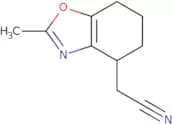
CAS:<p>Versatile small molecule scaffold</p>Formula:C10H10N2O2Purity:Min. 95%Molecular weight:190.2 g/mol2-(2-Methyl-4,5,6,7-tetrahydro-1,3-benzoxazol-4-yl)acetonitrile
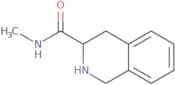
CAS:<p>Versatile small molecule scaffold</p>Formula:C10H12N2OPurity:Min. 95%Molecular weight:176.21 g/mol(3S)-N-Methyl-1,2,3,4-tetrahydroisoquinoline-3-carboxamide
CAS:Versatile small molecule scaffoldFormula:C11H14N2OPurity:Min. 95%Molecular weight:190.24 g/molMethyl 2-[(3S)-1,2,3,4-tetrahydroisoquinolin-3-yl]acetate hydrochloride
CAS:<p>Versatile small molecule scaffold</p>Formula:C12H16ClNO2Purity:Min. 95%Molecular weight:241.71 g/mol(3S)-tert-Butyl 3-(dimethylcarbamoyl)pyrrolidine-1-carboxylate
CAS:<p>Versatile small molecule scaffold</p>Formula:C12H22N2O3Purity:Min. 95%Molecular weight:242.31 g/mol1-Benzyl-4-(1H-pyrrol-1-yl)piperidine
CAS:<p>1-Benzyl-4-(1H-pyrrol-1-yl)piperidine is a chemical compound that has been shown to be effective in the treatment of autoimmune diseases and cancer. It also has anti-inflammatory properties, and can be used to treat eye disorders such as retinitis pigmentosa. 1-Benzyl-4-(1H-pyrrol-1-yl)piperidine binds to bromodomain proteins, which are found on the surface of cells and control gene transcription. This binding inhibits protein synthesis, leading to cell death. The chemical compound has been shown to have a glycosidic bond with an unknown carbohydrate structure.</p>Formula:C16H20N2Purity:Min. 95%Molecular weight:240.34 g/mol2-{[(tert-Butoxy)carbonyl]amino}-3-(1,3-oxazol-5-yl)propanoic acid
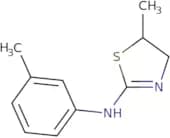
CAS:<p>Versatile small molecule scaffold</p>Formula:C11H16N2O5Purity:Min. 95%Molecular weight:256.3 g/mol5-Methyl-N-(3-methylphenyl)-4,5-dihydro-1,3-thiazol-2-amine
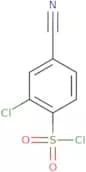
CAS:Versatile small molecule scaffoldFormula:C11H14N2SPurity:Min. 95%Molecular weight:206.31 g/mol2-Chloro-4-cyanobenzenesulfonyl chloride
CAS:<p>Versatile small molecule scaffold</p>Formula:C7H3Cl2NO2SPurity:Min. 95%Molecular weight:236.08 g/molMonastrol
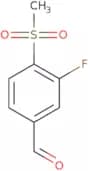
CAS:Monastrol is a natural compound that has been shown to induce apoptosis in cancer cells. It binds to the mitochondrial membrane, thereby causing mitochondrial membrane depolarization and inhibiting ATP production. Monastrol also inhibits axonal growth by blocking tubulin polymerization, which is required for axon elongation. This drug is being investigated as a potential treatment for skin cancers and leishmaniasis. Monastrol has been shown to inhibit the proliferation of carcinoma cell lines and to reduce metastasis in animals models. Preparative high pressure liquid chromatography (HPLC) has been used to isolate monastrol from Anhydrous Sodium Monastearate (ASM).Formula:C14H16N2O3SPurity:Min. 95%Molecular weight:292.35 g/mol3-Fluoro-4-(methylsulphonyl)benzaldehyde
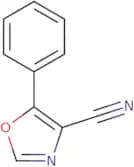
CAS:Versatile small molecule scaffoldFormula:C8H7FO3SPurity:Min. 95%Molecular weight:202.2 g/mol5-Phenyl-1,3-oxazole-4-carbonitrile
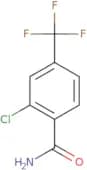
CAS:<p>5-Phenyl-1,3-oxazole-4-carbonitrile (5PO) is a reagent that can be used for the coupling of potassium with an anion. The radical mechanism of this reaction has been shown to use copper as a catalyst. 5PO is also useful for the preparation of cyanide salts from cyanides, such as potassium cyanide, ferricyanide, and hydrocyanic acid. 5PO is typically prepared in situ by coupling an alkyl halide with a phenylhydrazine.</p>Formula:C10H6N2OPurity:Min. 95%Molecular weight:170.17 g/mol2-Chloro-4-(trifluoromethyl)benzamide
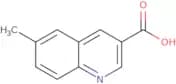
CAS:Versatile small molecule scaffoldFormula:C8H5ClF3NOPurity:Min. 95%Molecular weight:223.58 g/mol6-Methylquinoline-3-carboxylic acid
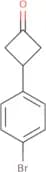
CAS:<p>Versatile small molecule scaffold</p>Formula:C11H9NO2Purity:Min. 95%Molecular weight:187.2 g/mol3-(4-Bromophenyl)cyclobutanone
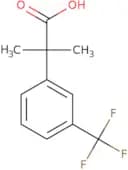
CAS:<p>3-(4-Bromophenyl)cyclobutanone is a lactonization product of 4-bromophenylacetic acid. Lactonization is the process of converting an ester into a cyclic lactone. 3-(4-Bromophenyl)cyclobutanone is synthesized from 4-bromophenylacetic acid in yields of up to 97%. The substrate concentration has been shown to have a significant effect on the yield of 3-(4-bromophenyl)cyclobutanone, and the maximum yield was achieved at a concentration of 5 g/L. This compound can be prepared by oxidation of cyclobutanone using peroxides, lipases, or chemoenzymatic methods. 3-(4-Bromophenyl)cyclobutanone belongs to the family of aliphatic ketones and has an aromatic ring with two substituents (a phenyl group and a bromine atom).</p>Formula:C10H9BrOPurity:Min. 95%Molecular weight:225.08 g/mol2-Methyl-2-(3-(trifluoromethylphenyl)propanoic acid
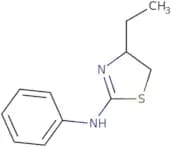
CAS:<p>Versatile small molecule scaffold</p>Formula:C11H11F3O2Purity:Min. 95%Molecular weight:232.2 g/mol4-Ethyl-N-phenyl-4,5-dihydro-1,3-thiazol-2-amine
CAS:<p>Versatile small molecule scaffold</p>Formula:C11H14N2SPurity:Min. 95%Molecular weight:206.31 g/mol4-[(3-Hydroxypropyl)sulfanyl]benzoic acid
CAS:<p>Versatile small molecule scaffold</p>Formula:C10H12O3SPurity:Min. 95%Molecular weight:212.27 g/mol5-(Benzyloxy)-2-{[(benzyloxy)carbonyl]-amino}-5-oxopentanoic acid
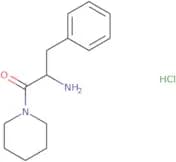
CAS:<p>Versatile small molecule scaffold</p>Formula:C20H21NO6Purity:Min. 95%Molecular weight:371.4 g/mol2-Amino-3-phenyl-1-(1-piperidinyl)-1-propanone hydrochloride
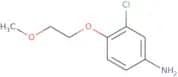
CAS:Versatile small molecule scaffoldFormula:C14H21ClN2OPurity:Min. 95%Molecular weight:268.79 g/mol3-Chloro-4-(2-methoxy-ethoxy)-phenylamine
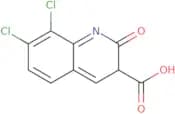
CAS:<p>Versatile small molecule scaffold</p>Formula:C9H12ClNO2Purity:Min. 95%Molecular weight:201.65 g/mol7,8-Dichloro-2-oxo-1,2-dihydroquinoline-3-carboxylic acid
CAS:Versatile small molecule scaffoldFormula:C10H5Cl2NO3Purity:Min. 95%Molecular weight:258.05 g/molPyrazolo[1,5-a]pyrimidine-3-carbaldehyde
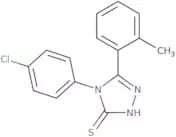
CAS:<p>Versatile small molecule scaffold</p>Formula:C7H5N3OPurity:Min. 95%Molecular weight:147.14 g/mol4-(4-Chlorophenyl)-5-(2-methylphenyl)-4H-1,2,4-triazole-3-thiol
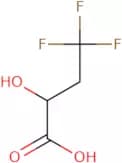
CAS:Versatile small molecule scaffoldFormula:C15H12ClN3SPurity:Min. 95%Molecular weight:301.8 g/mol4,4,4-Trifluoro-2-hydroxybutanoic acid
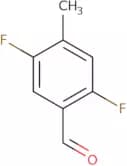
CAS:4,4,4-Trifluoro-2-hydroxybutanoic acid is an alcohol that is used in the synthesis of benzaldehydes. This compound can be extracted from a variety of sources, including natural sources such as plants and animals. 4,4,4-Trifluoro-2-hydroxybutanoic acid has been shown to react with butyllithium to form a mixture of 2:1:1 (R:S:R) diastereomers. The reaction is carried out under conditions that favor the formation of the desired product. This process produces high yields and allows for chiral products to be synthesized in high optical purity.Formula:C4H5F3O3Purity:Min. 95%Molecular weight:158.08 g/mol2,5-difluoro-4-methylbenzaldehyde
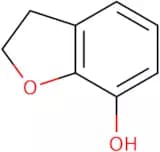
CAS:<p>Versatile small molecule scaffold</p>Formula:C8H6F2OPurity:Min. 95%Molecular weight:156.13 g/mol2,3-Dihydro-1-benzofuran-7-ol
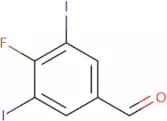
CAS:2,3-Dihydro-1-benzofuran-7-ol is a peroxide that can be used as an alternative to hydrogen peroxide in wastewater treatment. The compound is chemically stable and has a low toxicity to mammals. It has been shown to be effective in the removal of carbofuran and other pesticides from water. The removal of these chemicals is achieved by oxidation at the 2,3-dihydro-1-benzofuran-7-ol molecule's oxygen atom, which removes the pesticide's hydrogen atom. The reaction time for this process depends on the concentration of pesticide in the water sample. 2,3-Dihydro-1-benzofuran-7-ol reacts with ionic contaminants such as heavy metals and nitrates via catalytic effect with mineralization of these ions. This process can be used for the remediation of polluted soil and water due to its high efficiency and low cost.Formula:C8H8O2Purity:Min. 95%Molecular weight:136.15 g/mol4-Fluoro-3,5-diiodobenzaldehyde
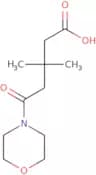
CAS:Versatile small molecule scaffoldFormula:C7H3FI2OPurity:Min. 95%Molecular weight:375.91 g/mol3,3-Dimethyl-5-(morpholin-4-yl)-5-oxopentanoic acid
CAS:Versatile small molecule scaffoldFormula:C11H19NO4Purity:Min. 95%Molecular weight:229.27 g/molN-(3-Carbamoyl-4,5,6,7-tetrahydro-1-benzothiophen-2-yl)-6-methyl-4,5,6,7-tetrahydro-1-benzothiophene-3-carboxamide
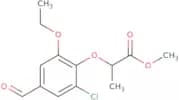
CAS:Versatile small molecule scaffoldFormula:C19H22N2O2S2Purity:Min. 95%Molecular weight:374.5 g/molMethyl 2-(2-chloro-6-ethoxy-4-formylphenoxy)propanoate
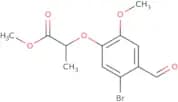
CAS:<p>Versatile small molecule scaffold</p>Formula:C13H15ClO5Purity:Min. 95%Molecular weight:286.71 g/molMethyl 2-(5-bromo-4-formyl-2-methoxyphenoxy)propanoate
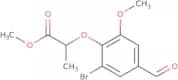
CAS:Versatile small molecule scaffoldFormula:C12H13BrO5Purity:Min. 95%Molecular weight:317.13 g/molMethyl 2-(2-bromo-4-formyl-6-methoxyphenoxy)propanoate
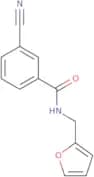
CAS:<p>Versatile small molecule scaffold</p>Formula:C12H13BrO5Purity:Min. 95%Molecular weight:317.13 g/mol3-Cyano-N-(furan-2-ylmethyl)benzamide
CAS:<p>Versatile small molecule scaffold</p>Formula:C13H10N2O2Purity:Min. 95%Molecular weight:226.23 g/mol3-(1H-Pyrazol-4-yl)pyridine
CAS:<p>3-(1H-Pyrazol-4-yl)pyridine is a chemical compound that has been shown to have anti-cancer activity. It has been found to inhibit the growth of ovarian cancer cells and is being studied as a potential treatment for other cancers. 3-(1H-Pyrazol-4-yl)pyridine binds to acetylcholine receptors in cancer cells, leading to cell apoptosis. It also inhibits the synthesis of DNA and RNA, which are necessary for cell division. 3-(1H-Pyrazol-4-yl)pyridine is an excellent catalyst and can be used in multiphase reactions such as cyanosilylation, where it reacts with sulfur dioxide (SO2) to produce polysulfide (polysulfur).</p>Formula:C8H7N3Purity:Min. 95%Molecular weight:145.16 g/molMethyl 2-ethyl-1H-pyrrole-3-carboxylate
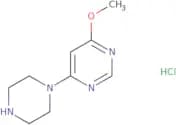
CAS:<p>Versatile small molecule scaffold</p>Formula:C8H11NO2Purity:Min. 95%Molecular weight:153.18 g/mol4-Methoxy-6-(piperazin-1-yl)pyrimidine hydrochloride
CAS:Versatile small molecule scaffoldFormula:C9H15ClN4OPurity:Min. 95%Molecular weight:230.69 g/mol3-Chloro-4-[(dimethylamino)methyl]aniline
CAS:Versatile small molecule scaffoldFormula:C9H13ClN2Purity:Min. 95%Molecular weight:184.66 g/molBenzyl 2-amino-3-hydroxypropanoate hydrochloride
CAS:Benzyl 2-amino-3-hydroxypropanoate hydrochloride is a chiral molecule with a S configuration. It is the racemic mixture of two enantiomers, which are mirror images of each other. The compound has been shown to inhibit bacterial growth by binding to the 50S ribosomal subunit and inhibiting protein synthesis. This drug also inhibits the formation of siderophores and pseudobactin, which are involved in iron uptake. Benzyl 2-amino-3-hydroxypropanoate hydrochloride also has an anti-inflammatory effect and may be used as an adjuvant therapy for tuberculosis or cancer chemotherapy.Formula:C10H14ClNO3Purity:Min. 95%Molecular weight:231.67 g/mol2-Phenyl-5-(4,4,5,5-tetramethyl-1,3,2-dioxaborolan-2-yl)pyridine
CAS:Versatile small molecule scaffoldFormula:C17H20BNO2Purity:Min. 95%Molecular weight:281.17 g/mol7-(1,3-Dioxaindan-5-yl)-1-methyl-2,4-dioxo-1H,2H,3H,4H-pyrido[2,3-d]pyrimidine-5-carboxylic acid
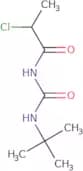
CAS:<p>Versatile small molecule scaffold</p>Formula:C16H11N3O6Purity:Min. 95%Molecular weight:341.27 g/mol3-tert-Butyl-1-(2-chloropropanoyl)urea
CAS:<p>Versatile small molecule scaffold</p>Formula:C8H15ClN2O2Purity:Min. 95%Molecular weight:206.67 g/mol2-Chloro-N-{4-[cyclohexyl(methyl)sulfamoyl]phenyl}acetamide
CAS:<p>Versatile small molecule scaffold</p>Formula:C15H21ClN2O3SPurity:Min. 95%Molecular weight:344.9 g/mol2-Chloro-N-[(4-methylphenyl)methyl]-N-propylacetamide
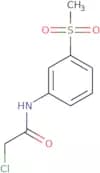
CAS:<p>Versatile small molecule scaffold</p>Formula:C13H18ClNOPurity:Min. 95%Molecular weight:239.74 g/mol2-Chloro-N-(3-methanesulfonylphenyl)acetamide
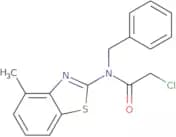
CAS:<p>Versatile small molecule scaffold</p>Formula:C9H10ClNO3SPurity:Min. 95%Molecular weight:247.7 g/molN-Benzyl-2-chloro-N-(4-methyl-1,3-benzothiazol-2-yl)acetamide
CAS:Versatile small molecule scaffoldFormula:C17H15ClN2OSPurity:Min. 95%Molecular weight:330.8 g/mol({2-[(4-Methylphenyl)sulfanyl]ethyl}carbamoyl)methyl 4-hydroxybenzoate
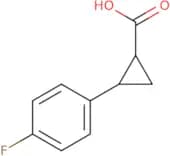
CAS:<p>Versatile small molecule scaffold</p>Formula:C18H19NO4SPurity:Min. 95%Molecular weight:345.4 g/mol2-(4-Fluorophenyl)cyclopropanecarboxylic acid
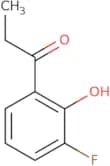
CAS:<p>Versatile small molecule scaffold</p>Formula:C10H9FO2Purity:Min. 95%Molecular weight:180.18 g/mol1-(3-Fluoro-2-hydroxyphenyl)propan-1-one
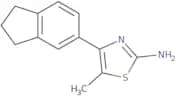
CAS:Versatile small molecule scaffoldFormula:C9H9FO2Purity:Min. 95%Molecular weight:168.16 g/mol4-(2,3-Dihydro-1H-inden-5-yl)-5-methyl-1,3-thiazol-2-amine
CAS:Versatile small molecule scaffoldFormula:C13H14N2SPurity:Min. 95%Molecular weight:230.33 g/mol
![Methyl 6-methylimidazo[1,5-a]pyridine-1-carboxylate](/_next/image/?url=https%3A%2Fstatic.cymitquimica.com%2Fproducts%2F3D%2Fthumb-webp%2FEJD92368.webp&w=3840&q=75)

![Methyl 2-[(3S)-1,2,3,4-tetrahydroisoquinolin-3-yl]acetate hydrochloride](/_next/image/?url=https%3A%2Fstatic.cymitquimica.com%2Fproducts%2F3D%2Fthumb-webp%2FEKA10233.webp&w=3840&q=75)


![2-{[(tert-Butoxy)carbonyl]amino}-3-(1,3-oxazol-5-yl)propanoic acid](/_next/image/?url=https%3A%2Fstatic.cymitquimica.com%2Fproducts%2F3D%2Fthumb-webp%2FEKA43884.webp&w=3840&q=75)

![4-[(3-Hydroxypropyl)sulfanyl]benzoic acid](/_next/image/?url=https%3A%2Fstatic.cymitquimica.com%2Fproducts%2F3D%2Fthumb-webp%2FEKA91061.webp&w=3840&q=75)
![5-(Benzyloxy)-2-{[(benzyloxy)carbonyl]-amino}-5-oxopentanoic acid](/_next/image/?url=https%3A%2Fstatic.cymitquimica.com%2Fproducts%2F3D%2Fthumb-webp%2FEKA98013.webp&w=3840&q=75)
![Pyrazolo[1,5-a]pyrimidine-3-carbaldehyde](/_next/image/?url=https%3A%2Fstatic.cymitquimica.com%2Fproducts%2F3D%2Fthumb-webp%2FEKB07259.webp&w=3840&q=75)



![3-Chloro-4-[(dimethylamino)methyl]aniline](/_next/image/?url=https%3A%2Fstatic.cymitquimica.com%2Fproducts%2F3D%2Fthumb-webp%2FEKB22262.webp&w=3840&q=75)


![7-(1,3-Dioxaindan-5-yl)-1-methyl-2,4-dioxo-1H,2H,3H,4H-pyrido[2,3-d]pyrimidine-5-carboxylic acid](/_next/image/?url=https%3A%2Fstatic.cymitquimica.com%2Fproducts%2F3D%2Fthumb-webp%2FEKB30383.webp&w=3840&q=75)
![2-Chloro-N-{4-[cyclohexyl(methyl)sulfamoyl]phenyl}acetamide](/_next/image/?url=https%3A%2Fstatic.cymitquimica.com%2Fproducts%2F3D%2Fthumb-webp%2FEKB31899.webp&w=3840&q=75)
![2-Chloro-N-[(4-methylphenyl)methyl]-N-propylacetamide](/_next/image/?url=https%3A%2Fstatic.cymitquimica.com%2Fproducts%2F3D%2Fthumb-webp%2FEKB31926.webp&w=3840&q=75)
![({2-[(4-Methylphenyl)sulfanyl]ethyl}carbamoyl)methyl 4-hydroxybenzoate](/_next/image/?url=https%3A%2Fstatic.cymitquimica.com%2Fproducts%2F3D%2Fthumb-webp%2FEKB32034.webp&w=3840&q=75)