Building Blocks
This section contains fundamental products for the synthesis of organic and biological compounds. Building blocks are the essential starting materials used to construct complex molecules through various chemical reactions. They play a critical role in drug discovery, material science, and chemical research. At CymitQuimica, we offer a diverse range of high-quality building blocks to support your innovative research and industrial projects, ensuring you have the essential components for successful synthesis.
Subcategories of "Building Blocks"
- Boronic Acids & Boronic Acid Derivatives(5,778 products)
- Chiral Building Blocks(1,243 products)
- Hydrocarbon Building Blocks(6,098 products)
- Organic Building Blocks(61,057 products)
Found 200710 products of "Building Blocks"
Sort by
Purity (%)
0
100
|
0
|
50
|
90
|
95
|
100
1-(5-Bromopyridin-2-yl)cyclobutanamine
CAS:Versatile small molecule scaffoldFormula:C9H11BrN2Purity:Min. 95%Molecular weight:227.1 g/molMethyl 2-(5-cyanopyridin-2-yl)acetate
CAS:Versatile small molecule scaffoldFormula:C9H8N2O2Purity:Min. 95%Molecular weight:176.17 g/molEthyl 2-amino-5-methoxynicotinate
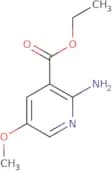
CAS:<p>Versatile small molecule scaffold</p>Formula:C9H12N2O3Purity:Min. 95%Molecular weight:196.2 g/molMethyl 6-bromoisoquinoline-4-carboxylate
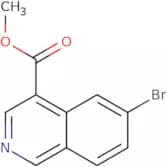
CAS:<p>Versatile small molecule scaffold</p>Formula:C11H8BrNO2Purity:Min. 95%Molecular weight:266.09 g/mol3-(Difluoromethyl)pyridine-2-carboxylic acid
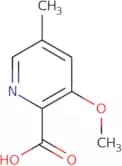
CAS:Versatile small molecule scaffoldFormula:C7H5F2NO2Purity:Min. 95%Molecular weight:173.12 g/mol3-Methoxy-5-methylpyridine-2-carboxylic acid
CAS:Versatile small molecule scaffoldFormula:C8H9NO3Purity:Min. 95%Molecular weight:167.16 g/mol1H-Pyrazolo[4,3-c]pyridine-6-carboxylic acid
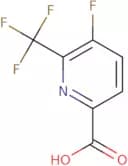
CAS:<p>Versatile small molecule scaffold</p>Formula:C7H5N3O2Purity:Min. 95%Molecular weight:163.14 g/mol5-Fluoro-6-(trifluoromethyl)pyridine-2-carboxylic acid
CAS:Versatile small molecule scaffoldFormula:C7H3F4NO2Purity:Min. 95%Molecular weight:209.1 g/mol5-Chloro-3-methyl-1H-pyrrolo[2,3-b]pyridine
CAS:Versatile small molecule scaffoldFormula:C8H7N2ClPurity:Min. 95%Molecular weight:166.6 g/molo-{[5-(Trifluoromethyl)pyridin-2-yl]methyl}hydroxylamine
CAS:Versatile small molecule scaffoldFormula:C7H7F3N2OPurity:Min. 95%Molecular weight:192.14 g/mol[1,3]Thiazolo[5,4-b]pyridine-6-carboxylic acid
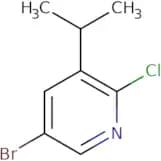
CAS:<p>Versatile small molecule scaffold</p>Formula:C7H4N2O2SPurity:Min. 95%Molecular weight:180.19 g/mol5-Bromo-2-chloro-3-(propan-2-yl)pyridine
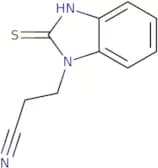
CAS:<p>Versatile small molecule scaffold</p>Formula:C8H9BrClNPurity:Min. 95%Molecular weight:234.52 g/mol3-(2-Sulfanyl-1H-1,3-benzodiazol-1-yl)propanenitrile
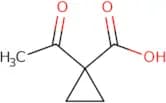
CAS:Versatile small molecule scaffoldFormula:C10H9N3SPurity:Min. 95%Molecular weight:203.27 g/mol1-Acetylcyclopropane-1-carboxylic acid
CAS:1-Acetylcyclopropane-1-carboxylic acid is a dicarboxylic acid that is produced by the alkylation of chloride with triethylbenzylammonium. It can be used to produce cyclopropanol, which can undergo an annulation reaction to form cyclopropylcarbinols. 1-Acetylcyclopropane-1-carboxylic acid has been shown to undergo rearrangement reactions in the presence of sodium hydroxide, and has been shown to be a good substrate for nucleophilic substitution reactions. This chemical also undergoes esterification with alcohols to form esters.Formula:C6H8O3Purity:Min. 95%Molecular weight:128.13 g/mol2-(3,4-Dichlorophenyl)-2,2-difluoroethan-1-amine hydrochloride
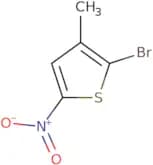
CAS:<p>Versatile small molecule scaffold</p>Formula:C8H8Cl3F2NPurity:Min. 95%Molecular weight:262.5 g/mol2-Bromo-3-methyl-5-nitrothiophene
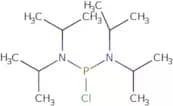
CAS:<p>2-Bromo-3-methyl-5-nitrothiophene is an organic compound that reacts with nucleophiles, such as amines, to form adducts. It is also a ring-opening reaction of 2-nitrothiophene and oxidative deamination of aliphatic amines. This reactant is analogous to other compounds, such as 3-methylthiophene and 2,4,6-trinitrobenzene.</p>Formula:C5H4BrNO2SPurity:Min. 95%Molecular weight:222.06 g/molBis(diisopropylamino)chlorophosphine
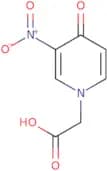
CAS:<p>Bis(diisopropylamino)chlorophosphine is a phosphorylating agent that binds to the polymerase active site of the hepatitis C virus (HCV) NS5B protein. It is a promising anti-HCV drug candidate for the treatment of chronic hepatitis C infections. Bis(diisopropylamino)chlorophosphine has been shown to be effective in inhibiting HCV replication in vitro and in vivo, with no significant toxicity. Bis(diisopropylamino)chlorophosphine has also been shown to be an excellent probe for detecting HCV RNA in clinical samples by fluorescence microscopy. This compound has been successfully used in a phase I clinical trial and is currently undergoing phase II clinical development.</p>Formula:C12H28ClN2PPurity:Min. 95%Molecular weight:266.79 g/mol2-(3-Nitro-4-oxo-1,4-dihydropyridin-1-yl)acetic acid
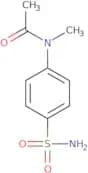
CAS:Versatile small molecule scaffoldFormula:C7H6N2O5Purity:Min. 95%Molecular weight:198.13 g/molN-Methyl-N-(4-sulfamoylphenyl)acetamide
CAS:Versatile small molecule scaffoldFormula:C9H12N2O3SPurity:Min. 95%Molecular weight:228.27 g/molrac-(9R,10S)-2-Azatricyclo[9.4.0.0,3,8]pentadeca-1(15),3,5,7,11,13-hexaene-9,10-diol
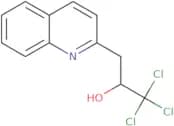
CAS:Versatile small molecule scaffoldFormula:C14H13NO2Purity:Min. 95%Molecular weight:227.26 g/mol1,1,1-Trichloro-3-(quinolin-2-yl)propan-2-ol
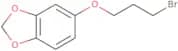
CAS:Versatile small molecule scaffoldFormula:C12H10Cl3NOPurity:Min. 95%Molecular weight:290.6 g/mol5-(3-Bromopropoxy)-1,3-dioxaindane
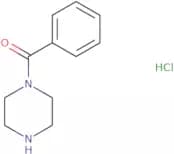
CAS:<p>Versatile small molecule scaffold</p>Formula:C10H11BrO3Purity:Min. 95%Molecular weight:259.1 g/mol1-Benzoylpiperazine hydrochloride
CAS:1-Benzoylpiperazine hydrochloride (1BP) is an antiviral prodrug that has been shown to inhibit HIV infection. It is a prodrug of benzylpiperazine, which inhibits viral replication by blocking the reverse transcriptase enzyme. 1BP is an amido derivative that is converted to benzylpiperazine in vivo, and then nitroreduced to form a reactive intermediate that binds irreversibly to the active site of the reverse transcriptase enzyme. This prevents the polymerization of viral DNA and formation of new viral particles. The drug also inhibits some strains of influenza A virus, herpes simplex virus type 2, and vaccinia virus. 1BP has antiviral activity against HIV-1, HIV-2, influenza A virus (strains H1N1 and H3N2), herpes simplex virus type 2, and vaccinia virus. It also has anti-inflammatory effects in vitroFormula:C11H14N2O·HClPurity:Min. 95%Molecular weight:226.7 g/mol2-(4-Benzoyl-1-piperazinyl)ethanol
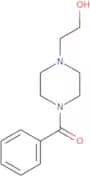
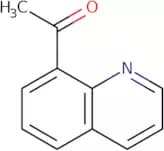
CAS:<p>Versatile small molecule scaffold</p>Formula:C13H18N2O2Purity:Min. 95%Molecular weight:234.3 g/mol1-(Quinolin-8-yl)ethanone
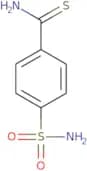
CAS:<p>Versatile small molecule scaffold</p>Formula:C11H9NOPurity:Min. 95%Molecular weight:171.2 g/mol4-Sulfamoylbenzene-1-carbothioamide
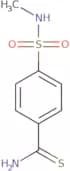
CAS:<p>Versatile small molecule scaffold</p>Formula:C7H8N2O2S2Purity:Min. 95%Molecular weight:216.3 g/mol4-(Methylsulfamoyl)benzene-1-carbothioamide
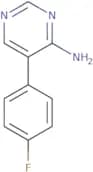
CAS:<p>Versatile small molecule scaffold</p>Formula:C8H10N2O2S2Purity:Min. 95%Molecular weight:230.3 g/mol5-(4-Fluorophenyl)pyrimidin-4-amine
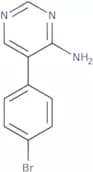
CAS:<p>Versatile small molecule scaffold</p>Formula:C10H8FN3Purity:Min. 95%Molecular weight:189.19 g/mol5-(4-Bromophenyl)pyrimidin-4-amine
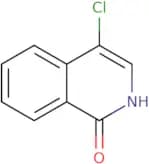
CAS:<p>Versatile small molecule scaffold</p>Formula:C10H8BrN3Purity:Min. 95%Molecular weight:250.09 g/mol4-Chloro-1(2H)-isoquinolone
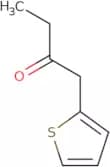
CAS:<p>Versatile small molecule scaffold</p>Formula:C9H6ClNOPurity:Min. 95%Molecular weight:179.6 g/mol1-(Thiophen-2-yl)butan-2-one
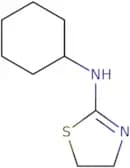
CAS:Versatile small molecule scaffoldFormula:C8H10OSPurity:Min. 95%Molecular weight:154.23 g/molN-Cyclohexyl-4,5-dihydro-1,3-thiazol-2-amine
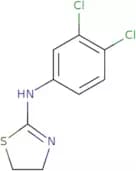
CAS:Versatile small molecule scaffoldFormula:C9H16N2SPurity:Min. 95%Molecular weight:184.3 g/molN-(3,4-Dichlorophenyl)-4,5-dihydro-1,3-thiazol-2-amine
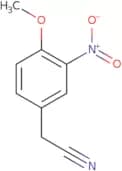
CAS:Versatile small molecule scaffoldFormula:C9H8Cl2N2SPurity:Min. 95%Molecular weight:247.14 g/mol2-(4-Methoxy-3-nitrophenyl)acetonitrile
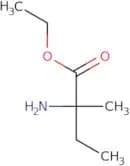
CAS:Versatile small molecule scaffoldFormula:C9H8N2O3Purity:Min. 95%Molecular weight:192.17 g/molEthyl 2-amino-2-methylbutanoate
CAS:Ethyl 2-amino-2-methylbutanoate is a type of chemical compound that belongs to the group of organic compounds called esters. It has been shown to be a potential anti-cancer drug that inhibits DNA replication and induces apoptosis in cancer cells. Ethyl 2-amino-2-methylbutanoate has also been shown to have an effect on the histone lysine residues, which are important for cell proliferation and differentiation. Animal studies have suggested that this compound may also protect against breast cancer, with the ability to reduce tumor growth by inhibiting the production of estrogen receptors in mammary glands. The anticancer activity of Ethyl 2-amino-2-methylbutanoate is due to its ability to inhibit diltiazem hydrochloride, which is an enzyme involved in the synthesis of DNA and RNA.Formula:C7H15NO2Purity:Min. 95%Molecular weight:145.2 g/mol4-phenyl-1H-imidazole-2-carbaldehyde
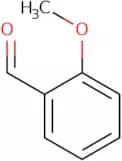
CAS:<p>Versatile small molecule scaffold</p>Formula:C10H7N2OPurity:Min. 95%Molecular weight:171.17 g/mol2-Methoxybenzaldehyde-d3
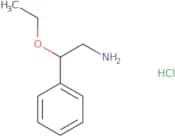
CAS:<p>Versatile small molecule scaffold</p>Formula:C8H8O2Purity:Min. 95%Molecular weight:139.17 g/mol2-Ethoxy-2-phenylethan-1-amine hydrochloride
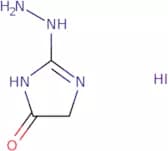
CAS:Controlled Product<p>Versatile small molecule scaffold</p>Formula:C10H16ClNOPurity:Min. 95%Molecular weight:201.69 g/mol2-Hydrazinyl-4,5-dihydro-1H-imidazol-5-one hydroiodide
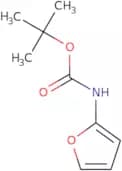
CAS:Versatile small molecule scaffoldFormula:C3H7IN4OPurity:Min. 95%Molecular weight:242.02 g/moltert-Butyl N-(2-furyl)carbamate
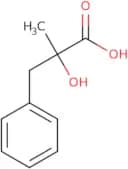
CAS:<p>Versatile small molecule scaffold</p>Formula:C9H13NO3Purity:Min. 95%Molecular weight:183.21 g/mol2-Hydroxy-2-methyl-3-phenylpropanoic acid
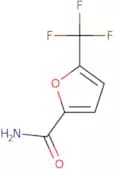
CAS:<p>2-Hydroxy-2-methyl-3-phenylpropanoic acid is a chlorinating agent that can be used as a cancer drug. It is one of the active substances in the plant didemnin, which has shown anticancer effects. 2-Hydroxy-2-methyl-3-phenylpropanoic acid reacts with oxindole to form 2,4,5,6,7 tetrahydrooxindole and 2,4,5,6 tetrahydrodideoxyoxindole. The chlorination reaction is catalyzed by corynebacterium glutamicum and produces epoxides. The epoxide ring opens under physiological conditions and reacts with hydroxyl groups on other molecules to form chlorohydrins or hydroxylamines.</p>Formula:C10H12O3Purity:Min. 95%Molecular weight:180.2 g/mol5-(Trifluoromethyl)furan-2-carboxamide
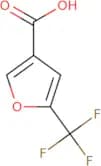
CAS:Versatile small molecule scaffoldFormula:C6H4F3NO2Purity:Min. 95%Molecular weight:179.1 g/mol5-(Trifluoromethyl)furan-3-carboxylic acid
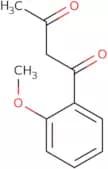
CAS:<p>Versatile small molecule scaffold</p>Formula:C6H3F3O3Purity:Min. 95%Molecular weight:180.08 g/mol1-(2-Methoxyphenyl)butane-1,3-dione
CAS:<p>Versatile small molecule scaffold</p>Formula:C11H12O3Purity:Min. 95%Molecular weight:192.21 g/mol1-o-Tolylbutane-1,3-dione
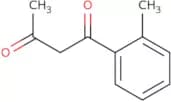
CAS:Versatile small molecule scaffoldFormula:C11H12O2Purity:Min. 95%Molecular weight:176.21 g/mol8-Methoxy-1,4-dioxaspiro[4.5]decane
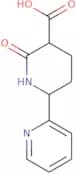
CAS:<p>Versatile small molecule scaffold</p>Formula:C9H16O3Purity:Min. 95%Molecular weight:172.22 g/mol2-Oxo-6-(2-pyridinyl)-1,2-dihydro-3-pyridinecarboxylic acid
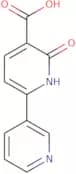
CAS:Versatile small molecule scaffoldFormula:C11H8N2O3Purity:Min. 95%Molecular weight:216.19 g/mol2-Oxo-6-(pyridin-3-yl)-1,2-dihydropyridine-3-carboxylic acid
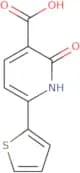
CAS:<p>Versatile small molecule scaffold</p>Formula:C11H8N2O3Purity:Min. 95%Molecular weight:216.19 g/mol2-Oxo-6-(thiophen-2-yl)-1,2-dihydropyridine-3-carboxylic acid
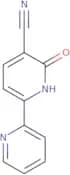
CAS:Versatile small molecule scaffoldFormula:C10H7NO3SPurity:Min. 95%Molecular weight:221.23 g/mol2-Oxo-6-(2-pyridinyl)-1,2-dihydro-3-pyridinecarbonitrile
CAS:Versatile small molecule scaffoldFormula:C11H7N3OPurity:Min. 95%Molecular weight:197.19 g/mol



![1H-Pyrazolo[4,3-c]pyridine-6-carboxylic acid](/_next/image/?url=https%3A%2Fstatic.cymitquimica.com%2Fproducts%2F3D%2Fthumb-webp%2FGAC80203.webp&w=3840&q=75)
![5-Chloro-3-methyl-1H-pyrrolo[2,3-b]pyridine](/_next/image/?url=https%3A%2Fstatic.cymitquimica.com%2Fproducts%2F3D%2Fthumb-webp%2FGAC80309.webp&w=3840&q=75)
![o-{[5-(Trifluoromethyl)pyridin-2-yl]methyl}hydroxylamine](/_next/image/?url=https%3A%2Fstatic.cymitquimica.com%2Fproducts%2F3D%2Fthumb-webp%2FGAC80376.webp&w=3840&q=75)
![[1,3]Thiazolo[5,4-b]pyridine-6-carboxylic acid](/_next/image/?url=https%3A%2Fstatic.cymitquimica.com%2Fproducts%2F3D%2Fthumb-webp%2FGAC80425.webp&w=3840&q=75)
![rac-(9R,10S)-2-Azatricyclo[9.4.0.0,3,8]pentadeca-1(15),3,5,7,11,13-hexaene-9,10-diol](/_next/image/?url=https%3A%2Fstatic.cymitquimica.com%2Fproducts%2F3D%2Fthumb-webp%2FGCA21173.webp&w=3840&q=75)
![8-Methoxy-1,4-dioxaspiro[4.5]decane](/_next/image/?url=https%3A%2Fstatic.cymitquimica.com%2Fproducts%2F3D%2Fthumb-webp%2FGCA29299.webp&w=3840&q=75)