Building Blocks
This section contains fundamental products for the synthesis of organic and biological compounds. Building blocks are the essential starting materials used to construct complex molecules through various chemical reactions. They play a critical role in drug discovery, material science, and chemical research. At CymitQuimica, we offer a diverse range of high-quality building blocks to support your innovative research and industrial projects, ensuring you have the essential components for successful synthesis.
Subcategories of "Building Blocks"
- Boronic Acids & Boronic Acid Derivatives(5,756 products)
- Chiral Building Blocks(1,242 products)
- Hydrocarbon Building Blocks(6,095 products)
- Organic Building Blocks(61,038 products)
Found 196817 products of "Building Blocks"
Sort by
Purity (%)
0
100
|
0
|
50
|
90
|
95
|
100
Timonacic
CAS:<p>Timonacic is an analog of nicotinamide that has been shown to be an effective inhibitor of energy metabolism in the mitochondria. It has antioxidative properties and can protect against the development of heart disease by inhibiting the production of reactive oxygen species. Timonacic's anti-inflammatory properties may be due to its ability to inhibit prostaglandin synthesis. It also has a high affinity for fatty acids, which may contribute to its inhibitory effects on lipid peroxidation. This drug has a carboxy terminal and is used as a sodium salt, which may play a role in its enzyme inhibition activity. Timonacic inhibits the activities of enzymes such as carnitine acetyltransferase and pyruvate dehydrogenase kinase, which are involved in the biosynthesis of fatty acids. The intramolecular hydrogen bonds formed with timonacic may contribute to its inhibitory effect on these enzymes.</p>Formula:C4H7NO2SPurity:Min. 95%Molecular weight:133.17 g/molRC-3095 trifluoroacetate
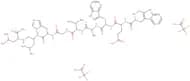
CAS:<p>Please enquire for more information about RC-3095 trifluoroacetate including the price, delivery time and more detailed product information at the technical inquiry form on this page</p>Formula:C56H79N15O9•C2HF3O2Purity:Min. 95%Molecular weight:1,220.35 g/mol2,4,6-Trichloropyrimidine
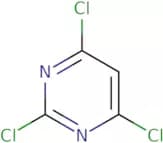
CAS:<p>2,4,6-Trichloropyrimidine is an antimicrobial agent that belongs to the chemical class of pyrimidine compounds. It inhibits bacterial growth by cross-linking with amino acids and nucleic acids in the cell wall, thereby inhibiting protein synthesis. 2,4,6-Trichloropyrimidine is also a cross-linking agent for polymers such as polyurethane and vinyl chloride. This compound has been shown to be effective against P. aeruginosa and other bacteria that are resistant to antibiotics. 2,4,6-Trichloropyrimidine reacts with water vapor or oxygen nucleophiles to form hydrogen chloride and amine groups. These reactions can be used for identification of this compound in the laboratory.</p>Formula:C4HCl3N2Purity:Min. 95%Color and Shape:PowderMolecular weight:183.42 g/molL-Tyrosine ethyl ester hydrochloride
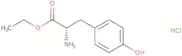
CAS:<p>L-Tyrosine ethyl ester hydrochloride is a non-protein amino acid that inhibits the activity of metalloproteases, which are enzymes that break down proteins. It has been shown to be effective against bowel disease and cancer by inhibiting the release of inflammatory cytokines. L-Tyrosine ethyl ester hydrochloride also has anti-inflammatory properties and can be used in the treatment of depression and liver cirrhosis. This drug is an inhibitor of hydroxylase, which is an enzyme involved in the synthesis of melanin. It is a structural analogue to L-DOPA, which is used for Parkinson's disease. L-Tyrosine ethyl ester hydrochloride has been shown to have antihypertensive effects and can be used as a diuretic agent.</p>Formula:C11H15NO3·HClPurity:Min. 95%Color and Shape:PowderMolecular weight:245.7 g/mol2,2',4,4'-tetrahydroxybenzophenone
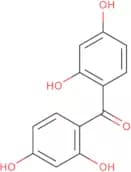
CAS:<p>2,2',4,4'-tetrahydroxybenzophenone is a hydroxylated benzophenone that has immunomodulatory effects. It binds to the receptor in the immune system and can cause an increase in cytokine production. 2,2',4,4'-tetrahydroxybenzophenone is cytotoxic and has significant toxicity in vitro. The molecule has been shown to disrupt mitochondrial membrane potential. This may be due to its ability to form hydrogen bonds with molecules on the mitochondrial membrane. 2,2',4,4'-tetrahydroxybenzophenone also modulates transcriptional regulation of genes involved in cell proliferation and apoptosis. The drug is detectable at low levels by mass spectrometry and is not known to have any toxicological effects.END>></p>Formula:C13H10O5Purity:Min. 95%Color and Shape:Green PowderMolecular weight:246.22 g/mol2,4,5-Trimethoxybenzylamine
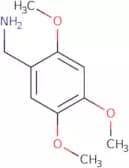
CAS:<p>2,4,5-Trimethoxybenzylamine is a synthetic compound that can be used as a precursor to the synthesis of other chemicals. It is prepared by reacting phenol with deuterium gas in a process called amination. This reaction is followed by reductive quaternization with cyanide. 2,4,5-Trimethoxybenzylamine is often used as an intermediate for the synthesis of drugs such as tamoxifen and clonidine.</p>Formula:C10H15NO3Purity:Min. 95%Color and Shape:PowderMolecular weight:197.23 g/mol2-Fluoro-4-methyl-5-nitrobenzene-1-sulfonyl chloride
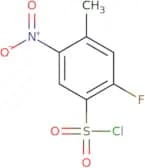
CAS:<p>Versatile small molecule scaffold</p>Formula:C7H5ClFNO4SPurity:Min. 95%Color and Shape:PowderMolecular weight:253.64 g/mol2-Ethynyl-3-methoxypyridine
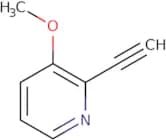
CAS:<p>2-Ethynyl-3-methoxypyridine is a chiral, alkynyl compound that can be synthesized from the reaction of acetone and ethyne. This compound is axially chiral and has two rotational isomers, which are optically active. The synthesis of this compound was first reported in 1952 by cyclizing 2-ethynylpyridine with methoxyacetophenone in the presence of acetic acid. The photochemical reactions of this compound have been studied extensively and it has shown to be a useful substrate for pyridines.</p>Formula:C8H7NOPurity:Min. 95%Molecular weight:133.14 g/molMethyl 3-chloro-5-hydroxypyridine-2-carboxylate
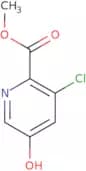
CAS:<p>Versatile small molecule scaffold</p>Formula:C7H6NO3ClPurity:Min. 95%Molecular weight:187.58 g/moltert-Butyl 4-[(piperazin-1-yl)methyl]piperidine-1-carboxylate
CAS:<p>Versatile small molecule scaffold</p>Formula:C15H29N3O2Purity:Min. 95%Molecular weight:283.41 g/mol1-Methanesulfonyl-1H-pyrazol-4-amine
CAS:<p>Versatile small molecule scaffold</p>Formula:C4H7N3O2SPurity:Min. 95%Molecular weight:161.19 g/mol1-(4-(4,4,5,5-Tetramethyl-1,3,2-dioxaborolan-2-yl)phenyl)cyclopropanecarbonitrile
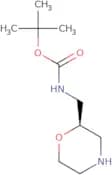
CAS:<p>Versatile small molecule scaffold</p>Formula:C16H20BNO2Purity:Min. 95%Molecular weight:269.15 g/mol(R)-2-(N-Boc-aminomethyl)morpholine
CAS:<p>Versatile small molecule scaffold</p>Formula:C10H20N2O3Purity:Min. 95%Molecular weight:216.28 g/moltert-Butyl 3-(trifluoromethyl)piperazine-1-carboxylate
CAS:<p>Versatile small molecule scaffold</p>Formula:C10H17F3N2O2Purity:Min. 95%Molecular weight:254.25 g/molTert-Butyl 2-(Trifluoromethyl)Piperazine-1-Carboxylate
CAS:<p>Versatile small molecule scaffold</p>Formula:C10H17N2O2F3Purity:Min. 95%Molecular weight:254.24 g/mol(2S)-3-(3,4-dihydroxyphenyl)-2-{[(9H-fluoren-9-ylmethoxy)carbonyl]amino}propanoic acid
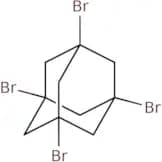
CAS:<p>3,4-Dihydroxyphenylalanine (3,4-DOPA) is a non-protein amino acid that is an intermediate in the synthesis of dopamine and norepinephrine. 3,4-DOPA is metabolized by the enzyme dopa decarboxylase to dopamine and then by catechol-O-methyl transferase to norepinephrine. 3,4-DOPA has antioxidant properties and has been shown to have anticancer effects in animals. It also has been shown to interact with other biomolecules such as proteins and nucleic acids. 3,4-DOPA binds strongly to metal ions through its carboxylic acid group and can chelate metals such as copper or iron. This property may be used for coatings on metal surfaces or for interacting with other molecules.br>br> 3,4-Dopa contains a chiral center due to the presence of two stereogenic carbons on the phen</p>Formula:C24H21NO6Purity:Min. 95%Molecular weight:419.4 g/mol1,3,5,7-Tetrabromoadamantane
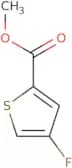
CAS:<p>1,3,5,7-Tetrabromoadamantane is a molecule that has been synthesized and introduced as a mediator to introduce oxidants. The introduction of the oxidant is mediated by 1,3,5,7-tetrabromoadamantane. This molecule has been shown to be synthesized in two steps from hexamethylenetetramine (HMT) and iodomethane. The synthesis of this molecule can also be achieved by reacting synthons such as tetraphenylmethane with hydrochloric acid. 1,3,5,7-Tetrabromoadamantane is an equivalence mediator because it can mediate a redox reaction in which the oxidizing agent is reduced and the reducing agent is oxidized.</p>Formula:C10H12Br4Purity:Min. 95%Molecular weight:451.82 g/molMethyl 4-fluorothiophene-2-carboxylate
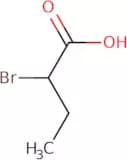
CAS:<p>Methyl 4-fluorothiophene-2-carboxylate is a fluorinated organic compound that is used as a model compound in polymer chemistry. It has been used to synthesize polymers with stepwise fluorination and diketopyrrolopyrrole moieties. This molecule also has optoelectronic properties and can be converted to a conjugated, monofluorinated, or difluorinated form by the addition of electron-withdrawing groups such as nitro or cyano groups. Methyl 4-fluorothiophene-2-carboxylate is an acceptor for electron transfer reactions.</p>Formula:C6H5FO2SPurity:Min. 95%Molecular weight:160.16 g/mol(S)-2-Bromobutyric acid
CAS:<p>(S)-2-Bromobutyric acid is a chiral compound. It is an enantiomer of the biologically inactive (R)-2-bromobutyric acid. The (S)-enantiomer has been shown to exhibit biological activity, with a kinetic and detectable activity that are similar to those of the parent molecule. This compound can be used as a precursor for pharmaceuticals, such as antibiotics, which would be useful in cases where bacteria have developed resistance to existing antibiotics. The dehalogenase enzyme catalyzes the hydrolysis of halogenated aromatic compounds in a way that produces an alcohol and hydrogen bromide. This reaction can be detected by changes in the chemical properties of the environment or by detecting changes in the optical rotation or fluorescence of the product.</p>Formula:C4H7BrO2Purity:Min. 95%Molecular weight:167 g/mol2-Chloro-2-(chlorodifluoromethoxy)-1,1,1-trifluoroethane
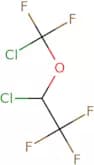
CAS:<p>2-Chloro-2-(chlorodifluoromethoxy)-1,1,1-trifluoroethane (HFC-152a) is a chemical compound that belongs to the group of chlorofluorocarbons. It has been used as a refrigerant and aerosol propellant. HFC-152a is an azeotrope with methyl ethyl ketone and ethyl ketone. It has also been reported to have properties as an ether, acetone, and difluoromethyl.</p>Formula:C3HCl2F5OPurity:Min. 95%Molecular weight:218.94 g/mol1,4-Cubanedicarboxylic acid
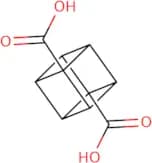
CAS:<p>1,4-Cubanedicarboxylic acid is an organic compound that is a diacid. It has been shown to be an inhibitor of chloride secretion in the intestine, and can also decrease the rate at which hydrogen ions are released into the intestinal lumen. 1,4-Cubanedicarboxylic acid is also a cross-linking agent that can be used in organic solvents for large-scale synthesis. The optical properties of 1,4-cubanedicarboxylic acid have been studied using FTIR spectroscopy. This agent has been found to react with intramolecular hydrogen to form a six membered ring.</p>Formula:C10H8O4Purity:Min. 95%Molecular weight:192.17 g/mol5,6-Dibromopyridin-2-ol
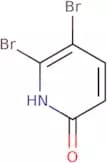
CAS:<p>Versatile small molecule scaffold</p>Formula:C5H3Br2NOPurity:Min. 95%Molecular weight:252.89 g/molIR-780 iodide
CAS:<p>IR-780 iodide is a water-soluble drug that has been shown to have significant cytotoxicity against prostate cancer cells. It binds to the mitochondrial membrane potential, which is involved in energy production and the regulation of the cell cycle. IR-780 iodide is taken up by tumor cells, where it inhibits adriamycin uptake and induces apoptosis. In vitro assays have shown that IR-780 iodide can be used as a diagnostic tool for detecting bladder cancer by binding to the mitochondria of cells from patients with bladder cancer. In vivo studies have been done in mice to determine the effectiveness of IR-780 iodide in treating cervical cancer. These studies showed that IR-780 iodide was not significantly effective in vivo, due to its low bioavailability and lack of specificity for cervical cancer cells. Histological analysis showed that IR-780 iodide did not inhibit tumor growth or induce apoptosis in vivo.</p>Formula:C36H44ClIN2Purity:Min. 95%Molecular weight:667.11 g/molH-Glu(OMe)-NHdihydrochloride
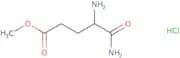
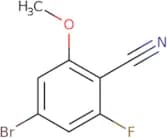
CAS:<p>Versatile small molecule scaffold</p>Formula:C6H13ClN2O3Purity:Min. 95%Molecular weight:196.63 g/mol4-Bromo-2-fluoro-6-methoxybenzonitrile
CAS:<p>Versatile small molecule scaffold</p>Formula:C8H5NOFBrPurity:Min. 95%Molecular weight:230.03 g/mol4-Chloro-2-hydroxy-6-methylphenylboronic acid
CAS:<p>Versatile small molecule scaffold</p>Formula:C7H8BClO3Purity:Min. 95%Molecular weight:186.4 g/mol4-Bromopyridine-2,3-diamine
CAS:Versatile small molecule scaffoldFormula:C5H6N3BrPurity:Min. 95%Molecular weight:188.02 g/mol1,5,6,7-Tetrahydro-2H-cyclopenta[b]pyridin-2-one
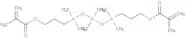
CAS:<p>Versatile small molecule scaffold</p>Formula:C8H9NOPurity:Min. 95%Molecular weight:135.17 g/molMethacryloxypropyl terminated polydimethylsiloxanes
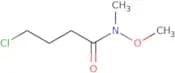
CAS:<p>MW 20,000 - 30,000</p>Formula:C20H40O6Si3Purity:Min. 95%Molecular weight:460.8 g/mol4-Chloro-N-methoxy-N-methylbutanamide
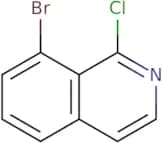
CAS:<p>Versatile small molecule scaffold</p>Formula:C6H12ClNO2Purity:Min. 95%Molecular weight:165.62 g/mol8-Bromo-1-chloroisoquinoline
CAS:<p>Versatile small molecule scaffold</p>Formula:C9H5BrClNPurity:Min. 95%Molecular weight:242.5 g/molMito-TEMPO
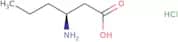
CAS:<p>Mito-TEMPO is a mitochondrial-targeted antioxidant that scavenges reactive oxygen species (ROS) and protects against oxidative injury. It has been shown to be effective in reducing oxidative damage in the heart and liver, as well as in models of neuronal death. Mito-TEMPO is also a potent inhibitor of lipid peroxidation and is able to prevent the formation of aldehydes. This drug has minimal toxicity, which may be due to its ability to accumulate in mitochondria without disrupting mitochondrial functions. Mito-TEMPO has been tested on healthy individuals with no observed side effects.</p>Formula:C29H35ClN2O2PPurity:Min. 95%Molecular weight:510.03 g/mol(S)-3-Aminohexanoic acid hydrochloride ee
CAS:<p>Versatile small molecule scaffold</p>Formula:C6H14ClNO2Purity:Min. 95%Molecular weight:167.63 g/molFipexide hydrochloride
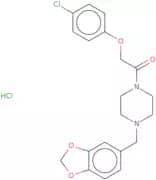
CAS:<p>Fipexide is a dopamine analog that is used as an anti-inflammatory drug. Fipexide has been shown to be effective against inflammatory bowel disease, autoimmune diseases and chronic oral toxicity in animal models. The symptoms of fipexide are similar to the symptoms of Parkinson's disease, which include tremors, muscle rigidity and slowness of movement. Fipexide also has a reactive nitrogen atom in its molecular structure, which may contribute to its toxicity. It has been shown to have no effect on locomotor activity in animals with bowel disease.</p>Formula:C20H21ClN2O4·HClPurity:Min. 95%Molecular weight:425.31 g/mol3,3',5'-Triiodo-D-thyronine
CAS:<p>3,3',5'-Triiodo-D-thyronine is a thyroid hormone that is used in the treatment of hypothyroidism. It is administered by injection or by mouth. 3,3',5'-Triiodo-D-thyronine is an insoluble drug, which means it cannot be dissolved in water. This drug can be injected into the body or taken as a pill. 3,3',5'-Triiodo-D-thyronine has been shown to increase metabolic rate and may also inhibit the growth of certain types of tumors. 3,3',5'-Triiodo-D-thyronine has been used in diagnostic procedures such as iontophoresis and implanting devices to treat prostate cancer. This medication can also be used for cosmetic purposes such as skin rejuvenation and hair loss prevention. 3,3',5'-Triiodo-D-thyronine has two structural isomers: levothyroxine and</p>Formula:C15H12I3NO4Purity:Min. 95%Molecular weight:650.97 g/mol3-(Methoxymethoxy)bromobenzene
CAS:<p>3-(Methoxymethoxy)bromobenzene is a white crystalline solid that is soluble in organic solvents. It has been shown to form polyethers and macrocyclic compounds, such as rotaxanes and catenanes. 3-(Methoxymethoxy)bromobenzene can be synthesized by reacting methoxymethanol with bromoiodobenzene in the presence of ammonium hexafluorophosphate. The compound has an x-ray crystallography and the chemical structure is determined by x-ray crystallography. It also has an NMR spectrum that consists of signals at δ 7.2, 6.7, 6.5, 5.0, 4.2, 3.7 ppm for C-H protons, which are characteristic of ethers; δ 190 for NH protons; δ 1.4 for CH protons; and δ 2.3 for</p>Formula:C8H9BrO2Purity:Min. 95%Molecular weight:217.06 g/mol5-Chloro-3-methylpyridazine hydrochloride
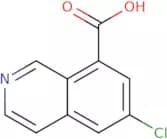
CAS:<p>Versatile small molecule scaffold</p>Formula:C5H6Cl2N2Purity:Min. 95%Molecular weight:165 g/mol6-Chloroisoquinoline-8-carboxylic acid
CAS:<p>Versatile small molecule scaffold</p>Formula:C10H6ClNO2Purity:90%MinMolecular weight:207.61 g/molTrans-3-aminocyclohexanecarboxylic acidhydrochloride
CAS:<p>Versatile small molecule scaffold</p>Formula:C7H14ClNO2Purity:Min. 95%Molecular weight:179.64 g/mol4-tert-Butyl-2,6-dimethylphenylsulfur trifluoride
CAS:<p>4-tert-Butyl-2,6-dimethylphenylsulfur Trifluoride is a chemical compound that is used as an intermediate in the synthesis of pharmaceuticals. It has been shown to be effective against 5-HT2C receptors and is used in the treatment of obesity. The mechanism of action for 4-tert-Butyl-2,6-dimethylphenylsulfur Trifluoride is not yet known but it may involve cleavage of amide bonds or stereoisomerism. 4-tert-Butyl-2,6-dimethylphenylsulfur Trifluoride has been synthesized by reacting hydrogen fluoride with sulfur trifluoride in the presence of a base.</p>Formula:C12H17F3SPurity:90%MinColor and Shape:PowderMolecular weight:250.32 g/mol1-tert-Butyl-1H-pyrazol-4-amine hydrochloride
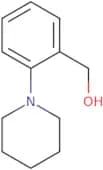
CAS:<p>Versatile small molecule scaffold</p>Formula:C10H14ClN3O4Purity:Min. 95%Molecular weight:275.69 g/mol(2-Piperidin-1-yl-phenyl)methanol
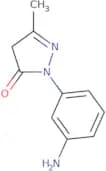
CAS:<p>Versatile small molecule scaffold</p>Formula:C12H17NOPurity:Min. 95%Molecular weight:191.27 g/mol1-(3-Aminophenyl)-3-methyl-1H-pyrazol-5(4H)-one
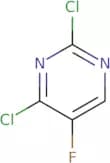
CAS:<p>Versatile small molecule scaffold</p>Formula:C10H11N3OPurity:90%MinColor and Shape:PowderMolecular weight:189.21 g/mol2,4-Dichloro-5-fluoropyrimidine
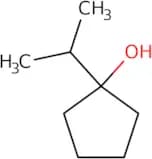
CAS:<p>2,4-Dichloro-5-fluoropyrimidine is an aromatic hydrocarbon that has been shown to inhibit the growth of mouse tumor cells in vitro. It also inhibits the production of amines by reacting with industrial chemicals and sodium carbonate. This compound has potent inhibitory activity against autoimmune diseases and cytotoxic potency on mcf-7 cells. Furthermore, 2,4-Dichloro-5-fluoropyrimidine has been shown to have a chlorinating effect on cancer cells.</p>Formula:C4HCl2FN2Purity:Min. 95%Color and Shape:Off-White PowderMolecular weight:166.97 g/mol1-(Propan-2-yl)cyclopentan-1-ol
CAS:<p>1-(Propan-2-yl)cyclopentan-1-ol is a chemical that belongs to the group of aliphatic alcohols. It has been synthesized in Australia.</p>Formula:C8H16OPurity:Min. 95%Molecular weight:128.21 g/molDecahydroquinoxaline
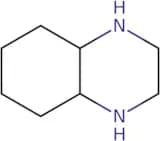
CAS:<p>Decahydroquinoxaline is a heterocyclic compound that contains a nitrogen atom in its structure. The hydroxyl group on the ring can act as an electron-donating group, which can be important for receptor binding and neurotransmission. It also has anti-inflammatory properties. Decahydroquinoxaline has been shown to have anticancer and anti-inflammatory effects, as well as being used for the treatment of chronic arthritis, bowel disease, and dopamine production.</p>Formula:C8H16N2Purity:Min. 95%Molecular weight:140.23 g/mol1-Cyclobutylpiperidine-4-carboxylic acid
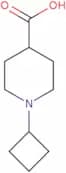
CAS:<p>Versatile small molecule scaffold</p>Formula:C10H17NO2Purity:Min. 95%Molecular weight:183.25 g/mol1-(4-Ethylphenyl)-2,2,2-trifluoroethan-1-ol
CAS:<p>Versatile small molecule scaffold</p>Formula:C10H11F3OPurity:Min. 95%Molecular weight:204.19 g/mol2-(4-Methoxy-1H-indol-3-yl)ethan-1-amine
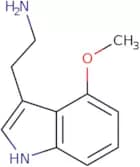
CAS:Controlled Product<p>2-(4-Methoxy-1H-indol-3-yl)ethan-1-amine is a synthetic compound that belongs to the class of organocatalysts. It is a serotonin receptor agonist, and has been shown to act as an antagonist at the 5HT2AR. This drug has been shown to have stereoselective effects in vitro, with high affinity for the S form of 5HT2AR. 2-(4-Methoxy-1H-indol-3-yl)ethan-1-amine also has some activity against dopamine receptors, but not as much as other compounds in its class. !--[if !supportLists]-->· !--[endif]-->This drug binds to speciogynine and alstovenine receptors, which are part of the opioid system.!--[if !supportLists]-->· !--[endif]-->Modelling studies suggest that 2-(4-M</p>Formula:C11H14N2OPurity:Min. 95%Color and Shape:PowderMolecular weight:190.24 g/molγ-Ethyl L-glutamate N-carboxyanhydride
CAS:<p>Please enquire for more information about γ-Ethyl L-glutamate N-carboxyanhydride including the price, delivery time and more detailed product information at the technical inquiry form on this page</p>Formula:C8H11NO5Purity:Min. 95%Molecular weight:201.18 g/mol


![tert-Butyl 4-[(piperazin-1-yl)methyl]piperidine-1-carboxylate](/_next/image/?url=https%3A%2Fstatic.cymitquimica.com%2Fproducts%2F3D%2Fthumb-webp%2FGQA72248.webp&w=3840&q=75)




![(2S)-3-(3,4-dihydroxyphenyl)-2-{[(9H-fluoren-9-ylmethoxy)carbonyl]amino}propanoic acid](/_next/image/?url=https%3A%2Fstatic.cymitquimica.com%2Fproducts%2F3D%2Fthumb-webp%2FMFA01893.webp&w=3840&q=75)



![1,5,6,7-Tetrahydro-2H-cyclopenta[b]pyridin-2-one](/_next/image/?url=https%3A%2Fstatic.cymitquimica.com%2Fproducts%2F3D%2Fthumb-webp%2FNDA49985.webp&w=3840&q=75)