


Building Blocks
This section contains fundamental products for the synthesis of organic and biological compounds. Building blocks are the essential starting materials used to construct complex molecules through various chemical reactions. They play a critical role in drug discovery, material science, and chemical research. At CymitQuimica, we offer a diverse range of high-quality building blocks to support your innovative research and industrial projects, ensuring you have the essential components for successful synthesis.
Subcategories of "Building Blocks"
- Boronic Acids & Boronic Acid Derivatives(5,756 products)
- Chiral Building Blocks(1,242 products)
- Hydrocarbon Building Blocks(6,095 products)
- Organic Building Blocks(61,038 products)
Found 196817 products of "Building Blocks"
Sort by
Purity (%)
0
100
|
0
|
50
|
90
|
95
|
100
2-{2-Azabicyclo[2.2.1]heptan-2-yl}ethan-1-amine
CAS:<p>Versatile small molecule scaffold</p>Formula:C8H16N2Purity:Min. 95%Molecular weight:140.2 g/molRef: 3D-DKB15547
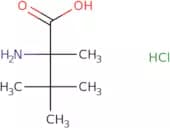
Discontinued product2-Amino-2-t-butylpropanoic acid HCl
CAS:<p>Versatile small molecule scaffold</p>Formula:C7H15NO2·HClPurity:Min. 95%Molecular weight:181.66 g/mol5-Azaspiro[2.5]octan-6-one
CAS:<p>Versatile small molecule scaffold</p>Formula:C7H11NOPurity:Min. 95%Molecular weight:125.17 g/mol2-[2-(Trimethylsilyl)ethynyl]benzenamine
CAS:<p>2-[2-(Trimethylsilyl)ethynyl]benzenamine is an aromatic compound that is used as a starting material for the synthesis of other chemicals. It is prepared by reaction of 2-bromobenzene with ethynylmagnesium bromide and p-toluenesulfonic acid in the presence of aluminum chloride. The yield of the reaction product depends on the time and temperature. Elemental analysis reveals that the compound contains an alkyne group, which facilitates its conversion to quinoline derivatives. The chemical has been shown to react with x-rays to produce diffraction patterns, which can be analyzed to determine the structure of the molecule. X-ray diffraction analysis also revealed that this compound contains a quinoline ring system, which may contribute to its anti-inflammatory effects.</p>Formula:C11H15NSiPurity:Min. 95%Molecular weight:189.33 g/mol4,7-Dibromo-2,3-dihydro-1H-inden-1-one
CAS:<p>Versatile small molecule scaffold</p>Formula:C9H6Br2OPurity:Min. 95%Molecular weight:289.95 g/mol3-Benzylpiperazin-2-one
CAS:<p>Versatile small molecule scaffold</p>Formula:C11H14N2OPurity:Min. 95%Molecular weight:190.24 g/mol(Diphenylmethyl)(ethyl)amine
CAS:<p>Versatile small molecule scaffold</p>Formula:C15H17NPurity:Min. 95%Molecular weight:211.3 g/molRef: 3D-DCA69347
Discontinued productMethyl 4-(aminomethyl)bicyclo[2.2.2]octane-1-carboxylate hydrochloride
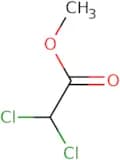
CAS:<p>Versatile small molecule scaffold</p>Formula:C11H20ClNO2Purity:Min. 95%Molecular weight:233.73 g/molDichloroacetic Acid Methyl Ester
CAS:<p>Dichloroacetic acid methyl ester (DCA) is a metabolic disorder agent that belongs to the group of detergent compositions. It is an important intermediate in the synthesis of sodium salts and hiv infection inhibitors, such as hydrochloric acid and covalent linkages. DCA reacts with water molecules to form hydroxyl groups and then reacts with metal carbonyls to produce anhydrous sodium. This product also reacts with fatty acids to produce alcohol residue and can be used in the reaction solution. The product has a pyrazole ring with a hydroxyl group at one end and an alcohol residue at the other end.</p>Formula:C3H4Cl2O2Purity:Min. 95%Molecular weight:142.97 g/mol1-Nitro-3-(prop-2-ene-1-sulfonyl)benzene
CAS:<p>Versatile small molecule scaffold</p>Formula:C9H9NO4SPurity:Min. 95%Molecular weight:227.24 g/molRef: 3D-DAA72941
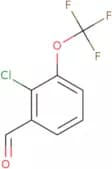
Discontinued product2-Chloro-3-(trifluoromethoxy)benzaldehyde
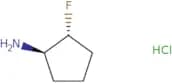
CAS:<p>Versatile small molecule scaffold</p>Formula:C8H4ClF3O2Purity:Min. 95%Molecular weight:224.56 g/moltrans-2-Fluorocyclopentan-1-amine HCl ee
CAS:<p>Versatile small molecule scaffold</p>Formula:C5H11ClFNPurity:Min. 95%Molecular weight:139.6 g/molRef: 3D-AKD94382
Discontinued product3-[(2-Chlorophenyl)sulfamoyl]benzoic acid
CAS:<p>Versatile small molecule scaffold</p>Formula:C13H10ClNO4SPurity:Min. 95%Molecular weight:311.74 g/molRef: 3D-ANA73221
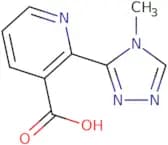
Discontinued product2-(4-Methyl-4H-1,2,4-triazol-3-yl)pyridine-3-carboxylic acid
CAS:<p>Versatile small molecule scaffold</p>Formula:C9H8N4O2Purity:Min. 95%Molecular weight:204.2 g/molRef: 3D-CVD03521
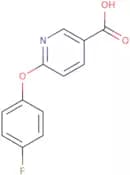
Discontinued product6-(4-Fluorophenoxy)pyridine-3-carboxylic acid
CAS:<p>Versatile small molecule scaffold</p>Formula:C12H8FNO3Purity:Min. 95%Molecular weight:233.19 g/molRef: 3D-MJB08871
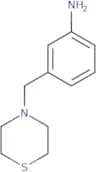
Discontinued product3-(Thiomorpholin-4-ylmethyl)aniline
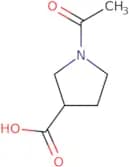
CAS:<p>Versatile small molecule scaffold</p>Formula:C11H16N2SPurity:Min. 95%Molecular weight:208.33 g/mol1-Acetyl-pyrrolidine-3-carboxylic acid
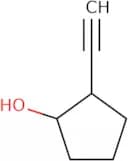
CAS:<p>Versatile small molecule scaffold</p>Formula:C7H11NO3Purity:Min. 95%Molecular weight:157.17 g/molCis-2-ethynylcyclopentanol
CAS:<p>Versatile small molecule scaffold</p>Formula:C7H10OPurity:Min. 95%Molecular weight:110.15 g/molRef: 3D-LCA96760
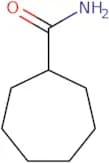
Discontinued productCycloheptanecarboxamide
CAS:<p>Cycloheptanecarboxamide is a cellular amide that is used in the study of β-amino acids. Cycloheptanecarboxamide is a prodrug that is converted to cycloheptylamine, which has been shown to be an inhibitor of proliferation and a potent inhibitor of inflammatory diseases. Cycloheptylamine also inhibits the production of aliphatic hydrocarbons and mineralocorticoids, as well as the activation of mineralocorticoid receptors. It has been shown to be an organic solution that can be used to generate tartrate-resistant acid potassium ions (TRAP).</p>Formula:C8H15NOPurity:Min. 95%Molecular weight:141.21 g/molRef: 3D-BAA45939
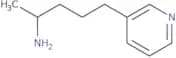
Discontinued product5-(Pyridin-3-yl)pentan-2-amine
CAS:<p>Versatile small molecule scaffold</p>Formula:C10H16N2Purity:Min. 95%Molecular weight:164.25 g/molRef: 3D-LEA84881
Discontinued productPB-22 3-carboxyindole metabolite solution
CAS:Controlled Product<p>PB-22 is a synthetic cannabinoid, which can be classified as a CB1 receptor agonist. It is one of the many cannabinoids that have been created in an attempt to circumvent drug laws by creating compounds that are similar to those found in cannabis but have different chemical structures. PB-22 has shown to increase locomotor activity and stimulate the cb1 receptor in mice. Magnetic resonance spectroscopy (MRS) and assays were used to determine the binding affinity of PB-22 for the CB1 receptor. The MRS data showed that PB-22 bound with high affinity to the CB1 receptor and had a lower affinity for CB2 receptors. This suggests that PB-22 may be more potent than other synthetic cannabinoids, such as JWH-018 and CP 55,940, which bind better with CB2 receptors than CB1 receptors.<br>PB-22 is an analog of JWH-073 and has been shown to have a stronger effect on locomotor activity than JWH</p>Formula:C14H17NO2Purity:Min. 95%Molecular weight:231.29 g/mol1,4-Dibromo-2,5-difluoro-3-nitrobenzene
CAS:<p>Versatile small molecule scaffold</p>Formula:C6HBr2F2NO2Purity:Min. 95%Molecular weight:316.88 g/molRef: 3D-CDB64058
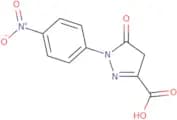
Discontinued product1-(4-Nitrophenyl)-5-oxo-4,5-dihydro-1H-pyrazole-3-carboxylic acid
CAS:<p>Versatile small molecule scaffold</p>Formula:C10H7N3O5Purity:Min. 95%Molecular weight:249.18 g/molRef: 3D-MCA08402
Discontinued producttert-Butyl 4,8-diazatricyclo[5.2.2.0,2,6]undecane-4-carboxylate
CAS:<p>Versatile small molecule scaffold</p>Formula:C14H24N2O2Purity:Min. 95%Molecular weight:252.35 g/molRef: 3D-KHD02048
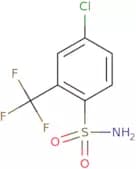
Discontinued product4-Chloro-2-(trifluoromethyl)benzene sulfonamide
CAS:<p>Versatile small molecule scaffold</p>Formula:C7H5ClF3NO2SPurity:Min. 95%Molecular weight:259.63 g/molRef: 3D-NEA82398
Discontinued product3-(Hydroxymethyl)cyclobutan-1-one
CAS:<p>3-(Hydroxymethyl)cyclobutan-1-one is a synthetic piperazine derivative that has been shown to have antitumor and antimycobacterial activities. It is a selective inhibitor of the enzyme purine nucleoside phosphorylase (PNP), which catalyzes the conversion of inosine monophosphate (IMP) to xanthosine monophosphate (XMP). This inhibition results in an accumulation of IMP and deoxyinosine monophosphate (dIMP) in tumor cells. 3-(Hydroxymethyl)cyclobutan-1-one also inhibits Mycobacterium tuberculosis, but not other bacteria such as Escherichia coli or Staphylococcus aureus. The product is synthetically produced by reacting cyclobutanone with hydroxylamine.</p>Formula:C5H8O2Purity:Min. 95%Molecular weight:100.12 g/molRef: 3D-IHA61618
Discontinued product2-[(4-bromophenyl)sulfanyl]ethan-1-ol
CAS:<p>Versatile small molecule scaffold</p>Formula:C8H9OSBrPurity:Min. 95%Molecular weight:233.12 g/molRef: 3D-PAA70392
Discontinued product1-[2-(Ethanesulfonyl)ethyl]-1H-pyrazol-4-amine
CAS:<p>Versatile small molecule scaffold</p>Formula:C7H13N3O2SPurity:Min. 95%Molecular weight:203.26 g/molRef: 3D-HWB51790
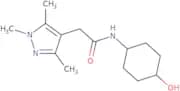
Discontinued productN-(4-Hydroxycyclohexyl)-2-(trimethyl-1H-pyrazol-4-yl)acetamide
CAS:<p>Versatile small molecule scaffold</p>Formula:C14H23N3O2Purity:Min. 95%Molecular weight:265.35 g/molRef: 3D-HWB10740
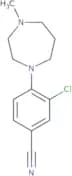
Discontinued product3-Chloro-4-(4-methyl-1,4-diazepan-1-yl)benzonitrile
CAS:<p>Versatile small molecule scaffold</p>Formula:C13H16ClN3Purity:Min. 95%Molecular weight:249.74 g/molRef: 3D-PJB29624
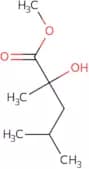
Discontinued productMethyl 2-hydroxy-2,4-dimethylpentanoate
CAS:<p>Versatile small molecule scaffold</p>Formula:C8H16O3Purity:Min. 95%Molecular weight:160.2 g/molMethyl 2-[4-(2-aminoethyl)phenoxy]acetate hydrochloride
CAS:<p>Versatile small molecule scaffold</p>Formula:C11H16ClNO3Purity:Min. 95%Molecular weight:245.7 g/mol3-{[3-(Trifluoromethyl)phenyl]methyl}azetidine hydrochloride
CAS:<p>Versatile small molecule scaffold</p>Formula:C11H13ClF3NPurity:Min. 95%Molecular weight:251.67 g/molRef: 3D-GXB45823
Discontinued product2-Methyl-6-[(2,2,2-trifluoroethyl)amino]pyridine-4-carboxylic acid
CAS:<p>Versatile small molecule scaffold</p>Formula:C9H9F3N2O2Purity:Min. 95%Molecular weight:234.17 g/molRef: 3D-PMC93616
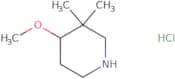
Discontinued product4-Methoxy-3,3-dimethylpiperidine hydrochloride
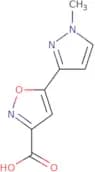
CAS:<p>Versatile small molecule scaffold</p>Formula:C8H18ClNOPurity:Min. 95%Molecular weight:179.69 g/mol5-(1-Methyl-1H-pyrazol-3-yl)-1,2-oxazole-3-carboxylic acid
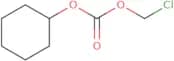
CAS:<p>Versatile small molecule scaffold</p>Formula:C8H7N3O3Purity:Min. 95%Molecular weight:193.16 g/molChloromethyl cyclohexyl carbonate
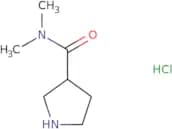
CAS:<p>Chloromethyl cyclohexyl carbonate is a new acyclic nucleoside phosphonate that has been shown to have antiviral properties. It is active against HIV strains and inhibits the production of clotting factors. Chloromethyl cyclohexyl carbonate can be used as a drug substance for treating bowel disease, hepatitis, and cancer. It also modulates syncytial cells and heterocycles. Pharmacokinetic studies on chloromethyl cyclohexyl carbonate have shown that it has high bioavailability in the small intestine and liver after oral administration. It is metabolized by tyrosine kinase, which indicates that it may interfere with other drugs such as warfarin or phenytoin. Chloromethyl cyclohexyl carbonate has been found to be effective in treating gastritis and cancer in animal models.</p>Formula:C8H13ClO3Purity:Min. 95%Molecular weight:192.64 g/mol(3S)-N,N-Dimethyl-3-pyrrolidinecarboxamide hydrochloride
CAS:<p>Versatile small molecule scaffold</p>Formula:C7H15ClN2OPurity:Min. 95%Molecular weight:178.66 g/molRef: 3D-QCC59337
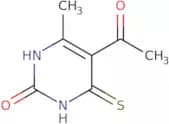
Discontinued product5-Acetyl-6-methyl-4-sulfanyl-1,2-dihydropyrimidin-2-one
CAS:<p>Versatile small molecule scaffold</p>Formula:C7H8N2O2SPurity:Min. 95%Molecular weight:184.22 g/mol1,2-Benzothiazole-3-carbonitrile
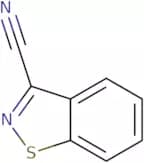
CAS:<p>Versatile small molecule scaffold</p>Formula:C8H4N2SPurity:Min. 95%Molecular weight:160.2 g/molRef: 3D-RAA80720
Discontinued product[4-(Propan-2-yl)-2-oxabicyclo[2.1.1]hexan-1-yl]methanol
CAS:<p>Versatile small molecule scaffold</p>Formula:C9H16O2Purity:Min. 95%Molecular weight:156.2 g/molRef: 3D-RPD14054
Discontinued product6-Bromo-8-methylimidazo[1,2-a]pyridine-2-carbothioamide
CAS:<p>Versatile small molecule scaffold</p>Formula:C9H8BrN3SPurity:Min. 95%Molecular weight:270.15 g/molRef: 3D-RYB13882
Discontinued producttert-Butyl N-benzylcarbamate
CAS:<p>Tert-Butyl N-benzylcarbamate is a synthetic compound that is being developed for the treatment of cancer. It is an analog of carmustine, a drug used for the treatment of brain tumors, and has been shown to be effective against cell lines in vitro. Tert-Butyl N-benzylcarbamate binds to DNA and inhibits protein synthesis, leading to cancer cell death. The drug also inhibits the growth of cancer cells by inhibiting chloride channels and blocking the influx of hydrogen chloride into cells. Tert-Butyl N-benzylcarbamate has not been tested in humans yet, but it has shown promising results in animal models.</p>Formula:C12H17NO2Purity:Min. 95%Molecular weight:207.27 g/molDicyclohexylmethanol
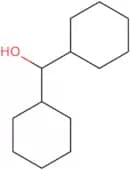
CAS:<p>Dicyclohexylmethanol is a trifunctional compound that contains a hydroxyl group, and can be used as a hydrogen bond donor or acceptor. The chemical structure of dicyclohexylmethanol can be seen in the figure below. Dicyclohexylmethanol has been used for sample preparation for hydrogen chloride gas. It has also been used to determine the concentration of blood ethanol levels and to measure blood pH in humans. Dicyclohexylmethanol is an important reactant in asymmetric synthesis reactions due to its ability to form hydrogen bonds with both reactants.</p>Formula:C13H24OPurity:Min. 95%Molecular weight:196.33 g/moltert-Butyl N-(3-amino-2-methylbutan-2-yl)carbamate
CAS:<p>Versatile small molecule scaffold</p>Formula:C10H22N2O2Purity:Min. 95%Molecular weight:202.3 g/molRef: 3D-SLC84728
Discontinued productN-Ethyl-2,2-dimethyloxan-4-amine, hydrochloride
CAS:<p>Versatile small molecule scaffold</p>Formula:C9H20ClNOPurity:Min. 95%Molecular weight:193.71 g/molRef: 3D-DXC58979
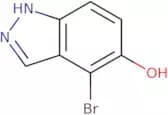
Discontinued product4-Bromo-1H-indazol-5-ol
CAS:<p>Versatile small molecule scaffold</p>Formula:C7H5BrN2OPurity:Min. 95%Molecular weight:213.03 g/molRef: 3D-DUA83852
Discontinued product2-[2-(3-Fluorophenyl)ethoxy]acetic acid
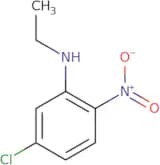
CAS:<p>Versatile small molecule scaffold</p>Formula:C10H11FO3Purity:Min. 95%Molecular weight:198.19 g/mol5-Chloro-N-ethyl-2-nitroaniline
CAS:<p>Versatile small molecule scaffold</p>Formula:C8H9ClN2O2Purity:Min. 95%Molecular weight:200.62 g/mol2-[Ethyl(propan-2-yl)amino]ethan-1-ol
CAS:Controlled Product<p>Versatile small molecule scaffold</p>Formula:C7H17NOPurity:Min. 95%Molecular weight:131.22 g/mol
![2-{2-Azabicyclo[2.2.1]heptan-2-yl}ethan-1-amine](/_next/image/?url=https%3A%2Fstatic.cymitquimica.com%2Fproducts%2F3D%2Fthumb-webp%2FDKB15547.webp&w=3840&q=75)

![5-Azaspiro[2.5]octan-6-one](/_next/image/?url=https%3A%2Fstatic.cymitquimica.com%2Fproducts%2F3D%2Fthumb-webp%2FDFC59996.webp&w=3840&q=75)
![2-[2-(Trimethylsilyl)ethynyl]benzenamine](/_next/image/?url=https%3A%2Fstatic.cymitquimica.com%2Fproducts%2F3D%2Fthumb-webp%2FDEA52916.webp&w=3840&q=75)


![Methyl 4-(aminomethyl)bicyclo[2.2.2]octane-1-carboxylate hydrochloride](/_next/image/?url=https%3A%2Fstatic.cymitquimica.com%2Fproducts%2F3D%2Fthumb-webp%2FDBA34557.webp&w=3840&q=75)

![3-[(2-Chlorophenyl)sulfamoyl]benzoic acid](/_next/image/?url=https%3A%2Fstatic.cymitquimica.com%2Fproducts%2F3D%2Fthumb-webp%2FANA73221.webp&w=3840&q=75)


![tert-Butyl 4,8-diazatricyclo[5.2.2.0,2,6]undecane-4-carboxylate](/_next/image/?url=https%3A%2Fstatic.cymitquimica.com%2Fproducts%2F3D%2Fthumb-webp%2FKHD02048.webp&w=3840&q=75)

![2-[(4-bromophenyl)sulfanyl]ethan-1-ol](/_next/image/?url=https%3A%2Fstatic.cymitquimica.com%2Fproducts%2F3D%2Fthumb-webp%2FPAA70392.webp&w=3840&q=75)
![1-[2-(Ethanesulfonyl)ethyl]-1H-pyrazol-4-amine](/_next/image/?url=https%3A%2Fstatic.cymitquimica.com%2Fproducts%2F3D%2Fthumb-webp%2FHWB51790.webp&w=3840&q=75)
![Methyl 2-[4-(2-aminoethyl)phenoxy]acetate hydrochloride](/_next/image/?url=https%3A%2Fstatic.cymitquimica.com%2Fproducts%2F3D%2Fthumb-webp%2FHFA22482.webp&w=3840&q=75)
![3-{[3-(Trifluoromethyl)phenyl]methyl}azetidine hydrochloride](/_next/image/?url=https%3A%2Fstatic.cymitquimica.com%2Fproducts%2F3D%2Fthumb-webp%2FGXB45823.webp&w=3840&q=75)
![2-Methyl-6-[(2,2,2-trifluoroethyl)amino]pyridine-4-carboxylic acid](/_next/image/?url=https%3A%2Fstatic.cymitquimica.com%2Fproducts%2F3D%2Fthumb-webp%2FPMC93616.webp&w=3840&q=75)
![[4-(Propan-2-yl)-2-oxabicyclo[2.1.1]hexan-1-yl]methanol](/_next/image/?url=https%3A%2Fstatic.cymitquimica.com%2Fproducts%2F3D%2Fthumb-webp%2FRPD14054.webp&w=3840&q=75)
![6-Bromo-8-methylimidazo[1,2-a]pyridine-2-carbothioamide](/_next/image/?url=https%3A%2Fstatic.cymitquimica.com%2Fproducts%2F3D%2Fthumb-webp%2FRYB13882.webp&w=3840&q=75)


![2-[2-(3-Fluorophenyl)ethoxy]acetic acid](/_next/image/?url=https%3A%2Fstatic.cymitquimica.com%2Fproducts%2F3D%2Fthumb-webp%2FDNB78695.webp&w=3840&q=75)
![2-[Ethyl(propan-2-yl)amino]ethan-1-ol](/_next/image/?url=https%3A%2Fstatic.cymitquimica.com%2Fproducts%2F3D%2Fthumb-webp%2FCAA89361.webp&w=3840&q=75)