Building Blocks
This section contains fundamental products for the synthesis of organic and biological compounds. Building blocks are the essential starting materials used to construct complex molecules through various chemical reactions. They play a critical role in drug discovery, material science, and chemical research. At CymitQuimica, we offer a diverse range of high-quality building blocks to support your innovative research and industrial projects, ensuring you have the essential components for successful synthesis.
Subcategories of "Building Blocks"
- Boronic Acids & Boronic Acid Derivatives(5,756 products)
- Chiral Building Blocks(1,242 products)
- Hydrocarbon Building Blocks(6,095 products)
- Organic Building Blocks(61,055 products)
Found 199650 products of "Building Blocks"
Sort by
Purity (%)
0
100
|
0
|
50
|
90
|
95
|
100
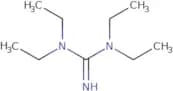
N,N,N',N'-Tetraethylguanidine
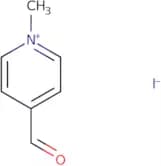
CAS:<p>Base employed in the preparation of alkyl nitriles.</p>Formula:C9H21N3Purity:Min. 95%Molecular weight:171.28 g/mol4-Formyl-1-methylpyridin-1-ium iodide
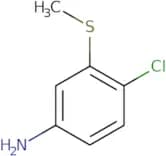
CAS:<p>Versatile small molecule scaffold</p>Formula:C7H8INOPurity:Min. 95%Molecular weight:249.05 g/mol4-Chloro-3-(methylsulfanyl)aniline
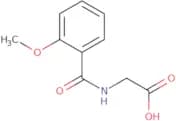
CAS:<p>Versatile small molecule scaffold</p>Formula:C7H8ClNSPurity:Min. 95%Molecular weight:173.66 g/mol(2-Methoxy-benzoylamino)-acetic acid
CAS:<p>(2-Methoxy-benzoylamino)-acetic acid is an endogenous metabolite of the drug 2-methoxybenzoic acid. This metabolite is formed in the human liver by oxidation of the benzoic acid moiety at the 2-position, and is found in human urine samples. (2-Methoxy-benzoylamino)-acetic acid has been shown to be a major urinary metabolite of 2-methoxybenzoic acid in humans. The metabolism of this substance has been studied using incubations with rat and human liver microsomes. The metabolites formed were identified by liquid chromatography, and those that could not be identified were characterized by mass spectrometry or nuclear magnetic resonance spectroscopy. The structures of these metabolites were determined using chemical degradation methods, such as gas chromatography/mass spectrometry (GC/MS) or high performance liquid chromatography/mass spectrometry (HPLC/</p>Formula:C10H11NO4Purity:Min. 95%Molecular weight:209.2 g/mol1-Ethyl-3-hydroxypiperidine
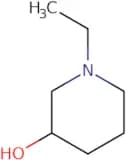
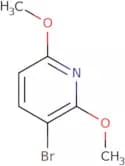
CAS:<p>1-Ethyl-3-hydroxypiperidine (1EHPP) is an alkanolamine that is a product of the metabolic pathway of ring-opening. It was synthesized in high yield by reacting 1,2-diaminobenzene with morpholine and benzyl chloride. The conjugates of 1EHPP were then hydrolyzed to form piperidine, the desired product. 1EHPP can be used for research purposes as it can be injected into animals and then isolated from their homogenates. This molecule has been shown to have gaseous properties due to its linear structure.</p>Formula:C7H15NOPurity:Min. 95%Molecular weight:129.2 g/mol3-Bromo-2,6-dimethoxypyridine
CAS:<p>Versatile small molecule scaffold</p>Formula:C7H8BrNO2Purity:Min. 95%Molecular weight:218.05 g/mol4-Chlorohippuric acid
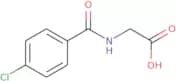
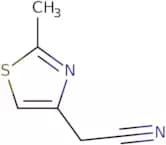
CAS:<p>4-Chlorohippuric acid is an active analogue of hippuric acid and is metabolized by cytochrome P450. It has a high chemical stability, which makes it a useful substrate for kinetic studies. The metabolism of 4-chlorohippuric acid to the corresponding sulfoxide (4-chloro-3'-sulfoxyhippurate) was found to be dependent on the concentration of rat liver microsomes in vitro and plasma concentrations in vivo. 4-Chlorohippuric acid is excreted mainly as hippuric acid in urine samples from humans and animals. Hippuric acid may also be formed by denaturation of 4-chlorohippurate or by hydrolysis of the amide bond between the two chloro groups.</p>Formula:C9H8ClNO3Purity:Min. 95%Molecular weight:213.62 g/mol2-(2-Methyl-1,3-thiazol-4-yl)acetonitrile
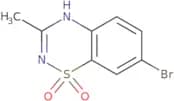
CAS:<p>Versatile small molecule scaffold</p>Formula:C6H6N2SPurity:Min. 95%Molecular weight:138.19 g/mol7-Bromo-3-methyl-4H-1,2,4-benzothiadiazine-1,1-dione
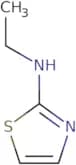
CAS:<p>Versatile small molecule scaffold</p>Formula:C8H7BrN2O2SPurity:Min. 95%Molecular weight:275.12 g/molEthyl-thiazol-2-yl-amine
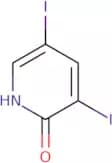
CAS:<p>Ethyl-thiazol-2-yl-amine is an organic compound that has the chemical formula CHN. It is a colorless liquid with a strong, unpleasant odor. This compound is used in the synthesis of urea derivatives and as a reagent for analyses of carbonyl compounds. Ethyl-thiazol-2-yl-amine can be synthesized by reacting ethylamine with trifluoroacetic acid and then adding ethoxycarbonyl isothiocyanate. The reaction mixture is heated to reflux, cyclizing the product into ethyl-thiazol-2-yl-amine.</p>Formula:C5H8N2SPurity:Min. 95%Molecular weight:128.2 g/mol3,5-Diiodopyridin-2-ol
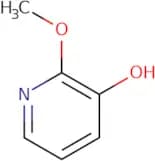
CAS:<p>Versatile small molecule scaffold</p>Formula:C5H3I2NOPurity:Min. 95%Molecular weight:346.89 g/mol2-Methoxypyridin-3-ol
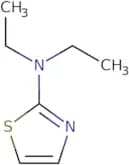
CAS:<p>2-Methoxypyridin-3-ol is a nitro compound that can be used as a lead compound to produce an inhibitor of oxime reductase. It can also be used as a pyridine ring, which is an important functional group in many organic compounds. 2-Methoxypyridin-3-ol has the ability to inhibit the enzyme oxime reductase, which catalyzes the formation of hydroxyl radicals from nitrosating agents and hydroxylamine, leading to their detoxification. This substance has been shown to be efficient in the orientation of nitro groups and ethers.</p>Formula:C6H7NO2Purity:Min. 95%Molecular weight:125.13 g/molN,N-Diethyl-1,3-thiazol-2-amine
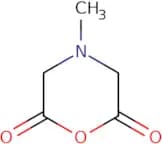
CAS:<p>Versatile small molecule scaffold</p>Formula:C7H12N2SPurity:Min. 95%Molecular weight:156.25 g/mol4-Methylmorpholine-2,6-dione
CAS:<p>4-Methylmorpholine-2,6-dione is a ligand that has been used in the synthesis of boronic acid derivatives. It has also been used to activate boronic acids. 4-Methylmorpholine-2,6-dione can be synthesised by reacting aryl boronic acids with dimethylformamide and acetonitrile in the presence of dehydrogenase and a metal catalyst. The resulting product is then cross-coupled with an amine to form the desired conjugate. 4-Methylmorpholine-2,6-dione is unreactive towards dehydration or morpholine.</p>Formula:C5H7NO3Purity:Min. 95%Molecular weight:129.11 g/mol5H,6H,7H,8H-Pyrazino[2,3-d]pyridazine-5,8-dione
CAS:<p>Versatile small molecule scaffold</p>Formula:C6H4N4O2Purity:Min. 95%Molecular weight:164.12 g/mol2-[(2-Methoxyethoxy)methyl]oxirane
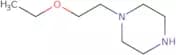
CAS:<p>2-[(2-Methoxyethoxy)methyl]oxirane is a colorless liquid with a high boiling point and viscosity. It has a wide range of industrial applications, such as in metal extraction and purification, organic synthesis, and the production of ethylene oxide and other chemicals. 2-[(2-Methoxyethoxy)methyl]oxirane is used as a solvent for metal salts or other insoluble substances, such as lithium chloride. It can also be used to extract hydrocarbons from oil sands.</p>Formula:C6H12O3Purity:Min. 95%Molecular weight:132.16 g/mol1-(2-Ethoxyethyl)-piperazine
CAS:<p>1-(2-Ethoxyethyl)-piperazine is a chemical compound that has been shown to have affinity for 5-HT1A receptors. It also has potentiation effects on the dopaminergic system and may be used as an antiamnesic drug. 1-(2-Ethoxyethyl)-piperazine is structurally related to piperazine, which is a weak base with pharmacological activities and is used in the production of pharmaceuticals. 1-(2-Ethoxyethyl)-piperazine can be found at nanomolar concentrations in brain tissue and has been shown to have affinity for chloride ions. The affinity values for this molecule are in the range of chlorides, which are involved in neurotransmitter release and transmission.</p>Formula:C8H18N2OPurity:Min. 95%Molecular weight:158.24 g/molTrichloropyrazin-2-amine
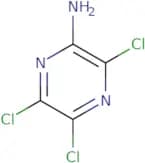
CAS:<p>Trichloropyrazin-2-amine is an inhibitor of bacterial growth, which is active against many microorganisms. It inhibits the enzyme carbonic anhydrase, which is required for the conversion of bicarbonate to carbon dioxide and water in the cytoplasm. This inhibition leads to a decrease in intracellular pH, which causes cell lysis, cell death, and inhibition of growth. Trichloropyrazin-2-amine has shown inhibitory activity against many microorganisms, including Escherichia coli, Bacillus subtilis, Pseudomonas aeruginosa, Staphylococcus aureus, Enterobacter cloacae and Klebsiella pneumoniae. This compound also has been shown to be a cytotoxic agent that can inhibit tumor cell growth in vitro.</p>Formula:C4H2Cl3N3Purity:Min. 95%Molecular weight:198.43 g/mol1-Cyclohexyl-3-methoxypropan-1-one
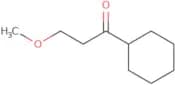
CAS:<p>Versatile small molecule scaffold</p>Formula:C10H18O2Purity:Min. 95%Molecular weight:170.2 g/mol2-Bromo-3-methoxybenzoic acid
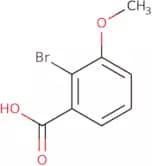
CAS:<p>2-Bromo-3-methoxybenzoic acid is a fluorescent acridine that can be used as a reagent, an analogue of acridone, and a ligand for macrocycles. It can also be used to synthesize fluorophores that are glycols. 2-Bromo-3-methoxybenzoic acid is cyclised to form the acridine ring system with two methoxy groups on the 2 and 3 positions. The bromine atom on the 2 position is replaced by a hydrogen atom in the final product.</p>Formula:C8H7BrO3Purity:Min. 95%Molecular weight:231.04 g/mol4-[(3,4-Dimethylphenoxy)methyl]benzoic acid
CAS:<p>Versatile small molecule scaffold</p>Formula:C16H16O3Purity:Min. 95%Molecular weight:256.3 g/molEthyl 2-(2,2,2-trifluoroethoxy)acetate
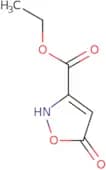
CAS:<p>Versatile small molecule scaffold</p>Formula:C6H9F3O3Purity:Min. 95%Molecular weight:186.13 g/molEthyl 5-hydroxy-1,2-oxazole-3-carboxylate
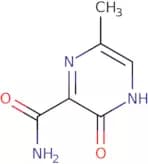
CAS:Ethyl 5-hydroxy-1,2-oxazole-3-carboxylate is an antidepressant drug that belongs to the isoxazole class of compounds. It has been shown to have antidepressant-like effects in a number of functional assays and animal models. This compound has been shown to bind with high affinity to nicotinic acetylcholine receptors as well as serotonin transporters. In addition, ethyl 5-hydroxy-1,2-oxazole-3-carboxylate prevents the reuptake of both acetylcholine and serotonin in rat brain synaptosomes. These results suggest that this compound may be useful for the treatment of depression and other neurological disorders related to neurotransmitter dysfunction.Formula:C6H7NO4Purity:Min. 95%Molecular weight:157.12 g/mol6-Methyl-3-oxo-3,4-dihydropyrazine-2-carboxamide
CAS:<p>Versatile small molecule scaffold</p>Formula:C6H7N3O2Purity:Min. 95%Molecular weight:153.14 g/mol3-Methyl-5-(methylamino)-1,2-thiazole-4-carbonitrile
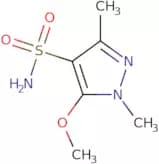
CAS:<p>Versatile small molecule scaffold</p>Formula:C6H7N3SPurity:Min. 95%Molecular weight:153.21 g/mol5-Methoxy-1,3-dimethyl-1H-pyrazole-4-sulfonamide
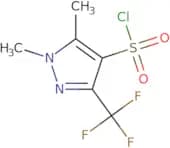
CAS:Versatile small molecule scaffoldFormula:C6H11N3O3SPurity:Min. 95%Molecular weight:205.24 g/mol1,5-Dimethyl-3-(trifluoromethyl)-1H-pyrazole-4-sulfonyl chloride
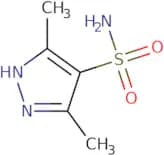
CAS:<p>Versatile small molecule scaffold</p>Formula:C6H6ClF3N2O2SPurity:Min. 95%Molecular weight:262.63 g/mol3,5-Dimethyl-1H-pyrazole-4-sulfonamide
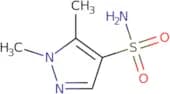
CAS:<p>Versatile small molecule scaffold</p>Formula:C5H9N3O2SPurity:Min. 95%Molecular weight:175.21 g/mol1,5-Dimethyl-1H-pyrazole-4-sulfonamide
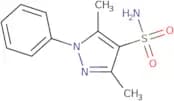
CAS:Versatile small molecule scaffoldFormula:C5H9N3O2SPurity:Min. 95%Molecular weight:175.21 g/mol3,5-Dimethyl-1-phenyl-1H-pyrazole-4-sulfonamide
CAS:<p>Versatile small molecule scaffold</p>Formula:C11H13N3O2SPurity:Min. 95%Molecular weight:251.31 g/molmethyl 5-chloro-1-methyl-1H-pyrazole-4-carboxylate
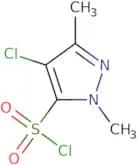
CAS:<p>Versatile small molecule scaffold</p>Formula:C6H7N2O2ClPurity:Min. 95%Molecular weight:174.58 g/mol4-Chloro-1,3-dimethyl-1H-pyrazole-5-sulfonyl chloride
CAS:<p>Versatile small molecule scaffold</p>Formula:C5H6Cl2N2O2SPurity:Min. 95%Molecular weight:229.08 g/mol5-Chloro-1,3-dimethyl-1H-pyrazole-4-sulfonyl chloride
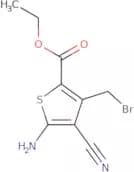
CAS:<p>Versatile small molecule scaffold</p>Formula:C5H6Cl2N2O2SPurity:Min. 95%Molecular weight:229.08 g/molEthyl 5-amino-3-(bromomethyl)-4-cyanothiophene-2-carboxylate
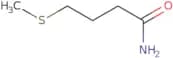
CAS:<p>Versatile small molecule scaffold</p>Formula:C9H9BrN2O2SPurity:Min. 95%Molecular weight:289.15 g/mol4-(Methylsulfanyl)butanamide
CAS:<p>4-(Methylsulfanyl)butanamide is a chiral compound that is derived from the amino acids valine, threonine, and methionine. It has been shown to inhibit the growth of Rhodococcus erythropolis in culture by blocking nitrile synthesis and hydrolysis. The mechanism of action for 4-(methylsulfanyl)butanamide is not clear. However, it has been shown to contain sequences related to those found in other amino acid sequences that are known to be involved in cell division.</p>Formula:C5H11NOSPurity:Min. 95%Molecular weight:133.21 g/mol2-[4-(Hydroxymethyl)phenyl]propan-2-ol
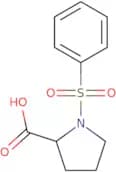
CAS:<p>Versatile small molecule scaffold</p>Formula:C10H14O2Purity:Min. 95%Molecular weight:166.22 g/mol(2S)-1-(Benzenesulfonyl)pyrrolidine-2-carboxylic acid
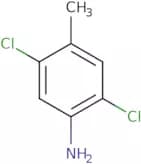
CAS:<p>Versatile small molecule scaffold</p>Formula:C11H13NO4SPurity:Min. 95%Molecular weight:255.29 g/mol2,5-Dichloro-4-methylaniline
CAS:<p>Versatile small molecule scaffold</p>Formula:C7H7Cl2NPurity:Min. 95%Molecular weight:176.04 g/molN-[2-(4-Amino-2,5-dimethoxyphenyl)ethyl]acetamide
CAS:Controlled Product<p>Versatile small molecule scaffold</p>Formula:C12H18N2O3Purity:Min. 95%Molecular weight:238.28 g/mol5-(3-Bromophenyl)-1,3,4-oxadiazole-2-thiol
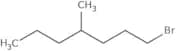
CAS:Versatile small molecule scaffoldFormula:C8H5BrN2OSPurity:Min. 95%Molecular weight:257.11 g/mol1-Bromo-4-methylheptane
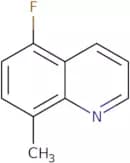
CAS:<p>1-Bromo-4-methylheptane is a chiral molecule with two stereogenic centers. It has been used as a pheromone in the study of insect behavior, and has been shown to have a similar effect on humans. It has been found that human subjects responded more strongly to an enantiomeric mixture than to either of the pure enantiomers. This suggests that 1-bromo-4-methylheptane is a racemate, or a molecule with two different configurations.</p>Formula:C8H17BrPurity:Min. 95%Molecular weight:193.12 g/mol5-Fluoro-8-methyl-quinoline
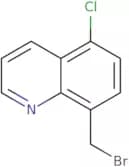
CAS:<p>5-Fluoro-8-methylquinoline is a catalytic agent that participates in the formation of 8-methylquinoline. It is prepared by reacting benzyl chloride with ethanolamine in the presence of phosphine, chlorine and catalytic amounts of iodine. The reaction product is purified by fractional distillation to yield 5-fluoro-8-methylquinoline. This compound can also be synthesized from chlorination of cyclic or carbonyl compounds with phosphine and chlorine, as well as from iodides and sulfate.</p>Formula:C10H8FNPurity:Min. 95%Molecular weight:161.18 g/mol8-(Bromomethyl)-5-chloroquinoline
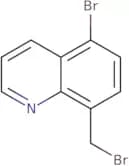
CAS:<p>Versatile small molecule scaffold</p>Formula:C10H7BrClNPurity:Min. 95%Molecular weight:256.52 g/mol5-Bromo-8-(bromomethyl)quinoline
CAS:<p>Versatile small molecule scaffold</p>Formula:C10H7Br2NPurity:Min. 95%Molecular weight:300.98 g/mol5-Chloro-1H-[1,2,3]triazole-4-carbonitrile
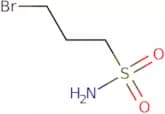
CAS:5-Chloro-1H-[1,2,3]triazole-4-carbonitrile is a chemical compound that can be prepared by reacting ethyl orthoformate with an acetal of ethylene. This chemical compound has the formula CHClN and can be described by three isomers, namely 5-chloro-1H-[1,2,3]triazole-4-carbonitrile, 5-chloro[1,2,3]-triazole-4-carbonitrile and 5-[1,2,3]-triazole-4-carbonitrile. It has been used in the synthesis of ethylene acetals as well as in alkylation reactions to produce ethyl orthoformates. The reaction product of this chemical compound with methyl iodide produces acetaldehyde dimethylacetal. This chemical compound also reacts with diethylzinc to form methyl azide and diethyl ether.Formula:C3HClN4Purity:Min. 95%Molecular weight:128.52 g/mol3-Bromopropane-1-sulfonamide
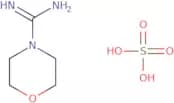
CAS:<p>Versatile small molecule scaffold</p>Formula:C3H8BrNO2SPurity:Min. 95%Molecular weight:202.07 g/molMorpholine-4-carboximidamide sulfate
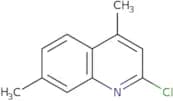
CAS:<p>Versatile small molecule scaffold</p>Formula:C5H13N3O5SPurity:Min. 95%Molecular weight:227.24 g/mol2-Chloro-4,7-dimethylquinoline
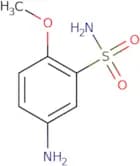
CAS:<p>Versatile small molecule scaffold</p>Formula:C11H10ClNPurity:Min. 95%Molecular weight:191.65 g/mol5-Amino-2-methoxybenzenesulfonamide
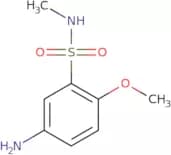
CAS:<p>5-Amino-2-methoxybenzenesulfonamide is an optical copolymer that belongs to the group of liquid crystalline polymers. It consists of a chiral, thermotropic monomer and a copolymerized, non-chiral monomer. 5-Amino-2-methoxybenzenesulfonamide has a crystal melting point of 195°C and is soluble in organic solvents. This polymer has been shown to form liquid crystalline phases with different optical properties depending on the composition of the mixture.</p>Formula:C7H10N2O3SPurity:Min. 95%Molecular weight:202.23 g/mol5-Amino-2-methoxy-N-methylbenzene-1-sulfonamide
CAS:Versatile small molecule scaffoldFormula:C8H12N2O3SPurity:Min. 95%Molecular weight:216.26 g/mol

![5H,6H,7H,8H-Pyrazino[2,3-d]pyridazine-5,8-dione](/_next/image/?url=https%3A%2Fstatic.cymitquimica.com%2Fproducts%2F3D%2Fthumb-webp%2FNAA48040.webp&w=3840&q=75)
![2-[(2-Methoxyethoxy)methyl]oxirane](/_next/image/?url=https%3A%2Fstatic.cymitquimica.com%2Fproducts%2F3D%2Fthumb-webp%2FNAA48349.webp&w=3840&q=75)
![4-[(3,4-Dimethylphenoxy)methyl]benzoic acid](/_next/image/?url=https%3A%2Fstatic.cymitquimica.com%2Fproducts%2F3D%2Fthumb-webp%2FNDA38247.webp&w=3840&q=75)



![2-[4-(Hydroxymethyl)phenyl]propan-2-ol](/_next/image/?url=https%3A%2Fstatic.cymitquimica.com%2Fproducts%2F3D%2Fthumb-webp%2FNDA41658.webp&w=3840&q=75)
![N-[2-(4-Amino-2,5-dimethoxyphenyl)ethyl]acetamide](/_next/image/?url=https%3A%2Fstatic.cymitquimica.com%2Fproducts%2F3D%2Fthumb-webp%2FNDA44102.webp&w=3840&q=75)

![5-Chloro-1H-[1,2,3]triazole-4-carbonitrile](/_next/image/?url=https%3A%2Fstatic.cymitquimica.com%2Fproducts%2F3D%2Fthumb-webp%2FNDA47432.webp&w=3840&q=75)