Building Blocks
Subcategories of "Building Blocks"
- Boronic Acids & Boronic Acid Derivatives(5,781 products)
- Chiral Building Blocks(1,242 products)
- Hydrocarbon Building Blocks(6,101 products)
- Organic Building Blocks(61,033 products)
Found 205320 products of "Building Blocks"
2-[4-(Aminomethyl)phenoxy]acetonitrile hydrochloride
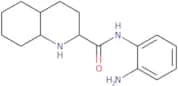
CAS:Versatile small molecule scaffoldFormula:C9H11ClN2OPurity:Min. 95%Molecular weight:198.65 g/molN-(2-Aminophenyl)-decahydroquinoline-2-carboxamide
CAS:Versatile small molecule scaffoldFormula:C16H23N3OPurity:Min. 95%Molecular weight:273.37 g/molRef: 3D-BAC92345
Discontinued product4-{[(2-Methoxyethyl)amino]methyl}benzonitrile hydrochloride
CAS:Versatile small molecule scaffold
Formula:C11H15ClN2OPurity:Min. 95%Molecular weight:226.7 g/mol2-[1-(2,2,2-Trifluoroethyl)-1H-imidazol-2-yl]acetonitrile
CAS:Versatile small molecule scaffold
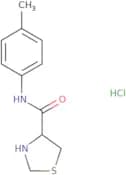
Formula:C7H6F3N3Purity:Min. 95%Molecular weight:189.14 g/molN-(4-Methylphenyl)-1,3-thiazolidine-4-carboxamide hydrochloride
CAS:Versatile small molecule scaffold
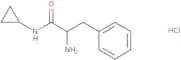
Formula:C11H15ClN2OSPurity:Min. 95%Molecular weight:258.77 g/mol2-Amino-N-cyclopropyl-3-phenylpropanamide hydrochloride
CAS:Versatile small molecule scaffold
Formula:C12H17ClN2OPurity:Min. 95%Molecular weight:240.73 g/mol1-Chloro-3-isocyano-2-methylbenzene
CAS:Versatile small molecule scaffold
Formula:C8H6ClNPurity:Min. 95%Molecular weight:151.59 g/molRef: 3D-BAA93079
Discontinued productN-Phenylfuran-2-carboxamide
CAS:N-Phenylfuran-2-carboxamide is an oxadiazole with a heterobicyclic structure. This compound has been shown to be a potent microbicide in the form of microcapsules, providing protection against fungi and bacteria. It can be used as a biocide in agrochemical formulations and as a control agent for fatty acids. The carboxamide group is susceptible to bond cleavage under acidic conditions, which can lead to the formation of hydrogen bonds between the amide and target pest. The mechanism of action for this compound is not fully understood, but it is thought that it may inhibit glycosidase enzymes by disrupting hydrogen bonds between the enzyme's active site and its substrate.
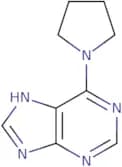
Formula:C11H9NO2Purity:Min. 95%Molecular weight:187.19 g/mol6-(Pyrrolidin-1-yl)-9H-purine
CAS:6-(Pyrrolidin-1-yl)-9H-purine is an inhibitor of lipid peroxidation. It has been shown to scavenge free radicals and prevent the formation of reactive oxygen species (ROS) by inhibiting the lipoxygenase enzyme. This compound also inhibits superoxide, a ROS that is produced in large quantities during irradiation, and thrombin activity. 6-(Pyrrolidin-1-yl)-9H-purine has a stable anion that interacts with other compounds and can be used as an antithrombotic agent.
Formula:C9H11N5Purity:Min. 95%Molecular weight:189.22 g/molPropachlor
CAS:Propachlor is a chloroacetanilide herbicide that inhibits the production of new cells by disrupting the synthesis of DNA. It has been shown to be an effective inhibitor of prostate cancer cells in vitro, but has not yet been tested in vivo. Propachlor can be used as a sample preparation agent for determining kinetic data on the inhibition of bacterial growth or chloroacetanilide metabolism. The optimum pH for propachlor is 7-8. Propachlor binds to microbial proteins through hydrogen bonding interactions, and is metabolized to pyridinium metabolites by bacteria, although there is no specific antidote against propachlor.
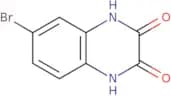
Formula:C11H14ClNOPurity:Min. 95%Molecular weight:211.69 g/mol6-Bromoquinoxaline-2,3(1h,4h)-dione
CAS:Versatile small molecule scaffold
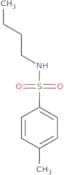
Formula:C8H5BrN2O2Purity:Min. 95%Molecular weight:241.04 g/molN-Butyltoluene-4-sulfonamide
CAS:N-Butyltoluene-4-sulfonamide is an alkylating agent that is used in the synthesis of pharmaceutical drugs. The chemical species of the molecule are amines, acidic, and anions. It is activated by light emission and reacts with a variety of chemical substrates. N-Butyltoluene-4-sulfonamide has a synthetic reaction time of 12 hours at room temperature and can be synthesized from toluene, sulfuric acid, and ammonium chloride. This molecule can react with various biomolecules such as DNA, RNA, proteins, carbohydrates, and lipids.
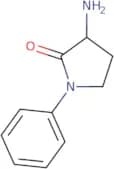
Formula:C11H17NO2SPurity:Min. 95%Molecular weight:227.32 g/mol3-Amino-1-phenylpyrrolidin-2-one
CAS:Versatile small molecule scaffold
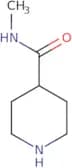
Formula:C10H12N2OPurity:Min. 95%Molecular weight:176.21 g/molN-Methylpiperidine-4-carboxamide
CAS:Versatile small molecule scaffold
Formula:C7H14N2OPurity:Min. 95%Molecular weight:142.2 g/molRef: 3D-BAA90369
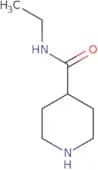
Discontinued productN-Ethylpiperidine-4-carboxamide
CAS:Versatile small molecule scaffold
Formula:C8H16N2OPurity:Min. 95%Molecular weight:156.23 g/molRef: 3D-BAA90365
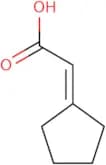
Discontinued product2-Cyclopentylideneacetic acid
CAS:2-Cyclopentylideneacetic acid is a growth factor that is structurally similar to epidermal growth factor (EGF) and has been shown to have an inhibitory effect on the EGF receptor. It is used in the manufacture of pharmaceuticals, such as antidiabetic agents, and cosmetics. 2-Cyclopentylideneacetic acid is also used as a synthetic intermediate in the manufacture of other drugs, such as peptide hormones. The two possible tautomers of 2-cyclopentylideneacetic acid are alpha-cyclohexenylacetic acid and beta-cyclohexenylacetic acid. The most stable form of these tautomers is alpha-cyclohexenylacetic acid. 2-Cyclopentylideneacetic acid can be used in the synthesis of epinephrine, norepinephrine, and dopamine.
2-cyclopentylideneacFormula:C7H10O2Purity:Min. 95%Molecular weight:126.15 g/molRef: 3D-BAA90327
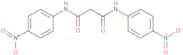
Discontinued productN,N'-Bis(4-nitrophenyl)propanediamide
CAS:Versatile small molecule scaffold
Formula:C15H12N4O6Purity:Min. 95%Molecular weight:344.28 g/molRef: 3D-BAA90040
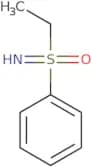
Discontinued productS-Ethyl-S-phenyl sulfoximine
CAS:Versatile small molecule scaffold
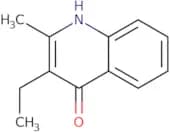
Formula:C8H11NOSPurity:Min. 95%Molecular weight:169.25 g/mol3-Ethyl-2-methylquinolin-4-ol
CAS:Versatile small molecule scaffold
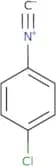
Formula:C12H13NOPurity:Min. 95%Molecular weight:187.24 g/mol1-Chloro-4-isocyanobenzene
CAS:1-Chloro-4-isocyanobenzene (1CI) is an organic compound that has been used as a chemical probe for the detection of amines and other molecules on metal surfaces. The frequency shift in Raman spectra, which is observed after the addition of 1CI to the metal surface, is used to detect amines. 1CI has also been shown to be a potent inhibitor of mitochondrial function. This molecule binds to nucleophilic sites on metal surfaces and forms covalent bonds with them, leading to a high degree of inhibition.
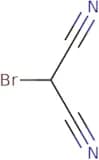
1CI can be synthesized in three steps from commercially available starting materials and is relatively easy to purify.Formula:C7H4ClNPurity:Min. 95%Molecular weight:137.56 g/mol2-Bromopropanedinitrile
CAS:2-Bromopropanedinitrile is an organic solvent that is used as a reactant in the production of polyurethane. It has been shown to have antibacterial activity against a number of bacteria, including Escherichia coli, Staphylococcus aureus, Bacillus subtilis, and Proteus vulgaris. 2-Bromopropanedinitrile exhibits its antimicrobial effect by reacting with the chloride ion and nucleophilic attack on the carbonyl group. This reaction causes the chemical to polymerize and form cross-links between molecules of DNA. The compound also has antifungal properties, which may be due to its hydroxyl groups or hydrogenated side chains.
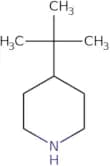
Formula:C3HBrN2Purity:Min. 95%Molecular weight:144.96 g/mol4-tert-Butylpiperidine
CAS:4-tert-Butylpiperidine is an organic chemical compound that is a colorless liquid with a strong, unpleasant odor. 4-tert-Butylpiperidine is a nonselective, nucleophilic sulfoxide oxidant that reacts with the electron pair of a sulfur atom in sulfoxides and halides to form alkylating products. It has been used in the oxidation of toluene to benzoic acid and in the synthesis of piperazine. 4-tert-Butylpiperidine can also be used to chlorinate aluminium or as an analytical reagent for the detection of chloride ions. The chemical structure includes two isomeric forms, namely alpha and beta. Alpha is more stable than beta and will react faster; however, beta can be isolated from mixtures of the two compounds by distillation.
Formula:C9H19NPurity:Min. 95%Molecular weight:141.25 g/molRef: 3D-BAA88242
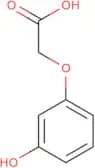
Discontinued product2-(3-Hydroxyphenoxy)acetic acid
CAS:2-(3-Hydroxyphenoxy)acetic acid is an organic compound that belongs to the phenoxy family. It is a cross-linker, which means that it links two molecules or parts of a molecule together. 2-(3-Hydroxyphenoxy)acetic acid has been used as a component in the production of polyurethane, cellulose acetate, and nylon. This chemical can be synthesized by reacting phenol with acetic anhydride in the presence of pyridine and tannins. 2-(3-Hydroxyphenoxy)acetic acid can be neutralized by adding sodium carbonate to form sodium phenoxide and sodium acetate. Alkylene chains can be introduced by reacting this compound with alkyl halides such as chloroethane or bromoethane in the presence of ammonia and sodium hydroxide. Phenolic groups can be introduced by reacting this compound with formaldehyde and trichlor
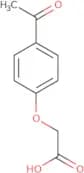
Formula:C8H8O4Purity:Min. 95%Molecular weight:168.15 g/mol4-Acetylphenoxyacetic acid
CAS:4-Acetylphenoxyacetic acid is a hydroxamic acid, which inhibits the deacetylation of histones. This compound has been shown to inhibit histone deacetylase activity and to induce a conformational change in the enzyme. 4-Acetylphenoxyacetic acid is also a peptidomimetic that can be used as a lead compound for antiviral agents. It is also an inhibitor of chalcone synthase and can be used as a lead compound for new drugs against cancer. 4-Acetylphenoxyacetic acid has been shown to have anti-inflammatory effects in mice, which may be due to its ability to suppress prostaglandin synthesis by inhibiting cyclooxygenase-2 (COX-2).
Formula:CH3COC6H4OCH2CO2HPurity:Min. 95%Molecular weight:194.18 g/mol(3-Acetylphenoxy)acetic acid
CAS:Versatile small molecule scaffold
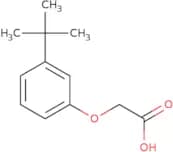
Formula:C10H10O4Purity:Min. 95%Molecular weight:194.19 g/mol2-(3-tert-Butylphenoxy)acetic acid
CAS:Versatile small molecule scaffold
Formula:C12H16O3Purity:Min. 95%Molecular weight:208.25 g/molRef: 3D-BAA87855
Discontinued product2-[3-(Propan-2-yl)phenoxy]acetic acid
CAS:2-[3-(Propan-2-yl)phenoxy]acetic acid is a chemical compound that is used as an additive in benzene, and is a phytotoxic chemical. It prevents the formation of chlorophyll by blocking electron transport and inhibiting photosynthesis. 2-[3-(Propan-2-yl)phenoxy]acetic acid is used to induce callus tissue from lettuce, radish, and other plants. This compound also inhibits the growth of various bacteria including Escherichia coli and Pseudomonas aeruginosa.
Formula:C11H14O3Purity:Min. 95%Molecular weight:194.23 g/molRef: 3D-BAA87852
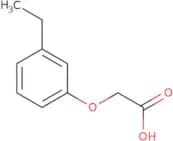
Discontinued product2-(3-Ethylphenoxy)acetic acid
CAS:2-(3-Ethylphenoxy)acetic acid is a phenoxyacetic acid that can be used as an igniting agent. It can be synthesized by the reaction of an alcohol with a carboxylic acid chloride in the presence of a base. The compound weighs 130.2 g/mol and has a melting point of 50°C. 2-(3-Ethylphenoxy)acetic acid is often used as a reagent for weighing zirconium oxide, which is used in some dental prostheses and dentures. It reacts with zirconia to produce ZrO2 and CO2 gas. The compound also reacts with water to form hydrogen gas, which makes it useful as a catalyst for oxidation reactions when heating zirconium metal in air.
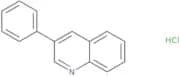
Formula:C10H12O3Purity:Min. 95%Molecular weight:180.2 g/mol3-Phenylquinoline hydrochloride
CAS:Versatile small molecule scaffold
Formula:C15H12ClNPurity:Min. 95%Molecular weight:241.71 g/molRef: 3D-BAA87537
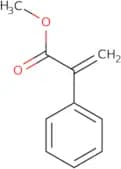
Discontinued productMethyl 2-phenylacrylate
CAS:Methyl 2-phenylacrylate is a synthetic chemical that is used in the production of polymers. It reacts with oxygen to give an oxidative carbonylation product, which consists of a particle and a functional group. The particle can be made insoluble by polymerisation. The reaction mechanism involves the donation of a methyl cinnamate group to the carbonyl group, which has a redox potential and kinetic energy that are sufficient for the reaction to proceed. Methyl 2-phenylacrylate has been used as an initiator for free radical polymerisation, which leads to cross-linked polymers. This initiator also reacts with other functional groups such as phenol or amine groups.
Formula:C10H10O2Purity:Min. 95%Molecular weight:162.19 g/mol6H-Benzo[C][1,2]benzothiazine 5,5-dioxide
CAS:6H-Benzo[C][1,2]benzothiazine 5,5-dioxide is a white crystalline solid with a molecular weight of 169.14. It is soluble in ether and benzene, but insoluble in water. 6H-Benzo[C][1,2]benzothiazine 5,5-dioxide has been shown to yield adducts with hydrochlorination and to react with quinones and other electrophiles to form chlorinated products. The regioselectivity of the reaction is determined by the anion of the substrate; chloride being the most reactive. The interaction of 6H-Benzo[C][1,2]benzothiazine 5,5-dioxide with anions such as diimide or sulfinic acid leads to the formation of different isomeric adducts.
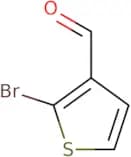
Formula:C12H9NO2SPurity:Min. 95%Molecular weight:231.27 g/mol2-Bromothiophene-3-carbaldehyde
CAS:2-Bromothiophene-3-carbaldehyde is a versatile monomer that can be used for the synthesis of a wide range of products. 2-Bromothiophene-3-carbaldehyde has been used in the synthesis of hexacyclic and grignard reagents, as well as aldehydes, which are precursors to many other chemicals. It is also an isomeric compound and can be used for cross coupling reactions. The yields of this chemical are high, making it an ideal choice for use in organic syntheses. 2-Bromothiophene-3-carbaldehyde can also be used in solar cells to produce polymers with optimal reaction rates. This chemical is often used as a monomer in the formylation and dimethylformamide processes.
Formula:C5H3BrOSPurity:Min. 95%Molecular weight:191.05 g/molRef: 3D-BAA86099
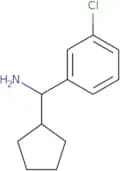
Discontinued product(3-Chlorophenyl)(cyclopentyl)methanamine
CAS:Versatile small molecule scaffold
Formula:C12H16ClNPurity:Min. 95%Molecular weight:209.71 g/molRef: 3D-BAA85539
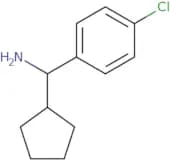
Discontinued product(4-Chlorophenyl)(cyclopentyl)methanamine
CAS:Versatile small molecule scaffold
Formula:C12H16ClNPurity:Min. 95%Molecular weight:209.71 g/molRef: 3D-BAA85537
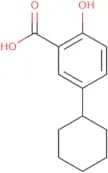
Discontinued product5-Cyclohexyl-2-hydroxybenzoic acid
CAS:5-Cyclohexyl-2-hydroxybenzoic acid is a compound that belongs to the group of phenolic compounds. It has been clinically used for the treatment of systemic hypertension and is used in the manufacture of dyes, resins, flavors and fragrances. 5-Cyclohexyl-2-hydroxybenzoic acid can be found in light exposure, metal cations and environmental pollution. The use of this compound may lead to depression, which may be due to its effects on the vessel diameter. This drug also has an effect on blood pressure by stimulating vasodilatation through an endothelium-dependent mechanism.
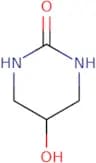
Formula:C13H16O3Purity:Min. 95%Molecular weight:220.26 g/mol5-Hydroxy-1,3-diazinan-2-one
CAS:Versatile small molecule scaffold
Formula:C4H8N2O2Purity:Min. 95%Molecular weight:116.12 g/molRef: 3D-BAA85218
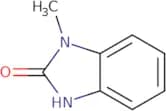
Discontinued product1-Methyl-2-benzimidazolinone
CAS:1-Methyl-2-benzimidazolinone is a synthetic compound that has been shown to be cytotoxic to cancer cells. It binds to metal ions and forms reactive intermediates, which are able to react with nucleophiles in cellular macromolecules. The reaction mechanism of 1-methyl-2-benzimidazolinone is similar to the reaction of picolinic acid with metal hydroxides. The heteroarylations of this compound have also been studied using chemical ligation, and it has been found that the d4 receptor may play a role in its cytotoxicity.
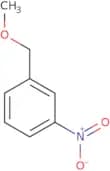
Formula:C8H8N2OPurity:Min. 95%Molecular weight:148.16 g/mol1-(Methoxymethyl)-3-nitrobenzene
CAS:Versatile small molecule scaffold
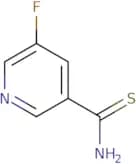
Formula:C8H9NO3Purity:Min. 95%Molecular weight:167.16 g/mol5-fluoropyridine-3-carbothioamide
CAS:Versatile small molecule scaffold
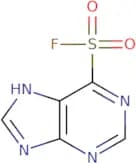
Formula:C6H5FN2SPurity:Min. 95%Molecular weight:156.18 g/mol9H-Purine-6-sulfonyl fluoride
CAS:The purpose of this study was to examine the association between fluoridated water and the prevalence of obesity in children. The study found that, in areas with a higher percentage of children who drank fluoridated water, there was a significant increase in the prevalence of obesity. It is important to note that fluoride has been shown to have health effects other than dental fluorosis. One such effect is an increase in bone fractures. Fluoride also interacts with physiological processes, such as blood pressure regulation and insulin secretion. This article reviews epidemiological studies that have investigated the association between fluoride exposure and various systemic diseases, including cardiovascular disease and diabetes mellitus type 2.
Formula:C5H3FN4O2SPurity:Min. 95%Molecular weight:202.17 g/molRef: 3D-BAA51363
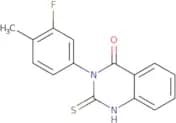
Discontinued product3-(3-Fluoro-4-methylphenyl)-2-sulfanyl-3,4-dihydroquinazolin-4-one
CAS:Versatile small molecule scaffold
Formula:C15H11FN2OSPurity:Min. 95%Molecular weight:286.3 g/mol4-(Thiophen-3-yl)butanoic acid
CAS:Versatile small molecule scaffold
Formula:C8H10O2SPurity:Min. 95%Molecular weight:170.23 g/mol6-Azaspiro[3.4]octane-5,7-dione
CAS:Versatile small molecule scaffold
Formula:C7H9NO2Purity:Min. 95%Molecular weight:139.15 g/molRef: 3D-BAA49716
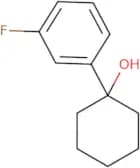
Discontinued product1-(3-Fluorophenyl)cyclohexanol
CAS:Versatile small molecule scaffold
Formula:C12H15FOPurity:Min. 95%Molecular weight:194.25 g/molRef: 3D-BAA49635
Discontinued product2-Ethylpiperidine hydrochloride
CAS:Versatile small molecule scaffold
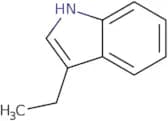
Formula:C7H16ClNPurity:Min. 95%Molecular weight:149.66 g/mol3-Ethyl-1H-indole
CAS:3-Ethyl-1H-indole is a chiral compound with a high degree of stereoselectivity. It is synthesized by the reaction of ethyl formate and diethyl malonate in the presence of sulfuric acid, magnesium and liquid chromatography. The product can be purified by vacuum distillation or recrystallization. 3-Ethyl-1H-indole is used as a starting material for the synthesis of other aromatic compounds. 3-Ethyl-1H-indole has been shown to be useful in the production of pharmaceuticals and agrochemicals.
Formula:C10H11NPurity:Min. 95%Molecular weight:145.2 g/molRef: 3D-BAA48419
Discontinued productSpiro[5.5]undecane-2,4-dione
CAS:Spiro[5.5]undecane-2,4-dione is an analgesic drug that belongs to the class of carboxylic acid derivatives. It has been shown to be effective in treating chronic pain and neuropathic pain. Spiro[5.5]undecane-2,4-dione binds to a pharmacophore site on voltage gated sodium channels, preventing the influx of sodium ions into the cell, which blocks the conduction of nerve impulses and relieves pain. The chemical structure of Spiro[5.5]undecane-2,4-dione is similar to that of morphine but it does not have morphine's addictive properties or potential for abuse.
Formula:C11H16O2Purity:Min. 95%Molecular weight:180.25 g/mol4-Chromanol
CAS:4-Chromanol is a trifluoroacetic acid amide. It contains a hydroxyl group, which is important for its neuroprotective properties. 4-Chromanol's mechanism of action is not yet fully understood, but it has been shown to inhibit the growth of human serum and oral pathogens in vitro. The compound also has an anti-inflammatory effect by inhibiting the production of pro-inflammatory cytokines from human monocytes. 4-Chromanol's chemical structure consists of a hydroxy group, fatty acids, and benzyl groups on both sides of the carbonyl group at position 4.
Formula:C9H10O2Purity:Min. 95%Molecular weight:150.18 g/mol5,6-Dihydrobenzo[b]thiophen-7(4H)-one
CAS:5,6-Dihydrobenzo[b]thiophen-7(4H)-one is a sulfur-containing heterocycle that has been shown in studies to have cytotoxic activity. This compound has been found to induce apoptosis (programmed cell death) in cancer cells by binding to the protein kinase B (PKB/Akt), which is involved in the regulation of cell proliferation and survival. 5,6-Dihydrobenzo[b]thiophen-7(4H)-one also binds to DNA, preventing transcription and translation of proteins. The cytotoxic effects of this compound make it useful for treatment of ophthalmic conditions such as cataracts and glaucoma. This compound is being studied for use in the treatment of ovarian cancer and other types of cancer. It was recently shown that 5,6-dihydrobenzo[b]thiophen-7(4H)-one
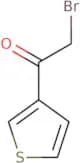
Formula:C8H8OSPurity:Min. 95%Molecular weight:152.21 g/mol3-(Bromoacetyl)thiophene
CAS:3-(Bromoacetyl)thiophene is a chromophore that can be used as an antibacterial agent. It has potent inhibitory effects on bacteria, which are caused by the ring-opening of the thiophene ring in the presence of irradiation. 3-(Bromoacetyl)thiophene can also be used in electrochemical polymerization and cyclic voltammetry. In addition, it has been shown to have an inhibitory effect on dehydrogenase enzymes, which are important for energy production in cells. This compound is fluorescent and can be detected using electrochemical impedance spectroscopy (EIS).
Formula:C6H5BrOSPurity:Min. 95%Molecular weight:205.07 g/mol
![2-[4-(Aminomethyl)phenoxy]acetonitrile hydrochloride](/_next/image/?url=https%3A%2Fstatic.cymitquimica.com%2Fproducts%2F3D%2Fthumb-webp%2FBAC92362.webp&w=3840&q=75)

![4-{[(2-Methoxyethyl)amino]methyl}benzonitrile hydrochloride](/_next/image/?url=https%3A%2Fstatic.cymitquimica.com%2Fproducts%2F3D%2Fthumb-webp%2FBAC92340.webp&w=3840&q=75)
![2-[1-(2,2,2-Trifluoroethyl)-1H-imidazol-2-yl]acetonitrile](/_next/image/?url=https%3A%2Fstatic.cymitquimica.com%2Fproducts%2F3D%2Fthumb-webp%2FBAC92315.webp&w=3840&q=75)



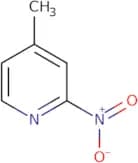
![2-[3-(Propan-2-yl)phenoxy]acetic acid](/_next/image/?url=https%3A%2Fstatic.cymitquimica.com%2Fproducts%2F3D%2Fthumb-webp%2FBAA87852.webp&w=3840&q=75)
![6H-Benzo[C][1,2]benzothiazine 5,5-dioxide](/_next/image/?url=https%3A%2Fstatic.cymitquimica.com%2Fproducts%2F3D%2Fthumb-webp%2FBAA86433.webp&w=3840&q=75)

![6-Azaspiro[3.4]octane-5,7-dione](/_next/image/?url=https%3A%2Fstatic.cymitquimica.com%2Fproducts%2F3D%2Fthumb-webp%2FBAA49716.webp&w=3840&q=75)

![Spiro[5.5]undecane-2,4-dione](/_next/image/?url=https%3A%2Fstatic.cymitquimica.com%2Fproducts%2F3D%2Fthumb-webp%2FBAA48199.webp&w=3840&q=75)

![5,6-Dihydrobenzo[b]thiophen-7(4H)-one](/_next/image/?url=https%3A%2Fstatic.cymitquimica.com%2Fproducts%2F3D%2Fthumb-webp%2FBAA46884.webp&w=3840&q=75)