


Building Blocks
This section contains fundamental products for the synthesis of organic and biological compounds. Building blocks are the essential starting materials used to construct complex molecules through various chemical reactions. They play a critical role in drug discovery, material science, and chemical research. At CymitQuimica, we offer a diverse range of high-quality building blocks to support your innovative research and industrial projects, ensuring you have the essential components for successful synthesis.
Subcategories of "Building Blocks"
- Boronic Acids & Boronic Acid Derivatives(5,756 products)
- Chiral Building Blocks(1,242 products)
- Hydrocarbon Building Blocks(6,095 products)
- Organic Building Blocks(61,051 products)
Found 199813 products of "Building Blocks"
Sort by
Purity (%)
0
100
|
0
|
50
|
90
|
95
|
100
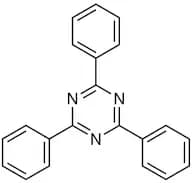
2,4,6-Triphenyl-1,3,5-triazine (purified by sublimation)
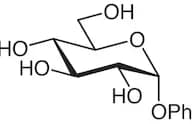
CAS:Formula:C21H15N3Purity:>99.0%(GC)Color and Shape:White to Almost white powder to crystalMolecular weight:309.37Phenyl α-D-Glucopyranoside
CAS:Formula:C12H16O6Purity:>97.0%(GC)Color and Shape:White to Light yellow powder to crystalMolecular weight:256.252-Mesitylethanol
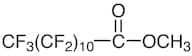
CAS:Formula:C11H16OPurity:>98.0%(GC)Color and Shape:White to Almost white powder to crystalMolecular weight:164.25Methyl Tricosafluorododecanoate
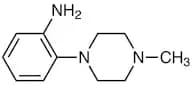
CAS:Formula:C13H3F23O2Purity:>95.0%(GC)Color and Shape:White to Almost white powder to crystalMolecular weight:628.132-(4-Methyl-1-piperazinyl)aniline
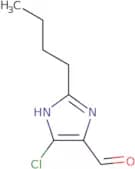
CAS:Formula:C11H17N3Purity:>98.0%(GC)(T)Color and Shape:White to Light yellow powder to crystalMolecular weight:191.282-Butyl-4-chloro-1H-imidazole-5-carboxaldehyde
CAS:<p>Glyoxal is a chemical compound that has shown to have bactericidal activity against human pathogens such as Mycobacterium tuberculosis, Helicobacter pylori, and Staphylococcus aureus. It is used in the synthesis of heterocyclic amines and can be found as an impurity in imidazole derivatives. Glyoxal is a broad-spectrum antimicrobial that has been shown to inhibit the growth of fungi and bacteria by reacting with functional groups on the microorganisms' cell walls. It reacts with bacterial cell walls by forming an intermediate molecule, which reacts with other molecules present in the microorganism's environment to form carbon dioxide, water, and glyoxal. The reaction time for glyoxal depends on temperature; higher temperatures will result in faster reactions. Techniques used to synthesize glyoxal include dehydration of oximes or by reaction with phosphorus oxychloride.</p>Formula:C8H11ClN2OPurity:Min. 95%Color and Shape:PowderMolecular weight:186.64 g/molRef: 3D-FB19493
Discontinued product2-Butyl-1,3-diazaspiro[4.4]non-1-en-4-one Hydrochloride
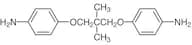
CAS:Formula:C11H18N2O·HClPurity:>98.0%(T)(HPLC)Color and Shape:White to Almost white powder to crystalMolecular weight:230.74Neopentyl Glycol Bis(4-aminophenyl) Ether
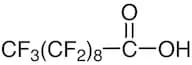
CAS:Formula:C17H22N2O2Purity:>97.0%(T)Color and Shape:White to Light yellow to Light orange powder to crystalMolecular weight:286.38Nonadecafluorodecanoic Acid
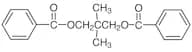
CAS:Formula:C10HF19O2Purity:>98.0%(T)Color and Shape:White to Almost white powder to crystalineMolecular weight:514.09Neopentyl Glycol Dibenzoate
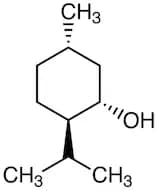
CAS:Formula:C19H20O4Purity:>98.0%(GC)Color and Shape:White to Almost white powder to crystalMolecular weight:312.37(+)-Menthol
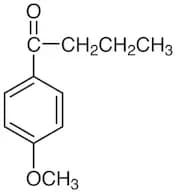
CAS:Formula:C10H20OPurity:>99.0%(GC)Color and Shape:White or Colorless powder to lump to clear liquidMolecular weight:156.274'-Methoxybutyrophenone
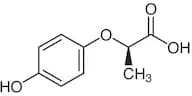
CAS:Formula:C11H14O2Purity:>98.0%(GC)Color and Shape:White or Colorless to Light yellow powder to lump to clear liquidMolecular weight:178.23(R)-(+)-2-(4-Hydroxyphenoxy)propionic Acid
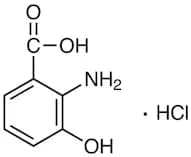
CAS:Formula:C9H10O4Purity:>98.0%(GC)(T)Color and Shape:White to Light yellow powder to crystalMolecular weight:182.182-Amino-3-hydroxybenzoic Acid Hydrochloride
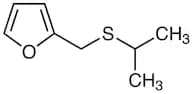
CAS:Formula:C7H7NO3·HClPurity:>98.0%(T)(HPLC)Color and Shape:White to Light yellow to Purple powder to crystalMolecular weight:189.60Furfuryl Isopropyl Sulfide
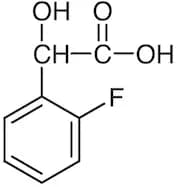
CAS:Formula:C8H12OSPurity:>98.0%(GC)Color and Shape:Colorless to Almost colorless clear liquidMolecular weight:156.242-Fluoro-DL-mandelic Acid
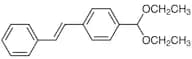
CAS:Formula:C8H7FO3Purity:>98.0%(GC)(T)Color and Shape:White to Almost white powder to crystalMolecular weight:170.144-(Diethoxymethyl)-trans-stilbene
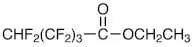
CAS:Formula:C19H22O2Purity:>98.0%(GC)Color and Shape:White to Almost white powder to crystalMolecular weight:282.38Ethyl 5H-Octafluorovalerate
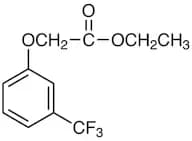
CAS:Formula:C7H6F8O2Purity:>98.0%(GC)Color and Shape:Colorless to Almost colorless clear liquidMolecular weight:274.11Ethyl 3-(Trifluoromethyl)phenoxyacetate
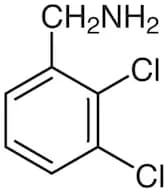
CAS:Formula:C11H11F3O3Purity:>95.0%(GC)Color and Shape:Light yellow to Yellow to Orange clear liquidMolecular weight:248.202,3-Dichlorobenzylamine
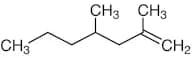
CAS:Formula:C7H7Cl2NPurity:>98.0%(GC)(T)Color and Shape:Colorless to Light orange to Yellow clear liquidMolecular weight:176.042,4-Dimethyl-1-heptene
CAS:Formula:C9H18Purity:>98.0%(GC)Color and Shape:Colorless to Almost colorless clear liquidMolecular weight:126.245-Chloro-2-phenyl-1H-imidazole-4-carboxaldehyde
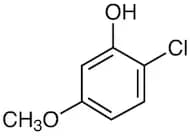
CAS:Formula:C10H7ClN2OPurity:>97.0%(HPLC)(N)Color and Shape:Orange to Amber to Dark red powder to crystalMolecular weight:206.632-Chloro-5-methoxyphenol
CAS:Formula:C7H7ClO2Purity:>97.0%(GC)Color and Shape:White to Yellow to Green clear liquidMolecular weight:158.583-(2-Chloroethyl)-2-methyl-4H-pyrido[1,2-a]pyrimidin-4-one
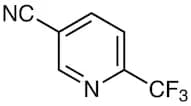
CAS:Formula:C11H11ClN2OPurity:>98.0%(GC)(T)Color and Shape:White to Light yellow powder to crystalMolecular weight:222.675-Cyano-2-(trifluoromethyl)pyridine
CAS:Formula:C7H3F3N2Purity:>98.0%(GC)Color and Shape:White to Light yellow powder to lumpMolecular weight:172.112-Chloro-4-fluorobenzyl Bromide
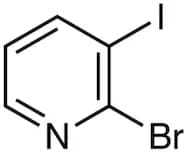
CAS:Formula:C7H5BrClFPurity:>98.0%(GC)Color and Shape:White to Light yellow to Light orange powder to crystalMolecular weight:223.472-Bromo-3-iodopyridine
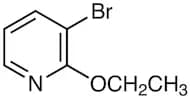
CAS:Formula:C5H3BrINPurity:>95.0%(GC)Color and Shape:Light yellow to Brown powder to crystalMolecular weight:283.893-Bromo-2-ethoxypyridine
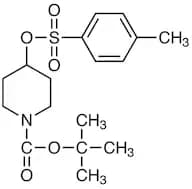
CAS:Formula:C7H8BrNOPurity:>97.0%(GC)(T)Color and Shape:Colorless to Light yellow clear liquidMolecular weight:202.051-(tert-Butoxycarbonyl)-4-(p-toluenesulfonyloxy)piperidine
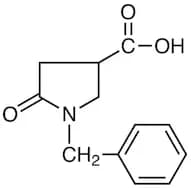
CAS:Formula:C17H25NO5SPurity:>98.0%(HPLC)Color and Shape:White to Almost white powder to crystalMolecular weight:355.451-Benzyl-5-oxopyrrolidine-3-carboxylic Acid
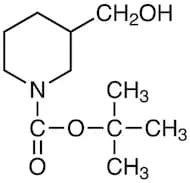
CAS:Formula:C12H13NO3Purity:>98.0%(GC)(T)Color and Shape:White to Almost white powder to crystalMolecular weight:219.241-(tert-Butoxycarbonyl)-3-piperidinemethanol
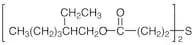
CAS:Formula:C11H21NO3Purity:>95.0%(GC)Color and Shape:White to Almost white powder to crystalMolecular weight:215.29Bis(2-ethylhexyl) 3,3'-Thiodipropionate
CAS:Formula:C22H42O4SPurity:>96.0%(GC)Color and Shape:Colorless to Almost colorless clear liquidMolecular weight:402.632-[Nitroso(phenylmethyl)amino]benzoic Acid
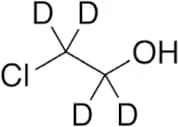
CAS:Controlled ProductFormula:C14H12N2O3Color and Shape:NeatMolecular weight:256.2572-Chloroethanol-1,1,2,2-d4
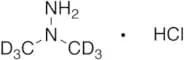
CAS:Controlled Product<p>Applications 2-Chloroethanol is used in the preparation of TTFTT (tetrathiafulvalene-2,3,6,7-tetrathiolate) and important building block in TTF syntheis. In addition, it is used in the synthesis of vinyltriazoles. This is the labeled analog.<br>Dangerous Goods Info This compound is forbidden to ship by air under IATA regulations.<br>References Svenstrup, N. et al.: Synthesis, 8, 809 (1994); Thibault, R. et al.: J. Am. Chem. Soc., 128, 12084 (2006);<br></p>Formula:C22H4ClOHColor and Shape:Colourless OilMolecular weight:84.54N,N-(Dimethyl-d6)hydrazine Hydrochloride
CAS:Controlled Product<p>Applications A labelled isotope of a toxic volatile hydrazine found in rocket fuel systems.<br>References Oanasyuk, A.G. et al.: Vis. Nat. Tekh. Univ. KhPI, 13, 59 (2010);<br></p>Formula:C2H3D6ClN2Color and Shape:NeatMolecular weight:102.60Glyceryl Trihexadecanoate-13C1 (2-Hexadecanoate-1-13C)
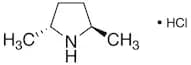
CAS:Controlled Product<p>Applications Glyceryl Trihexadecanoate-13C1 (2-Hexadecanoate-1-13C) is a useful isotopically labeled compound of Tripalmitin (T808130)<br></p>Formula:CC50H98O6Color and Shape:NeatMolecular weight:808.33(-)-(2R,5R)-2,5-Dimethylpyrrolidine, Hydrochloride, 90% (contains meso-isomer)
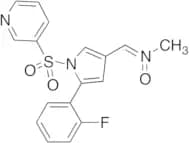
CAS:Controlled Product<p>Applications Reagent used for asymmetric syntheses.<br>References Schlessinger, R., et al.: J. Org. Chem., 28, 3070 (1986)<br></p>Formula:C6H13N·ClHColor and Shape:NeatMolecular weight:135.64(Z)-N-((5-(2-Fluorophenyl)-1-(pyridin-3-ylsulfonyl)-1H-pyrrol-3-yl)methylene)methanamine Oxide
CAS:Formula:C17H14FN3O3SColor and Shape:Neat4-Tetradecylphenyl-13C6 1-Sodium Sulfonate
CAS:Controlled ProductFormula:C6C14H33O3S·NaColor and Shape:NeatMolecular weight:382.4855-(Propan-2-yl)-1-(pyridin-4-yl)-1H-pyrazole-3-carboxylic acid
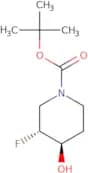
CAS:<p>Versatile small molecule scaffold</p>Formula:C12H13N3O2Purity:Min. 95%Molecular weight:231.25 g/moltrans-1-BOC-3-Fluoro-4-hydroxypiperidine
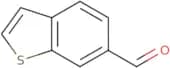
CAS:<p>Versatile small molecule scaffold</p>Formula:C10H18FNO3Purity:Min. 95%Molecular weight:219.26 g/mol1-Benzothiophene-6-carboxaldehyde
CAS:<p>1-Benzothiophene-6-carboxaldehyde (BTA) is a heterocyclic compound that contains sulfur. It is a colorless liquid with a sweet odor. BTA is used in the manufacture of pesticides, pharmaceuticals, and other organic chemicals. It is also used as a building block in the synthesis of other compounds and has been shown to have anti-inflammatory properties.</p>Formula:C9H6OSPurity:Min. 95%Molecular weight:162.21 g/molRef: 3D-GAA38680
Discontinued productMethyl 2-[4-(2-aminoethyl)phenoxy]acetate hydrochloride
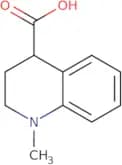
CAS:<p>Versatile small molecule scaffold</p>Formula:C11H16ClNO3Purity:Min. 95%Molecular weight:245.7 g/mol1-Methyl-1,2,3,4-tetrahydroquinoline-4-carboxylic acid
CAS:<p>Versatile small molecule scaffold</p>Formula:C11H13NO2Purity:Min. 95%Molecular weight:191.23 g/mol2-Chloro-N-[2-(3-chlorophenyl)ethyl]acetamide
CAS:<p>Versatile small molecule scaffold</p>Formula:C10H11Cl2NOPurity:Min. 95%Molecular weight:232.1 g/mol[1-(1-Amino-2-methylpropyl)cyclopent-3-en-1-yl]methanol hydrochloride
CAS:<p>Versatile small molecule scaffold</p>Formula:C10H20ClNOPurity:Min. 95%Molecular weight:205.72 g/molRef: 3D-JBD31750
Discontinued productQuinoline-5-carbonitrile
CAS:<p>Quinoline-5-carbonitrile is a cyanide compound that can be used in the synthesis of heterocyclic compounds. The reaction between quinoline and 5-cyanovaleric acid produces 6-nitroquinoline, which is then converted to dimethyl sulfoxide by alcoholysis. This reaction product can then be used to synthesize an amide or nucleophile. Quinoline-5-carbonitrile reacts with potassium in the presence of bifunctional hydrazide to produce a cyanide ion, which can be hydrolyzed by an acid to release hydrogen cyanide gas. This experiment has been shown as a model for reactions involving cyano compounds.</p>Formula:C10H6N2Purity:Min. 95%Molecular weight:154.17 g/molRef: 3D-JCA55102
Discontinued product2,4-Dimethyl-5-[4-(trifluoromethyl)phenyl]pyrimidine
CAS:<p>Versatile small molecule scaffold</p>Formula:C13H11F3N2Purity:Min. 95%Molecular weight:252.23 g/molRef: 3D-LAC75867
Discontinued product



![2-Butyl-1,3-diazaspiro[4.4]non-1-en-4-one Hydrochloride](/_next/image/?url=https%3A%2Fstatic.cymitquimica.com%2Fproducts%2F3B%2Fthumb-webp%2FB3291.webp&w=3840&q=75)

![3-(2-Chloroethyl)-2-methyl-4H-pyrido[1,2-a]pyrimidin-4-one](/_next/image/?url=https%3A%2Fstatic.cymitquimica.com%2Fproducts%2F3B%2Fthumb-webp%2FC2716.webp&w=3840&q=75)



![2-[Nitroso(phenylmethyl)amino]benzoic Acid](/_next/image/?url=https%3A%2Fstatic.cymitquimica.com%2Fproducts%2FTR%2Fthumb-webp%2FN472575.webp&w=3840&q=75)



![Methyl 2-[4-(2-aminoethyl)phenoxy]acetate hydrochloride](/_next/image/?url=https%3A%2Fstatic.cymitquimica.com%2Fproducts%2F3D%2Fthumb-webp%2FHFA22482.webp&w=3840&q=75)
![2-Chloro-N-[2-(3-chlorophenyl)ethyl]acetamide](/_next/image/?url=https%3A%2Fstatic.cymitquimica.com%2Fproducts%2F3D%2Fthumb-webp%2FJBA16215.webp&w=3840&q=75)
![[1-(1-Amino-2-methylpropyl)cyclopent-3-en-1-yl]methanol hydrochloride](/_next/image/?url=https%3A%2Fstatic.cymitquimica.com%2Fproducts%2F3D%2Fthumb-webp%2FJBD31750.webp&w=3840&q=75)
![2,4-Dimethyl-5-[4-(trifluoromethyl)phenyl]pyrimidine](/_next/image/?url=https%3A%2Fstatic.cymitquimica.com%2Fproducts%2F3D%2Fthumb-webp%2FLAC75867.webp&w=3840&q=75)