Building Blocks
This section contains fundamental products for the synthesis of organic and biological compounds. Building blocks are the essential starting materials used to construct complex molecules through various chemical reactions. They play a critical role in drug discovery, material science, and chemical research. At CymitQuimica, we offer a diverse range of high-quality building blocks to support your innovative research and industrial projects, ensuring you have the essential components for successful synthesis.
Subcategories of "Building Blocks"
- Boronic Acids & Boronic Acid Derivatives(5,778 products)
- Chiral Building Blocks(1,242 products)
- Hydrocarbon Building Blocks(6,098 products)
- Organic Building Blocks(61,092 products)
Found 199296 products of "Building Blocks"
Sort by
Purity (%)
0
100
|
0
|
50
|
90
|
95
|
100
1H,2H,3H-Naphtho[2,1-b]pyran-2-carboxylic acid
CAS:<p>Versatile small molecule scaffold</p>Formula:C14H12O3Purity:Min. 95%Molecular weight:228.24 g/molRef: 3D-YLB23881
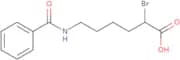
Discontinued product2-Bromo-6-(phenylformamido)hexanoic acid
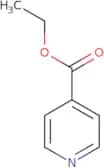
CAS:<p>Versatile small molecule scaffold</p>Formula:C13H16BrNO3Purity:Min. 95%Molecular weight:314.17 g/mol4-Pyridinecarboxylic Acid Ethyl Ester
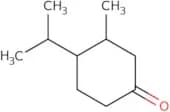
CAS:<p>4-Pyridinecarboxylic Acid Ethyl Ester is a compound that belongs to the group of pyridinecarboxylic acids. It is a metabolite of nicotinamide, which is converted to 4-pyridinecarboxylic acid ethyl ester by esterases in the intestine. Nicotinamide is an important component of the vitamin B3 and has been shown to be effective for treating autoimmune diseases such as rheumatoid arthritis. 4-Pyridinecarboxylic Acid Ethyl Ester may have similar effects on inflammatory bowel disease and alopecia areata. The reaction mechanism of this compound has not been elucidated, but it has been shown to inhibit amyloid protein production in rat intestines. Hydroxyl groups on the side chain likely play a role in hydrogen bonding interactions with receptors in inflammatory bowel disease and alopecia areata.</p>Formula:C8H9NO2Purity:Min. 95%Molecular weight:151.16 g/mol3-Methyl-4-(propan-2-yl)cyclohexan-1-one
CAS:<p>Versatile small molecule scaffold</p>Formula:C10H18OPurity:Min. 95%Molecular weight:154.25 g/molRef: 3D-BAA53819
Discontinued producttert-Butyl (2S,3R)-2-amino-3-methoxybutanoate hydrochloride
CAS:<p>Versatile small molecule scaffold</p>Formula:C9H20ClNO3Purity:Min. 95%Molecular weight:225.7 g/molRef: 3D-AVD24955
Discontinued productrac-Methyl 2-[(3R,4R)-4-(2-methoxy-2-oxoethyl)pyrrolidin-3-yl]acetate hydrochloride
CAS:<p>Versatile small molecule scaffold</p>Formula:C10H18ClNO4Purity:Min. 95%Molecular weight:251.7 g/molRef: 3D-AVD24807
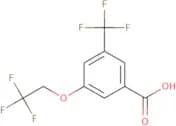
Discontinued product3-(2,2,2-Trifluoroethoxy)-5-(trifluoromethyl)benzoic acid
CAS:<p>Versatile small molecule scaffold</p>Formula:C10H6F6O3Purity:Min. 95%Molecular weight:288.14 g/molRef: 3D-AVD00865
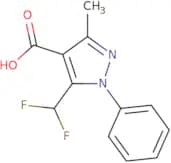
Discontinued product5-(Difluoromethyl)-3-methyl-1-phenyl-1H-pyrazole-4-carboxylic acid
CAS:<p>Versatile small molecule scaffold</p>Formula:C12H10F2N2O2Purity:Min. 95%Molecular weight:252.22 g/molRef: 3D-AFC47355
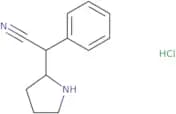
Discontinued product2-Phenyl-2-(pyrrolidin-2-yl)acetonitrile hydrochloride
CAS:<p>Versatile small molecule scaffold</p>Formula:C12H15ClN2Purity:Min. 95%Molecular weight:222.71 g/molRef: 3D-AFC47353
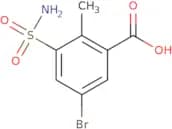
Discontinued product5-Bromo-2-methyl-3-sulfamoylbenzoic acid
CAS:<p>Versatile small molecule scaffold</p>Formula:C8H8BrNO4SPurity:Min. 95%Molecular weight:294.12 g/molRef: 3D-AFC47231
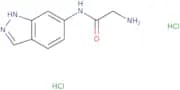
Discontinued product2-Amino-N-(2H-indazol-6-yl)acetamide dihydrochloride
CAS:<p>Versatile small molecule scaffold</p>Formula:C9H12Cl2N4OPurity:Min. 95%Molecular weight:263.12 g/molRef: 3D-AFC47212
Discontinued product1a,2,3a,5b-Tetrachlorohexahydro-3,3-dimethoxy-1,2,4-ethanylylidene-1H-cyclobuta[cd]pentalene-5,7(1aH)-dione
CAS:<p>Versatile small molecule scaffold</p>Formula:C13H10Cl4O4Purity:Min. 95%Molecular weight:372 g/mol1-[(2-Methyl-1,3-thiazol-5-yl)methyl]piperazine
CAS:<p>Versatile small molecule scaffold</p>Formula:C9H15N3SPurity:Min. 95%Molecular weight:197.3 g/molRef: 3D-AAC11820
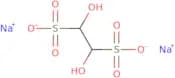
Discontinued productGlyoxal bis(sodium hydrogen sulfite) adduct hydrate
CAS:<p>Glyoxal bis(sodium hydrogen sulfite) adduct hydrate is a reactive compound that has been shown to react with quinoxaline derivatives. The nitrogen atoms in the amide and nitrogen atoms in the quinoxaline derivative are oxidized by oxidation catalyst, such as sodium carbonate, to form an amide-quinone. This reaction leads to the formation of a polyvinyl polymer that can be used for sample preparation. In addition, this compound has been shown to have receptor activity and detergent compositions. Glyoxal bis(sodium hydrogen sulfite) adduct hydrate also has antimicrobial properties and can be used for plant physiology studies and pharmacokinetic properties.</p>Formula:OHCCHO·2NaHSO3Purity:Min. 95%Molecular weight:266.16 g/molRef: 3D-AAA51721
Discontinued product3,3-Diethylpiperidine hydrochloride
CAS:<p>Versatile small molecule scaffold</p>Formula:C9H20ClNPurity:Min. 95%Molecular weight:177.71 g/mol2-[2-(2-Methylphenyl)-2-oxoethylidene]-1,3-thiazolidin-4-one
CAS:<p>Versatile small molecule scaffold</p>Formula:C12H11NO2SPurity:Min. 95%Molecular weight:233.29 g/mol2-[({12-Oxo-7-thia-9,11-diazatricyclo[6.4.0.0,2,6]dodeca-1(8),2(6),9-trien-10-yl}methyl)sulfanyl]acetic acid
CAS:<p>Versatile small molecule scaffold</p>Formula:C12H12N2O3S2Purity:Min. 95%Molecular weight:296.4 g/molRef: 3D-ZEB92070
Discontinued product1-Benzyl-4-(pyrrolidin-2-yl)piperidine
CAS:<p>Versatile small molecule scaffold</p>Formula:C16H24N2Purity:Min. 95%Molecular weight:244.37 g/molRef: 3D-ZVA67428
Discontinued productPiperazin-1-amine dihydrochloride
CAS:<p>Versatile small molecule scaffold</p>Formula:C4H13Cl2N3Purity:Min. 95%Molecular weight:174.07 g/mol1-Boc-6-amino-1-azaspiro[3.3]heptane
CAS:<p>Versatile small molecule scaffold</p>Formula:C11H20N2O2Purity:Min. 95%Molecular weight:212.29 g/molRef: 3D-ZEC65919
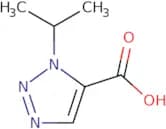
Discontinued product1-(Propan-2-yl)-1H-1,2,3-triazole-5-carboxylic acid
CAS:<p>Versatile small molecule scaffold</p>Formula:C6H9N3O2Purity:Min. 95%Molecular weight:155.15 g/molRef: 3D-YXB43754
Discontinued product2-Chloro-4-[2-(trimethylsilyl)ethynyl]pyridine
CAS:<p>Versatile small molecule scaffold</p>Formula:C10H12ClNSiPurity:Min. 95%Molecular weight:209.75 g/molRef: 3D-ZUA19357
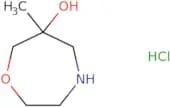
Discontinued product6-Methyl-1,4-oxazepan-6-ol hydrochloride
CAS:<p>Versatile small molecule scaffold</p>Formula:C6H14ClNO2Purity:Min. 95%Molecular weight:167.63 g/mol3-(2-Methylpropane-2-sulfonyl)propane-1-sulfonamide
CAS:<p>Versatile small molecule scaffold</p>Formula:C7H17NO4S2Purity:Min. 95%Molecular weight:243.3 g/molRef: 3D-YXC32101
Discontinued product6-Fluorophthalazine-1,4-diol
CAS:<p>Versatile small molecule scaffold</p>Formula:C8H5FN2O2Purity:Min. 95%Molecular weight:180.14 g/molRef: 3D-ZAA03699
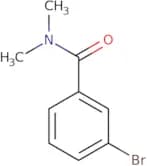
Discontinued product3-Bromo-n,n-dimethylbenzamide
CAS:<p>Versatile small molecule scaffold</p>Formula:C9H10BrNOPurity:Min. 95%Molecular weight:228.09 g/molRef: 3D-ZAA16751
Discontinued product4H,5H,6H,7H-[1,2,5]Oxadiazolo[3,4-b]pyrazine-5,6-dione
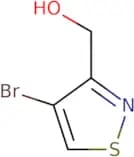
CAS:<p>Versatile small molecule scaffold</p>Formula:C4H2N4O3Purity:Min. 95%Molecular weight:154.08 g/mol(4-Bromo-1,2-thiazol-3-yl)methanol
CAS:<p>Versatile small molecule scaffold</p>Formula:C4H4BrNOSPurity:Min. 95%Molecular weight:194.05 g/molRef: 3D-ZAA34079
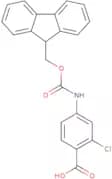
Discontinued product4-(Fmoc-amino)-2-chloro-benzoic acid
CAS:<p>Versatile small molecule scaffold</p>Formula:C22H16ClNO4Purity:Min. 95%Molecular weight:393.82 g/mol4-[2-(Trifluoromethyl)phenoxy]aniline
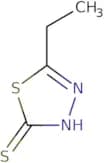
CAS:<p>Versatile small molecule scaffold</p>Formula:C13H10F3NOPurity:Min. 95%Molecular weight:253.22 g/mol5-Ethyl-1,3,4-thiadiazole-2-thiol
CAS:<p>Versatile small molecule scaffold</p>Formula:C4H6N2S2Purity:Min. 95%Molecular weight:146.2 g/molRef: 3D-MBA66351
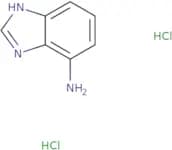
Discontinued product1H-1,3-Benzodiazol-7-amine dihydrochloride
CAS:<p>Versatile small molecule scaffold</p>Formula:C7H9Cl2N3Purity:Min. 95%Molecular weight:206.07 g/molRef: 3D-MBA72428
Discontinued product3-Boc-3-azabicyclo[3.2.1]octan-8-amine
CAS:<p>Versatile small molecule scaffold</p>Formula:C12H22N2O2Purity:Min. 95%Molecular weight:226.32 g/mol3-(Methoxycarbonyl)pyridine-4-carboxylic acid
CAS:<p>Versatile small molecule scaffold</p>Formula:C8H7NO4Purity:Min. 95%Molecular weight:181.15 g/mol6,6-Difluorospiro[3.3]heptan-2-amine Hydrochloride
CAS:<p>Versatile small molecule scaffold</p>Formula:C7H11F2N·HClPurity:Min. 95%Molecular weight:147.17 g/mol2-Bromo-3,3,3-trifluoro-1-propene
CAS:Controlled Product<p>2-Bromo-3,3,3-trifluoro-1-propene is a chemical compound that has been synthesized in an asymmetric reaction. The reactant is bromopropane and the product is 2,2,2-trifluoropropene. The methylene group on the propene molecule is activated by the nucleophilic attack of a fluoride ion from hydrogen fluoride to form a cavity with a highly strained bond. The kinetic study of this reaction revealed that the activation energy for the reaction is 42 kJ/mol. Palladium-catalyzed coupling reactions are catalyzed by palladium and require nonpolar solvents such as toluene or dichloromethane. This type of reaction has been shown to be exothermic with an isolated yield of 1%.</p>Formula:C3H2BrF3Purity:Min. 95%Color and Shape:Colorless PowderMolecular weight:174.95 g/mol3-Methylbenzo[b]thiophene-2-carboxylic acid
CAS:<p>3-Methylbenzo[b]thiophene-2-carboxylic acid (MBTCA) is a heterocyclic compound that is an intermediate in the synthesis of 3-methylthiophene-2-carboxylic acid, a precursor to other drugs. MBTCA is an aerobic, nonpolar compound that has shown antimicrobial activity against some bacteria and fungi. It also has been shown to have practicality as a biomolecular probe for methyl groups in organic solvents. MBTCA can be synthesized by nitration of benzene in the presence of sulfur and sulfoxides. This reaction produces nitrobenzene, which can then be oxidized by potassium permanganate or hydrogen peroxide to produce MBTCA. The most common isomer of MBTCA is 2-(3,5-dimethoxybenzylidene)tetrahydrofuran, with three methyl groups on the</p>Formula:C10H8O2SPurity:Min. 95%Molecular weight:192.23 g/moltert-Butyl 5-bromo-3,4-dihydro-2,7-naphthyridine-2(1H)-carboxylate
CAS:<p>Versatile small molecule scaffold</p>Formula:C13H17BrN2O2Purity:Min. 95%Molecular weight:313.19 g/mol(2S,3R)-2-((((9H-Fluoren-9-yl)methoxy)carbonyl)amino)-3-methoxybutanoic acid
CAS:<p>Versatile small molecule scaffold</p>Formula:C20H21NO5Purity:Min. 95%Molecular weight:355.4 g/mol1-[3-(Dimethylamino)propyl]-1-(4-fluorophenyl)-1,3-dihydro-3-oxo-5-isobenzofurancarbonitrile
CAS:<p>Please enquire for more information about 1-[3-(Dimethylamino)propyl]-1-(4-fluorophenyl)-1,3-dihydro-3-oxo-5-isobenzofurancarbonitrile including the price, delivery time and more detailed product information at the technical inquiry form on this page</p>Formula:C20H19FN2O2Purity:Min. 95%Molecular weight:338.38 g/molRef: 3D-FD184085
Discontinued product2-Bromo-4-(4-fluorophenyl)-1,3-thiazole
CAS:<p>Versatile small molecule scaffold</p>Formula:C9H5NFSBrPurity:Min. 95%Molecular weight:258.11 g/mol2-Acetylbenzoic acid
CAS:<p>2-Acetylbenzoic acid is a functional molecule that contains an acetyl group. It can form hydrogen bonds with other molecules and has been shown to induce apoptosis in cells. The reaction products of 2-acetylbenzoic acid are malonic acid, acetylsalicylic acid, and 2-benzoylbenzoic acid. These three compounds are made by the addition of hydrogen or hydroxide to the molecule 2-acetylbenzoic acid. The molecule has two functional groups: a carbonyl group and an acetyl group. The chemical structure of this molecule can be seen in the figure below.<br>2-Acetylbenzoic Acid</p>Formula:C9H8O3Purity:Min. 95%Color and Shape:PowderMolecular weight:164.16 g/molRef: 3D-FA05086
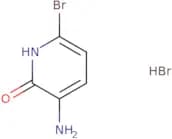
Discontinued product3-amino-6-bromopyridin-2-ol hydrobromide
CAS:<p>Versatile small molecule scaffold</p>Formula:C5H6Br2N2OPurity:Min. 95%Molecular weight:269.9 g/mol3-[5-(Aminomethyl)-1-oxo-2,3-dihydro-1H-isoindol-2-yl]piperidine-2,6-dione hydrochloride
CAS:<p>Versatile small molecule scaffold</p>Formula:C14H16ClN3O3Purity:Min. 95%Molecular weight:309.75 g/molH-Ser-Ala-Glu-Glu-Tyr-Glu-Tyr-Pro-Ser OH trifluoroacetate
CAS:<p>Please enquire for more information about H-Ser-Ala-Glu-Glu-Tyr-Glu-Tyr-Pro-Ser OH trifluoroacetate including the price, delivery time and more detailed product information at the technical inquiry form on this page</p>Formula:C47H63N9O20•(C2HF3O2)xPurity:Min. 95%Ref: 3D-FS183525
Discontinued productGivinostat hydrochloride
CAS:<p>Givinostat hydrochloride is a research chemical that has shown potential in various fields. It is a molybdenum-based compound that has been studied for its effects on dopamine release and hydrogen evolution. Givinostat hydrochloride has also been investigated as an osteoclast inhibitor, which may be beneficial in the treatment of bone-related disorders such as osteoporosis. Additionally, it has shown promise as a retinoid and calpain inhibitor, suggesting its potential use in dermatological conditions and neurodegenerative diseases. The compound contains fluorine atoms, making it suitable for imaging studies using fluorine MRI techniques. Givinostat hydrochloride has been tested on MDA-MB-231 cells and has shown inhibitory effects on their growth, indicating its potential as an anticancer agent.</p>Formula:C24H27N3O4·HClPurity:Min. 95%Molecular weight:457.95 g/mol
![1H,2H,3H-Naphtho[2,1-b]pyran-2-carboxylic acid](/_next/image/?url=https%3A%2Fstatic.cymitquimica.com%2Fproducts%2F3D%2Fthumb-webp%2FYLB23881.webp&w=3840&q=75)


![rac-Methyl 2-[(3R,4R)-4-(2-methoxy-2-oxoethyl)pyrrolidin-3-yl]acetate hydrochloride](/_next/image/?url=https%3A%2Fstatic.cymitquimica.com%2Fproducts%2F3D%2Fthumb-webp%2FAVD24807.webp&w=3840&q=75)
![1a,2,3a,5b-Tetrachlorohexahydro-3,3-dimethoxy-1,2,4-ethanylylidene-1H-cyclobuta[cd]p…](/_next/image/?url=https%3A%2Fstatic.cymitquimica.com%2Fproducts%2F3D%2Fthumb-webp%2FACA87439.webp&w=3840&q=75)
![1-[(2-Methyl-1,3-thiazol-5-yl)methyl]piperazine](/_next/image/?url=https%3A%2Fstatic.cymitquimica.com%2Fproducts%2F3D%2Fthumb-webp%2FAAC11820.webp&w=3840&q=75)
![2-[2-(2-Methylphenyl)-2-oxoethylidene]-1,3-thiazolidin-4-one](/_next/image/?url=https%3A%2Fstatic.cymitquimica.com%2Fproducts%2F3D%2Fthumb-webp%2FZEB92039.webp&w=3840&q=75)
![2-[({12-Oxo-7-thia-9,11-diazatricyclo[6.4.0.0,2,6]dodeca-1(8),2(6),9-trien-10-yl}methyl)sulfanyl]a…](/_next/image/?url=https%3A%2Fstatic.cymitquimica.com%2Fproducts%2F3D%2Fthumb-webp%2FZEB92070.webp&w=3840&q=75)
![1-Boc-6-amino-1-azaspiro[3.3]heptane](/_next/image/?url=https%3A%2Fstatic.cymitquimica.com%2Fproducts%2F3D%2Fthumb-webp%2FZEC65919.webp&w=3840&q=75)
![2-Chloro-4-[2-(trimethylsilyl)ethynyl]pyridine](/_next/image/?url=https%3A%2Fstatic.cymitquimica.com%2Fproducts%2F3D%2Fthumb-webp%2FZUA19357.webp&w=3840&q=75)

![4H,5H,6H,7H-[1,2,5]Oxadiazolo[3,4-b]pyrazine-5,6-dione](/_next/image/?url=https%3A%2Fstatic.cymitquimica.com%2Fproducts%2F3D%2Fthumb-webp%2FZAA29489.webp&w=3840&q=75)
![4-[2-(Trifluoromethyl)phenoxy]aniline](/_next/image/?url=https%3A%2Fstatic.cymitquimica.com%2Fproducts%2F3D%2Fthumb-webp%2FLCA94684.webp&w=3840&q=75)
![3-Boc-3-azabicyclo[3.2.1]octan-8-amine](/_next/image/?url=https%3A%2Fstatic.cymitquimica.com%2Fproducts%2F3D%2Fthumb-webp%2FFDC76351.webp&w=3840&q=75)

![6,6-Difluorospiro[3.3]heptan-2-amine Hydrochloride](/_next/image/?url=https%3A%2Fstatic.cymitquimica.com%2Fproducts%2F3D%2Fthumb-webp%2FYGC03271.webp&w=3840&q=75)

![3-Methylbenzo[b]thiophene-2-carboxylic acid](/_next/image/?url=https%3A%2Fstatic.cymitquimica.com%2Fproducts%2F3D%2Fthumb-webp%2FDAA13378.webp&w=3840&q=75)


![1-[3-(Dimethylamino)propyl]-1-(4-fluorophenyl)-1,3-dihydro-3-oxo-5-isobenzofurancarbonitrile](/_next/image/?url=https%3A%2Fstatic.cymitquimica.com%2Fproducts%2F3D%2Fthumb-webp%2FFD184085.webp&w=3840&q=75)


![3-[5-(Aminomethyl)-1-oxo-2,3-dihydro-1H-isoindol-2-yl]piperidine-2,6-dione hydrochloride](/_next/image/?url=https%3A%2Fstatic.cymitquimica.com%2Fproducts%2F3D%2Fthumb-webp%2FIWB26469.webp&w=3840&q=75)