Building Blocks
Subcategories of "Building Blocks"
- Boronic Acids & Boronic Acid Derivatives(5,774 products)
- Chiral Building Blocks(1,237 products)
- Hydrocarbon Building Blocks(6,098 products)
- Organic Building Blocks(60,970 products)
Found 205134 products of "Building Blocks"
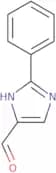
2-Phenyl-1H-imidazole-4-carbaldehyde
CAS:2-Phenyl-1H-imidazole-4-carbaldehyde is an aldehyde that is used as a ligand in asymmetric synthesis. It can be used in the nitroaldol reaction to produce chiral imidazole derivatives. The compound is useful for the synthesis of molecules with high molecular weight and low reactivity, which can be further modified to produce pharmaceuticals. The compound has been shown to catalyze organic reactions, such as condensation products and stereospecific reactions.Formula:C10H8N2OPurity:Min. 95%Molecular weight:172.19 g/molRef: 3D-TCA28247
Discontinued product3-Oxa-1-azaspiro[4.4]nonane-2,4-dione
CAS:Versatile small molecule scaffold
Formula:C7H9NO3Purity:Min. 95%Molecular weight:155.15 g/mol3-Azaspiro[5.6]dodecane-2,4-dione
CAS:Versatile small molecule scaffold
Formula:C11H17NO2Purity:Min. 95%Molecular weight:195.26 g/molRef: 3D-BAA07889
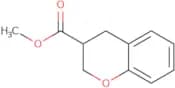
Discontinued productMethyl chroman-3-carboxylate
CAS:Versatile small molecule scaffold
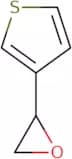
Formula:C11H12O3Purity:Min. 95%Molecular weight:192.21 g/mol2-(Thiophen-3-yl)oxirane
CAS:Versatile small molecule scaffold
Formula:C6H6OSPurity:Min. 95%Molecular weight:126.18 g/molRef: 3D-TCA27738
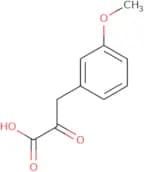
Discontinued product3-(3-Methoxyphenyl)-2-oxopropanoic acid
CAS:Vanillic acid is a phenolic compound that can be found in vanilla and other plants. It is an important precursor for the synthesis of aromatic compounds such as ferulic acid, lignin, and coumarin. Vanillic acid has been shown to have a variety of biochemical and chemists properties, including the ability to aromatize, which means it can be used in the preparation of synthetic hormones. This compound also acts as an antioxidant by scavenging reactive oxygen species. Vanillic acid is found in two sources: pre-existing vanillin (from plants) and ferulic acid (from microbial metabolism). Vanillin is derived from coniferyl alcohol and coniferaldehyde, which are both found in poria. Ferulic acid is produced by polyporus fungi and can be converted into vanillic acid via decarboxylation.Formula:C10H10O4Purity:Min. 95%Molecular weight:194.18 g/molRef: 3D-TCA26220
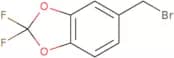
Discontinued product5-(Bromomethyl)-2,2-difluoro-2H-1,3-benzodioxole
CAS:Versatile small molecule scaffold
Formula:C8H5BrF2O2Purity:Min. 95%Molecular weight:251.02 g/mol3-(Propan-2-yl)-3-azabicyclo[3.3.1]nonan-9-one
CAS:Versatile small molecule scaffoldFormula:C11H19NOPurity:Min. 95%Molecular weight:181.27 g/molRef: 3D-TCA06655
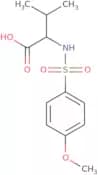
Discontinued product(2S)-2-(4-Methoxybenzenesulfonamido)-3-methylbutanoic acid
CAS:Versatile small molecule scaffoldFormula:C12H17NO5SPurity:Min. 95%Molecular weight:287.33 g/molRef: 3D-TCA03019
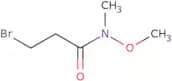
Discontinued product3-Bromo-N-methoxy-N-methyl-propanamide
CAS:Versatile small molecule scaffold
Formula:C5H10BrNO2Purity:Min. 95%Molecular weight:196.04 g/molRef: 3D-DFA56258
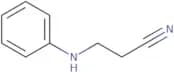
Discontinued product3-(Phenylamino)propanenitrile
CAS:3-(Phenylamino)propanenitrile (N-phenylglycine, PAG) is an amine that belongs to the class of compounds known as thermodynamic reaction intermediates. It is a chiral compound that can be used for the synthesis of β-unsaturated ketones and bichloride. The synthesis of PAG begins with the addition of phosphorus pentachloride and acrylonitrile to a solution containing thiamine pyrophosphate in an inorganic acid, such as hydrochloric acid. The reaction produces a mixture of amino acids and amides, including PAG. This process has been scaled up and shown to be selective for PAG.
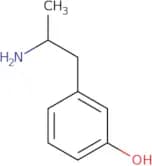
Formula:C9H10N2Purity:Min. 95%Molecular weight:146.19 g/mol3-(2-Aminopropyl)phenol
CAS:Controlled Product3-(2-Aminopropyl)phenol is a water-soluble drug that has been used as a pharmaceutical dosage to treat symptoms of autoimmune diseases and heart tissue damage. 3-(2-Aminopropyl)phenol is commonly found in the form of its salt, 3-(2-aminopropyl)benzene sulfonic acid, which is used to treat congestive heart failure. The chemical ionization of 3-(2-aminopropyl)phenol has been used to identify protein genes that encode for enzymes involved in the production of inflammatory substances. 3-(2-Aminopropyl)phenol also has anti-inflammatory properties.
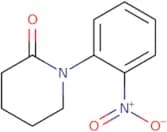
Formula:C9H13NOPurity:Min. 95%Molecular weight:151.21 g/mol2-Piperidinone, 1-(2-nitrophenyl)-
CAS:Versatile small molecule scaffold
Formula:C11H12N2O3Purity:Min. 95%Molecular weight:220.22 g/molRef: 3D-DIA50992
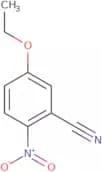
Discontinued product5-Ethoxy-2-nitrobenzonitrile
CAS:Versatile small molecule scaffold
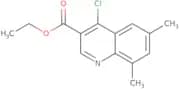
Formula:C9H8N2O3Purity:Min. 95%Molecular weight:192.17 g/molEthyl 4-chloro-6,8-dimethylquinoline-3-carboxylate
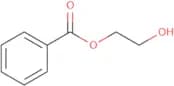
CAS:Versatile small molecule scaffoldFormula:C14H14ClNO2Purity:Min. 95%Molecular weight:263.72 g/mol2-Hydroxyethyl benzoate
CAS:2-Hydroxyethyl benzoate is a model system that has been used to study the mechanism of hydrolysis of an ester with a hydroxyl group. The reaction products are a metal hydroxide and a chloride ion. 2-Hydroxyethyl benzoate is an antimicrobial agent that has shown activity against bacteria, fungi, and protozoa. It is thought to work by reacting with fatty acids in the cell membrane, leading to disruption of the membrane and leakage of cellular contents. It also reacts with chloride ions to form hydroxybenzoic acid and water molecules. The activation energy for this reaction was found to be around 19 kJ mol−1.
Formula:C9H10O3Purity:Min. 95%Molecular weight:166.17 g/mol4,5-Dihydro-1H-imidazol-2-amine hydrochloride
CAS:Please enquire for more information about 4,5-Dihydro-1H-imidazol-2-amine hydrochloride including the price, delivery time and more detailed product information at the technical inquiry form on this page
Formula:C3H7N3•HClPurity:Min. 95%Molecular weight:121.57 g/molRef: 3D-FD183639
Discontinued product1-Hydroxycyclopentane-1-carbonitrile
CAS:1-Hydroxycyclopentane-1-carbonitrile is a monomer that is hydrolyzed to form benzoin and cyanohydrins. It can be used in the production of scifinder as a monomer or dimerizer.
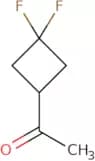
Formula:C6H9NOPurity:Min. 95%Molecular weight:111.14 g/mol1-(3,3-Difluorocyclobutyl)ethan-1-one
CAS:Versatile small molecule scaffold
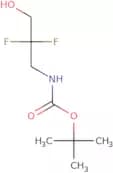
Formula:C6H8F2OPurity:Min. 95%Molecular weight:134.13 g/moltert-Butyl (2,2-difluoro-3-hydroxypropyl)carbamate
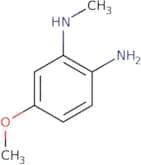
CAS:Versatile small molecule scaffoldFormula:C10H13NO4Purity:Min. 95%Molecular weight:211.21 g/mol5-Methoxy-N1-methylbenzene-1,2-diamine
CAS:Versatile small molecule scaffold
Formula:C8H12N2OPurity:Min. 95%Molecular weight:152.19 g/mol3,6-Dichloropicolinonitrile
CAS:3,6-Dichloropicolinonitrile is a peroxide that is used in the synthesis of organic compounds. It is produced by the reaction of sodium carbonate and hydrochloric acid with nitric acid as a catalyst. 3,6-Dichloropicolinonitrile has been shown to be more selective than other oxidizing agents such as hydrogen peroxide and potassium permanganate. The product can then be purified by adding diacetate, which selectively reacts with the chlorine to form acetyl chloride and glycolic acid. The resulting mixture can then be distilled to produce 3,6-dichloropicolinonitrile in high purity. 3,6-Dichloropicolinonitrile can also be used in electrochemical methods for the synthesis of cyanides or biochemically for virulent products such as pesticides and organic solvents.
Formula:C6H2Cl2N2Purity:Min. 95%Molecular weight:173 g/mol2-Bromo-5-fluoro-4-nitroaniline
CAS:2-Bromo-5-fluoro-4-nitroaniline can be synthesized in a reaction system of ammonium chloride, hydrochloric acid, and water vapor. The reaction is carried out at a temperature of 190°C under reflux. The efficiency of this synthesis is high, and the chemical yield is about 90%.
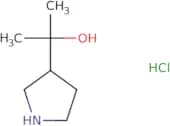
Formula:C6H4BrFN2O2Purity:Min. 95%Molecular weight:235.01 g/mol(S)-2-(3-Pyrrolidinyl)-2-propanol Hydrochloride ee
CAS:Versatile small molecule scaffold
Formula:C7H16ClNOPurity:Min. 95%Molecular weight:165.66 g/mol2-Bromo-3,3,3-trifluoro-1-propene
CAS:Controlled Product2-Bromo-3,3,3-trifluoro-1-propene is a chemical compound that has been synthesized in an asymmetric reaction. The reactant is bromopropane and the product is 2,2,2-trifluoropropene. The methylene group on the propene molecule is activated by the nucleophilic attack of a fluoride ion from hydrogen fluoride to form a cavity with a highly strained bond. The kinetic study of this reaction revealed that the activation energy for the reaction is 42 kJ/mol. Palladium-catalyzed coupling reactions are catalyzed by palladium and require nonpolar solvents such as toluene or dichloromethane. This type of reaction has been shown to be exothermic with an isolated yield of 1%.
Formula:C3H2BrF3Purity:Min. 95%Color and Shape:Colorless PowderMolecular weight:174.95 g/mol4-Chloro-2-hydroxy-6-methylphenylboronic acid
CAS:Versatile small molecule scaffoldFormula:C7H8BClO3Purity:Min. 95%Molecular weight:186.4 g/mol4-Bromo-2,3-difluoropyridine
CAS:Versatile small molecule scaffold
Formula:C5H2BrF2NPurity:Min. 95%Molecular weight:193.98 g/mol3-Hydroxy-5-methylpyridine
CAS:3-Hydroxy-5-methylpyridine (3HMP) is a chemical substance that has been classified as an amine. It is a product of the metabolism of purines, which are nitrogenous bases found in DNA and RNA. 3HMP is produced by aerogenic bacteria (such as Enterobacter), and can be used to estimate the number of these bacteria present in water samples. 3HMP has been shown to have antiviral properties against influenza virus, and can be used as a biomarker for the presence of other viruses in animals. 3HMP also has mineralization properties, which have been studied extensively, particularly with regards to pancreatic disease.
Formula:C6H7NOPurity:Min. 95%Color and Shape:PowderMolecular weight:109.13 g/molRef: 3D-FH16174
Discontinued product8-Bromo-2-methylimidazo[1,2-a]pyridine
CAS:Versatile small molecule scaffold
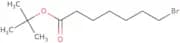
Formula:C8H7N2BrPurity:Min. 95%Molecular weight:211.05 g/moltert-Butyl 7-bromoheptanoate
CAS:Versatile small molecule scaffold
Formula:C11H21BrO2Purity:Min. 95%Molecular weight:265.19 g/mol4,5-Dihydroxy-2,3-Pentanedione
CAS:4,5-Dihydroxy-2,3-pentanedione is a carbonyl compound that is the product of the oxidation of ascorbic acid. It is used in wastewater treatment and has antimicrobial properties against infectious diseases. This compound has been shown to inhibit protein synthesis by binding to the ribosome and preventing the formation of peptide bonds between amino acids. 4,5-Dihydroxy-2,3-pentanedione has also been shown to bind to plasma proteins, which may be due to its acyl chain structure. 4,5-Dihydroxy-2,3-pentanedione can be synthesized in a catalytic mechanism that involves dehydroascorbic acid and molecular oxygen.
Formula:C5H8O4Purity:Min. 95%Color and Shape:PowderMolecular weight:132.11 g/molRef: 3D-FD180770
Discontinued productPiperyline
CAS:Piperyline is an alkanoic acid that has shown to be effective against skin cancer. It also has antimicrobial properties, which may be due to its ability to bind metal ions and form polymeric compounds. Piperyline inhibits microbial growth by inhibiting the synthesis of proteins and nucleic acids. The antimicrobial activity is related to its cationic polymerization with hydroxyl groups, which forms a structure that can inhibit microbial enzymes and disrupt microbial cell membranes. This compound also interacts with the skin's natural lipids, making it difficult for microorganisms to attach and grow on the skin. Piperyline is synthesized in organic chemistry laboratories as an amide precursor of other pharmaceuticals such as penicillin.
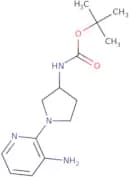
Formula:C16H17NO3Purity:Min. 95%Molecular weight:271.31 g/mol(R)-tert-Butyl 1-(3-aminopyridin-2-yl)pyrrolidin-3-ylcarbamate
CAS:Versatile small molecule scaffoldFormula:C14H22N4O2Purity:Min. 95%Molecular weight:278.35 g/molRef: 3D-IZB85984
Discontinued productMacaridine
CAS:Please enquire for more information about Macaridine including the price, delivery time and more detailed product information at the technical inquiry form on this page
Formula:C13H13NO2Purity:Min. 95%Molecular weight:215.25 g/molRef: 3D-FM183770
Discontinued product

![3-Oxa-1-azaspiro[4.4]nonane-2,4-dione](/_next/image/?url=https%3A%2Fstatic.cymitquimica.com%2Fproducts%2F3D%2Fthumb-webp%2FDAA25344.webp&w=3840&q=75)
![3-Azaspiro[5.6]dodecane-2,4-dione](/_next/image/?url=https%3A%2Fstatic.cymitquimica.com%2Fproducts%2F3D%2Fthumb-webp%2FBAA07889.webp&w=3840&q=75)
![3-(Propan-2-yl)-3-azabicyclo[3.3.1]nonan-9-one](/_next/image/?url=https%3A%2Fstatic.cymitquimica.com%2Fproducts%2F3D%2Fthumb-webp%2FTCA06655.webp&w=3840&q=75)






![8-Bromo-2-methylimidazo[1,2-a]pyridine](/_next/image/?url=https%3A%2Fstatic.cymitquimica.com%2Fproducts%2F3D%2Fthumb-webp%2FUXB37475.webp&w=3840&q=75)