


Building Blocks
This section contains fundamental products for the synthesis of organic and biological compounds. Building blocks are the essential starting materials used to construct complex molecules through various chemical reactions. They play a critical role in drug discovery, material science, and chemical research. At CymitQuimica, we offer a diverse range of high-quality building blocks to support your innovative research and industrial projects, ensuring you have the essential components for successful synthesis.
Subcategories of "Building Blocks"
- Boronic Acids & Boronic Acid Derivatives(5,778 products)
- Chiral Building Blocks(1,242 products)
- Hydrocarbon Building Blocks(6,098 products)
- Organic Building Blocks(61,098 products)
Found 199594 products of "Building Blocks"
Sort by
Purity (%)
0
100
|
0
|
50
|
90
|
95
|
100
4-(3-Methoxypropyl)-4H-1,2,4-triazole-3-thiol
CAS:<p>4-(3-Methoxypropyl)-4H-1,2,4-triazole-3-thiol is a sulfuric acid derivative of 4H-1,2,4-triazole-3-thiol. It is an efficient and potentiodynamic polarizer that can be used to measure the concentration of copper ions in solution. This agent has been shown to have synergistic effects with copper ions and can be used as an analytical tool for cyclic voltammetry.</p>Formula:C6H11N3OSPurity:Min. 95%Molecular weight:173.24 g/mol2-[(3-Phenyl-1,2,4-oxadiazol-5-yl)methoxy]acetic acid
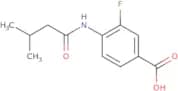
CAS:<p>Versatile small molecule scaffold</p>Formula:C11H10N2O4Purity:Min. 95%Molecular weight:234.21 g/mol3-Fluoro-4-(3-methylbutanamido)benzoic acid
CAS:<p>Versatile small molecule scaffold</p>Formula:C12H14FNO3Purity:Min. 95%Molecular weight:239.24 g/molRef: 3D-ABC43347
Discontinued productN-[4-Chloro-3-(trifluoromethyl)phenyl]-2-hydroxybenzamide
CAS:<p>Versatile small molecule scaffold</p>Formula:C14H9ClF3NO2Purity:Min. 95%Molecular weight:315.67 g/molRef: 3D-AAA36974
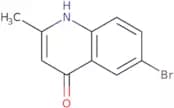
Discontinued product6-Bromo-2-methylquinolin-4-ol
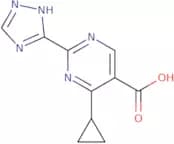
CAS:<p>Versatile small molecule scaffold</p>Formula:C10H8BrNOPurity:Min. 95%Molecular weight:238.08 g/mol4-Cyclopropyl-2-(4H-1,2,4-triazol-3-yl)pyrimidine-5-carboxylic acid
CAS:<p>Versatile small molecule scaffold</p>Formula:C10H9N5O2Purity:Min. 95%Molecular weight:231.21 g/molRef: 3D-JBC91477
Discontinued product2-[(Piperazin-1-yl)methyl]-3H,4H-thieno[3,2-d]pyrimidin-4-one dihydrochloride
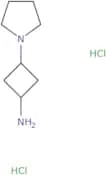
CAS:<p>Versatile small molecule scaffold</p>Formula:C11H16Cl2N4OSPurity:Min. 95%Molecular weight:323.2 g/molrac-(1S,3S)-3-(Pyrrolidin-1-yl)cyclobutan-1-amine dihydrochloride
CAS:<p>Versatile small molecule scaffold</p>Formula:C8H18Cl2N2Purity:Min. 95%Molecular weight:213.15 g/molRef: 3D-JBD28873
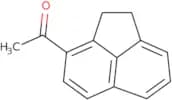
Discontinued product1-(1,2-Dihydroacenaphthylen-3-yl)ethan-1-one
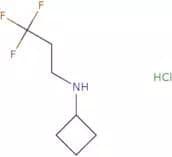
CAS:<p>Versatile small molecule scaffold</p>Formula:C14H12OPurity:Min. 95%Molecular weight:196.24 g/molN-(3,3,3-Trifluoropropyl)cyclobutanamine hydrochloride
CAS:<p>Versatile small molecule scaffold</p>Formula:C7H13ClF3NPurity:Min. 95%Molecular weight:203.63 g/molRef: 3D-JFC42748
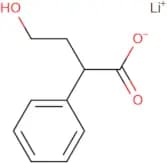
Discontinued product4-hydroxy-2-phenylbutanoate lithium
CAS:<p>Versatile small molecule scaffold</p>Formula:C10H11LiO3Purity:Min. 95%Molecular weight:186.2 g/molRef: 3D-JHD94264
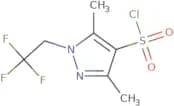
Discontinued product3,5-Dimethyl-1-(2,2,2-trifluoroethyl)-1H-pyrazole-4-sulfonyl chloride
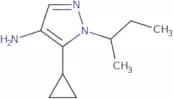
CAS:<p>Versatile small molecule scaffold</p>Formula:C7H8ClF3N2O2SPurity:Min. 95%Molecular weight:276.66 g/mol1-(Butan-2-yl)-5-cyclopropyl-1H-pyrazol-4-amine
CAS:<p>Versatile small molecule scaffold</p>Formula:C10H17N3Purity:Min. 95%Molecular weight:179.26 g/molRef: 3D-GQB45453
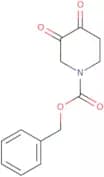
Discontinued productBenzyl 3,4-dioxopiperidine-1-carboxylate
CAS:<p>Versatile small molecule scaffold</p>Formula:C13H13NO4Purity:Min. 95%Molecular weight:247.25 g/molRef: 3D-JHD94774
Discontinued productN-(Propan-2-yl)-2-[({2-[(propan-2-yl)carbamoyl]phenyl}sulfamoyl)amino]benzamide
CAS:<p>Versatile small molecule scaffold</p>Formula:C20H26N4O4SPurity:Min. 95%Molecular weight:418.5 g/molRef: 3D-GFA76871
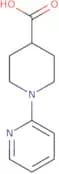
Discontinued product1-(Pyridin-2-yl)piperidine-4-carboxylic acid
CAS:<p>Versatile small molecule scaffold</p>Formula:C11H14N2O2Purity:Min. 95%Molecular weight:206.24 g/molRef: 3D-KCB82770
Discontinued product5-Bromo-6-hydroxypyrimidine-4-carboxylic acid
CAS:<p>5-Bromo-6-hydroxypyrimidine-4-carboxylic acid is a homologous organic acid that is used as a pharmaceutical preservative. It is most commonly found in acidic pharmaceutical formulations. 5-Bromo-6-hydroxypyrimidine-4-carboxylic acid inhibits the growth of bacteria and fungi by acting as an enzyme inhibitor. The inhibition of enzymes such as lactamase, which breaks down the lactam ring in penicillin, prevents bacterial and fungal growth by preventing them from breaking down their natural cell walls. 5-Bromo-6-hydroxypyrimidine-4-carboxylic acid has also been shown to have potent anticancer activity in the lab setting, although the clinical significance of this has not yet been determined.</p>Formula:C5H3BrN2O3Purity:Min. 95%Molecular weight:218.99 g/molRef: 3D-KFA27482
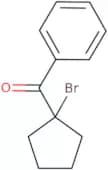
Discontinued product(1-Bromocyclopentyl)(phenyl)methanone
CAS:<p>Versatile small molecule scaffold</p>Formula:C12H13BrOPurity:Min. 95%Molecular weight:253.13 g/molRef: 3D-GAA74066
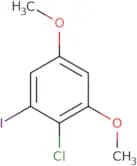
Discontinued product2-Chloro-1-iodo-3,5-dimethoxybenzene
CAS:<p>Versatile small molecule scaffold</p>Formula:C8H8ClIO2Purity:Min. 95%Molecular weight:298.5 g/molRef: 3D-FXC22420
Discontinued product2-[(1-Phenylethyl)amino]propanoic acid hydrochloride
CAS:<p>Versatile small molecule scaffold</p>Formula:C11H16ClNO2Purity:Min. 95%Molecular weight:229.7 g/molRef: 3D-KJC81808
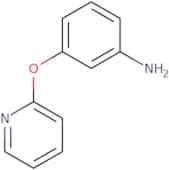
Discontinued product3-(Pyridin-2-yloxy)aniline
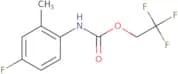
CAS:<p>3-(Pyridin-2-yloxy)aniline is a synthetic compound that is used as a potent inhibitor of the enzyme tyrosine hydroxylase. This enzyme catalyzes the conversion of tyrosine to L-3,4-dihydroxyphenylalanine and plays a key role in the synthesis of dopamine. 3-(Pyridin-2-yloxy)aniline has been shown to be effective in treating Parkinson's disease and other disorders that involve neuronal degeneration and cell death. This drug inhibits the production of dopamine by binding to tyrosine hydroxylase, thereby preventing it from converting tyrosine into L-3,4-dihydroxyphenylalanine. The compound also has significant inhibitory activity against cyclin dependent kinases (CDKs), which are enzymes that regulate the activity of protein kinases.</p>Formula:C11H10N2OPurity:Min. 95%Molecular weight:186.21 g/mol2,2,2-Trifluoroethyl N-(4-fluoro-2-methylphenyl)carbamate
CAS:<p>Versatile small molecule scaffold</p>Formula:C10H9F4NO2Purity:Min. 95%Molecular weight:251.18 g/molRef: 3D-MTB78898
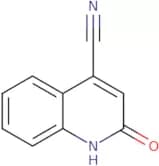
Discontinued product2-Oxo-1,2-dihydroquinoline-4-carbonitrile
CAS:<p>Versatile small molecule scaffold</p>Formula:C10H6N2OPurity:Min. 95%Molecular weight:170.17 g/molRef: 3D-NCA15899
Discontinued product2-[2-(1-Piperidinyl)ethoxy]benzaldehyde hydrochloride
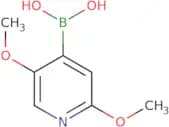
CAS:<p>Versatile small molecule scaffold</p>Formula:C14H20ClNO2Purity:Min. 95%Molecular weight:269.77 g/mol2,5-Dimethoxypyridine-4-boronic acid
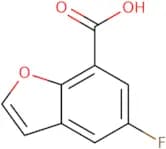
CAS:<p>Versatile small molecule scaffold</p>Formula:C7H10BNO4Purity:Min. 95%Molecular weight:182.97 g/mol5-Fluorobenzofuran-7-carboxylic acid
CAS:<p>Versatile small molecule scaffold</p>Formula:C9H5FO3Purity:Min. 95%Molecular weight:180.13 g/molRef: 3D-NFC02103
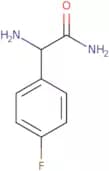
Discontinued product2-Amino-2-(4-fluorophenyl)acetamide
CAS:<p>Versatile small molecule scaffold</p>Formula:C8H9FN2OPurity:Min. 95%Molecular weight:168.17 g/molRef: 3D-PHA13828
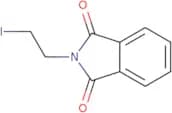
Discontinued product2-(2-Iodoethyl)-2,3-dihydro-1H-isoindole-1,3-dione
CAS:<p>2-(2-Iodoethyl)-2,3-dihydro-1H-isoindole-1,3-dione is a crystalline compound that is an n-substituted derivative of phthalimide. It has been shown to be effective for the treatment of tuberculosis. This drug binds to DNA and inhibits transcription and replication. 2-(2-Iodoethyl)-2,3-dihydro-1H-isoindole-1,3-dione also inhibits bacterial growth by binding to RNA polymerase.</p>Formula:C10H8INO2Purity:Min. 95%Molecular weight:301.08 g/mol1-[2-(4-Bromophenoxy)ethyl]-4-methylpiperazine dihydrochloride
CAS:<p>Versatile small molecule scaffold</p>Formula:C13H21BrCl2N2OPurity:Min. 95%Molecular weight:372.1 g/molRef: 3D-QDA23668
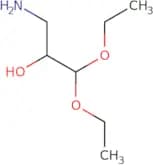
Discontinued product3-Amino-1,1-diethoxypropan-2-ol
CAS:<p>Versatile small molecule scaffold</p>Formula:C7H17NO3Purity:Min. 95%Molecular weight:163.21 g/molRef: 3D-QEA82718
Discontinued productPyrazolo[1,5-a]pyridin-4-ol
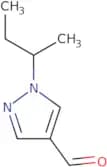
CAS:<p>Pyrazolo[1,5-a]pyridin-4-ol is a heteroaromatic compound that acts as an inhibitor of phosphodiesterase (PDE). It prevents the breakdown of cyclic nucleotides and thus leads to increased levels of cAMP and cGMP. Pyrazolo[1,5-a]pyridin-4-ol has been shown to have bronchodilatory activity in animal models. The drug also inhibits the production of inflammatory mediators such as prostaglandins by inhibiting cyclooxygenases. In addition, pyrazolo[1,5-a]pyridin-4-ol has been shown to be a potential PDE inhibitor replacement for the more commonly used PDE inhibitors such as sildenafil and tadalafil. However, due to its lack of stereochemistry and its bicyclic chemical structure, pyrazolo[1,5-a]</p>Formula:C7H6N2OPurity:Min. 95%Molecular weight:134.14 g/mol1-(Butan-2-yl)-1H-pyrazole-4-carbaldehyde
CAS:<p>Versatile small molecule scaffold</p>Formula:C8H12N2OPurity:Min. 95%Molecular weight:152.19 g/molRef: 3D-VWB16927
Discontinued product2,2-Dimethylpentan-1-amine hydrochloride
CAS:<p>Versatile small molecule scaffold</p>Formula:C7H18ClNPurity:Min. 95%Molecular weight:151.7 g/molEthyl 3-chloro-6-cyclopropylpyridazine-4-carboxylate
CAS:<p>Versatile small molecule scaffold</p>Formula:C10H11ClN2O2Purity:Min. 95%Molecular weight:226.66 g/molRef: 3D-YID11348
Discontinued product[1-(2-Methylpropyl)cyclohexyl]methanol
CAS:<p>Versatile small molecule scaffold</p>Formula:C11H22OPurity:Min. 95%Molecular weight:170.29 g/mol2-[(1,1-Dioxo-2,5-dihydro-1λ⁶-thiophen-3-yl)sulfanyl]-N-phenylacetamide
CAS:<p>Versatile small molecule scaffold</p>Formula:C12H13NO3S2Purity:Min. 95%Molecular weight:283.4 g/molRef: 3D-YUB20412
Discontinued product2-Bromo-4-(4-fluorophenyl)-1,3-thiazole
CAS:<p>Versatile small molecule scaffold</p>Formula:C9H5NFSBrPurity:Min. 95%Molecular weight:258.11 g/mol3-Methylbenzo[b]thiophene-2-carboxylic acid
CAS:<p>3-Methylbenzo[b]thiophene-2-carboxylic acid (MBTCA) is a heterocyclic compound that is an intermediate in the synthesis of 3-methylthiophene-2-carboxylic acid, a precursor to other drugs. MBTCA is an aerobic, nonpolar compound that has shown antimicrobial activity against some bacteria and fungi. It also has been shown to have practicality as a biomolecular probe for methyl groups in organic solvents. MBTCA can be synthesized by nitration of benzene in the presence of sulfur and sulfoxides. This reaction produces nitrobenzene, which can then be oxidized by potassium permanganate or hydrogen peroxide to produce MBTCA. The most common isomer of MBTCA is 2-(3,5-dimethoxybenzylidene)tetrahydrofuran, with three methyl groups on the</p>Formula:C10H8O2SPurity:Min. 95%Molecular weight:192.23 g/mol2-Acetylbenzoic acid
CAS:<p>2-Acetylbenzoic acid is a functional molecule that contains an acetyl group. It can form hydrogen bonds with other molecules and has been shown to induce apoptosis in cells. The reaction products of 2-acetylbenzoic acid are malonic acid, acetylsalicylic acid, and 2-benzoylbenzoic acid. These three compounds are made by the addition of hydrogen or hydroxide to the molecule 2-acetylbenzoic acid. The molecule has two functional groups: a carbonyl group and an acetyl group. The chemical structure of this molecule can be seen in the figure below.<br>2-Acetylbenzoic Acid</p>Formula:C9H8O3Purity:Min. 95%Color and Shape:PowderMolecular weight:164.16 g/molRef: 3D-FA05086
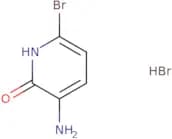
Discontinued product3-amino-6-bromopyridin-2-ol hydrobromide
CAS:<p>Versatile small molecule scaffold</p>Formula:C5H6Br2N2OPurity:Min. 95%Molecular weight:269.9 g/mol3-(Methoxycarbonyl)pyridine-4-carboxylic acid
CAS:<p>Versatile small molecule scaffold</p>Formula:C8H7NO4Purity:Min. 95%Molecular weight:181.15 g/mol2-Bromo-3,3,3-trifluoro-1-propene
CAS:Controlled Product<p>2-Bromo-3,3,3-trifluoro-1-propene is a chemical compound that has been synthesized in an asymmetric reaction. The reactant is bromopropane and the product is 2,2,2-trifluoropropene. The methylene group on the propene molecule is activated by the nucleophilic attack of a fluoride ion from hydrogen fluoride to form a cavity with a highly strained bond. The kinetic study of this reaction revealed that the activation energy for the reaction is 42 kJ/mol. Palladium-catalyzed coupling reactions are catalyzed by palladium and require nonpolar solvents such as toluene or dichloromethane. This type of reaction has been shown to be exothermic with an isolated yield of 1%.</p>Formula:C3H2BrF3Purity:Min. 95%Color and Shape:Colorless PowderMolecular weight:174.95 g/mol3-Boc-3-azabicyclo[3.2.1]octan-8-amine
CAS:<p>Versatile small molecule scaffold</p>Formula:C12H22N2O2Purity:Min. 95%Molecular weight:226.32 g/molGivinostat hydrochloride
CAS:<p>Givinostat hydrochloride is a research chemical that has shown potential in various fields. It is a molybdenum-based compound that has been studied for its effects on dopamine release and hydrogen evolution. Givinostat hydrochloride has also been investigated as an osteoclast inhibitor, which may be beneficial in the treatment of bone-related disorders such as osteoporosis. Additionally, it has shown promise as a retinoid and calpain inhibitor, suggesting its potential use in dermatological conditions and neurodegenerative diseases. The compound contains fluorine atoms, making it suitable for imaging studies using fluorine MRI techniques. Givinostat hydrochloride has been tested on MDA-MB-231 cells and has shown inhibitory effects on their growth, indicating its potential as an anticancer agent.</p>Formula:C24H27N3O4·HClPurity:Min. 95%Molecular weight:457.95 g/mol


![2-[(3-Phenyl-1,2,4-oxadiazol-5-yl)methoxy]acetic acid](/_next/image/?url=https%3A%2Fstatic.cymitquimica.com%2Fproducts%2F3D%2Fthumb-webp%2FABC54398.webp&w=3840&q=75)
![N-[4-Chloro-3-(trifluoromethyl)phenyl]-2-hydroxybenzamide](/_next/image/?url=https%3A%2Fstatic.cymitquimica.com%2Fproducts%2F3D%2Fthumb-webp%2FAAA36974.webp&w=3840&q=75)
![2-[(Piperazin-1-yl)methyl]-3H,4H-thieno[3,2-d]pyrimidin-4-one dihydrochloride](/_next/image/?url=https%3A%2Fstatic.cymitquimica.com%2Fproducts%2F3D%2Fthumb-webp%2FHGD66526.webp&w=3840&q=75)
![N-(Propan-2-yl)-2-[({2-[(propan-2-yl)carbamoyl]phenyl}sulfamoyl)amino]benzamide](/_next/image/?url=https%3A%2Fstatic.cymitquimica.com%2Fproducts%2F3D%2Fthumb-webp%2FGFA76871.webp&w=3840&q=75)

![2-[(1-Phenylethyl)amino]propanoic acid hydrochloride](/_next/image/?url=https%3A%2Fstatic.cymitquimica.com%2Fproducts%2F3D%2Fthumb-webp%2FKJC81808.webp&w=3840&q=75)
![2-[2-(1-Piperidinyl)ethoxy]benzaldehyde hydrochloride](/_next/image/?url=https%3A%2Fstatic.cymitquimica.com%2Fproducts%2F3D%2Fthumb-webp%2FNFA35108.webp&w=3840&q=75)
![1-[2-(4-Bromophenoxy)ethyl]-4-methylpiperazine dihydrochloride](/_next/image/?url=https%3A%2Fstatic.cymitquimica.com%2Fproducts%2F3D%2Fthumb-webp%2FQDA23668.webp&w=3840&q=75)
![Pyrazolo[1,5-a]pyridin-4-ol](/_next/image/?url=https%3A%2Fstatic.cymitquimica.com%2Fproducts%2F3D%2Fthumb-webp%2FRFA03272.webp&w=3840&q=75)
![[1-(2-Methylpropyl)cyclohexyl]methanol](/_next/image/?url=https%3A%2Fstatic.cymitquimica.com%2Fproducts%2F3D%2Fthumb-webp%2FFHC75203.webp&w=3840&q=75)
![2-[(1,1-Dioxo-2,5-dihydro-1λ⁶-thiophen-3-yl)sulfanyl]-N-phenylacetamide](/_next/image/?url=https%3A%2Fstatic.cymitquimica.com%2Fproducts%2F3D%2Fthumb-webp%2FYUB20412.webp&w=3840&q=75)

![3-Methylbenzo[b]thiophene-2-carboxylic acid](/_next/image/?url=https%3A%2Fstatic.cymitquimica.com%2Fproducts%2F3D%2Fthumb-webp%2FDAA13378.webp&w=3840&q=75)



![3-Boc-3-azabicyclo[3.2.1]octan-8-amine](/_next/image/?url=https%3A%2Fstatic.cymitquimica.com%2Fproducts%2F3D%2Fthumb-webp%2FFDC76351.webp&w=3840&q=75)
