


Building Blocks
This section contains fundamental products for the synthesis of organic and biological compounds. Building blocks are the essential starting materials used to construct complex molecules through various chemical reactions. They play a critical role in drug discovery, material science, and chemical research. At CymitQuimica, we offer a diverse range of high-quality building blocks to support your innovative research and industrial projects, ensuring you have the essential components for successful synthesis.
Subcategories of "Building Blocks"
- Boronic Acids & Boronic Acid Derivatives(5,778 products)
- Chiral Building Blocks(1,242 products)
- Hydrocarbon Building Blocks(6,098 products)
- Organic Building Blocks(61,092 products)
Found 199296 products of "Building Blocks"
Sort by
Purity (%)
0
100
|
0
|
50
|
90
|
95
|
100
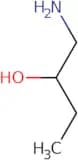
(S)-1-Aminobutan-2-ol
CAS:<p>Versatile small molecule scaffold</p>Formula:C4H11NOPurity:Min. 95%Molecular weight:89.14 g/molMethyl 2-[(4-hydroxyphenyl)sulfanyl]acetate
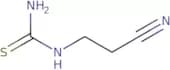
CAS:<p>Versatile small molecule scaffold</p>Formula:C9H10O3SPurity:Min. 95%Molecular weight:198.24 g/mol(2-Cyanoethyl)thiourea
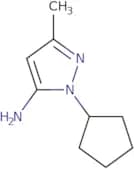
CAS:<p>(2-Cyanoethyl)thiourea is a carbonyl compound that is insoluble in water. It has a molecular weight of 180.2 and it contains two carbon atoms. The compound is crosslinked and lactate-modified, but not modified by lysine or unmodified. This compound reacts with the enzyme dehydrogenase to produce hydrogen peroxide and 2-cyanoethanol. The reaction mechanism for this process is as follows: <br>The substrate binds to the active site of the enzyme, forming an enzyme-substrate complex; the enzyme transfers electrons from NADH to the substrate; this results in a release of hydrogen peroxide, which then reacts with 2-cyanoethanol to form ethylene glycol and oxalic acid. The x-ray analysis showed that this molecule has a homologous structure with other enzymes.</p>Formula:C4H7N3SPurity:Min. 95%Molecular weight:129.19 g/mol2-Cyclopentyl-5-methyl-2H-pyrazol-3-ylamine
CAS:<p>Versatile small molecule scaffold</p>Formula:C9H15N3Purity:Min. 95%Molecular weight:165.24 g/mol2-(2,6-Dimethoxyphenoxymethyl)oxirane
CAS:<p>Versatile small molecule scaffold</p>Formula:C11H14O4Purity:Min. 95%Molecular weight:210.23 g/molRef: 3D-FAA43529
Discontinued product2-Hydroxy-4-(phenylmethoxy)benzoic Acid Methyl Ester
CAS:<p>2-Hydroxy-4-(phenylmethoxy)benzoic Acid Methyl Ester is a benzene derivative that inhibits the binding of xanthones to the benzene ring in a variety of ways. This compound is formed by reacting phenol with methyl benzoate in the presence of acid and heat. The low energy ligand inhibits the binding of xanthones to benzene by forming hydrogen bonds, covalent bonds, or van der Waals forces with the anion. 2-Hydroxy-4-(phenylmethoxy)benzoic acid methyl ester has shown anti-inflammatory properties, which may be due to its ability to inhibit leukocyte adhesion at inflammatory sites.</p>Formula:C15H14O4Purity:Min. 95%Molecular weight:258.27 g/molRef: 3D-FAA42729
Discontinued producttert-Butyl (4aS,7aS)-octahydro-1H-pyrrolo[3,4-b]pyridine-6-carboxylate
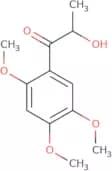
CAS:<p>Versatile small molecule scaffold</p>Formula:C12H22N2O2Purity:Min. 95%Molecular weight:226.32 g/mol(2R)-2-Hydroxy-1-(2,4,5-trimethoxyphenyl)propan-1-one
CAS:<p>(2R)-2-Hydroxy-1-(2,4,5-trimethoxyphenyl)propan-1-one is an efficient method for the synthesis of adenosine. This method is based on a cyclic reaction with trimethoxybenzene and yields 2 moles of adenosine per mole of trimethoxybenzene. The reaction time is short and the yield is high. This synthetic route has been used to produce large quantities of adenosine for use in pharmacological studies. (2R)-2-Hydroxy-1-(2,4,5-trimethoxyphenyl)propan-1-one can be used as an enantiomer for the synthesis of other compounds. It was also shown that nitrite mediates this reaction</p>Formula:C12H16O5Purity:Min. 95%Molecular weight:240.25 g/molRef: 3D-EZB00535
Discontinued product{5H,7H,8H-Pyrano[4,3-d]pyrimidin-2-yl}methanamine
CAS:<p>Versatile small molecule scaffold</p>Formula:C8H11N3OPurity:Min. 95%Molecular weight:165.19 g/molRef: 3D-EMC23714
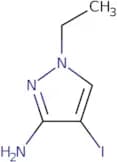
Discontinued product1-Ethyl-4-iodo-1H-pyrazol-3-amine
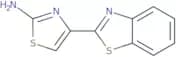
CAS:<p>Versatile small molecule scaffold</p>Formula:C5H8IN3Purity:Min. 95%Molecular weight:237.04 g/mol4-(1,3-Benzothiazol-2-yl)-1,3-thiazol-2-amine
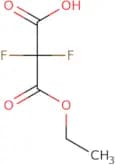
CAS:<p>Versatile small molecule scaffold</p>Formula:C10H7N3S2Purity:Min. 95%Molecular weight:233.3 g/mol3-Ethoxy-2,2-difluoro-3-oxopropanoic acid
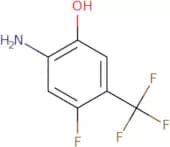
CAS:<p>Versatile small molecule scaffold</p>Formula:C5H6F2O4Purity:Min. 95%Molecular weight:168.1 g/mol2-Amino-4-fluoro-5-(trifluoromethyl)phenol
CAS:<p>Versatile small molecule scaffold</p>Formula:C7H5F4NOPurity:Min. 95%Molecular weight:195.11 g/molRef: 3D-DXC77086
Discontinued productMethyl 6-cyano-5-fluoropyridine-2-carboxylate
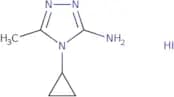
CAS:<p>Versatile small molecule scaffold</p>Formula:C8H5FN2O2Purity:Min. 95%Molecular weight:180.14 g/mol4-Cyclopropyl-5-methyl-4H-1,2,4-triazol-3-amine hydroiodide
CAS:<p>Versatile small molecule scaffold</p>Formula:C6H11IN4Purity:Min. 95%Molecular weight:266.08 g/molRef: 3D-DXC61209
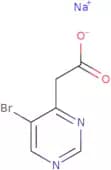
Discontinued productSodium 2-(5-bromopyrimidin-4-yl)acetate
CAS:<p>Versatile small molecule scaffold</p>Formula:C6H4BrN2NaO2Purity:Min. 95%Molecular weight:239 g/molRef: 3D-DXC61195
Discontinued productMethyl({2-[4-(trifluoromethyl)phenoxy]ethyl})amine hydrochloride
CAS:<p>Versatile small molecule scaffold</p>Formula:C10H13ClF3NOPurity:Min. 95%Molecular weight:255.66 g/molRef: 3D-DXC61138
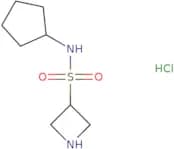
Discontinued productN-Cyclopentylazetidine-3-sulfonamide hydrochloride
CAS:<p>Versatile small molecule scaffold</p>Formula:C8H17ClN2O2SPurity:Min. 95%Molecular weight:240.75 g/molRef: 3D-DXC61068
Discontinued productPotassium 2-[(tert-butyldimethylsilyl)oxy]acetate
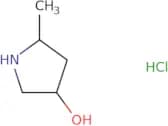
CAS:<p>Versatile small molecule scaffold</p>Formula:C8H17KO3SiPurity:Min. 95%Molecular weight:228.4 g/mol5-Methylpyrrolidin-3-ol hydrochloride
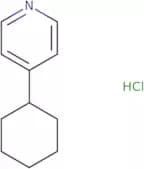
CAS:<p>Versatile small molecule scaffold</p>Formula:C5H12ClNOPurity:Min. 95%Molecular weight:137.61 g/mol4-Cyclohexylpyridine hydrochloride
CAS:<p>Versatile small molecule scaffold</p>Formula:C11H16ClNPurity:Min. 95%Molecular weight:197.7 g/molRef: 3D-DXC58465
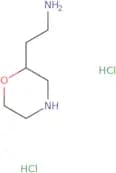
Discontinued product2-(Morpholin-2-yl)ethan-1-amine dihydrochloride
CAS:<p>Versatile small molecule scaffold</p>Formula:C6H16Cl2N2OPurity:Min. 95%Molecular weight:203.11 g/molRef: 3D-DXC58419
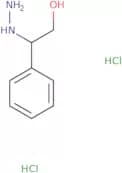
Discontinued product2-Hydrazinyl-2-phenylethan-1-ol dihydrochloride
CAS:<p>Versatile small molecule scaffold</p>Formula:C8H14Cl2N2OPurity:Min. 95%Molecular weight:225.11 g/molRef: 3D-DXC58415
Discontinued product4-[(2-Methylphenyl)methyl]piperidin-4-ol hydrochloride
CAS:<p>Versatile small molecule scaffold</p>Formula:C13H20ClNOPurity:Min. 95%Molecular weight:241.76 g/molRef: 3D-DXC58367
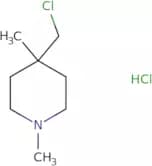
Discontinued product4-(Chloromethyl)-1,4-dimethylpiperidine hydrochloride
CAS:<p>Versatile small molecule scaffold</p>Formula:C8H17Cl2NPurity:Min. 95%Molecular weight:198.13 g/molRef: 3D-DXC58362
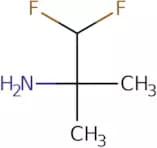
Discontinued product1,1-Difluoro-2-methylpropan-2-amine hydrochloride
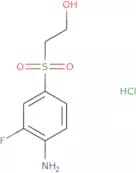
CAS:<p>Versatile small molecule scaffold</p>Formula:C4H9F2NPurity:Min. 95%Molecular weight:109.12 g/mol2-(4-Amino-3-fluorobenzenesulfonyl)ethan-1-ol hydrochloride
CAS:<p>Versatile small molecule scaffold</p>Formula:C8H11ClFNO3SPurity:Min. 95%Molecular weight:255.69 g/molRef: 3D-DXC58337
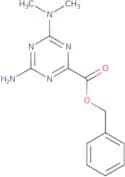
Discontinued productBenzyl 4-amino-6-(dimethylamino)-1,3,5-triazine-2-carboxylate
CAS:<p>Versatile small molecule scaffold</p>Formula:C13H15N5O2Purity:Min. 95%Molecular weight:273.29 g/molRef: 3D-DXC58303
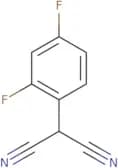
Discontinued product2-(2,4-Difluorophenyl)propanedinitrile
CAS:<p>Versatile small molecule scaffold</p>Formula:C9H4F2N2Purity:Min. 95%Molecular weight:178.14 g/molRef: 3D-DXC58290
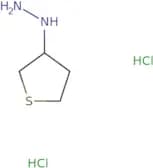
Discontinued productThiolan-3-ylhydrazine dihydrochloride
CAS:<p>Versatile small molecule scaffold</p>Formula:C4H12Cl2N2SPurity:Min. 95%Molecular weight:191.12 g/molRef: 3D-DXC58282
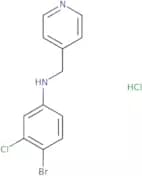
Discontinued product4-Bromo-3-chloro-N-(pyridin-4-ylmethyl)aniline hydrochloride
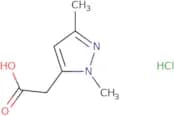
CAS:<p>Versatile small molecule scaffold</p>Formula:C12H11BrCl2N2Purity:Min. 95%Molecular weight:334.04 g/mol2-(1,3-Dimethyl-1H-pyrazol-5-yl)acetic acid hydrochloride
CAS:<p>Versatile small molecule scaffold</p>Formula:C7H11ClN2O2Purity:Min. 95%Molecular weight:190.6 g/mol6,6-Difluorospiro[3.3]heptan-2-amine Hydrochloride
CAS:<p>Versatile small molecule scaffold</p>Formula:C7H11F2N·HClPurity:Min. 95%Molecular weight:147.17 g/moltert-Butyl 5-bromo-3,4-dihydro-2,7-naphthyridine-2(1H)-carboxylate
CAS:<p>Versatile small molecule scaffold</p>Formula:C13H17BrN2O2Purity:Min. 95%Molecular weight:313.19 g/mol3-Methylbenzo[b]thiophene-2-carboxylic acid
CAS:<p>3-Methylbenzo[b]thiophene-2-carboxylic acid (MBTCA) is a heterocyclic compound that is an intermediate in the synthesis of 3-methylthiophene-2-carboxylic acid, a precursor to other drugs. MBTCA is an aerobic, nonpolar compound that has shown antimicrobial activity against some bacteria and fungi. It also has been shown to have practicality as a biomolecular probe for methyl groups in organic solvents. MBTCA can be synthesized by nitration of benzene in the presence of sulfur and sulfoxides. This reaction produces nitrobenzene, which can then be oxidized by potassium permanganate or hydrogen peroxide to produce MBTCA. The most common isomer of MBTCA is 2-(3,5-dimethoxybenzylidene)tetrahydrofuran, with three methyl groups on the</p>Formula:C10H8O2SPurity:Min. 95%Molecular weight:192.23 g/mol1-[3-(Dimethylamino)propyl]-1-(4-fluorophenyl)-1,3-dihydro-3-oxo-5-isobenzofurancarbonitrile
CAS:<p>Please enquire for more information about 1-[3-(Dimethylamino)propyl]-1-(4-fluorophenyl)-1,3-dihydro-3-oxo-5-isobenzofurancarbonitrile including the price, delivery time and more detailed product information at the technical inquiry form on this page</p>Formula:C20H19FN2O2Purity:Min. 95%Molecular weight:338.38 g/molRef: 3D-FD184085
Discontinued product2-Acetylbenzoic acid
CAS:<p>2-Acetylbenzoic acid is a functional molecule that contains an acetyl group. It can form hydrogen bonds with other molecules and has been shown to induce apoptosis in cells. The reaction products of 2-acetylbenzoic acid are malonic acid, acetylsalicylic acid, and 2-benzoylbenzoic acid. These three compounds are made by the addition of hydrogen or hydroxide to the molecule 2-acetylbenzoic acid. The molecule has two functional groups: a carbonyl group and an acetyl group. The chemical structure of this molecule can be seen in the figure below.<br>2-Acetylbenzoic Acid</p>Formula:C9H8O3Purity:Min. 95%Color and Shape:PowderMolecular weight:164.16 g/molRef: 3D-FA05086
Discontinued product3-(Methoxycarbonyl)pyridine-4-carboxylic acid
CAS:<p>Versatile small molecule scaffold</p>Formula:C8H7NO4Purity:Min. 95%Molecular weight:181.15 g/mol(2S,3R)-2-((((9H-Fluoren-9-yl)methoxy)carbonyl)amino)-3-methoxybutanoic acid
CAS:<p>Versatile small molecule scaffold</p>Formula:C20H21NO5Purity:Min. 95%Molecular weight:355.4 g/mol3-Boc-3-azabicyclo[3.2.1]octan-8-amine
CAS:<p>Versatile small molecule scaffold</p>Formula:C12H22N2O2Purity:Min. 95%Molecular weight:226.32 g/mol3-[5-(Aminomethyl)-1-oxo-2,3-dihydro-1H-isoindol-2-yl]piperidine-2,6-dione hydrochloride
CAS:<p>Versatile small molecule scaffold</p>Formula:C14H16ClN3O3Purity:Min. 95%Molecular weight:309.75 g/mol2-Bromo-4-(4-fluorophenyl)-1,3-thiazole
CAS:<p>Versatile small molecule scaffold</p>Formula:C9H5NFSBrPurity:Min. 95%Molecular weight:258.11 g/mol2-Bromo-3,3,3-trifluoro-1-propene
CAS:Controlled Product<p>2-Bromo-3,3,3-trifluoro-1-propene is a chemical compound that has been synthesized in an asymmetric reaction. The reactant is bromopropane and the product is 2,2,2-trifluoropropene. The methylene group on the propene molecule is activated by the nucleophilic attack of a fluoride ion from hydrogen fluoride to form a cavity with a highly strained bond. The kinetic study of this reaction revealed that the activation energy for the reaction is 42 kJ/mol. Palladium-catalyzed coupling reactions are catalyzed by palladium and require nonpolar solvents such as toluene or dichloromethane. This type of reaction has been shown to be exothermic with an isolated yield of 1%.</p>Formula:C3H2BrF3Purity:Min. 95%Color and Shape:Colorless PowderMolecular weight:174.95 g/mol3-amino-6-bromopyridin-2-ol hydrobromide
CAS:<p>Versatile small molecule scaffold</p>Formula:C5H6Br2N2OPurity:Min. 95%Molecular weight:269.9 g/molH-Ser-Ala-Glu-Glu-Tyr-Glu-Tyr-Pro-Ser OH trifluoroacetate
CAS:<p>Please enquire for more information about H-Ser-Ala-Glu-Glu-Tyr-Glu-Tyr-Pro-Ser OH trifluoroacetate including the price, delivery time and more detailed product information at the technical inquiry form on this page</p>Formula:C47H63N9O20•(C2HF3O2)xPurity:Min. 95%Ref: 3D-FS183525
Discontinued productGivinostat hydrochloride
CAS:<p>Givinostat hydrochloride is a research chemical that has shown potential in various fields. It is a molybdenum-based compound that has been studied for its effects on dopamine release and hydrogen evolution. Givinostat hydrochloride has also been investigated as an osteoclast inhibitor, which may be beneficial in the treatment of bone-related disorders such as osteoporosis. Additionally, it has shown promise as a retinoid and calpain inhibitor, suggesting its potential use in dermatological conditions and neurodegenerative diseases. The compound contains fluorine atoms, making it suitable for imaging studies using fluorine MRI techniques. Givinostat hydrochloride has been tested on MDA-MB-231 cells and has shown inhibitory effects on their growth, indicating its potential as an anticancer agent.</p>Formula:C24H27N3O4·HClPurity:Min. 95%Molecular weight:457.95 g/mol

![Methyl 2-[(4-hydroxyphenyl)sulfanyl]acetate](/_next/image/?url=https%3A%2Fstatic.cymitquimica.com%2Fproducts%2F3D%2Fthumb-webp%2FFBA51263.webp&w=3840&q=75)

![tert-Butyl (4aS,7aS)-octahydro-1H-pyrrolo[3,4-b]pyridine-6-carboxylate](/_next/image/?url=https%3A%2Fstatic.cymitquimica.com%2Fproducts%2F3D%2Fthumb-webp%2FEZB42851.webp&w=3840&q=75)
![{5H,7H,8H-Pyrano[4,3-d]pyrimidin-2-yl}methanamine](/_next/image/?url=https%3A%2Fstatic.cymitquimica.com%2Fproducts%2F3D%2Fthumb-webp%2FEMC23714.webp&w=3840&q=75)

![Methyl({2-[4-(trifluoromethyl)phenoxy]ethyl})amine hydrochloride](/_next/image/?url=https%3A%2Fstatic.cymitquimica.com%2Fproducts%2F3D%2Fthumb-webp%2FDXC61138.webp&w=3840&q=75)
![Potassium 2-[(tert-butyldimethylsilyl)oxy]acetate](/_next/image/?url=https%3A%2Fstatic.cymitquimica.com%2Fproducts%2F3D%2Fthumb-webp%2FDXC58509.webp&w=3840&q=75)
![4-[(2-Methylphenyl)methyl]piperidin-4-ol hydrochloride](/_next/image/?url=https%3A%2Fstatic.cymitquimica.com%2Fproducts%2F3D%2Fthumb-webp%2FDXC58367.webp&w=3840&q=75)
![6,6-Difluorospiro[3.3]heptan-2-amine Hydrochloride](/_next/image/?url=https%3A%2Fstatic.cymitquimica.com%2Fproducts%2F3D%2Fthumb-webp%2FYGC03271.webp&w=3840&q=75)

![3-Methylbenzo[b]thiophene-2-carboxylic acid](/_next/image/?url=https%3A%2Fstatic.cymitquimica.com%2Fproducts%2F3D%2Fthumb-webp%2FDAA13378.webp&w=3840&q=75)
![1-[3-(Dimethylamino)propyl]-1-(4-fluorophenyl)-1,3-dihydro-3-oxo-5-isobenzofurancarbonitrile](/_next/image/?url=https%3A%2Fstatic.cymitquimica.com%2Fproducts%2F3D%2Fthumb-webp%2FFD184085.webp&w=3840&q=75)


![3-Boc-3-azabicyclo[3.2.1]octan-8-amine](/_next/image/?url=https%3A%2Fstatic.cymitquimica.com%2Fproducts%2F3D%2Fthumb-webp%2FFDC76351.webp&w=3840&q=75)
![3-[5-(Aminomethyl)-1-oxo-2,3-dihydro-1H-isoindol-2-yl]piperidine-2,6-dione hydrochloride](/_next/image/?url=https%3A%2Fstatic.cymitquimica.com%2Fproducts%2F3D%2Fthumb-webp%2FIWB26469.webp&w=3840&q=75)




