


Building Blocks
This section contains fundamental products for the synthesis of organic and biological compounds. Building blocks are the essential starting materials used to construct complex molecules through various chemical reactions. They play a critical role in drug discovery, material science, and chemical research. At CymitQuimica, we offer a diverse range of high-quality building blocks to support your innovative research and industrial projects, ensuring you have the essential components for successful synthesis.
Subcategories of "Building Blocks"
- Boronic Acids & Boronic Acid Derivatives(5,778 products)
- Chiral Building Blocks(1,242 products)
- Hydrocarbon Building Blocks(6,098 products)
- Organic Building Blocks(61,098 products)
Found 199594 products of "Building Blocks"
Sort by
Purity (%)
0
100
|
0
|
50
|
90
|
95
|
100
1-(Cyclohex-1-en-1-yl)propan-2-amine hydrochloride
CAS:<p>Versatile small molecule scaffold</p>Formula:C9H18ClNPurity:Min. 95%Molecular weight:175.7 g/molRef: 3D-SDA14555
Discontinued product1-[4-(4-Chlorophenyl)-5-methyl-1,3-thiazol-2-yl]ethan-1-amine
CAS:<p>Versatile small molecule scaffold</p>Formula:C12H13ClN2SPurity:Min. 95%Molecular weight:252.76 g/molRef: 3D-SAB92946
Discontinued productEthyl[1-(oxolan-2-yl)-2-phenylethyl]amine hydrochloride
CAS:<p>Versatile small molecule scaffold</p>Formula:C14H22ClNOPurity:Min. 95%Molecular weight:255.8 g/molRef: 3D-SDA32173
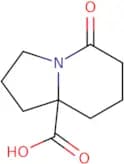
Discontinued product5-Oxo-octahydroindolizine-8a-carboxylic acid
CAS:<p>Versatile small molecule scaffold</p>Formula:C9H13NO3Purity:Min. 95%Molecular weight:183.2 g/molPyrazolo[1,5-a]pyridin-4-ol
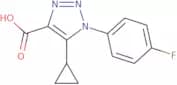
CAS:<p>Pyrazolo[1,5-a]pyridin-4-ol is a heteroaromatic compound that acts as an inhibitor of phosphodiesterase (PDE). It prevents the breakdown of cyclic nucleotides and thus leads to increased levels of cAMP and cGMP. Pyrazolo[1,5-a]pyridin-4-ol has been shown to have bronchodilatory activity in animal models. The drug also inhibits the production of inflammatory mediators such as prostaglandins by inhibiting cyclooxygenases. In addition, pyrazolo[1,5-a]pyridin-4-ol has been shown to be a potential PDE inhibitor replacement for the more commonly used PDE inhibitors such as sildenafil and tadalafil. However, due to its lack of stereochemistry and its bicyclic chemical structure, pyrazolo[1,5-a]</p>Formula:C7H6N2OPurity:Min. 95%Molecular weight:134.14 g/mol5-Cyclopropyl-1-(4-fluorophenyl)-1H-1,2,3-triazole-4-carboxylic acid
CAS:<p>Versatile small molecule scaffold</p>Formula:C12H10FN3O2Purity:Min. 95%Molecular weight:247.22 g/molRef: 3D-SQB42332
Discontinued product1-(2,2,2-Trifluoroethyl)piperidine-2,4-dione
CAS:<p>Versatile small molecule scaffold</p>Formula:C7H8F3NO2Purity:Min. 95%Molecular weight:195.14 g/molRef: 3D-TKC92474
Discontinued product2-{[(tert-Butoxy)carbonyl]amino}-2-(2,5-difluorophenyl)acetic acid
CAS:<p>Versatile small molecule scaffold</p>Formula:C13H15F2NO4Purity:Min. 95%Molecular weight:287.26 g/molRef: 3D-TLB14459
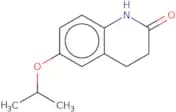
Discontinued product6-(Propan-2-yloxy)-1,2,3,4-tetrahydroquinolin-2-one
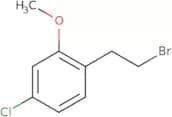
CAS:<p>Versatile small molecule scaffold</p>Formula:C12H15NO2Purity:Min. 95%Molecular weight:205.3 g/mol1-(2-Bromoethyl)-4-chloro-2-methoxybenzene
CAS:<p>Versatile small molecule scaffold</p>Formula:C9H10BrClOPurity:Min. 95%Molecular weight:249.53 g/molRef: 3D-TLD16029
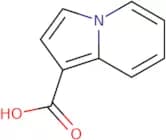
Discontinued productIndolizine-1-carboxylic acid
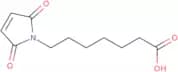
CAS:<p>Indolizine-1-carboxylic acid (IDCA) is an antimicrobial agent that inhibits bacterial growth by interfering with the synthesis of proteins. IDCA is a fluorescent compound that can be detected using fluorescence spectroscopy. This drug has been shown to have potent cytotoxic effects against cancer cells, as well as antibacterial activity against Staphylococcus aureus and other bacteria.</p>Formula:C9H7NO2Purity:Min. 95%Molecular weight:161.16 g/mol7-(2,5-Dioxo-2,5-dihydro-1H-pyrrol-1-yl)heptanoic acid
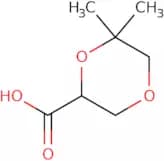
CAS:<p>Versatile small molecule scaffold</p>Formula:C11H15NO4Purity:Min. 95%Molecular weight:225.24 g/mol6,6-Dimethyl-1,4-dioxane-2-carboxylic acid
CAS:<p>Versatile small molecule scaffold</p>Formula:C7H12O4Purity:Min. 95%Molecular weight:160.17 g/molRef: 3D-TLD88232
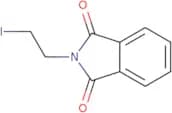
Discontinued product2-(2-Iodoethyl)-2,3-dihydro-1H-isoindole-1,3-dione
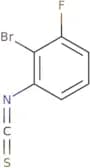
CAS:<p>2-(2-Iodoethyl)-2,3-dihydro-1H-isoindole-1,3-dione is a crystalline compound that is an n-substituted derivative of phthalimide. It has been shown to be effective for the treatment of tuberculosis. This drug binds to DNA and inhibits transcription and replication. 2-(2-Iodoethyl)-2,3-dihydro-1H-isoindole-1,3-dione also inhibits bacterial growth by binding to RNA polymerase.</p>Formula:C10H8INO2Purity:Min. 95%Molecular weight:301.08 g/mol2-Bromo-3-fluorophenylisothiocyanate
CAS:<p>Versatile small molecule scaffold</p>Formula:C7H3BrFNSPurity:Min. 95%Molecular weight:232.08 g/mol8-(Trifluoromethyl)imidazo[1,2-a]pyridine-2-carboxylic acid monohydrochloride monohydrate
CAS:<p>Versatile small molecule scaffold</p>Formula:C9H5F3N2O2Purity:Min. 95%Molecular weight:230.14 g/mol3-Chloro-2,4-dimethoxybenzoic acid
CAS:<p>Versatile small molecule scaffold</p>Formula:C9H9ClO4Purity:Min. 95%Molecular weight:216.62 g/molRef: 3D-PLB93375
Discontinued product(1R,3S,5R,7S)-3-(1H-1,2,4-Triazol-1-yl)adamantane-1-carboxylic acid
CAS:<p>Versatile small molecule scaffold</p>Formula:C13H17N3O2Purity:Min. 95%Molecular weight:247.29 g/molRef: 3D-TRA80551
Discontinued productN-[4-(Aminomethyl)phenyl]-4-butylcyclohexane-1-carboxamide
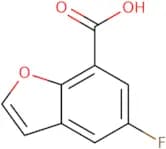
CAS:<p>Versatile small molecule scaffold</p>Formula:C18H28N2OPurity:Min. 95%Molecular weight:288.4 g/mol5-Fluorobenzofuran-7-carboxylic acid
CAS:<p>Versatile small molecule scaffold</p>Formula:C9H5FO3Purity:Min. 95%Molecular weight:180.13 g/molRef: 3D-NFC02103
Discontinued product2-[2-(1-Piperidinyl)ethoxy]benzaldehyde hydrochloride
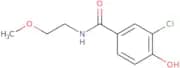
CAS:<p>Versatile small molecule scaffold</p>Formula:C14H20ClNO2Purity:Min. 95%Molecular weight:269.77 g/mol3-Chloro-4-hydroxy-N-(2-methoxyethyl)benzamide
CAS:<p>Versatile small molecule scaffold</p>Formula:C10H12ClNO3Purity:Min. 95%Molecular weight:229.66 g/molRef: 3D-UQB46653
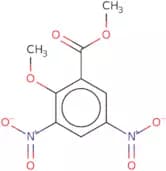
Discontinued productMethyl 2-methoxy-3,5-dinitrobenzoate
CAS:<p>Versatile small molecule scaffold</p>Formula:C9H8N2O7Purity:Min. 95%Molecular weight:256.2 g/mol1-[2-(tert-Butylsulfanyl)-5-fluorophenyl]ethan-1-one
CAS:<p>Versatile small molecule scaffold</p>Formula:C12H15FOSPurity:Min. 95%Molecular weight:226.31 g/mol3-{[(4-Chlorophenyl)methyl]amino}benzonitrile
CAS:<p>Versatile small molecule scaffold</p>Formula:C14H11ClN2Purity:Min. 95%Molecular weight:242.7 g/molRef: 3D-UQB49579
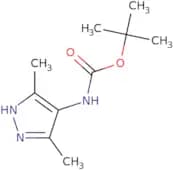
Discontinued producttert-Butyl N-(3,5-dimethyl-1H-pyrazol-4-yl)carbamate
CAS:<p>Versatile small molecule scaffold</p>Formula:C10H17N3O2Purity:Min. 95%Molecular weight:211.26 g/molRef: 3D-MXB34103
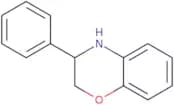
Discontinued product3-Phenyl-3,4-dihydro-2H-1,4-benzoxazine
CAS:<p>Versatile small molecule scaffold</p>Formula:C14H13NOPurity:Min. 95%Molecular weight:211.26 g/molRef: 3D-VCA31030
Discontinued product2-Methyl-2-(phenylamino)propanamide
CAS:<p>Versatile small molecule scaffold</p>Formula:C10H14N2OPurity:Min. 95%Molecular weight:178.23 g/molRef: 3D-VCA44127
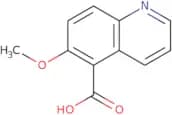
Discontinued product6-Methoxyquinoline-5-carboxylic acid
CAS:<p>Versatile small molecule scaffold</p>Formula:C11H9NO3Purity:Min. 95%Molecular weight:203.19 g/molRef: 3D-VLB73984
Discontinued product2-Chloro-1-[3-(trifluoromethyl)cyclohexyl]ethan-1-one
CAS:<p>Versatile small molecule scaffold</p>Formula:C9H12ClF3OPurity:Min. 95%Molecular weight:228.64 g/molRef: 3D-VLC72752
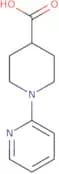
Discontinued product1-(Pyridin-2-yl)piperidine-4-carboxylic acid
CAS:<p>Versatile small molecule scaffold</p>Formula:C11H14N2O2Purity:Min. 95%Molecular weight:206.24 g/molRef: 3D-KCB82770
Discontinued productThieno[2,3-b]pyridine-5-carbonitrile
CAS:<p>Thienopyridine analogs are a class of chemical compounds that function as agonists of the receptor α. These compounds have been shown to inhibit fatty acid oxidation and ATP production in rat liver cells, which may be due to their ability to activate AMP-activated protein kinase (AMPK). Thienopyridine analogs are being investigated for use as anti-inflammatory agents and cancer treatments.</p>Formula:C8H4N2SPurity:Min. 95%Molecular weight:160.2 g/molRef: 3D-WAA34431
Discontinued product2-Methyl-4-(trifluoromethyl)aniline hydrochloride
CAS:<p>Versatile small molecule scaffold</p>Formula:C8H9ClF3NPurity:Min. 95%Molecular weight:211.61 g/molRef: 3D-YAA98480
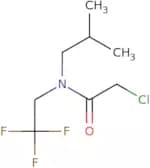
Discontinued product2-Chloro-N-(2-methylpropyl)-N-(2,2,2-trifluoroethyl)acetamide
CAS:<p>Versatile small molecule scaffold</p>Formula:C8H13ClF3NOPurity:Min. 95%Molecular weight:231.64 g/molRef: 3D-JXB08809
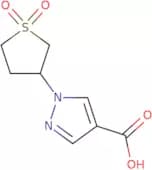
Discontinued product1-(1,1-Dioxothiolan-3-yl)pyrazole-4-carboxylic acid
CAS:<p>Versatile small molecule scaffold</p>Formula:C8H10N2O4SPurity:Min. 95%Molecular weight:230.24 g/mol1-{Bicyclo[2.2.1]heptan-2-yl}propan-1-amine
CAS:<p>Versatile small molecule scaffold</p>Formula:C10H19NPurity:Min. 95%Molecular weight:153.26 g/molRef: 3D-JMC20030
Discontinued product3-Methylbenzo[b]thiophene-2-carboxylic acid
CAS:<p>3-Methylbenzo[b]thiophene-2-carboxylic acid (MBTCA) is a heterocyclic compound that is an intermediate in the synthesis of 3-methylthiophene-2-carboxylic acid, a precursor to other drugs. MBTCA is an aerobic, nonpolar compound that has shown antimicrobial activity against some bacteria and fungi. It also has been shown to have practicality as a biomolecular probe for methyl groups in organic solvents. MBTCA can be synthesized by nitration of benzene in the presence of sulfur and sulfoxides. This reaction produces nitrobenzene, which can then be oxidized by potassium permanganate or hydrogen peroxide to produce MBTCA. The most common isomer of MBTCA is 2-(3,5-dimethoxybenzylidene)tetrahydrofuran, with three methyl groups on the</p>Formula:C10H8O2SPurity:Min. 95%Molecular weight:192.23 g/mol2-Bromo-4-(4-fluorophenyl)-1,3-thiazole
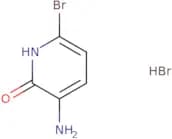
CAS:<p>Versatile small molecule scaffold</p>Formula:C9H5NFSBrPurity:Min. 95%Molecular weight:258.11 g/mol3-amino-6-bromopyridin-2-ol hydrobromide
CAS:<p>Versatile small molecule scaffold</p>Formula:C5H6Br2N2OPurity:Min. 95%Molecular weight:269.9 g/mol2-Acetylbenzoic acid
CAS:<p>2-Acetylbenzoic acid is a functional molecule that contains an acetyl group. It can form hydrogen bonds with other molecules and has been shown to induce apoptosis in cells. The reaction products of 2-acetylbenzoic acid are malonic acid, acetylsalicylic acid, and 2-benzoylbenzoic acid. These three compounds are made by the addition of hydrogen or hydroxide to the molecule 2-acetylbenzoic acid. The molecule has two functional groups: a carbonyl group and an acetyl group. The chemical structure of this molecule can be seen in the figure below.<br>2-Acetylbenzoic Acid</p>Formula:C9H8O3Purity:Min. 95%Color and Shape:PowderMolecular weight:164.16 g/molRef: 3D-FA05086
Discontinued product3-Boc-3-azabicyclo[3.2.1]octan-8-amine
CAS:<p>Versatile small molecule scaffold</p>Formula:C12H22N2O2Purity:Min. 95%Molecular weight:226.32 g/mol3-(Methoxycarbonyl)pyridine-4-carboxylic acid
CAS:<p>Versatile small molecule scaffold</p>Formula:C8H7NO4Purity:Min. 95%Molecular weight:181.15 g/mol2-Bromo-3,3,3-trifluoro-1-propene
CAS:Controlled Product<p>2-Bromo-3,3,3-trifluoro-1-propene is a chemical compound that has been synthesized in an asymmetric reaction. The reactant is bromopropane and the product is 2,2,2-trifluoropropene. The methylene group on the propene molecule is activated by the nucleophilic attack of a fluoride ion from hydrogen fluoride to form a cavity with a highly strained bond. The kinetic study of this reaction revealed that the activation energy for the reaction is 42 kJ/mol. Palladium-catalyzed coupling reactions are catalyzed by palladium and require nonpolar solvents such as toluene or dichloromethane. This type of reaction has been shown to be exothermic with an isolated yield of 1%.</p>Formula:C3H2BrF3Purity:Min. 95%Color and Shape:Colorless PowderMolecular weight:174.95 g/molGivinostat hydrochloride
CAS:<p>Givinostat hydrochloride is a research chemical that has shown potential in various fields. It is a molybdenum-based compound that has been studied for its effects on dopamine release and hydrogen evolution. Givinostat hydrochloride has also been investigated as an osteoclast inhibitor, which may be beneficial in the treatment of bone-related disorders such as osteoporosis. Additionally, it has shown promise as a retinoid and calpain inhibitor, suggesting its potential use in dermatological conditions and neurodegenerative diseases. The compound contains fluorine atoms, making it suitable for imaging studies using fluorine MRI techniques. Givinostat hydrochloride has been tested on MDA-MB-231 cells and has shown inhibitory effects on their growth, indicating its potential as an anticancer agent.</p>Formula:C24H27N3O4·HClPurity:Min. 95%Molecular weight:457.95 g/mol

![1-[4-(4-Chlorophenyl)-5-methyl-1,3-thiazol-2-yl]ethan-1-amine](/_next/image/?url=https%3A%2Fstatic.cymitquimica.com%2Fproducts%2F3D%2Fthumb-webp%2FSAB92946.webp&w=3840&q=75)
![Ethyl[1-(oxolan-2-yl)-2-phenylethyl]amine hydrochloride](/_next/image/?url=https%3A%2Fstatic.cymitquimica.com%2Fproducts%2F3D%2Fthumb-webp%2FSDA32173.webp&w=3840&q=75)
![Pyrazolo[1,5-a]pyridin-4-ol](/_next/image/?url=https%3A%2Fstatic.cymitquimica.com%2Fproducts%2F3D%2Fthumb-webp%2FRFA03272.webp&w=3840&q=75)

![2-{[(tert-Butoxy)carbonyl]amino}-2-(2,5-difluorophenyl)acetic acid](/_next/image/?url=https%3A%2Fstatic.cymitquimica.com%2Fproducts%2F3D%2Fthumb-webp%2FTLB14459.webp&w=3840&q=75)
![8-(Trifluoromethyl)imidazo[1,2-a]pyridine-2-carboxylic acid monohydrochloride monohydrate](/_next/image/?url=https%3A%2Fstatic.cymitquimica.com%2Fproducts%2F3D%2Fthumb-webp%2FTQB82872.webp&w=3840&q=75)


![N-[4-(Aminomethyl)phenyl]-4-butylcyclohexane-1-carboxamide](/_next/image/?url=https%3A%2Fstatic.cymitquimica.com%2Fproducts%2F3D%2Fthumb-webp%2FUQB40032.webp&w=3840&q=75)
![2-[2-(1-Piperidinyl)ethoxy]benzaldehyde hydrochloride](/_next/image/?url=https%3A%2Fstatic.cymitquimica.com%2Fproducts%2F3D%2Fthumb-webp%2FNFA35108.webp&w=3840&q=75)
![1-[2-(tert-Butylsulfanyl)-5-fluorophenyl]ethan-1-one](/_next/image/?url=https%3A%2Fstatic.cymitquimica.com%2Fproducts%2F3D%2Fthumb-webp%2FUQB48019.webp&w=3840&q=75)
![3-{[(4-Chlorophenyl)methyl]amino}benzonitrile](/_next/image/?url=https%3A%2Fstatic.cymitquimica.com%2Fproducts%2F3D%2Fthumb-webp%2FUQB49579.webp&w=3840&q=75)

![2-Chloro-1-[3-(trifluoromethyl)cyclohexyl]ethan-1-one](/_next/image/?url=https%3A%2Fstatic.cymitquimica.com%2Fproducts%2F3D%2Fthumb-webp%2FVLC72752.webp&w=3840&q=75)
![Thieno[2,3-b]pyridine-5-carbonitrile](/_next/image/?url=https%3A%2Fstatic.cymitquimica.com%2Fproducts%2F3D%2Fthumb-webp%2FWAA34431.webp&w=3840&q=75)
![1-{Bicyclo[2.2.1]heptan-2-yl}propan-1-amine](/_next/image/?url=https%3A%2Fstatic.cymitquimica.com%2Fproducts%2F3D%2Fthumb-webp%2FJMC20030.webp&w=3840&q=75)
![3-Methylbenzo[b]thiophene-2-carboxylic acid](/_next/image/?url=https%3A%2Fstatic.cymitquimica.com%2Fproducts%2F3D%2Fthumb-webp%2FDAA13378.webp&w=3840&q=75)


![3-Boc-3-azabicyclo[3.2.1]octan-8-amine](/_next/image/?url=https%3A%2Fstatic.cymitquimica.com%2Fproducts%2F3D%2Fthumb-webp%2FFDC76351.webp&w=3840&q=75)


