Building Blocks
Subcategories of "Building Blocks"
- Boronic Acids & Boronic Acid Derivatives(5,780 products)
- Chiral Building Blocks(1,241 products)
- Hydrocarbon Building Blocks(6,100 products)
- Organic Building Blocks(61,023 products)
Found 205289 products of "Building Blocks"
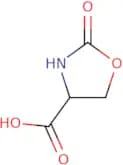
(4S)-2-Oxo-1,3-oxazolidine-4-carboxylic acid
CAS:Versatile small molecule scaffold
Formula:C4H5NO4Purity:Min. 95%Molecular weight:131.09 g/molRef: 3D-UAA52595
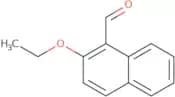
Discontinued product2-Ethoxy-1-naphthaldehyde
CAS:2-Ethoxy-1-naphthaldehyde is a synthetic compound that is an intermediate in the synthesis of nafcillin sodium. It is also used as an intermediate for the production of acetonitrile, which can be used as a solvent. 2-Ethoxy-1-naphthaldehyde has been shown to have optical properties similar to those of anthracene and dihedral angles similar to those of peroxide. It undergoes dehydrating reactions with hydrogen peroxide, forming acetic acid, water, and hydrogen dioxide. This compound also has a strong tendency to form hydrogen bonds with other molecules.
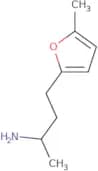
Formula:C13H12O2Purity:Min. 95%Molecular weight:200.23 g/mol4-(5-Methylfuran-2-yl)butan-2-amine
CAS:Versatile small molecule scaffold
Formula:C9H15NOPurity:Min. 95%Molecular weight:153.22 g/molRef: 3D-UAA50975
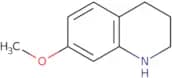
Discontinued product7-Methoxy-1,2,3,4-tetrahydroquinoline
CAS:Versatile small molecule scaffold
Formula:C10H13NOPurity:Min. 95%Molecular weight:163.22 g/molRef: 3D-UAA50061
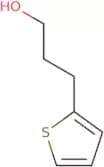
Discontinued product3-(thiophen-2-yl)propan-1-ol
CAS:3-(thiophen-2-yl)propan-1-ol is a chiral synthon. It is used as a building block in the synthesis of organic compounds, such as esters and amides. 3-(Thiophen-2-yl)propan-1-ol has been used to synthesize enantiomerically pure methylene compounds. This synthon can be prepared by the catalysis of vinyl acetate with thiophene, which forms a chain reaction that leads to the formation of 3-(thiophen-2-yl)propan-1-ol. The stereogenic center of this synthon is also chiral.
Formula:C7H10OSPurity:Min. 95%Molecular weight:142.22 g/molRef: 3D-UAA49872
Discontinued product2-Bromo-4-isopropylphenol
CAS:Versatile small molecule scaffold
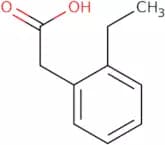
Formula:C9H11BrOPurity:Min. 95%Molecular weight:215.1 g/mol2-(2-Ethylphenyl)acetic acid
CAS:2-(2-Ethylphenyl)acetic acid is a compound that is used to synthesize antihistamines. It has been shown to have potent antihistaminic activity in both the ileum and the stomach, which is stereoselective for the S(+) enantiomer. The 2-ethylphenyl group of this compound can be susceptible to alkylation by organometallic reagents such as piperidine, which can lead to side reactions with other groups on the molecule or other molecules in the reaction mixture. The 2-ethylphenyl group is also chiral, meaning that it has two different forms, or configurations.
Formula:C10H12O2Purity:Min. 95%Molecular weight:164.2 g/molRef: 3D-UAA41895
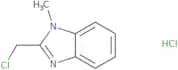
Discontinued product2-(Chloromethyl)-1-methyl-1H-1,3-benzodiazole hydrochloride
CAS:Controlled ProductVersatile small molecule scaffold
Formula:C9H10Cl2N2Purity:Min. 95%Molecular weight:217.09 g/mol3-Iodo-pyrazolo[1,5-a]pyridine
CAS:3-Iodo-pyrazolo[1,5-a]pyridine is a boronic acid that has been optimized for medicinal use. It is chemically synthesized by coupling with a boronic ester. 3-Iodo-pyrazolo[1,5-a]pyridine has shown potent anti-inflammatory properties in mice models.
Formula:C7H5IN2Purity:Min. 95%Molecular weight:244.03 g/mol2-[(Pyridin-2-yl)carbamoyl]benzoic acid
CAS:2-[(Pyridin-2-yl)carbamoyl]benzoic acid is an organic compound that contains a benzamide and amide functional group. It is paramagnetic, which means that it has the ability to be attracted by a magnetic field. It also has intramolecular nucleophilic attack properties. 2-[(Pyridin-2-yl)carbamoyl]benzoic acid can be used in elemental analyses and as a catalyst for chemical reactions, such as the conversion of thiocyanate to cyanide. 2-[(Pyridin-2-yl)carbamoyl]benzoic acid is used in the production of dyes and pharmaceuticals, including antihistamines and analgesics.
Formula:C13H10N2O3Purity:Min. 95%Molecular weight:242.23 g/molRef: 3D-UAA35710
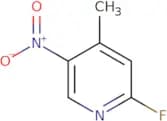
Discontinued product2-Fluoro-4-Methyl-5-Nitropyridine
CAS:Versatile small molecule scaffold
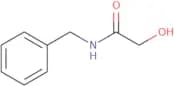
Formula:C6H5FN2O2Purity:Min. 95%Molecular weight:156.11 g/molN-Benzyl-2-hydroxyacetamide
CAS:N-Benzyl-2-hydroxyacetamide is a synthetic molecule that is used in the synthesis of other molecules. It is synthesized by reacting benzaldehyde with 2-aminoethanol in the presence of hydrochloric acid and sodium hydroxide. The yields are typically high, as the reaction proceeds under relatively mild conditions with few side reactions. The mechanism of this reaction is nucleophilic addition of the amino group to the carbonyl carbon atom, followed by elimination of water. N-Benzyl-2-hydroxyacetamide can be converted to various other compounds through intramolecular reactions or substitutions on its molecular structure.
Formula:C9H11NO2Purity:Min. 95%Molecular weight:165.19 g/molBenzo[b]thiophen-5-ol
CAS:Benzo[b]thiophen-5-ol is a chiral molecule that has been synthesized to be homochiral. It has an active site and selective epoxide hydration activity, which is the rate-limiting step of epoxide ring opening reactions. The mechanism of this reaction is the cleavage of a C–C bond in an epoxide substrate by an O–H or S–H bond in benzo[b]thiophen-5-ol. The nature of this mechanistic bond cleavage reaction is unknown, but it may be due to catalysis by a benzyl group.
Formula:C8H6OSPurity:Min. 95%Molecular weight:150.2 g/mol4-(Prop-2-yn-1-yl)piperidine hydrochloride
CAS:Versatile small molecule scaffold
Formula:C8H14ClNPurity:Min. 95%Molecular weight:159.7 g/molRef: 3D-XLD18851
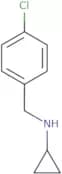
Discontinued productN-(4-Chlorobenzyl)-N-cyclopropylamine
CAS:Versatile small molecule scaffold
Formula:C10H12ClNPurity:Min. 95%Molecular weight:181.66 g/molDibenzo[b,d]furan-4-ol
CAS:Dibenzo[b,d]furan-4-ol is a biodegradable compound that can be synthesized in a stepwise manner. The compound can be assayed by using different methods including mass spectrometric and hplc analyses to determine the number of carbon atoms and functional groups present in the molecule. Dibenzo[b,d]furan-4-ol is used as a carbon source for many microorganisms. The compound has been shown to hydroxylate under aerobic conditions and also reacts with nitro groups to form nitroso derivatives. Magnetic resonance spectroscopy has been used to study the molecular structure of dibenzo[b,d]furan-4-ol, which has revealed that it is monosubstituted with two methyl groups. This compound is naturally found in filamentous fungi found in tropical regions.
Formula:C12H8O2Purity:Min. 95%Molecular weight:184.19 g/molRef: 3D-UAA26106
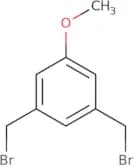
Discontinued product1,3-Bis(bromomethyl)-5-methoxybenzene
CAS:Versatile small molecule scaffold
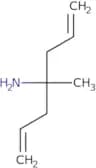
Formula:C9H10Br2OPurity:Min. 95%Molecular weight:293.98 g/mol1-Allyl-1-methyl-but-3-enylamine
CAS:Versatile small molecule scaffold
Formula:C8H15NPurity:Min. 95%Molecular weight:125.21 g/molRef: 3D-UAA24349
Discontinued product1-Ethyl-3-isothiocyanatobenzene
CAS:Versatile small molecule scaffold
Formula:C9H9NSPurity:Min. 95%Molecular weight:163.24 g/molRef: 3D-UAA24120
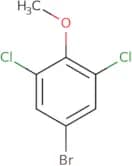
Discontinued product4-Bromo-2,6-dichloroanisole
CAS:4-Bromo-2,6-dichloroanisole (4BDCA) is a polychlorinated biphenyl congeners. It is used as a chemical intermediate in the synthesis of boronic acids and their derivatives. 4BDCA has high selectivity for human plasma over other tissues and can be used to study the metabolism of this compound in humans. The high selectivity of this compound may be due to its ability to form hydroxylated metabolites that are less toxic than the parent compound, which may be due to its ability to form hydroxy anisoles.
Formula:C7H5BrCl2OPurity:Min. 95%Molecular weight:255.92 g/mol


![3-Iodo-pyrazolo[1,5-a]pyridine](/_next/image/?url=https%3A%2Fstatic.cymitquimica.com%2Fproducts%2F3D%2Fthumb-webp%2FUAA36399.webp&w=3840&q=75)
![2-[(Pyridin-2-yl)carbamoyl]benzoic acid](/_next/image/?url=https%3A%2Fstatic.cymitquimica.com%2Fproducts%2F3D%2Fthumb-webp%2FUAA35710.webp&w=3840&q=75)
![Benzo[b]thiophen-5-ol](/_next/image/?url=https%3A%2Fstatic.cymitquimica.com%2Fproducts%2F3D%2Fthumb-webp%2FUAA30135.webp&w=3840&q=75)

![Dibenzo[b,d]furan-4-ol](/_next/image/?url=https%3A%2Fstatic.cymitquimica.com%2Fproducts%2F3D%2Fthumb-webp%2FUAA26106.webp&w=3840&q=75)