Building Blocks
Subcategories of "Building Blocks"
- Boronic Acids & Boronic Acid Derivatives(5,778 products)
- Chiral Building Blocks(1,243 products)
- Hydrocarbon Building Blocks(6,099 products)
- Organic Building Blocks(61,038 products)
Found 205375 products of "Building Blocks"
Fmoc-b-Ala-Ala-Pro-OH
CAS:Fmoc-b-Ala-Ala-Pro-OH is a reaction component that can be used in the synthesis of peptides and other compounds. It is a building block for the preparation of complex compounds, such as small molecules, polymers and natural products. Fmoc-b-Ala-Ala-Pro-OH has been shown to be useful in the synthesis of various types of reagents, including antibiotics and pharmaceuticals. This chemical has been reported as a useful scaffold for the preparation of high quality research chemicals. Fmoc-b-Ala-Ala-Pro is also an intermediate in the synthesis of speciality chemicals and fine chemicals.Formula:C26H29N3O6Purity:Min. 95%Color and Shape:White PowderMolecular weight:479.53 g/mol3-Bromo-6,7-dihydro-4H-pyrazolo[1,5-a]pyrazine-5-carboxylic acid tert-butyl ester
CAS:Versatile small molecule scaffold
Formula:C11H16BrN3O2Purity:Min. 95%Molecular weight:302.17 g/molFmoc-N-methylglycine
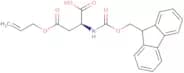
CAS:Fmoc-N-methylglycine is a modified form of the amino acid glycine, which has been modified to include a reactive group that can be used to link other molecules. This molecule has gram-negative bacterial activity and exhibits potent antibacterial activity against many gram-positive bacteria. Fmoc-N-methylglycine is also an antimicrobial peptide with binding constants in the nanomolar range. It is also an agent that binds to serotonin, which may explain its effects on mood and sleep. Fmoc-N-methylglycine can be synthesized using stepwise solid phase synthesis methods or by conjugation with other molecules.Formula:C18H17NO4Purity:Min. 95%Molecular weight:311.33 g/molFmoc-L-aspartic acid beta-allyl ester
CAS:Fmoc-L-aspartic acid beta-allyl ester is a specific interaction between an amide and an enzyme target. It has been shown to have anti-inflammatory properties by inhibiting the activity of COX-2, which inhibits the production of prostaglandins. Fmoc-L-aspartic acid beta-allyl ester is a cyclic peptide with a lactam ring system that has been synthesized in a stepwise manner on a solid phase. This molecule interacts with cell line A549 and blocks the proliferation of cancer cells. Fmoc-L-aspartic acid beta-allyl ester also contains a disulfide bond that stabilizes its structure.Formula:C22H21NO6Purity:Min. 95%Molecular weight:395.41 g/molFmoc-α-methyl-L-phenylalanine
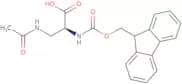
CAS:Please enquire for more information about Fmoc-α-methyl-L-phenylalanine including the price, delivery time and more detailed product information at the technical inquiry form on this pageFormula:C25H23NO4Purity:Min. 95%Color and Shape:PowderMolecular weight:401.45 g/molFmoc-Dap(Ac)-OH
CAS:Fmoc-Dap(Ac)-OH is a fine chemical that is used as a building block in the synthesis of complex compounds. It reacts with various nucleophiles to form an amide bond, and has been shown to be useful for both research and industrial applications. Fmoc-Dap(Ac)-OH can also be used as a reagent to synthesize peptides, which are biologically active compounds that form the basis of many drugs. This versatile intermediate is also used as a scaffold in the construction of more complex molecules. Fmoc-Dap(Ac)-OH has CAS No. 181952-29-4 and is classified as a speciality chemical by the International Union of Pure and Applied Chemistry (IUPAC).Formula:C20H20N2O5Purity:Min. 95%Color and Shape:PowderMolecular weight:368.38 g/mol3-(boc-amino)-cyclobutanemethanol
CAS:Versatile small molecule scaffoldFormula:C10H19NO3Purity:Min. 95%Molecular weight:201.27 g/mol1-Boc-2-methyl (2R,3S)-3-hydroxypyrrolidine-2-carboxylate
CAS:Please enquire for more information about 1-Boc-2-methyl (2R,3S)-3-hydroxypyrrolidine-2-carboxylate including the price, delivery time and more detailed product information at the technical inquiry form on this pageFormula:C11H19NO5Purity:Min. 95%Molecular weight:245.27 g/molMethyl 3-formyl-4-methoxybenzoate
CAS:Versatile small molecule scaffold
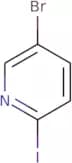
Formula:C10H10O4Purity:Min. 95%Molecular weight:194.19 g/mol5-Bromo-2-iodopyridine
CAS:5-Bromo-2-iodopyridine is an antibiotic that is used to treat bacterial infections. It has been shown to inhibit the growth of bacteria by binding to the 50S ribosomal subunit. This drug also has a toxic effect on respiratory system cells, which may be due to its ability to induce apoptosis. 5-Bromo-2-iodopyridine interacts with DNA in a triazine ring and inhibits bacterial growth by inhibiting protein synthesis. The drug binds to the 50S ribosomal subunit at a site that is different from that of rifampin and other antibiotics. The reaction is catalyzed by palladium at high temperatures and takes place in organic solvents such as chloroform or benzene. This synthetic process can be made more efficient by using inexpensive starting materials, such as bromine, iodine, and acetone, rather than expensive starting materials like platinum or gold salts.
Formula:C5H3BrINPurity:Min. 95%Color and Shape:Slightly Yellow PowderMolecular weight:283.89 g/moltert-Butyl 2,9-diazaspiro[5.5]undecane-2-carboxylate
CAS:Versatile small molecule scaffold
Formula:C14H26N2O2Purity:Min. 95%Molecular weight:254.38 g/mol2,4-Dichloro-6-(propan-2-yl)pyrimidine
CAS:Versatile small molecule scaffold
Formula:C7H8Cl2N2Purity:Min. 95%Molecular weight:191.05 g/mol6-Hydroxy-1-naphthoic acid
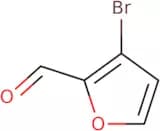
CAS:6-Hydroxy-1-naphthoic acid is a synthetic carboxylate compound with an analog structure that has been shown to be cytotoxic to cancer cells. It inhibits the activity of protein kinases by binding to ATP, which blocks the phosphorylation of tyrosine residues on proteins. 6-Hydroxy-1-naphthoic acid has been shown to inhibit growth factor receptors and induce apoptosis in tumor cells. The mechanism of action for this drug is believed to be through ring opening and hydrolysis of the naphthalene ring, followed by reaction with p-hydroxybenzoic acid. This results in inhibition of histone deacetylase activity, leading to decreased expression of genes involved in cell proliferation.Formula:C11H8O3Purity:Min. 95%Color and Shape:PowderMolecular weight:188.18 g/mol3-Bromofuran-2-carbaldehyde
CAS:3-Bromofuran-2-carbaldehyde is a chemical compound that belongs to the group of carbonyl compounds. It is an acetylated form of 3-bromofuran and its molecular formula is C6H5BrO. This chemical contains a carbonyl group, which reacts with the hydroxyl group in epidermal growth factor (EGF) to produce epidermal growth. 3-Bromofuran-2-carbaldehyde has been shown to be an adrenergic receptor agonist and can be used as a structural formula blocker or hydrochloric acid. The chemical can also be synthesized in acidic conditions using methods such as fluorination, chlorination, and acetylation.Formula:C5H3BrO2Purity:Min. 95%Molecular weight:174.98 g/mol4-Bromopyridine hydrochloride
CAS:4-Bromopyridine HCl is a chemical compound with the molecular formula C6H5BrN. It is an aromatic heterocycle and is used in organic synthesis as a coupling partner in cross-coupling reactions. The bromine atom of 4-bromopyridine is replaced by chloride, resulting in 4-chloropyridine. The chlorination reaction can be conducted using either hydrochloric acid or thionyl chloride. This process can be done on an industrial scale and the chlorinated product has been used in the manufacture of pharmaceuticals, dyes, and pesticides. The reaction mechanism for this substitution reaction involves a nucleophilic attack by chlorine on the pyridine ring at carbon atom 2 followed by displacement of hydrogen from the adjacent position on nitrogen atom 3. Acylation reactions are oxidation processes that involve conversion of carboxylic acids to acyl halides or acyl chlorides through treatment with acidified halogenating agents such
Formula:C5H4BrN•HClPurity:Min. 95%Color and Shape:White PowderMolecular weight:194.46 g/moltert-Butyl N-(4-methylphenyl)carbamate
CAS:Tert-butyl N-(4-methylphenyl)carbamate is a reusable, efficient method for the synthesis of tert-butyl carbamates from amines and carbon dioxide. This reaction is an example of a C–H bond activation that proceeds through an anion intermediate. The reaction time can be reduced by irradiation to increase the efficiency. Electrons are unpaired during this process, which is modeled with quantum mechanics software. Chloride is used as a catalyst to activate the electron and generate a reactive intermediate. Amine functionalities are added to the molecule in order to give it desired properties. The chloride group can be replaced with other anions such as bromide or iodide, which will also introduce different reactivity patterns.Formula:C12H17NO2Purity:Min. 95%Molecular weight:207.27 g/mol7-Bromo-3,4-dihydro-1H-quinolin-2-one
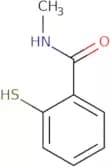
CAS:Versatile small molecule scaffoldFormula:C9H8BrNOPurity:Min. 95%Molecular weight:226.07 g/mol2-Mercapto-N-methylbenzamide
CAS:2-Mercapto-N-methylbenzamide is a synthetic compound that has been shown to have inhibitory activities against activated brain cells and cell lines. This drug has been used in the synthesis of axitinib, a cancer drug that inhibits cellular growth. 2-Mercapto-N-methylbenzamide is also used as a preservative in cosmetics and can be found in carbonated drinks and foods. It has been shown to inhibit the production of serotonin in microbicidal reactions by inhibiting the enzyme hydroxymethyl transferase, which catalyzes the conversion of 5-hydroxytryptophan to serotonin. It also prevents the reaction products from being formed by reacting with hypoxanthine, xanthine, and phosphoribosyl pyrophosphate (PRPP). 2-Mercapto-N-methylbenzamide also reacts with plasma samples to form ethylmercaptoacetate, which is then oxidized to merc
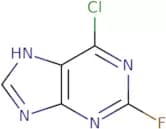
Formula:C8H9NOSPurity:Min. 95%Color and Shape:White PowderMolecular weight:167.23 g/mol6-Chloro-2-fluoropurine
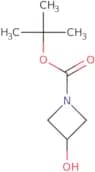
CAS:6-Chloro-2-fluoropurine is an analytical reagent with a monoclonal antibody that binds to the nucleic acid of HL-60 cells and can be used for optical analysis. 6-Chloro-2-fluoropurine has been shown to have significant cytotoxicity against HL-60 cells, which may be due to its ability to bind to intracellular targets. 6-Chloro-2-fluoropurine has also been shown to inhibit the growth of HL-60 cells in a fluorescein angiography study and is used as a diagnostic agent for diagnosis of cancer.Formula:C5H2ClFN4Purity:Min. 98 Area-%Color and Shape:Off-White PowderMolecular weight:172.55 g/molN-Boc-3-Azetidinol
CAS:This linker is chemically stable and not cleavable under standard intracellular or extracellular conditions. N-Boc-3-Azetidinol is also a versatile organic intermediate used primarily in the pharmaceutical industry for synthesizing a wide range of drugs, including antibacterials, immunosuppressants, and cancer therapies.Formula:C8H15NO3Purity:Min. 95%Molecular weight:173.21 g/mol


![3-Bromo-6,7-dihydro-4H-pyrazolo[1,5-a]pyrazine-5-carboxylic acid tert-butyl ester](/_next/image/?url=https%3A%2Fstatic.cymitquimica.com%2Fproducts%2F3D%2Fthumb-webp%2FWXB15425.webp&w=3840&q=75)




![tert-Butyl 2,9-diazaspiro[5.5]undecane-2-carboxylate](/_next/image/?url=https%3A%2Fstatic.cymitquimica.com%2Fproducts%2F3D%2Fthumb-webp%2FPHA33303.webp&w=3840&q=75)