Building Blocks
Subcategories of "Building Blocks"
- Boronic Acids & Boronic Acid Derivatives(5,774 products)
- Chiral Building Blocks(1,237 products)
- Hydrocarbon Building Blocks(6,098 products)
- Organic Building Blocks(60,970 products)
Found 205134 products of "Building Blocks"
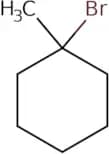
1-Bromo-1-methylcyclohexane
CAS:1-Bromo-1-methylcyclohexane is a monomolecular gas that is used as an intermediate in organic synthesis. It reacts with halides to form cyclopentyl derivatives. This reaction has been shown to be faster than the corresponding reaction of 1-bromocyclohexane with chlorides or bromides. The rate of this reaction may be due to the polarizability and conformational changes of the molecule upon substitution by a methyl group. 1-Bromo-1-methylcyclohexane is also an ionizing reagent, which means it can cause electrophilic reactions to occur on other molecules. It has been found that the solvent effect on this product can affect its reactivity, with solvents such as water having more of an effect than solvents such as benzene. 1-Bromo-1-methylcyclohexane has been shown to interact with other compounds in both transfer and complex
Formula:C7H13BrPurity:Min. 95%Molecular weight:177.08 g/molRef: 3D-AAA93177
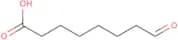
Discontinued product8-Oxo-octanoic acid
CAS:8-Oxo-octanoic acid is an oxo fatty acid that is naturally produced in the body. It is also found in urine and plasma samples. 8-Oxo-octanoic acid has been shown to be a product of lipid peroxidation and may increase the risk of cardiovascular disease. This compound is metabolized by esterases to form 8-oxo-nonanoic acid, which can be detected in urine samples. The presence of 8-oxo-octanoic acid in plasma can be used as a marker for oxidative stress.
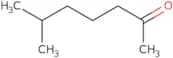
Formula:C8H14O3Purity:Min. 95%Molecular weight:158.19 g/mol6-Methylheptan-2-one
CAS:6-Methylheptan-2-one is a chemical substance that can be found in the form of an oxidation product of tripalmitin. It is used as an analytical control agent for the qualitative and quantitative analysis of tripalmitin. 6-Methylheptan-2-one is analyzed by gas chromatography with mass spectrometry detection (GC/MS). The use of solid phase microextraction (SPME) allows for the sample to be taken from a solid matrix and analyzed without any interference from other compounds. This method has been validated with animals and has been shown to be accurate, precise, and sensitive. 6-Methylheptan-2-one is also an active substance in inflammatory bowel disease (IBD) due to its ability to induce oxidative stress in the intestine, which causes inflammation. This compound also has a fatty acid composition consisting primarily of unsaturated β-ketones such as methylpentanoate or methylhexanoate
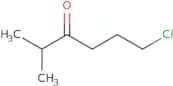
Formula:C8H16OPurity:Min. 95%Molecular weight:128.21 g/mol6-Chloro-2-methylhexan-3-one
CAS:Versatile small molecule scaffold
Formula:C7H13ClOPurity:Min. 95%Molecular weight:148.63 g/molRef: 3D-AAA92248
Discontinued productN-[Carbamothioyl(phenyl)methyl]benzamide
CAS:Versatile small molecule scaffold
Formula:C15H14N2OSPurity:Min. 95%Molecular weight:270.3 g/molRef: 3D-AAA89278
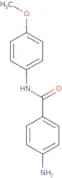
Discontinued product4-Amino-n-(4-methoxyphenyl)benzamide
CAS:4-Amino-N-(4-methoxyphenyl)benzamide is a catalytic sulfamate that has been optimized for use in the synthesis of benzimidazole derivatives. 4-Amino-N-(4-methoxyphenyl)benzamide is used as a reagent for the preparation of aldehydes from sulfamic acid and various types of carboxylic acids. The reaction mechanism involves nucleophilic attack by the hydroxyl group from the sulfamate on the carbonyl carbon atom to form an intermediate, which then reacts with water to release hydrogen sulfate and form a new double bond.
Formula:C14H14N2O2Purity:Min. 95%Molecular weight:242.27 g/molRef: 3D-AAA89135
Discontinued product1-(4-Phenoxyphenyl)propan-1-one
CAS:Versatile small molecule scaffold
Formula:C15H14O2Purity:Min. 95%Molecular weight:226.27 g/molRef: 3D-AAA88926
Discontinued productImidazo[4,3-b][1,3]thiazole
CAS:Imidazo[4,3-b][1,3]thiazole is a heterocyclic aromatic compound. It is stable in air and water, but hydrolyzes in alkaline media to form an alkylthio that is relatively stable. Imidazo[4,3-b][1,3]thiazole has been shown to have antibacterial activity against enterococci and β-lactamase-producing strains of bacteria. It has been used as a component of topical ointments for the treatment of skin infections caused by gram-positive bacteria. Imidazo[4,3-b][1,3]thiazole also has antiviral properties and can be used as a component of influenza vaccines. This drug may also act as a nitroaromatic explosive or as an antimicrobial agent when it reacts with carbapenems such as ertapenem or doripenem.
Formula:C5H4N2SPurity:Min. 95%Molecular weight:124.17 g/molRef: 3D-AAA25189
Discontinued product2-Azaspiro[5.5]undecane
CAS:2-Azaspiro[5.5]undecane is a perchlorate amide, which is a quinoline derivative. It has been used in the synthesis of spirocyclic compounds and yields high yields, including carbon-carbon bonds. 2-Azaspiro[5.5]undecane can be used in the synthesis of aliphatic alcohols and formaldehyde, which is also a chemical known as an aliphatic or an alcohol. 2-Azaspiro[5.5]undecane can also be used in the synthesis of phthalimide and 2-naphthylamine, both of which are organic compounds that belong to the class of aliphatic amines.
Formula:C10H19NPurity:Min. 95%Molecular weight:153.26 g/molRef: 3D-AAA18048
Discontinued product2,8-Diazaspiro[4.5]decane
CAS:2,8-Diazaspiro[4.5]decane is a competitive antagonist of the receptor α-adrenergic. It has been shown to significantly activate ATP-binding cassette transporter proteins in bone cells and increase bone mass. 2,8-Diazaspiro[4.5]decane is also an enantiomer that can be used for the treatment of cancer, as well as other diseases such as depression and anxiety. The pharmacokinetic properties of this drug have been studied in rats and mice with significant concentration levels achieved in plasma after 1 hour. The half-life of 2,8-Diazaspiro[4.5]decane is 3 hours and it is metabolized by hydrolysis by carboxylesterase or hydroxylase enzymes to form an inactive compound.
Formula:C8H16N2Purity:Min. 95%Molecular weight:140.23 g/molButyl benzoate
CAS:Butyl benzoate is a glycol ester that is used as a chemical solvent and as a catalyst for chemical reactions. It has been shown to be an effective catalyst for the synthesis of polymers, such as polybutylene terephthalate (PBT), from the monomers butanediol and terephthalic acid. Butyl benzoate also has been used in the production of fatty acids and pharmaceuticals, such as warfarin. The activation energy for butyl benzoate is 10.5 kJ/mol, which is higher than the activation energy for water at 10.2 kJ/mol.
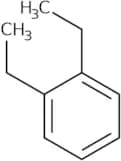
Formula:C11H14O2Purity:Min. 95%Molecular weight:178.23 g/mol1,2-Diethylbenzene
CAS:1,2-Diethylbenzene is a trifluoroacetic acid derivative that is used as an acylation agent and a solid catalyst. 1,2-Diethylbenzene has been shown to increase the energy metabolism in cultured human cells. It also influences fatty acid synthesis and nmr spectra of plant families. 1,2-Diethylbenzene was found to be safe for use in sciatic nerve regeneration in Sprague-Dawley rats with axonopathy. This chemical can also be used as an analytical reagent for the separation of urine samples by liquid chromatography methods.
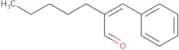
Formula:C10H14Purity:Min. 95%Molecular weight:134.22 g/mol±-Amylcinnamaldehyde
CAS:±-Amylcinnamaldehyde is a hydrocarbon that has been used as a fragrance and flavoring agent. The compound is found naturally in plants such as cinnamon, nutmeg, and cumin. It can be synthesized from acetone and benzaldehyde by the reaction of trifluoroacetic acid. ±-Amylcinnamaldehyde has been shown to stimulate growth factor production and to inhibit the growth of bacteria. This compound has also been shown to possess detergent compositions for use in detergent compositions, including hypochlorite-based detergents. The chemical structure of ±-Amylcinnamaldehyde is shown below: CH3COCH=CH2 ±-AMYLCINNAMALDEHYDE Molecular Weight: 180.25 Boiling Point: n/a Melting Point: n/a Density: 1.00 g/mL at 25°C
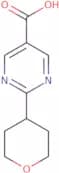
Formula:C14H18OPurity:90%MinMolecular weight:202.3 g/mol2-(Oxan-4-yl)pyrimidine-5-carboxylic acid
CAS:Versatile small molecule scaffold
Formula:C10H12N2O3Purity:Min. 95%Molecular weight:208.21 g/molRef: 3D-XHC60707
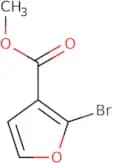
Discontinued productMethyl 2-bromofuran-3-carboxylate
CAS:Versatile small molecule scaffold
Formula:C6H5BrO3Purity:Min. 95%Molecular weight:205.01 g/molRef: 3D-XHA84606
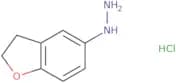
Discontinued product2,3-Dihydro-1-benzofuran-5-ylhydrazine hydrochloride
CAS:Versatile small molecule scaffoldFormula:C8H11ClN2OPurity:Min. 95%Molecular weight:186.64 g/molRef: 3D-XHA59046
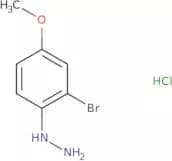
Discontinued product(2-Bromo-4-methoxyphenyl)hydrazine hydrochloride
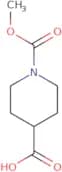
CAS:Versatile small molecule scaffoldFormula:C7H10BrClN2OPurity:Min. 95%Molecular weight:253.52 g/mol1-(Methoxycarbonyl)-4-piperidinecarboxylic acid
CAS:Versatile small molecule scaffold
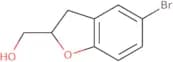
Formula:C8H13NO4Purity:Min. 95%Molecular weight:187.19 g/mol(5-Bromo-2,3-dihydro-1-benzofuran-2-yl)methanol
CAS:Versatile small molecule scaffold
Formula:C9H9O2BrPurity:Min. 95%Molecular weight:229.07 g/molRef: 3D-XHA57735
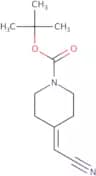
Discontinued producttert-Butyl 4-(cyanomethylidene)piperidine-1-carboxylate
CAS:Versatile small molecule scaffoldFormula:C12H18N2O2Purity:Min. 95%Molecular weight:222.29 g/molRef: 3D-XHA56911
Discontinued product

![N-[Carbamothioyl(phenyl)methyl]benzamide](/_next/image/?url=https%3A%2Fstatic.cymitquimica.com%2Fproducts%2F3D%2Fthumb-webp%2FAAA89278.webp&w=3840&q=75)

![Imidazo[4,3-b][1,3]thiazole](/_next/image/?url=https%3A%2Fstatic.cymitquimica.com%2Fproducts%2F3D%2Fthumb-webp%2FAAA25189.webp&w=3840&q=75)
![2-Azaspiro[5.5]undecane](/_next/image/?url=https%3A%2Fstatic.cymitquimica.com%2Fproducts%2F3D%2Fthumb-webp%2FAAA18048.webp&w=3840&q=75)
![2,8-Diazaspiro[4.5]decane](/_next/image/?url=https%3A%2Fstatic.cymitquimica.com%2Fproducts%2F3D%2Fthumb-webp%2FAAA17667.webp&w=3840&q=75)