Building Blocks
Subcategories of "Building Blocks"
- Boronic Acids & Boronic Acid Derivatives(5,784 products)
- Chiral Building Blocks(1,244 products)
- Hydrocarbon Building Blocks(6,105 products)
- Organic Building Blocks(61,076 products)
Found 205454 products of "Building Blocks"
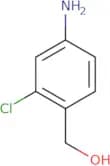
(4-Amino-2-chlorophenyl)methanol
CAS:Versatile small molecule scaffold
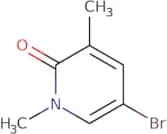
Formula:C7H8ClNOPurity:Min. 95%Molecular weight:157.6 g/mol5-Bromo-1,3-dimethylpyridin-2(1H)-one
CAS:Benzyne is a reactive intermediate that is formed by the tautomerization of 5-bromo-1,3-dimethylpyridin-2(1H)-one. It is an adduct between a bromine atom and a benzene ring. This compound has been shown to react with electron-rich olefins to form bicyclic compounds called diels-alder adducts. These reactions are often catalyzed by metals, such as palladium or nickel. Benzyne also reacts with triple bonds or other electron rich centers to form benzyne adducts, which are highly reactive and can be used as chemical probes for electron density in molecules.
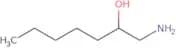
Formula:C7H8BrNOPurity:Min. 95%Molecular weight:202.05 g/mol1-Aminoheptan-2-ol
CAS:Versatile small molecule scaffold
Formula:C7H17NOPurity:Min. 95%Molecular weight:131.22 g/molRef: 3D-BCA41148
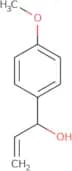
Discontinued product1-(4-Methoxyphenyl)prop-2-en-1-ol
CAS:1-(4-Methoxyphenyl)prop-2-en-1-ol (1MPE) is a model compound that has been shown to inhibit the growth of cancer cells in vitro and in vivo. 1MPE inhibits the activity of human liver enzymes, such as cytochrome P450, which are involved in metabolizing xenobiotics and drugs. 1MPE also binds to the DNA repair enzyme topoisomerase II alpha and inhibits its activity. The binding of 1MPE with this enzyme prevents the relaxation of DNA, leading to cell death by apoptosis. 1MPE has been shown to have toxic effects on rat primary hepatocytes and rat liver microsomes. It also inhibits the growth of CD-1 mice transplanted with human colon tumor cells. In addition, 1MPE is excreted unchanged in urine samples from rats dosed orally with high doses of this drug.
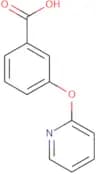
Formula:C10H12O2Purity:Min. 95%Molecular weight:164.2 g/mol3-(Pyridin-2-yloxy)benzoic acid
CAS:3-(Pyridin-2-yloxy)benzoic acid is an organic compound that belongs to the group of anilides. It has been shown to be toxic to plants by inhibiting their chlorophyll production and by causing phytotoxicity. 3-(Pyridin-2-yloxy)benzoic acid also inhibits the germination of seeds, primarily due to its inhibition of growth hormone activity. 3-(Pyridin-2-yloxy)benzoic acid can be used as a herbicide because it is highly effective against broadleaf plants, but not grasses. This compound is also relatively non-toxic to mammals and birds, but can cause skin irritation in humans.
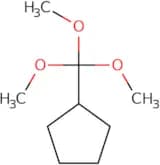
Formula:C12H9NO3Purity:Min. 95%Molecular weight:215.2 g/mol(Trimethoxymethyl)cyclopentane
CAS:Versatile small molecule scaffold
Formula:C9H18O3Purity:Min. 95%Molecular weight:174.24 g/molRef: 3D-BCA35479
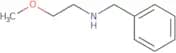
Discontinued productN-Benzyl-n-(2-methoxyethyl)amine
CAS:Versatile small molecule scaffold
Formula:C10H15NOPurity:Min. 95%Molecular weight:165.23 g/molRef: 3D-BCA35326
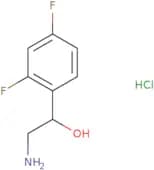
Discontinued product2-Amino-1-(2,4-difluorophenyl)ethan-1-ol hydrochloride
CAS:Versatile small molecule scaffold
Formula:C8H10ClF2NOPurity:Min. 95%Molecular weight:209.62 g/molRef: 3D-BCA33707
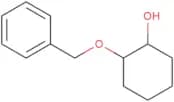
Discontinued productrac-(1R,2R)-2-(Benzyloxy)cyclohexan-1-ol
CAS:Versatile small molecule scaffold
Formula:C13H18O2Purity:Min. 95%Molecular weight:206.28 g/molRef: 3D-BCA32929
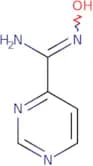
Discontinued productN'-Hydroxypyrimidine-4-carboximidamide
CAS:Versatile small molecule scaffold
Formula:C5H6N4OPurity:Min. 95%Molecular weight:138.13 g/molRef: 3D-BCA28511
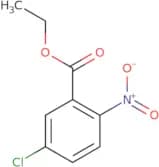
Discontinued productEthyl 5-chloro-2-nitrobenzoate
CAS:Versatile small molecule scaffold
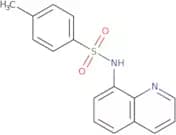
Formula:C9H8ClNO4Purity:Min. 95%Molecular weight:229.62 g/mol8-(Tosylamino)quinoline
CAS:8-(Tosylamino)quinoline is a quinoline derivative that inhibits the production of tumor necrosis factor-α (TNF-α) and other inflammatory mediators. 8-(Tosylamino)quinoline has been shown to inhibit the proliferation of muscle cells, which may be due to its anti-inflammatory properties. This drug also suppresses genes that are involved in cell growth and signaling, such as suppressor genes. 8-(Tosylamino)quinoline binds copper ions, which prevents the formation of reactive oxygen species and blocks the activation of nuclear factor kappa beta (NFκB), which regulates immune responses. It also inhibits autophagy, a process by which cells destroy their own intracellular contents during periods of starvation or stress.
Formula:C16H14N2O2SPurity:Min. 95%Molecular weight:298.36 g/moltert-Butyl 3-bromopropionate
CAS:Tert-butyl 3-bromopropionate is a linker for the synthesis of pleuromutilin derivatives. It has been used as a model substrate for studying the effects of hypertrophy on cardiac muscle. Tert-butyl 3-bromopropionate has also been shown to inhibit the production of proinflammatory cytokines in response to bacterial infection, and can be used as an antibacterial agent. Tert-butyl 3-bromopropionate binds to RNA and inhibits protein synthesis, which leads to cell death by preventing the production of proteins vital for cell division. Tert-butyl 3-bromopropionate is also a potent inhibitor of chloride channels that are found in nerve cells and prevents the flow of chloride ions through these channels, leading to paralysis. This drug also inhibits hydrogen fluoride excretion in rats, which may be due to its ability to bind with chloride ions in the kidney tubules, preventing their
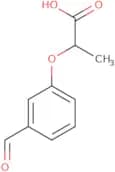
Formula:C7H13BrO2Purity:Min. 95%Color and Shape:Colorless Clear LiquidMolecular weight:209.08 g/mol2-(3-Formylphenoxy)propanoic acid
CAS:Versatile small molecule scaffold
Formula:C10H10O4Purity:Min. 95%Molecular weight:194.18 g/molRef: 3D-BCA26477
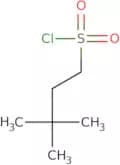
Discontinued product3,3-Dimethylbutane-1-sulfonyl chloride
CAS:Versatile small molecule scaffold
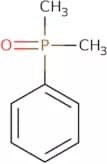
Formula:C6H13ClO2SPurity:Min. 95%Molecular weight:184.69 g/mol(Dimethylphosphoryl)benzene
CAS:Dimethylphosphorylbenzene is an inorganic compound that is a phosphine, a class of organometallic compounds. It has been shown to have a catalytic effect on the reaction between acyl halides and carbon disulphide. Dimethylphosphorylbenzene has also been studied for its use as a polymerization initiator in lithography. Its light-emitting properties are due to the presence of a hydroxyl group and its ability to undergo photochemical reactions following exposure to light.
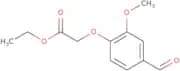
Formula:C8H11OPPurity:Min. 95%Molecular weight:154.15 g/mol4-Formyl-2-methoxy-phenoxy-acetic acid ethyl ester
CAS:Versatile small molecule scaffold
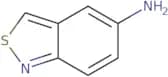
Formula:C12H14O5Purity:Min. 95%Molecular weight:238.24 g/mol2,1-Benzothiazol-5-amine
CAS:Versatile small molecule scaffold
Formula:C7H6N2SPurity:Min. 95%Molecular weight:150.2 g/molRef: 3D-BCA25366
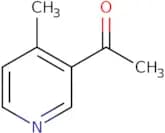
Discontinued product1-(4-Methyl-3-pyridinyl)ethanone
CAS:1-(4-Methyl-3-pyridinyl)ethanone is an organic compound that yields optical pyruvic acid on hydrolysis. It also has unselective dehydrogenase activity on a variety of substrates, including dioxane and 2,2,2-trichloroethanol. 1-(4-Methyl-3-pyridinyl)ethanone can be used as a reagent for the synthesis of chiral iminium salts or as a dehydrating agent in organic synthesis. It is also used to synthesize vitamin B6 and indole alkaloids. The chemical structure of 1-(4-methyl-3-pyridinyl)ethanone is similar to that of benzaldehyde (C6H5CH2CHO), which has benzylic hydroxyl group on the benzene ring. This compound can be oxidized to yield a dianion that can be used as a photocat
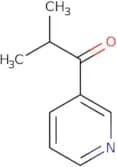
Formula:C8H9NOPurity:Min. 95%Molecular weight:135.16 g/mol2-Methyl-1-(pyridin-3-yl)propan-1-one
CAS:Versatile small molecule scaffold
Formula:C9H11NOPurity:Min. 95%Molecular weight:149.19 g/mol