Building Blocks
Subcategories of "Building Blocks"
- Boronic Acids & Boronic Acid Derivatives(5,805 products)
- Chiral Building Blocks(1,248 products)
- Hydrocarbon Building Blocks(6,118 products)
- Organic Building Blocks(61,447 products)
Found 208423 products of "Building Blocks"
4-bromo-1H-imidazole-2-carbaldehyde
CAS:Versatile small molecule scaffoldFormula:C4H3BrN2OPurity:Min. 95%Molecular weight:175 g/mol1H-[1,2,3]Triazolo[4,5-d]pyrimidin-5-amine
CAS:1H-[1,2,3]Triazolo[4,5-d]pyrimidin-5-amine is a nitro compound that binds to the receptor binding sites of certain inflammatory bowel disease and cancer cells. It also inhibits the production of adenosine in these cells. 1H-[1,2,3]Triazolo[4,5-d]pyrimidin-5-amine has been shown to be effective against bowel disease and cancer by inhibiting cyclic AMP (cAMP) degradation. This drug has also been shown to be an irreversible inhibitor of ischemia reperfusion injury in animal models. 1H-[1,2,3]Triazolo[4,5-d]pyrimidin-5-amine is a nitro compound that binds to the receptor binding sites of certain inflammatory bowel disease and cancer cells. It also inhibits the production of adenosine in these cells. 1HFormula:C4H4N6Purity:Min. 95%Molecular weight:136.12 g/mol6-Oxa-2-azaspiro[3.4]octane HCl
CAS:Versatile small molecule scaffold
Formula:C6H12ClNOPurity:Min. 95%Molecular weight:149.62 g/mol5-(2-Aminoethyl)thiophene-2-sulfonamide hydrochloride
CAS:Versatile small molecule scaffoldFormula:C6H11ClN2O2S2Purity:Min. 95%Molecular weight:242.8 g/molMito-TEMPO
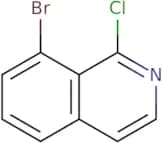
CAS:Mito-TEMPO is a mitochondrial-targeted antioxidant that scavenges reactive oxygen species (ROS) and protects against oxidative injury. It has been shown to be effective in reducing oxidative damage in the heart and liver, as well as in models of neuronal death. Mito-TEMPO is also a potent inhibitor of lipid peroxidation and is able to prevent the formation of aldehydes. This drug has minimal toxicity, which may be due to its ability to accumulate in mitochondria without disrupting mitochondrial functions. Mito-TEMPO has been tested on healthy individuals with no observed side effects.Formula:C29H35ClN2O2PPurity:Min. 95%Molecular weight:510.03 g/mol8-Bromo-1-chloroisoquinoline
CAS:Versatile small molecule scaffold
Formula:C9H5BrClNPurity:Min. 95%Molecular weight:242.5 g/molmethyl 4-bromo-3-formylbenzoate
CAS:Versatile small molecule scaffoldFormula:C9H7BrO3Purity:Min. 95%Molecular weight:243.1 g/mol7-Bromo-1-methylnaphthalene
CAS:7-Bromo-1-methylnaphthalene is a fluorescent dye that can be used to measure the concentration of DNA, RNA, and proteins. This compound is an intercalator, which means that it can bind to double stranded DNA or RNA near the center of the molecule where there is a space for binding. It has been used in the study of the thymic gland because it binds to DNA and RNA in cells from this organ. 7-Bromo-1-methylnaphthalene has also been used as a skeleton for organic compounds, such as dimethylammonium. The bromine atom in this compound can be replaced with other atoms like iodine or chlorine to make different colored dyes.
Formula:C11H9BrPurity:Min. 95%Molecular weight:221.09 g/mol4-Bromopyridine-2,3-diamine
CAS:Versatile small molecule scaffoldFormula:C5H6N3BrPurity:Min. 95%Molecular weight:188.02 g/mol4-Chloro-2-hydroxy-6-methylphenylboronic acid
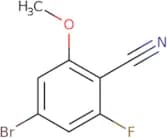
CAS:Versatile small molecule scaffoldFormula:C7H8BClO3Purity:Min. 95%Molecular weight:186.4 g/mol4-Bromo-2-fluoro-6-methoxybenzonitrile
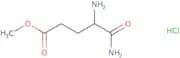
CAS:Versatile small molecule scaffoldFormula:C8H5NOFBrPurity:Min. 95%Molecular weight:230.03 g/molH-Glu(OMe)-NHdihydrochloride
CAS:Versatile small molecule scaffoldFormula:C6H13ClN2O3Purity:Min. 95%Molecular weight:196.63 g/mol6,7-dihydro-5h-pyrrolo[3,4-d]pyrimidin-2-amine 2hcl
CAS:Versatile small molecule scaffold
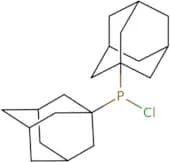
Formula:C6H10Cl2N4Purity:Min. 95%Molecular weight:209.07 g/molDi(1-adamantyl)chlorophosphine
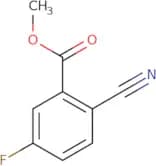
CAS:Di(1-adamantyl)chlorophosphine is a bifunctional ligand that can be used for the palladium-catalyzed coupling of aryl chlorides and amines. Di(1-adamantyl)chlorophosphine is synthesized from adamantane, phosphorous pentachloride, and anhydrous ammonia in the presence of catalytic amounts of palladium. Di(1-adamantyl)chlorophosphine is immobilized on silica gel to prevent hydrolysis. This ligand reacts with primary amines to form iminophosphoranes, which can then be reacted with aryl chlorides to form aryl chloroamines.Formula:C20H30ClPPurity:Min. 95%Molecular weight:336.88 g/molMethyl 2-cyano-5-fluorobenzoate
CAS:Versatile small molecule scaffold
Formula:C9H6FNO2Purity:Min. 95%Molecular weight:179.15 g/moltert-Butyl 4-[(piperazin-1-yl)methyl]piperidine-1-carboxylate
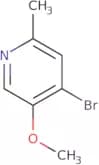
CAS:Versatile small molecule scaffoldFormula:C15H29N3O2Purity:Min. 95%Molecular weight:283.41 g/mol4-Bromo-5-methoxy-2-methylpyridine
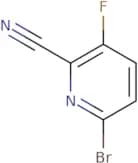
CAS:Versatile small molecule scaffoldFormula:C7H8BrNOPurity:Min. 95%Molecular weight:202.05 g/mol6-Bromo-3-fluoropyridine-2-carbonitrile
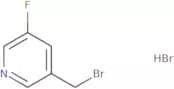
CAS:Versatile small molecule scaffoldFormula:C6H2N2FBrPurity:Min. 95%Molecular weight:200.99 g/mol3-(bromomethyl)-5-fluoropyridine hbr
CAS:Versatile small molecule scaffoldFormula:C6H6Br2FNPurity:Min. 95%Molecular weight:270.93 g/molMethyl 3-chloropropionate
CAS:Methyl 3-chloropropionate is an alkyl ether that has been used in clinical studies as a liquid phase ion-pair extraction solvent. It was developed to replace the use of hexane, which is not environmentally friendly and can also cause irritation. Methyl 3-chloropropionate has been shown to have a higher viscosity than hexane at room temperature and is less likely to evaporate than hexane. Methyl 3-chloropropionate has also been used as a synthetic process solvent, with the reaction time being shorter than that of hexane. This compound can be used for chromatography without any effect on the solute or the stationary phase. Methyl 3-chloropropionate has also been shown to be effective in lipase and agarose gel assays, as well as chloride ion extraction from water samples.
Formula:C4H7ClO2Purity:Min. 95%Color and Shape:Clear LiquidMolecular weight:122.55 g/mol


![1H-[1,2,3]Triazolo[4,5-d]pyrimidin-5-amine](/_next/image/?url=https%3A%2Fstatic.cymitquimica.com%2Fproducts%2F3D%2Fthumb-webp%2FKAA17984.webp&w=3840&q=75)
![6-Oxa-2-azaspiro[3.4]octane HCl](/_next/image/?url=https%3A%2Fstatic.cymitquimica.com%2Fproducts%2F3D%2Fthumb-webp%2FJEC65612.webp&w=3840&q=75)




![6,7-dihydro-5h-pyrrolo[3,4-d]pyrimidin-2-amine 2hcl](/_next/image/?url=https%3A%2Fstatic.cymitquimica.com%2Fproducts%2F3D%2Fthumb-webp%2FHGA32752.webp&w=3840&q=75)
![tert-Butyl 4-[(piperazin-1-yl)methyl]piperidine-1-carboxylate](/_next/image/?url=https%3A%2Fstatic.cymitquimica.com%2Fproducts%2F3D%2Fthumb-webp%2FGQA72248.webp&w=3840&q=75)