Building Blocks
This section contains fundamental products for the synthesis of organic and biological compounds. Building blocks are the essential starting materials used to construct complex molecules through various chemical reactions. They play a critical role in drug discovery, material science, and chemical research. At CymitQuimica, we offer a diverse range of high-quality building blocks to support your innovative research and industrial projects, ensuring you have the essential components for successful synthesis.
Subcategories of "Building Blocks"
- Boronic Acids & Boronic Acid Derivatives(5,756 products)
- Chiral Building Blocks(1,242 products)
- Hydrocarbon Building Blocks(6,093 products)
- Organic Building Blocks(60,522 products)
Found 195533 products of "Building Blocks"
Sort by
Purity (%)
0
100
|
0
|
50
|
90
|
95
|
100
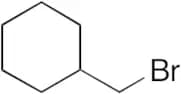
(Bromomethyl)cyclohexane
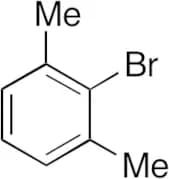
CAS:Controlled Product<p>Applications (Bromomethyl)cyclohexane is a reagent that is used in the synthesis of cyano thiouracils as SecA inhibitors.<br> Not a dangerous good if item is equal to or less than 1g/ml and there is less than 100g/ml in the package<br>References Chaudhary, A. S., et al.: Bioorg. Med. Chem., 23, 105 (2015);<br></p>Formula:C7H13BrColor and Shape:NeatMolecular weight:177.0822-Bromo-m-xylene
CAS:Controlled Product<p>Applications 2-Bromo-m-xylene, is an organic building block used for the synthesis of various chemicals. It can be used for the preparation of Pd(II) complexes used as catalyst.<br>References Hanhan, M. E., et al.: App. Organomet. Chem., 27, 570 (2013); Liu, Z., et al.: J. Org. Chem., 78, 7436 (2013);<br></p>Formula:C8H9BrColor and Shape:NeatMolecular weight:185.064-(n-Butylamino-2,2,3,3,4,4,4-d7)benzoic Acid
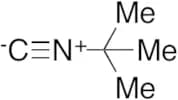
CAS:Controlled Product<p>Applications 4-(n-Butylamino-2,2,3,3,4,4,4-d7)benzoic Acid (CAS# 1219803-44-7) is a useful isotopically labeled research compound.<br></p>Formula:C11H8D7NO2Color and Shape:NeatMolecular weight:200.29tert-Butyl Isocyanide
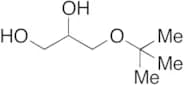
CAS:Controlled Product<p>Stability Hygroscopic<br>Applications tert-Butyl Isocyanide is an intermediate used to prepare coumarines, 4H-chromenes and isoxazolines.<br> Not a dangerous good if item is equal to or less than 1g/ml and there is less than 100g/ml in the package<br>References Yavari, I., et al.: Synthesis, 5, 679 (2004);<br></p>Formula:C5H9NColor and Shape:NeatMolecular weight:83.13(±)-3-tert-Butoxy-1,2-propanediol
CAS:Controlled Product<p>Applications (±)-3-tert-Butoxy-1,2-propanediol is a diesel fuel additive.<br>References Frusteri, F., et al.: Appl. Catal., 367, 77 (2009)<br></p>Formula:C7H16O3Color and Shape:NeatMolecular weight:148.2n-Butyraldehyde-2,2-d2
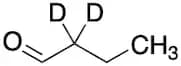
CAS:Controlled ProductFormula:C4H6D2OColor and Shape:NeatMolecular weight:74.122,3-Butane-1,1,1,4,4,4-d6-diol
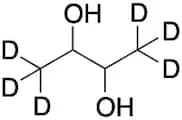
CAS:Controlled Product<p>Applications 2,3-Butane-1,1,1,4,4,4-d6-diol (CAS# 344750-80-7) is a useful isotopically labeled research compound.<br></p>Formula:C4H4D6O2Color and Shape:NeatMolecular weight:96.16n-Butyl-4,4,4-d3 Alcohol
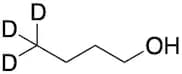
CAS:Controlled Product<p>Applications n-Butyl-4,4,4-d3 Alcohol (CAS# 64156-70-3) is a useful isotopically labeled research compound.<br></p>Formula:C4H7D3OColor and Shape:NeatMolecular weight:77.14n-Butyl-1,1,2,2-d4 Alcohol
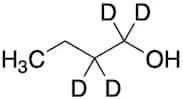
CAS:Controlled Product<p>Applications n-Butyl-1,1,2,2-d4 Alcohol (CAS# 118104-91-9) is a useful isotopically labeled research compound.<br></p>Formula:C4H6D4OColor and Shape:NeatMolecular weight:78.15n-Butyl-2,2,3,3,4,4,4-d7 Alcohol
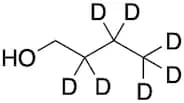
CAS:Controlled ProductFormula:C4H3D7OColor and Shape:NeatMolecular weight:81.17n-Butyl-3,3,4,4,4-d5 Alcohol
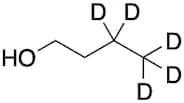
CAS:Controlled Product<p>Applications n-Butyl-3,3,4,4,4-d5 Alcohol (CAS# 64118-16-7) is a useful isotopically labeled research compound.<br></p>Formula:C4H5D5OColor and Shape:NeatMolecular weight:79.15n-Butyl-1,1,2,2,3,3-d6 Alcohol
CAS:Controlled Product<p>Applications n-Butyl-1,1,2,2,3,3-d6 Alcohol (CAS# 1219794-84-9) is a useful isotopically labeled research compound.<br></p>Formula:C4H4D6OColor and Shape:NeatMolecular weight:80.162,6-di-tert-Butylpyridine
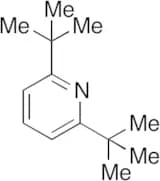
CAS:Controlled Product<p>Applications 2,6-di-tert-Butylpyridine is used in the preparation of polymers with n-type nitroxide side groups to be used in organic radical batteries.<br>References Jaehnert, T., et. al.: Eur. Polymer J., 61, 105 (2014)<br></p>Formula:C13H21NColor and Shape:NeatMolecular weight:191.31n-Butylamine-d11 DCl
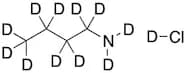
CAS:Controlled Product<p>Applications n-Butylamine-d11 DCl (CAS# 347841-81-0) is a useful isotopically labeled research compound.<br>Chemical Name: n-Butylamine-d11 DCl (CAS# 347841-81-0) is a useful isotopically labeled research compound.<br></p>Formula:C4D12ClNColor and Shape:NeatMolecular weight:121.67n-Butylamine-ND2 DCl
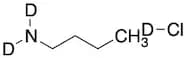
CAS:Controlled Product<p>Applications n-Butylamine-ND2 DCl (CAS# 156235-87-9) is a useful isotopically labeled research compound.<br>Chemical Name: n-Butylamine-ND2 DCl (CAS# 156235-87-9) is a useful isotopically labeled research compound.<br></p>Formula:C4H9D3ClNColor and Shape:NeatMolecular weight:112.62tert-Butyl N-(4-Amino-1-methylcyclohexyl)carbamate
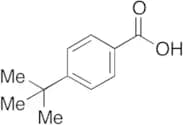
CAS:Controlled ProductFormula:C12H24N2O2Color and Shape:NeatMolecular weight:228.3314-tert-Butylbenzoic Acid
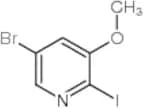
CAS:<p>Applications 4-tert-Butylbenzoic Acid is a general chemical reactant/reagent used in the synthesis of Arylboronic Acids as dual-action FAAH and TRPV1 ligands. As well, used in the preparation of cellular chemical probes targetting PRC1 (polycomb repressive complex 1) for prostate cancer cells.<br>References Morera, E. et al.: Bioorg. Med. Chem. Lett., 26, 1401 (2016); Stuckey, J. et al.: Nat. Chem. Biol., 12, 180 (2016);<br></p>Formula:C11H14O2Color and Shape:NeatMolecular weight:178.235-Bromo-2-iodo-3-methoxypyridine
CAS:Controlled Product<p>Applications 5-Bromo-2-iodo-3-methoxypyridine<br></p>Formula:C6H5BrINOColor and Shape:NeatMolecular weight:313.924-Bromo-1,2-methylenedioxybenzene
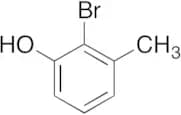
CAS:Controlled Product<p>Stability Light Sensitive<br>Applications 4-Bromo-1,2-methylenedioxybenzene<br></p>Formula:C7H5BrO2Color and Shape:NeatMolecular weight:201.022-Bromo-3-methylphenol
CAS:Controlled Product<p>Applications 2-Bromo-3-methylphenol is a reagent used in chemoselective and regioselective oxybromination of phenols with dioxygen<br>References Menini, L., et al.: Tetrahedron Lett., 48, 6401 (2007)<br></p>Formula:C7H7BrOColor and Shape:NeatMolecular weight:187.03