Building Blocks
This section contains fundamental products for the synthesis of organic and biological compounds. Building blocks are the essential starting materials used to construct complex molecules through various chemical reactions. They play a critical role in drug discovery, material science, and chemical research. At CymitQuimica, we offer a diverse range of high-quality building blocks to support your innovative research and industrial projects, ensuring you have the essential components for successful synthesis.
Subcategories of "Building Blocks"
- Boronic Acids & Boronic Acid Derivatives(5,778 products)
- Chiral Building Blocks(1,243 products)
- Hydrocarbon Building Blocks(6,098 products)
- Organic Building Blocks(61,057 products)
Found 200710 products of "Building Blocks"
Sort by
Purity (%)
0
100
|
0
|
50
|
90
|
95
|
100
4-Nitrobenzenesulfonyl chloride
CAS:<p>4-Nitrobenzenesulfonyl chloride is a versatile chemical compound. As a reagent in organic synthesis, it plays a crucial role in the preparation of pharmaceuticals, iminosugars, and oligosaccharides. Its ability to facilitate alpha-glucosylation makes it an essential component in the synthesis of complex carbohydrates. 4-Nitrobenzenesulfonyl chloride is also utilized in the preparation of N-nosyl-alpha-amino acids, which are essential building blocks in peptide synthesis. Additionally, it is widely used in the production of dyes and pigments.</p>Formula:C6H4ClNO4SPurity:Min. 98 Area-%Color and Shape:PowderMolecular weight:221.62 g/mol2-Carboxy-3,4-dimethoxybenzaldehyde
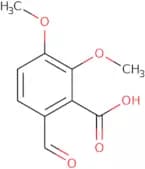
CAS:2-Carboxy-3,4-dimethoxybenzaldehyde is a chemical that belongs to the class of compounds known as butyric acid derivatives. It is a colorless liquid with a pungent odor and can be used in pharmaceutical preparations as an antispasmodic or a sedative. 2-Carboxy-3,4-dimethoxybenzaldehyde has been shown to have radical scavenging activities in tissue culture systems and dry weight reaction products in the presence of hydrochloric acid and chloride ion. This compound can also act as an acid complexing agent for hydrogen chloride and depressant activity on animal behavior.Formula:C10H10O5Purity:Min. 95%Color and Shape:White Yellow PowderMolecular weight:210.18 g/mol1-Naphthol
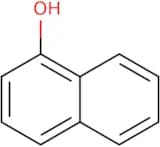
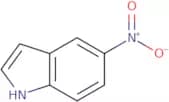
CAS:<p>Derivative of naphthalene; used in the synthesis of various chemicals and as a precursor in the production of dyes, pigments, and pharmaceuticals. It is particularly important in the manufacture of azo dyes, where it serves as a coupling agent in the diazo coupling reaction to produce colored compounds.</p>Formula:C10H7OHPurity:Min. 95%Color and Shape:PowderMolecular weight:144.17 g/mol5-Nitroindole
CAS:5-Nitroindole is a chemical used in wastewater treatment. It is an electron acceptor that can be used to reduce the cost of the process. 5-Nitroindole has significant cytotoxicity and polymerase chain activity in human pathogens, such as Escherichia coli, Salmonella enterica, Staphylococcus aureus, and Mycobacterium tuberculosis. The drug is stable under aerobic conditions and has shown no significant cytotoxicity to mammalian cells. 5-Nitroindole has been shown to hybridize with DNA duplexes containing guanine bases and form covalent bonds in a model system. The drug also has been shown to be present in colonies of colony-stimulating factor (CSF) cells that are found in the blood stream of healthy individuals.Formula:C8H6N2O2Purity:Min. 95%Color and Shape:Yellow PowderMolecular weight:162.15 g/mol2-Naphthaldehyde
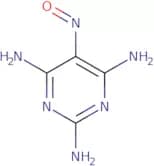
CAS:<p>2-Naphthaldehyde is an antimicrobial agent that has been shown to inhibit the growth of bacteria in vitro. It has been shown to inhibit the synthesis of DNA, RNA and protein. 2-Naphthaldehyde is an intramolecular hydrogen acceptor and a substrate for coumarin derivatives. The reaction mechanism of 2-napthalaldehyde is not yet fully understood, but it has been proposed that 2-napthalaldehyde reacts with sodium carbonate to form sodium phenolate and acetone. 2-Naphthaldehyde also shows genotoxic activity, as it has been shown to induce structural aberrations in bacterial DNA. This chemical compound also forms coordination geometry complexes with metal ions such as copper and zinc.</p>Formula:C11H8OPurity:Min. 98%Color and Shape:Beige PowderMolecular weight:156.18 g/mol5-Nitroso-2,4,6-triaminopyrimidine
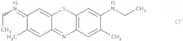
CAS:<p>5-Nitroso-2,4,6-triaminopyrimidine is a chemical compound that has been shown to have anticancer activity. It reacts with nucleophilic compounds such as hydroxides of metals and amides to form an amide bond. 5-Nitroso-2,4,6-triaminopyrimidine inhibits the enzyme glycosylase by reacting with it in a nucleophilic attack. This reaction leads to the formation of a stable nitrosamine intermediate that can be hydrolyzed by an acid or base. The inhibitory effect of 5-Nitroso-2,4,6-triaminopyrimidine on malonic acid decarboxylase (MAD) and anthranilic acid synthase (AAS) in animals is due to its ability to react with these enzymes in a similar way as for MAD and AAS in humans. Inhibition of MAD and AAS leads to reduced levels of malonic</p>Formula:C4H6N6OPurity:Min. 95%Color and Shape:Yellow PowderMolecular weight:154.13 g/molNew Methylene Blue N
CAS:New Methylene Blue N is a dye that has been shown to have antimicrobial properties. It is used as a stain in histology, as well as in the treatment of bacterial and fungal infections. New Methylene Blue N can also be used as an indicator for acidity, due to its acidic nature. The compound may also act as a substrate for nitrite reductase, which is an enzyme involved in the reduction of nitrite to nitric oxide. Nitric oxide is a potent vasodilator that relaxes vascular smooth muscle and inhibits platelet aggregation. New Methylene Blue N has also been shown to have photochemical properties, which may contribute to its ability to inhibit bacterial growth.Formula:C18H22ClN3SColor and Shape:Brown PowderMolecular weight:347.91 g/molN-Nitroso-3-azabicyclo[3.3.0]octane
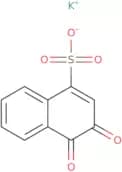
CAS:<p>N-Nitroso-3-azabicyclo[3.3.0]octane is a nitrosating agent that can be used for the determination of gliclazide in pharmaceuticals and other applications. It is synthesized by reacting 3-azabicyclo[3.3.0]octane with sodium nitrite in an alkaline environment, followed by hydrolysis with hydrochloric acid. Nitrosation reactions are usually slow, but N-nitroso-3-azabicyclo[3.3.0]octane has been shown to have a fast reaction kinetics, which makes it useful for the determination of gliclazide in pharmaceuticals and other applications. The product is analyzed using chromatographic techniques such as high performance liquid chromatography (HPLC) or gas chromatography/mass spectrometry (GC/MS). The product was found to be linear over the range of 0–</p>Formula:C7H12N2OPurity:Min. 95%Color and Shape:Colorless PowderMolecular weight:140.18 g/mol1,2-Naphthoquinone-4-sulfonic acid potassium salt
CAS:<p>1,2-Naphthoquinone-4-sulfonic acid potassium salt is a pesticide that has been shown to be active against many types of insects. It is used as an insecticide and acaricide in agriculture, horticulture, and forestry. The compound is stable and does not hydrolyze in water, making it easy to handle. This product is also a natural product that can be synthesized from cyanamide and amines, which are both commercially available. 1,2-Naphthoquinone-4-sulfonic acid potassium salt has been found to be effective at killing insects when injected into their bodies with the use of a syringe or when sprayed on the surface where they live. GC–MS analysis has shown that this compound contains no reactive functional groups or substances that would cause harm to humans or animals. Research has shown this product to be safe for use in food crops and animal feed.</p>Formula:C10H5O5SKPurity:Min. 98 Area-%Color and Shape:Orange PowderMolecular weight:276.31 g/molNitrobenzene
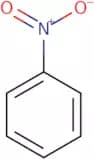
CAS:Nitrobenzene is a chemical that is used in wastewater treatment. It reacts with sodium carbonate to form sodium nitrite and hydrogen fluoride. The reaction mechanism is not well understood, but it is thought that the hydrogen fluoride acts as a catalyst for the reaction. Nitrobenzene has been shown to have transport properties in natural water systems. It can be found in the environment from industrial waste or from the combustion of fossil fuels. Nitrobenzene has been shown to cause chronic exposure when ingested by humans and animals, as well as structural changes in DNA, which may lead to cancer. Nitrobenzene can also react with an inorganic acid to form an organic compound called a nitrosamine. These compounds are carcinogenic and mutagenic, and have been linked to various cancers such as bladder cancer, stomach cancer, pancreatic cancer, lung cancer, breast cancer, esophageal cancer and liver cancer. The most common nitrosamines are N-nitFormula:C6H5NO2Purity:Min. 98 Area-%Color and Shape:Colorless Clear LiquidMolecular weight:123.11 g/mol2-{[(9H-Fluoren-9-yl)methoxy]carbonyl}-1,2,3,4-tetrahydroisoquinoline-6-carboxylic acid
CAS:<p>2-{[(9H-Fluoren-9-yl)methoxy]carbonyl}-1,2,3,4-tetrahydroisoquinoline-6-carboxylic acid is a high quality reagent. It is a useful intermediate for the synthesis of various complex compounds. This compound is also a useful scaffold and building block for research chemicals. 2-{[(9H-Fluoren-9-yl)methoxy]carbonyl}-1,2,3,4-tetrahydroisoquinoline-6-carboxylic acid is versatile in that it can be used as a reaction component in different reactions.</p>Formula:C25H21NO4Purity:Min. 95%Color and Shape:PowderMolecular weight:399.4 g/molIndole-3-acetic acid
CAS:<p>Plant growth hormone. Regulates cell membrane electron transport and proton flux, plays important roles in a number of plant activities, including: development of the embryo, leafformation, phototropism, gravitropism, apical dominance, fruit development, abscission, root initiation.</p>Formula:C10H9NO2Purity:Min. 99 Area-%Molecular weight:175.19 g/mol1-Naphthalenesulfonic acid
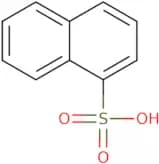
CAS:<p>1-Naphthalenesulfonic acid (1NS) is a sulfonated organic compound. It is an inhibitor of human serum albumin, with a high affinity for the hydroxyl group on the protein's surface. 1NS has been shown to have anti-cancer activity against malignant brain tumors in mice, and also inhibits HIV replication by inhibiting the function of the enzyme reverse transcriptase. 1NS has been shown to inhibit toll-like receptor 4 (TLR4), which may be related to its immunomodulatory effects.</p>Formula:C10H8O3SPurity:Min. 50.0 Area-%Color and Shape:White Beige Slightly Brown PowderMolecular weight:208.23 g/mol2-Cyanopyrimidine
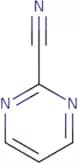
CAS:2-Cyanopyrimidine is a substrate molecule for hypoglycemic effect. It has been shown to inhibit the synthesis of proteins such as immunoglobulin E and other cytokines, which play a role in autoimmune diseases. 2-Cyanopyrimidine also acts as an inhibitor of protein genes, including those that are encoded by the polymerase chain reaction (PCR). 2-Cyanopyrimidine has been shown to be effective in treating eye disorders such as iritis and anterior uveitis. The mechanism of action is not fully understood but may be due to its ability to produce hypoglycemia and its effects on prostaglandin synthesis. 2-Cyanopyrimidine can cause a decrease in systolic blood pressure when used as pharmacological treatment.Formula:C5H3N3Purity:Min. 95%Color and Shape:White PowderMolecular weight:105.1 g/mol3-{2,8,9-Trioxa-5-aza-1-silabicyclo[3.3.3]undecan-1-yl}propan-1-amine
CAS:3-{2,8,9-Trioxa-5-aza-1-silabicyclo[3.3.3]undecan-1-yl}propan-1-amine (TPAP) is a reactive molecule. It has been immobilized on silicon and titanium surfaces and has shown photocatalytic activity in the presence of oxygen. TPAP is highly resistant to acidic environments and can be used as an immobilization agent for other molecules. TPAP is also labile to hydrolysis and will react with water, releasing ammonia gas, which can be a problem in some applications. TPAP is not active against bacteria or fungi but does have growth rate inhibiting effects on yeast cells.Formula:C9H20N2O3SiPurity:Min. 95%Color and Shape:PowderMolecular weight:232.35 g/molIndole-4-carboxaldehyde
CAS:Please enquire for more information about Indole-4-carboxaldehyde including the price, delivery time and more detailed product information at the technical inquiry form on this pageFormula:C9H7NOMolecular weight:145.16 g/mol5-Chloroindole-3-acetic acid
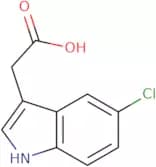
CAS:<p>5-Chloroindole-3-acetic acid (5CI3A) is a compound that belongs to the indole class of compounds. It is structurally similar to the amino acid tryptophan, which makes it a good template molecule for the synthesis of other indoles. 5CI3A is mainly found in plants and bacteria, where it acts as an auxin. In plants, 5CI3A stimulates cell elongation and leaf growth by interacting with plant hormones such as auxins and gibberellins. This compound also binds to serum albumin, which may be responsible for its low toxicity in humans. 5CI3A has been shown to inhibit the activity of human serum albumin by forming hydrogen bonds with it. This inhibition reduces the binding affinity of 5CI3A for other proteins in serum, making it less likely to interact with them than if there were no binding competition.</p>Formula:C10H8ClNO2Color and Shape:PowderMolecular weight:209.63 g/mol[(1H-Indol-6-yl)methyl](methyl)amine
CAS:<p>Versatile small molecule scaffold</p>Formula:C10H12N2Purity:Min. 95%Molecular weight:160.22 g/mol4-Chloro-3-methoxy-2-methylpyridine N-oxide
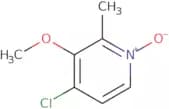
CAS:The compound 4-Chloro-3-methoxy-2-methylpyridine N-oxide is an organic compound with a neutral chemical nature. It is a byproduct of the production of methylpyridine, which is achieved through the reaction between phosphorus oxychloride and toluene. The toxicological properties of this substance are unknown.Formula:C7H8ClNO2Purity:Min. 95%Color and Shape:PowderMolecular weight:173.6 g/mol5-Phenyl-3H-furan-2-one
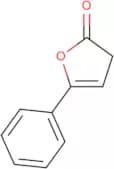
CAS:<p>5-Phenyl-3H-furan-2-one is an antiviral agent that belongs to the group of aldehydes. It is used as an active ingredient in influenza vaccines. The virus is inactivated by 5-phenyl-3H-furan-2-one and produces a recemic product that can be detected with a branched chain profile after chemical hydrolysis.</p>Formula:C10H8O2Purity:Min. 95%Color and Shape:PowderMolecular weight:160.17 g/mol



![N-Nitroso-3-azabicyclo[3.3.0]octane](/_next/image/?url=https%3A%2Fstatic.cymitquimica.com%2Fproducts%2F3D%2Fthumb-webp%2FFN166610.webp&w=3840&q=75)
![2-{[(9H-Fluoren-9-yl)methoxy]carbonyl}-1,2,3,4-tetrahydroisoquinoline-6-carboxylic acid](/_next/image/?url=https%3A%2Fstatic.cymitquimica.com%2Fproducts%2F3D%2Fthumb-webp%2FNKD22621.webp&w=3840&q=75)

![3-{2,8,9-Trioxa-5-aza-1-silabicyclo[3.3.3]undecan-1-yl}propan-1-amine](/_next/image/?url=https%3A%2Fstatic.cymitquimica.com%2Fproducts%2F3D%2Fthumb-webp%2FSAA86927.webp&w=3840&q=75)

amine](/_next/image/?url=https%3A%2Fstatic.cymitquimica.com%2Fproducts%2F3D%2Fthumb-webp%2FDAA46821.webp&w=3840&q=75)