Building Blocks
This section contains fundamental products for the synthesis of organic and biological compounds. Building blocks are the essential starting materials used to construct complex molecules through various chemical reactions. They play a critical role in drug discovery, material science, and chemical research. At CymitQuimica, we offer a diverse range of high-quality building blocks to support your innovative research and industrial projects, ensuring you have the essential components for successful synthesis.
Subcategories of "Building Blocks"
- Boronic Acids & Boronic Acid Derivatives(5,756 products)
- Chiral Building Blocks(1,242 products)
- Hydrocarbon Building Blocks(6,095 products)
- Organic Building Blocks(61,051 products)
Found 199813 products of "Building Blocks"
Sort by
Purity (%)
0
100
|
0
|
50
|
90
|
95
|
100
Methyl 2-nitrobenzoate
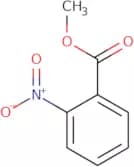
CAS:<p>Methyl 2-nitrobenzoate is a nitro compound that has been used to synthesize benzyl esters. It has been shown to react with protonation and acidic conditions. Methyl 2-nitrobenzoate is also used as an intermediate in the synthesis of methyl anthranilate, which is a component of artificial grape flavoring. The mechanism of the reaction is not fully understood, but it has been proposed that methyl 2-nitrobenzoate undergoes an intramolecular hydrogen bond with the benzoate group to form an intermediate compound called N-methyl-2-(phenylmethyl)benzamide. This intermediate then reacts with methylamine to form methyl anthranilate.<br> <br>The molecule can be detected by gas chromatography or liquid chromatography in organic solvents such as methanol or acetone.</p>Formula:C8H7NO4Purity:Min. 95%Color and Shape:Yellow Clear LiquidMolecular weight:181.15 g/molMethyl 3-bromo-2-fluorobenzoate
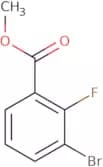
CAS:<p>Methyl 3-bromo-2-fluorobenzoate (MBFB) is a versatile building block in chemical synthesis. MBFB can be used as a reagent or speciality chemical. It has been used as an intermediate for the synthesis of other compounds, such as methyl 5-bromo-2-fluorobenzoate and ethyl 5-bromo-2-fluorobenzoate. MBFB is also a useful scaffold for the synthesis of complex compounds with interesting functions, such as research chemicals.</p>Formula:C8H6BrF2Purity:Min. 95%Color and Shape:White PowderMolecular weight:233 g/mol5-Methoxy-2-nitrobenzoic acid
CAS:<p>5-Methoxy-2-nitrobenzoic acid is a compound that has been shown to have antiinflammatory properties. It has been found to inhibit the production of inflammatory mediators such as leukotrienes and prostaglandins. 5-Methoxy-2-nitrobenzoic acid also inhibits certain enzymes, such as cyclooxygenase and lipoxygenase, which are involved in the biosynthesis of these mediators. 5-Methoxy-2-nitrobenzoic acid may be useful in the treatment of inflammatory diseases such as arthritis or asthma. This drug can also be used for chemoprevention against cancer. The drug has been shown to inhibit the growth of tumor cells in vivo by oral administration. This is due to its ability to inhibit DNA synthesis and protein synthesis in cells by binding with DNA and inhibiting RNA synthesis through inhibition of ribonucleotide reductase.</p>Formula:C8H7NO5Purity:90%Color and Shape:PowderMolecular weight:197.14 g/mol3-Methylbenzophenone
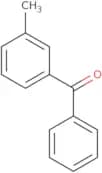
CAS:<p>3-Methylbenzophenone is a fatty acid that has been used as an analytical reagent in organic synthesis. It can be synthesized by acylation of benzoic acid with methylchloroformate. 3-Methylbenzophenone is also a chlorinated derivative of benzophenone, and its structure can be rationalized by the protonation and deprotonation of the chloride ion. The acidic properties of 3-methylbenzophenone are due to the presence of carbonyl group.</p>Formula:C14H12OPurity:Min. 98 Area-%Color and Shape:PowderMolecular weight:196.24 g/mol6-Methyl-DL-tryptophan
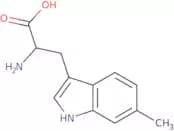
CAS:6-Methyl-DL-tryptophan is a naturally occurring amino acid that is used as a precursor in the synthesis of the neurotransmitter serotonin. 6-Methyl-DL-tryptophan is synthesized from the amino acid L-tryptophan by the enzyme tryptophan synthase. It is also found in dietary sources such as nuts and seeds, but not in significant quantities. 6-Methyl-DL-tryptophan has been shown to inhibit cancer cells in vitro and has been shown to be effective against prostate cancer cells. The inhibition mechanism for this drug has not yet been elucidated, but it may be due to frameshifting and/or inhibition of protein synthesis.Formula:C12H14N2O2Purity:Min. 95%Color and Shape:White PowderMolecular weight:218.25 g/mol7-Methyl-DL-tryptophan
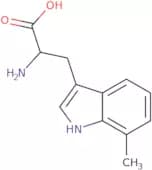
CAS:<p>7-Methyl-DL-tryptophan is a crystalline solid that is used as a protein analog. It is structurally similar to L-tryptophan and has been shown to have the same biochemical properties. 7-Methyl-DL-tryptophan can be used in the production of recombinant proteins, such as human growth hormone, and for structural analysis of proteins. This compound also has herbicide resistance, which may be due to its ability to bind with anthranilate. The solubility of 7-methyl-DL-tryptophan in water is about 0.1 mg/mL at room temperature.</p>Formula:C12H14N2O2Purity:Min. 95%Color and Shape:PowderMolecular weight:218.25 g/mol3-Mercapto-1,2-propanediol
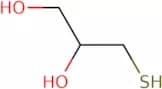
CAS:<p>3-Mercapto-1,2-propanediol is a sulfhydryl compound that has anti-tumor properties. It has been shown to induce apoptosis in leukemia cells and to inhibit the growth of myeloma cells. 3-Mercapto-1,2-propanediol has also been shown to induce redox potentials in cancer cells and prevent the formation of disulfide bonds in the cytoskeleton. The molecular pathogenesis of cancer is thought to be related to oxidative stress, which may be prevented by 3-mercapto-1,2-propanediol. This drug has also been shown to block transfection experiments with pemetrexed in a model system and human serum.</p>Formula:C3H8O2SPurity:Min. 95%Color and Shape:Clear LiquidMolecular weight:108.16 g/mol3-(3-Methoxyphenyl)propionic acid
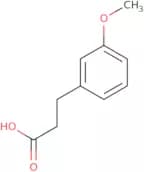
CAS:<p>3-(3-Methoxyphenyl)propionic acid is a phenylpropionic acid with the chemical formula C9H11O2. It is a competitive antagonist of the h3 receptors, and has been shown to inhibit acetylcholinesterase activity in vitro. 3-(3-Methoxyphenyl)propionic acid also has antioxidant properties, which may be due to its ability to inhibit lipase activity. This compound also has anti-inflammatory effects, which may be due to its ability to inhibit tryptophan metabolism. 3-(3-Methoxyphenyl)propionic acid has been shown to have therapeutic potential for Alzheimer's disease, as it can cross the blood brain barrier and inhibits amyloid beta (Aβ) aggregation.</p>Formula:C10H12O3Purity:Min. 95%Color and Shape:PowderMolecular weight:180.2 g/mol3-Methoxy-2,4,5-trifluorobenzoic acid
CAS:<p>3-Methoxy-2,4,5-trifluorobenzoic acid (3MTBF) is a ligand that binds to the active site of bacterial dehydrogenases. It is used to inhibit the growth of bacteria in the environment and food products. 3MTBF inhibits the production of fluoroquinolones by methylating their chlorides with methoxy groups. This compound also has bifunctional properties, as it can act as both a methylating agent and an inhibitor of dehydrogenase enzymes. 3MTBF inhibits the production of cancer cells by inhibiting transcription and translation, preventing cell division and proliferation. 3MTBF is thermostable, meaning it does not break down in high temperatures or at pH extremes.</p>Formula:C8H5F3O3Purity:Min. 95%Color and Shape:White to off-white solid.Molecular weight:206.12 g/mol2-Mercaptopyridine N-oxide
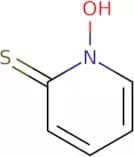
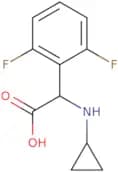
CAS:<p>2-Mercaptopyridine N-oxide is a radical that has been shown to have antifungal activity in vitro. It also inhibits the synthesis of peptide hormones by binding to copper ions, which are required for this process. 2-Mercaptopyridine N-oxide has been shown to chelate metal ions such as iron, which can lead to oxidative injury. This compound has been shown to be toxic in vivo, but it is not currently known if it is toxic in vitro.</p>Formula:C5H5NOSPurity:Min 97%Color and Shape:Off-White PowderMolecular weight:127.17 g/mol2-(Cyclopropylamino)-2-(2,6-difluorophenyl)acetic acid
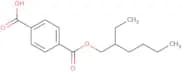
CAS:Versatile small molecule scaffoldFormula:C11H11F2NO2Purity:Min. 95%Color and Shape:PowderMolecular weight:227.21 g/molMono(2-ethylhexyl) terephthalate
CAS:Please enquire for more information about Mono(2-ethylhexyl) terephthalate including the price, delivery time and more detailed product information at the technical inquiry form on this pageFormula:C16H22O4Purity:Min. 95%Color and Shape:PowderMolecular weight:278.34 g/mol2-Methoxy-1-((2-(trimethylsilyl)ethoxy)methyl)-1H-imidazole-5-carbaldehyde
<p>Please enquire for more information about 2-Methoxy-1-((2-(trimethylsilyl)ethoxy)methyl)-1H-imidazole-5-carbaldehyde including the price, delivery time and more detailed product information at the technical inquiry form on this page</p>Formula:C11H20N2O3SiPurity:Min. 95%Color and Shape:PowderMolecular weight:256.37 g/molN-Methyl-1-quinolin-2-ylmethanamine dihydrochloride
CAS:<p>Please enquire for more information about N-Methyl-1-quinolin-2-ylmethanamine dihydrochloride including the price, delivery time and more detailed product information at the technical inquiry form on this page</p>Formula:C11H12N2•(HCl)2Purity:Min. 95%Color and Shape:PowderMolecular weight:245.15 g/mol7-Methylindole technical grade
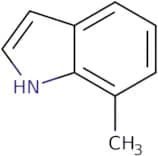
CAS:7-Methylidole is a heterocyclic chemical compound that is used as a precursor in the synthesis of many pharmaceuticals. It has been shown to have an inhibitory effect on the growth of cancer cells in tissue cultures and can be used as a marker for cancer cells. 7-Methylidole is also a virulence factor, which can be seen through assays on bacterial strains. This compound has been proven to be reactive with Polygonum cuspidatum. The reaction produces indirubin, which is a red pigment that is found in some species of Polygonum and other plants.Formula:C9H9NPurity:Min. 95%Color and Shape:PowderMolecular weight:131.17 g/molO-Methyl-D-threonine
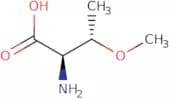
CAS:O-Methyl-D-threonine is an amino acid that is biosynthesized from O-methylserine and D-threonine. It belongs to the class of β-lactam antibiotics and inhibits peptidoglycan synthesis by binding to the catalytic site of the enzyme synthase, which is required for the formation of β-lactam rings in peptidoglycan. The crystal structure of O-methylserine has been determined and analyzed. Mutations in the catalytic tripeptide have been shown to affect its activity, as well as protonation state and carboxylate groups.Formula:C5H11NO3Purity:Min. 98 Area-%Color and Shape:White Off-White PowderMolecular weight:133.15 g/mol4-Methylmorpholine N-oxide monohydrate
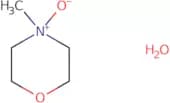
CAS:<p>Intermediate for organic syntheses</p>Formula:C5H13NO3Color and Shape:PowderMolecular weight:135.16 g/mol1-Methylindole
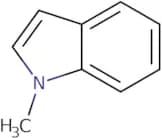
CAS:<p>1-Methylindole is a chemical compound that belongs to the group of pyrimidine compounds. It has been shown to have antibacterial activity against many types of bacteria, including methicillin-resistant Staphylococcus aureus and Clostridium perfringens. 1-Methylindole inhibits bacterial growth by binding to DNA and RNA, preventing the synthesis of proteins necessary for cell division. The high chemical stability and low redox potential make 1-methylindole an excellent candidate for use as an anticancer agent. This drug has been shown to be effective in killing cancer cells in vitro, but more research needs to be done before it can be used in vivo.</p>Formula:C9H9NPurity:Min. 97 Area-%Color and Shape:Colorless Clear LiquidMolecular weight:131.17 g/molMethanesulfinic acid sodium salt
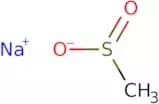
CAS:<p>Methanesulfinic acid sodium salt (MSAS) is a chemical compound that inhibits the growth of bacteria by inhibiting the synthesis of proteins. It is used as an antimicrobial agent in plant physiology and has been shown to be effective against infectious diseases including HIV infection. MSAS inhibits protein synthesis by binding to the hydroxyl group of a substrate molecule, which is required for amino acid formation. This inhibitory effect leads to a decrease in the production of proteins vital for cell division. Inhibiting protein synthesis also prevents the production of enzymes needed for metabolism, leading to metabolic disorders.</p>Formula:CH3O2S·NaPurity:Min. 95%Color and Shape:PowderMolecular weight:102.09 g/molN,N-Diethylpyrrolidine-2-carboxamide
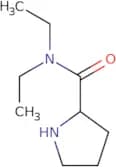
CAS:<p>Versatile small molecule scaffold</p>Formula:C9H18N2OPurity:Min. 90%Color and Shape:PowderMolecular weight:170.25 g/mol