Building Blocks
This section contains fundamental products for the synthesis of organic and biological compounds. Building blocks are the essential starting materials used to construct complex molecules through various chemical reactions. They play a critical role in drug discovery, material science, and chemical research. At CymitQuimica, we offer a diverse range of high-quality building blocks to support your innovative research and industrial projects, ensuring you have the essential components for successful synthesis.
Subcategories of "Building Blocks"
- Boronic Acids & Boronic Acid Derivatives(5,778 products)
- Chiral Building Blocks(1,242 products)
- Hydrocarbon Building Blocks(6,098 products)
- Organic Building Blocks(61,092 products)
Found 199297 products of "Building Blocks"
Sort by
Purity (%)
0
100
|
0
|
50
|
90
|
95
|
100
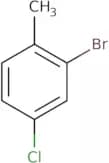
2-Bromo-4-chlorotoluene
CAS:<p>2-Bromo-4-chlorotoluene is a chemical compound with the molecular formula C6H4BrClO. It is an aromatic peroxide that has a chlorine atom attached to one of the benzene rings. 2-Bromo-4-chlorotoluene is produced by the reaction of bromine with chlorotoluene in the presence of hydrogen peroxide and sodium periodate. The reaction takes place at room temperature, producing a colourless liquid with a pungent odour. This chemical can be identified by its infrared frequencies, which are observed as vibrations between 1650 and 1700 cm−1. The molecule has a dipole moment of 0.5 D, which means it can transfer electrons to other molecules or atoms in order to form bonds. 2-Bromo-4-chlorotoluene is used as an intermediate for organic compounds such as glycol dimethyl ethers.<br>2-Bromo</p>Formula:C7H6BrClPurity:Min. 95%Color and Shape:PowderMolecular weight:205.48 g/mol2-Ethoxy-1,3-thiazole-5-carbaldehyde
CAS:<p>2-Ethoxy-1,3-thiazole-5-carbaldehyde is a fine chemical that is a versatile building block for the synthesis of complex molecules. It can be used as a reagent in organic chemistry, and it is also an intermediate in the synthesis of drugs and other compounds. This compound has been shown to be useful as a scaffold in the development of novel drug candidates.</p>Formula:C6H7NO2SPurity:Min. 95%Color and Shape:PowderMolecular weight:157.19 g/mol1-Bromoadamantane - 99%min
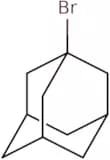
CAS:<p>1-Bromoadamantane is a quinoline derivative that is used as a pharmaceutical preparation. It was first synthesized in the 1950s, and has been used to treat inflammatory bowel disease. The synthesis of 1-Bromoadamantane is accomplished by the palladium-catalyzed coupling of trifluoromethanesulfonic acid with an organic solution containing the bromide salt of the quinoline. The chemical structure of 1-Bromoadamantane can be seen below:</p>Formula:C10H15BrPurity:Min. 98.5%Color and Shape:PowderMolecular weight:215.13 g/mol1-Bromo-4-iodonaphthalene
CAS:<p>1-Bromo-4-iodonaphthalene is an organic compound that can be synthesized in a number of steps. The first step involves the reaction of 4-bromobenzonitrile with sulfur. This is followed by the acetylation of the product to give 2-(acetyloxy)benzonitrile. An intermediate product is then obtained by reacting this with sodium azide in water and heating to 90°C for 12 hours. Finally, the intermediate product is reacted with phenylmagnesium bromide in ether and hydrolyzed with an alkali to give 1-bromo-4-iodonaphthalene. This compound has been used in the industrial synthesis of biphenyls and dyes such as methyl violet.</p>Formula:C10H6BrIPurity:Min. 95%Color and Shape:Off-White PowderMolecular weight:332.96 g/mol6-Ethylmercaptopurine
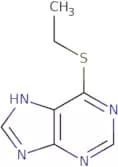
CAS:<p>6-Ethylmercaptopurine is a purine analogue that inhibits the synthesis of DNA. It is used as an inhibitor of protein synthesis and in the treatment of inflammatory bowel disease. 6-Ethylmercaptopurine has been shown to inhibit the activity of ATPase, which may be responsible for its ability to suppress the proliferation of cells. This drug can also act as an analog to adenosine, which can be used to determine ATP levels in a cell or tissue sample by measuring the amount of p-nitrophenyl phosphate produced. 6-Ethylmercaptopurine has been shown to block phosphatase activity, which may lead to inflammation in some cases.<br>6-Ethylmercaptopurine has a molecular weight of 194.2 g/mol and an optimum pH of 4.5</p>Formula:C7H8N4SPurity:Min. 95%Color and Shape:Off-White PowderMolecular weight:180.23 g/molGalβ(1-4)[Neu5Acα(2-6)]GlcNAc-β-pNP
Formula:C31H45N3O21Purity:>90.0%(HPLC)Color and Shape:White to Light yellow powder to crystalMolecular weight:795.70(S)-3-(4-Boc-piperazin-1-yl)-2-(Fmoc-amino)propionic acid
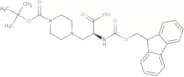
CAS:<p>(S)-3-(4-Boc-piperazin-1-yl)-2-(Fmoc-amino)propionic acid is a high quality reagent which has been synthesized in our lab. It is used as a reaction component and can be used as a speciality chemical, versatile building block, or useful intermediate. This compound has been shown to have complex properties and can be used as a fine chemical.</p>Formula:C27H33N3O6Purity:Min. 95%Color and Shape:White PowderMolecular weight:495.57 g/molEthyl 4-Chloroquinoline-3-carboxylate
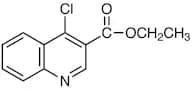
CAS:Formula:C12H10ClNO2Purity:>98.0%(GC)(T)Color and Shape:White to Orange to Green powder to crystalMolecular weight:235.67Boc-Phe-Pro-OH
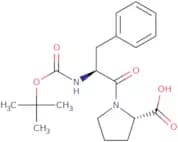
CAS:<p>Boc-Phe-Pro-OH is an opioid receptor agonist. It binds to the δ opioid receptors and activates them, which leads to analgesic effects. Boc-Phe-Pro-OH also has antibacterial properties and can be used for the treatment of bacterial infections. This compound may also have antiinflammatory properties that are mediated by its ability to inhibit prostaglandin synthesis. Boc-Phe-Pro-OH has been shown to possess a high affinity for the μ opioid receptor, but does not activate this receptor subtype.</p>Formula:C19H26N2O5Purity:Min. 95%Color and Shape:White To Off-White SolidMolecular weight:362.42 g/molEthylene Glycol Mono-m-tolyl Ether
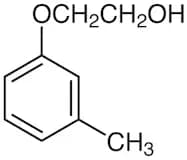
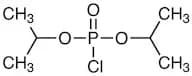
CAS:Formula:C9H12O2Purity:>98.0%(GC)Color and Shape:Colorless to Almost colorless clear liquidMolecular weight:152.19Diisopropyl Phosphorochloridate
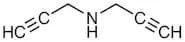
CAS:Formula:C6H14ClO3PPurity:>97.0%(GC)(T)Color and Shape:Colorless to Almost colorless clear liquidMolecular weight:200.60Dipropargylamine
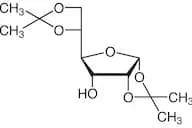
CAS:Formula:C6H7NPurity:>97.0%(T)Color and Shape:Orange to Brown clear liquidMolecular weight:93.131,2:5,6-Di-O-isopropylidene-α-D-allofuranose
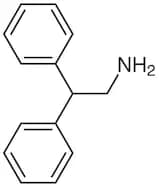
CAS:Formula:C12H20O6Purity:>98.0%(GC)Color and Shape:White to Almost white powder to crystalMolecular weight:260.292,2-Diphenylethylamine
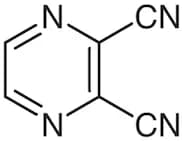
CAS:Formula:C14H15NPurity:>98.0%(GC)(T)Color and Shape:White or Colorless to Light yellow to Light orange powder to lump to clear liquidMolecular weight:197.282,3-Dicyanopyrazine
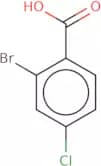
CAS:Formula:C6H2N4Purity:>99.0%(GC)Color and Shape:White to Light yellow to Light orange powder to crystalMolecular weight:130.112-Bromo-4-chlorobenzoic acid
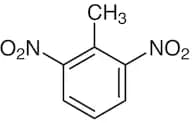
CAS:<p>2-Bromo-4-chlorobenzoic acid (2BCBA) is a potent inhibitor of the hepatitis C virus NS5B polymerase. It has been shown to inhibit the growth of cancer cells in vitro. 2BCBA binds to the active site of the NS5B polymerase, which is essential for viral replication. In addition, it has been found to have synergistic effects with other anti-hepatitis drugs such as interferon. The binding affinity of 2BCBA and its derivatives to NS5B polymerase are determined by their interaction energies and also by their ability to form supramolecular complexes with this enzyme. The inhibition constants for 2BCBA were calculated using high performance liquid chromatography (HPLC). This drug is an isomeric compound that can exist in two different forms: cis and trans.</p>Formula:C7H4BrClO2Purity:Min. 95%Color and Shape:PowderMolecular weight:235.46 g/mol2,6-Dinitrotoluene
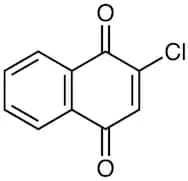
CAS:Formula:C7H6N2O4Purity:>99.0%(GC)Color and Shape:White to Orange to Green powder to crystalMolecular weight:182.142-Chloro-1,4-naphthoquinone
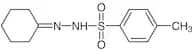
CAS:Formula:C10H5ClO2Purity:>98.0%(GC)Color and Shape:Light yellow to Yellow to Orange powder to crystalMolecular weight:192.60Cyclohexanone p-Toluenesulfonylhydrazone
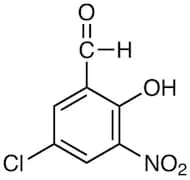
CAS:Formula:C13H18N2O2SPurity:>98.0%(T)(HPLC)Color and Shape:White to Light yellow to Light orange powder to crystalMolecular weight:266.365-Chloro-3-nitrosalicylaldehyde
CAS:Formula:C7H4ClNO4Purity:>98.0%(GC)(T)Color and Shape:Light orange to Yellow to Green powder to crystalMolecular weight:201.56



![Galβ(1-4)[Neu5Acα(2-6)]GlcNAc-β-pNP](/_next/image/?url=https%3A%2Fstatic.cymitquimica.com%2Fproducts%2F3B%2Fthumb-webp%2FG0353.webp&w=3840&q=75)