


Building Blocks
This section contains fundamental products for the synthesis of organic and biological compounds. Building blocks are the essential starting materials used to construct complex molecules through various chemical reactions. They play a critical role in drug discovery, material science, and chemical research. At CymitQuimica, we offer a diverse range of high-quality building blocks to support your innovative research and industrial projects, ensuring you have the essential components for successful synthesis.
Subcategories of "Building Blocks"
- Boronic Acids & Boronic Acid Derivatives(5,778 products)
- Chiral Building Blocks(1,242 products)
- Hydrocarbon Building Blocks(6,098 products)
- Organic Building Blocks(61,092 products)
Found 199297 products of "Building Blocks"
Sort by
Purity (%)
0
100
|
0
|
50
|
90
|
95
|
100
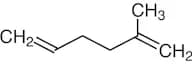
2-Methyl-1,5-hexadiene
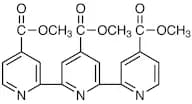
CAS:Formula:C7H12Purity:>98.0%(GC)Color and Shape:Colorless to Almost colorless clear liquidMolecular weight:96.17Trimethyl 2,2':6',2''-Terpyridine-4,4',4''-tricarboxylate
CAS:Formula:C21H17N3O6Purity:>96.0%(HPLC)Color and Shape:White to Light yellow powder to crystalMolecular weight:407.385,6-Diaminobenzimidazole dihydrochloride
CAS:Please enquire for more information about 5,6-Diaminobenzimidazole dihydrochloride including the price, delivery time and more detailed product information at the technical inquiry form on this pageFormula:C7H10Cl2N4Purity:Min. 95%Color and Shape:Off-white to pale brown solid.Molecular weight:221.09 g/mol2-(2,2-Diethoxyethyl)-1,3-propanediol
CAS:Formula:C9H20O4Purity:>88.0%(GC)Color and Shape:Colorless to Light yellow clear liquidMolecular weight:192.262,6-Dibromopyridine
CAS:2,6-Dibromopyridine (2,6-DBP) is a chemical compound that has been used in the synthesis of other organic compounds. It is an aromatic heterocycle with nitrogen atoms at the 2 and 6 positions. 2,6-DBP is a monosubstituted pyridine derivative that undergoes a palladium-catalyzed coupling reaction with an aryl halide to form pyrazoles. This process can be done unsymmetrically by protonating the 2 position of the dibromopyridine molecule. The presence of serine protease has been shown to promote this reaction by increasing the surface area of the substrate.Formula:C5H3Br2NPurity:Min. 98 Area-%Color and Shape:Off-White Yellow PowderMolecular weight:236.89 g/mol6-Hydroxyquinoline-(1H)-2-one
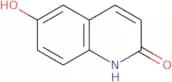
CAS:<p>6-Hydroxyquinoline-(1H)-2-one is an organic compound that has been shown to inhibit the uptake of carbostyril by bacterial cells. This inhibition causes increased uptake of xanthurenic acid and anthranilic acid, which are two compounds that are found in wastewater treatment. 6-Hydroxyquinoline-(1H)-2-one may be a potential anticancer agent, as it inhibits the growth of astroglia cells and bladder cancer cells. It also reacts with acylation reactions to form quinolinic acid, which has been shown to have anticancer effects.</p>Formula:C9H7NO2Purity:Min. 95%Color and Shape:White SolidMolecular weight:161.16 g/molEthylenedithiobis(trimethylsilane) [Protecting Reagent for Aldehydes and Ketones]
CAS:Formula:C8H22S2Si2Purity:>97.0%(GC)Color and Shape:Colorless to Almost colorless clear liquidMolecular weight:238.55D-Allylglycine
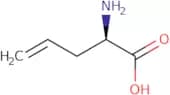
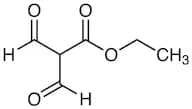
CAS:<p>D-Allylglycine is a l-amino acid with the chemical formula of CH2CH(CH3)COOH. D-Allylglycine binds to the N-methyl-D-aspartate (NMDA) receptor and has been shown in animal studies to have effects on blood pressure, although its clinical relevance remains unclear. It is an enantiopure compound and can be obtained as a trifluoroacetate salt or ethyl diazoacetate ester hydrochloride. D-Allylglycine is also an aminoglycoside and ester hydrochloride that can be used for the treatment of bacterial infections. The amino group in D-allylglycine binds to glutamate receptors, which are found on neurons, and inhibits the release of gamma-aminobutyric acid (GABA). This drug may also have potential as a serotonergic agent due to its ability to inhibit serotonin re</p>Formula:C5H9NO2Purity:Min. 95%Color and Shape:White PowderMolecular weight:115.13 g/molEthyl Diformylacetate
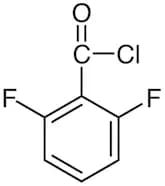
CAS:Formula:C6H8O4Purity:>97.0%(T)Color and Shape:Colorless to Light yellow to Light orange clear liquidMolecular weight:144.132,6-Difluorobenzoyl Chloride
CAS:Formula:C7H3ClF2OPurity:>97.0%(GC)(T)Color and Shape:Colorless to Light orange to Yellow clear liquidMolecular weight:176.555-Methyl-2-phenyl-1H-imidazole-4-carboxylic acid
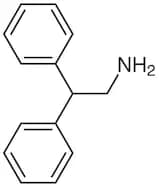
CAS:<p>5-Methyl-2-phenyl-1H-imidazole-4-carboxylic acid (MPICA) is a potent inhibitor of xanthine oxidase. It is also an inhibitor of β-glucuronidase and enzymes that maintain the integrity of bacterial DNA. MPICA has been shown to inhibit xanthine oxidase in a dose dependent manner and can be used as a lead compound for new inhibitors of this enzyme.</p>Formula:C11H10N2O2Purity:Min. 95%Color and Shape:White PowderMolecular weight:202.21 g/mol2,2-Diphenylethylamine
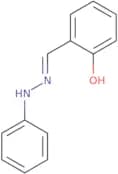
CAS:Formula:C14H15NPurity:>98.0%(GC)(T)Color and Shape:White or Colorless to Light yellow to Light orange powder to lump to clear liquidMolecular weight:197.28Salicylaldehyde phenylhydrazone
CAS:<p>Salicylaldehyde phenylhydrazone is a covid-19 pandemic, organometallic compound. It is a colorless solid that reacts with water to give hydrogen chloride and salicylaldehyde. Salicylaldehyde phenylhydrazone has been shown to react with amines, which may be due to its chelate ring system. The analytical method for this compound is gravimetric analysis, which involves the use of lanthanum as an indicator. This compound has good transport properties and can be activated by hydrogen gas.</p>Formula:C13H12N2OPurity:Min. 97 Area-%Color and Shape:PowderMolecular weight:212.25 g/mol2,6-Diacetylpyridine
CAS:<p>2,6-Diacetylpyridine is a chelate ligand that has significant cytotoxicity. It binds to nitrogen atoms and can form stable complexes with metals. The compound also has genotoxic activity that is shown through the formation of high values in plasma mass spectrometry. 2,6-Diacetylpyridine has been used as an antimicrobial agent, where it inhibits bacterial growth by binding to DNA and RNA. This compound also binds to the enzyme thymidylate synthase and inhibits its activity, which may be due to its coordination geometry. 2,6-Diacetylpyridine has been shown to have biological properties such as being able to inhibit cell proliferation and induce apoptosis in cell cultures.</p>Formula:C9H9NO2Purity:Min. 98 Area-%Color and Shape:White PowderMolecular weight:163.17 g/mol6-Amino-2-pyrazinecarboxylic acid
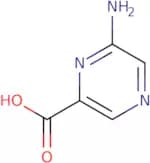
CAS:<p>6-Amino-2-pyrazinecarboxylic acid is a high quality reagent that is used as an intermediate for the synthesis of complex compounds. It is also a useful scaffold for the production of valuable speciality chemicals. This chemical is also used as a reaction component in research and development to produce versatile building blocks. 6-Amino-2-pyrazinecarboxylic acid has been shown to be useful for producing fine chemicals and speciality chemicals, which are often used in many industries.</p>Formula:C5H5N3O2Purity:Min. 95%Color and Shape:Yellow To Brown SolidMolecular weight:139.11 g/mol2-(2-Aminophenyl)benzimidazole
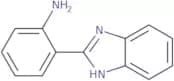
CAS:<p>2-(2-Aminophenyl)benzimidazole is a synthetic compound with the chemical formula C8H6N2. It has an intramolecular hydrogen bond and reacts with salicylaldehyde to form 2-aminobenzimidazole, which is a reaction product. 2-(2-Aminophenyl)benzimidazole may be used as an antimicrobial agent, but it also has other uses such as a reagent in organic synthesis. It is soluble in water and can be obtained through liquid chromatography.</p>Formula:C13H11N3Purity:Min. 95%Color and Shape:Off-White PowderMolecular weight:209.25 g/mol1-Hexen-3-one
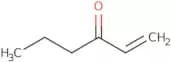
CAS:<p>1-Hexen-3-one is a carbonyl compound that has been shown to act as an estrogen receptor modulator. It has been isolated from the reaction product of hexene and formaldehyde, in which the intramolecular hydrogen is transferred to the carbon atom adjacent to the carbonyl group. 1-Hexen-3-one has been shown to induce muscle cell proliferation in vitro and inhibit liver microsomal protein synthesis in vivo. The 1-hexen-3-one can be prepared by reacting hexene with formaldehyde. The yield of this reaction is about 80%.<br>2 HCHO + C6H12 → C6H14O + 2 HCOOH</p>Formula:C6H10OPurity:Min. 95%Color and Shape:PowderMolecular weight:98.14 g/mol7-Bromoquinoline
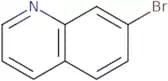
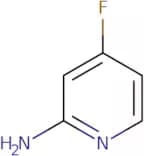
CAS:<p>7-Bromoquinoline is a synthetic molecule that was first synthesized in the early 1980s. It is an analog of 7-bromoquinoline, which has been shown to have cytotoxic properties against cancer cells. The synthesis of 7-bromoquinoline involves a cross-coupling reaction with chloroacetonitrile and N-methylformamide. The nmr spectra for this compound are very similar to those for 7-bromoquinoine, but it lacks the secondary amine peak at δ 10.7 ppm. Primary culture cells were used to test the bioactivity of 7-bromoquinoline, and these cells were disrupted by adding trypsin after incubation with various concentrations of 7-bromoquinoline. This study showed that the quinoline derivatives had cytotoxic effects on cultured cells at low concentrations, suggesting that they may be useful as anticancer agents. Molecular modeling studies show that</p>Formula:C9H6BrNPurity:Min. 95%Color and Shape:PowderMolecular weight:208.05 g/mol2-Amino-4-fluoropyridine
CAS:<p>2-Amino-4-fluoropyridine is an acylation reaction product of 2-amino-4-chloropyridine and a fatty acid. The diaminopyridine moiety is responsible for the inhibition of copper enzymes. In addition, fluorine substitution provides a higher operational stability. The synthesis of this compound is accomplished through the use of thionyl chloride in an operational procedure that includes heating at 180 °C for 4 hours. 2-Amino-4-fluoropyridine has been shown to be effective against some bacteria such as Mycobacterium tuberculosis and Legionella pneumophila, which are resistant to other agents. This drug also has antiplasmodial properties and can be used to treat malaria. The structure based design of this molecule was optimized by replacing chlorine with fluorine as well as introducing a n oxide group to provide a sterically more favorable conformation.</p>Formula:C5H5FN2Purity:Min. 95%Color and Shape:White To Yellow SolidMolecular weight:112.11 g/mol(αS)-α-[[2-(4-Morpholinyl)acetyl]amino]benzenebutanoyl-L-leucyl-L-phenylalanine phenylmethyl ester
CAS:<p>Please enquire for more information about (αS)-α-[[2-(4-Morpholinyl)acetyl]amino]benzenebutanoyl-L-leucyl-L-phenylalanine phenylmethyl ester including the price, delivery time and more detailed product information at the technical inquiry form on this page</p>Formula:C38H48N4O6Purity:Min. 95%Color and Shape:PowderMolecular weight:656.81 g/mol



![Ethylenedithiobis(trimethylsilane) [Protecting Reagent for Aldehydes and Ketones]](/_next/image/?url=https%3A%2Fstatic.cymitquimica.com%2Fproducts%2F3B%2Fthumb-webp%2FE0479.webp&w=3840&q=75)


![(αS)-α-[[2-(4-Morpholinyl)acetyl]amino]benzenebutanoyl-L-leucyl-L-phenylalanine phenylmethyl ester](/_next/image/?url=https%3A%2Fstatic.cymitquimica.com%2Fproducts%2F3D%2Fthumb-webp%2FFM183824.webp&w=3840&q=75)