Building Blocks
This section contains fundamental products for the synthesis of organic and biological compounds. Building blocks are the essential starting materials used to construct complex molecules through various chemical reactions. They play a critical role in drug discovery, material science, and chemical research. At CymitQuimica, we offer a diverse range of high-quality building blocks to support your innovative research and industrial projects, ensuring you have the essential components for successful synthesis.
Subcategories of "Building Blocks"
- Boronic Acids & Boronic Acid Derivatives(5,778 products)
- Chiral Building Blocks(1,243 products)
- Hydrocarbon Building Blocks(6,097 products)
- Organic Building Blocks(61,052 products)
Found 201390 products of "Building Blocks"
Sort by
Purity (%)
0
100
|
0
|
50
|
90
|
95
|
100
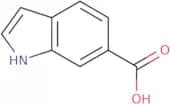
6-Carboxyindole
CAS:6-Carboxyindole is an indole that binds to the IL-17A receptor, which leads to the production of pro-inflammatory cytokines. It has been shown to be involved in autoimmune diseases and other inflammatory conditions. 6-Carboxyindole can be used as a probe for studying the biology of IL-17A, by binding to it and inhibiting its effects. The chemical structure of 6-carboxyindole is also useful for diagnostic purposes, as it can bind to antibodies and antigens for detecting infectious diseases or other biological processes. 6-Carboxyindole can be used in the treatment of heart tissue by binding with monoclonal antibodies that are specific for cardiac proteins such as myosin light chain kinase.Formula:C9H7NO2Purity:Min. 95%Molecular weight:161.16 g/molN-[3-(2-Oxopyrrolidin-1-yl)propyl]acetamide
CAS:<p>N-[3-(2-Oxopyrrolidin-1-yl)propyl]acetamide is a chemotherapeutic treatment that has been shown to be effective against infant cancer. It is a selective inhibitor of the enzyme adenosine kinase, which is involved in the regulation of cell proliferation and differentiation. N-[3-(2-Oxopyrrolidin-1-yl)propyl]acetamide has also been shown to have antiarrhythmic properties, which may be due to its ability to inhibit atrial natriuretic peptide and potassium currents. This drug has been shown to produce metabolic profiles that are similar to those observed in chronic kidney disease patients with diabetes mellitus. N-[3-(2-Oxopyrrolidin-1-yl)propyl]acetamide also shows diagnostic potential for the diagnosis of atrial arrhythmias, as it can identify patients with atrial fibrillation or atrial flutter</p>Formula:C9H16N2O2Purity:Min. 95%Color and Shape:Clear LiquidMolecular weight:184.24 g/molLauroyl coenzyme A lithium
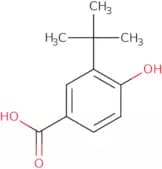
CAS:<p>Please enquire for more information about Lauroyl coenzyme A lithium including the price, delivery time and more detailed product information at the technical inquiry form on this page</p>Formula:C33H58N7O17P3S•LixPurity:90%Color and Shape:Powder3-tert-Butyl-4-hydroxybenzoic acid
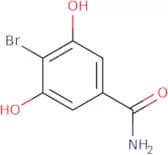
CAS:3-tert-Butyl-4-hydroxybenzoic acid is a phenolic compound that is found in the plant species of "Solanum xanthocarpum". It has antioxidant properties and has been shown to have anticancer activity in vitro. 3-tert-Butyl-4-hydroxybenzoic acid also inhibits the growth of human colon carcinoma cells. It is soluble in organic solvents and homopolymers at high temperatures, but insoluble at lower temperatures.Formula:C11H14O3Purity:Min. 95%Color and Shape:PowderMolecular weight:194.23 g/mol4-Bromo-3,5-dihydroxybenzamide
CAS:<p>4-Bromo-3,5-dihydroxybenzamide is a versatile building block that can be used as a reagent or as an intermediate in the synthesis of other compounds. It can also be used as a research chemical. 4-Bromo-3,5-dihydroxybenzamide has shown to be useful for the synthesis of complex organic compounds and is an excellent starting point for the preparation of novel scaffolds. This compound is also useful for making high quality products.</p>Formula:C7H6BrNO3Purity:90%Color and Shape:PowderMolecular weight:232.03 g/mol1-Nitrobutane
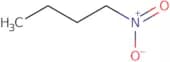
CAS:1-Nitrobutane is an organic compound with the chemical formula CH3NO2. It is a colorless liquid that is soluble in water and insoluble in ether. 1-Nitrobutane can react with hydroxyl groups to form nitroalkanes and it has been used as a reaction product for kinetic measurements of hydroxyl group concentration. The reaction mechanism of 1-nitrobutane is not completely known, but it has been proposed that the hydroxyl group reacts with the nitro group by nucleophilic substitution. 1-Nitrobutane can be used as a reagent for chromatography because it absorbs ultraviolet radiation and emits photoelectrons, which can be detected by covid-19 detectors. 1-Nitrobutane also has been shown to have antiviral properties against pandemic influenza A virus (H1N1) in cultured cells and rat liver microsomes.Formula:C4H9NO2Purity:Min. 95%Color and Shape:PowderMolecular weight:103.12 g/mol5-Chloro-indan-2-ylamine hydrochloride
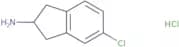
CAS:Controlled Product5-Chloro-indan-2-ylamine hydrochloride is a chemical that can be used as a building block in the synthesis of other chemicals. It is a reagent and useful scaffold in organic synthesis reactions, such as Friedel-Crafts reactions, and can be used to produce indenes. 5-Chloro-indan-2-ylamine hydrochloride is also an intermediate for the production of complex compounds, fine chemicals, and pharmaceuticals. The CAS number for this chemical is 73536-86-4.Formula:C9H10NCl·HClPurity:Min. 95%Color and Shape:PowderMolecular weight:204.09 g/mol2-Amino-4-chloro-6-methylpyridine
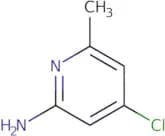
CAS:<p>2-Amino-4-chloro-6-methylpyridine (2ACP) is a molecule that has been studied by molecular modeling. This compound inhibits the enzyme tyrosine phosphatase, which is involved in the transmission of signals from outside the cell to inside the cell. 2ACP has a hydrogen bonding interaction with the catalytic site of the enzyme, which blocks its activity and prevents it from transmitting signals to other cells. 2ACP also has an inhibitory effect on fructus amomi and diamine tetraacetic acid (DTA), which are both enzymes involved in bacterial phosphorus metabolism. The structural analysis of 2ACP shows two protonated amino groups and one protonated pyridine group, which may explain its inhibitory effect on these enzymes.</p>Formula:C6H7ClN2Purity:Min. 95%Color and Shape:White PowderMolecular weight:142.59 g/mol4-Nitrobenzylamine hydrochloride
CAS:4-Nitrobenzylamine hydrochloride is a bifunctional immobilizing agent that can be used for the immobilization of Zn2+. It reacts with nitrogen atoms, forming an amination reaction. The linker is covalently immobilized to the surface and the nature of this chemical is synthetic. 4-Nitrobenzylamine hydrochloride is synthesized by reacting nitric acid with benzaldehyde in ammonia solution at room temperature. This chemical has shown to be effective in reactions where a flow rate is needed or when diamidines are present in the reaction mixture.Formula:C7H8N2O2·HClPurity:Min. 95%Color and Shape:PowderMolecular weight:188.61 g/mol3-(2-Hydroxyphenyl)propionic acid
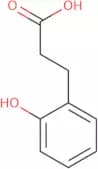
CAS:<p>3-(2-Hydroxyphenyl)propionic acid (HPPA) is an inorganic acid that is found in microbial metabolism. HPPA has been shown to inhibit the growth of bacteria by reacting with the hydroxyl group on the enzyme's active site, thus irreversibly inhibiting enzymatic activity. HPPA can be used as an alternative to other inorganic acids such as p-hydroxybenzoic acid and malonic acid due to its ability to scavenge anion radicals. This inhibition of enzyme activity can be used in wastewater treatment to remove organic compounds from industrial waste streams. It also has been shown to have anti-cancer properties against human breast cancer cells, which may be due to its ability to induce cell death through apoptosis and/or necrosis.</p>Formula:C9H10O3Purity:Min. 95%Color and Shape:White PowderMolecular weight:166.17 g/mol2-Methyl-3-morpholin-4-yl-propionic acid hydrochloride
CAS:2-Methyl-3-morpholin-4-yl-propionic acid hydrochloride is a reagent that can be used in the synthesis of various compounds. It is also a building block for the preparation of complex compounds and fine chemicals. The CAS number for this chemical is 1052522-32-3.Formula:C8H16ClNO3Purity:Min. 95%Color and Shape:PowderMolecular weight:209.67 g/mol4-Bromo-3,5-dihydroxybenzoic acid methyl ester
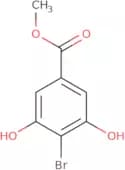
CAS:The compound 4-Bromo-3,5-dihydroxybenzoic acid methyl ester is an ether that is a natural product. It has been shown to have diastereoselective coupling with phenolic groups and unsymmetrically with lactones. This compound also undergoes epoxidation and farnesylation reactions. The intramolecular chain of the ether is methylated by formylation and reductive elimination.Formula:C8H7BrO4Purity:Min. 95%Color and Shape:PowderMolecular weight:247.04 g/mol4-Bromo-3-methyl-1,2-oxazole
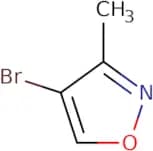
CAS:<p>4-Bromo-3-methyl-1,2-oxazole is a chemical compound that is used as a reaction component in organic synthesis. It is also used as a reagent for the synthesis of various pharmaceuticals. 4-Bromo-3-methyl-1,2-oxazole can be used to produce useful scaffolds and intermediates. This compound has been shown to be useful in the production of complex compounds and fine chemicals. CAS No. 101084-19-9</p>Formula:C4H4BrNOPurity:Min. 90%Color and Shape:Clear LiquidMolecular weight:161.98 g/mol6-Bromo-1-hexanol
CAS:6-Bromo-1-hexanol is an azobenzene polymer film that is used in the manufacture of a number of pharmaceuticals. The polymer has been shown to have a broad spectrum of activity against bacteria and fungi, including human maltase glucoamylase, which is found in the gut. The polymers are prepared by reacting sodium salts with maleate, hydroxyl group, and x-ray crystal structures. 6-Bromo-1-hexanol has been shown to have good optical properties and can be used as a sample preparation material for x-ray diffraction studies. It also has a high chloride ion content and acts as a halide donor in cell culture experiments. This polymer also fluoresces under UV light.!--Formula:C6H13BrOPurity:Min. 97 Area-%Color and Shape:Colorless Clear LiquidMolecular weight:181.07 g/moltert-Butyl 1H,4H,5H,6H,7H-pyrrolo[3,2-c]pyridine-5-carboxylate
CAS:Tert-Butyl 1H,4H,5H,6H,7H-pyrrolo[3,2-c]pyridine-5-carboxylate is a fine chemical that is a useful scaffold for the synthesis of various organic compounds. It is an intermediate for research chemicals and a reaction component for speciality chemicals. Tert-Butyl 1H,4H,5H,6H,7H-pyrrolo[3,2-c]pyridine-5-carboxylate has been used as a reagent in the synthesis of complex compounds. This compound has high purity and can be used as a building block in synthesis of other compounds.Formula:C12H18N2O2Purity:Min. 95%Color and Shape:PowderMolecular weight:222.28 g/mol4-Bromo-3,5-dimethoxybenzoic acid
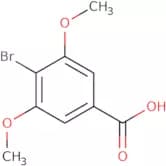
CAS:<p>4-Bromo-3,5-dimethoxybenzoic acid is a synthetic molecule that has been shown to have catalytic properties. It was generated by the reaction of resorcinol and dimethoxybenzoic acid in the presence of copper(II) acetate. This compound has also been shown to be bioinspired by its similarity to natural products such as 3,5-dihydroxybenzoic acid. 4-Bromo-3,5-dimethoxybenzoic acid has been used for the synthesis of bioactive molecules with cyclic structures. These advances are important for sustainable development and may help in the discovery of new natural products.</p>Formula:C9H9BrO4Purity:Min. 95%Color and Shape:PowderMolecular weight:261.07 g/mol2-Hydroxy-3-methoxybenzoic acid
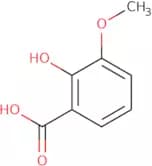
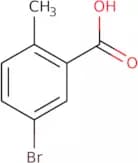
CAS:2-Hydroxy-3-methoxybenzoic acid is a chemical compound that has been studied for its potential use in the treatment of prostate cancer. It is a coordination complex that binds to DNA and inhibits the process of transcription. This compound also possesses anti-inflammatory properties, which are related to its ability to inhibit prostaglandin synthesis. 2-Hydroxy-3-methoxybenzoic acid has been shown to have an effect on human HL60 cells, which may be due to its ability to induce apoptosis. This compound has also been shown to have a high degree of metabolic stability and is not toxic to normal cells at doses up to 100 μM.Formula:C8H8O4Purity:Min. 95%Color and Shape:PowderMolecular weight:168.15 g/mol5-Bromo-2-methylbenzoic acid
CAS:<p>Intermediate in the synthesis of canagliflozin</p>Formula:C8H7BrO2Purity:Min. 95%Color and Shape:White PowderMolecular weight:215.04 g/mol4-[(Pyridine-3-carbonyl)amino]butyric acid
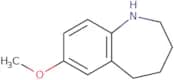
CAS:<p>4-[(Pyridine-3-carbonyl)amino]butyric acid (4-PBA) is a non-proteinogenic amino acid that has been found in food and has been shown to have therapeutic effects on a number of diseases. 4-PBA is converted to gamma-aminobutyric acid (GABA) by the enzyme GABA transaminase. It also has a synergistic effect with sodium succinate, which is another precursor in the production of GABA. This synergistic effect increases the amount of GABA produced from 4-PBA and sodium succinate when they are consumed together. 4-PBA also binds to receptors for dopamine, which may be why it is effective for treating diabetic neuropathy and Parkinson's disease.</p>Formula:C10H12N2O3Purity:Min. 95%Color and Shape:White PowderMolecular weight:208.21 g/mol7-Methoxy-2,3,4,5-tetrahydro-1H-1-benzazepine
CAS:7-Methoxy-2,3,4,5-tetrahydro-1H-1-benzazepine is a fine chemical with CAS No. 46180-98-7. It is a versatile building block and useful intermediate for the synthesis of complex compounds with various functions. 7-Methoxy-2,3,4,5-tetrahydro-1H-1-benzazepine is also a reagent that can be used in research chemicals and speciality chemicals. This compound has been shown to have high quality and is an excellent reaction component for reactions producing new synthetic intermediates.Formula:C11H15NOPurity:Min. 95%Molecular weight:177.24 g/mol

![N-[3-(2-Oxopyrrolidin-1-yl)propyl]acetamide](/_next/image/?url=https%3A%2Fstatic.cymitquimica.com%2Fproducts%2F3D%2Fthumb-webp%2FGEA69236.webp&w=3840&q=75)




![tert-Butyl 1H,4H,5H,6H,7H-pyrrolo[3,2-c]pyridine-5-carboxylate](/_next/image/?url=https%3A%2Fstatic.cymitquimica.com%2Fproducts%2F3D%2Fthumb-webp%2FPGC95879.webp&w=3840&q=75)
![4-[(Pyridine-3-carbonyl)amino]butyric acid](/_next/image/?url=https%3A%2Fstatic.cymitquimica.com%2Fproducts%2F3D%2Fthumb-webp%2FFP15522.webp&w=3840&q=75)