Building Blocks
This section contains fundamental products for the synthesis of organic and biological compounds. Building blocks are the essential starting materials used to construct complex molecules through various chemical reactions. They play a critical role in drug discovery, material science, and chemical research. At CymitQuimica, we offer a diverse range of high-quality building blocks to support your innovative research and industrial projects, ensuring you have the essential components for successful synthesis.
Subcategories of "Building Blocks"
- Boronic Acids & Boronic Acid Derivatives(5,778 products)
- Chiral Building Blocks(1,243 products)
- Hydrocarbon Building Blocks(6,097 products)
- Organic Building Blocks(61,052 products)
Found 201390 products of "Building Blocks"
Sort by
Purity (%)
0
100
|
0
|
50
|
90
|
95
|
100
1-Hydroxy-2-naphthoic acid
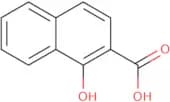
CAS:1-Hydroxy-2-naphthoic acid is a chemical compound that belongs to the group of carboxylic acids. It is used in the treatment of malonic acidemia and as a reagent for the structural analysis of organic compounds. 1-Hydroxy-2-naphthoic acid has been shown to react with protonated malonic acid in a synchronous fluorescence experiment. The reaction mechanism involves an intramolecular hydrogen transfer from the carboxylate group to the naphthalene ring, leading to formation of a methyl ethyl cation. This cation can then either react with another malonic acid molecule or be deprotonated by water, depending on pH and concentration. 1-Hydroxy-2-naphthoic acid has also shown photochemical properties and can be used for wastewater treatment due to its ability to degrade organic pollutants such as phenols and amines.Formula:C11H8O3Purity:Min. 98 Area-%Color and Shape:PowderMolecular weight:188.18 g/mol2-Amino-3-(furan-3-yl)propanoic acid hydrochloride
CAS:<p>Please enquire for more information about 2-Amino-3-(furan-3-yl)propanoic acid hydrochloride including the price, delivery time and more detailed product information at the technical inquiry form on this page</p>Formula:C7H9NO3•HClPurity:Min. 95%Color and Shape:PowderMolecular weight:191.61 g/mol4-Hydroxy-2-methoxybenzaldehyde
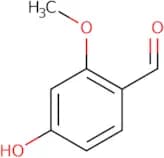
CAS:<p>Echinatin is a benzaldehyde derivative that is found in the roots of Echinacea purpurea. It is a phenolic compound with a carbonyl group and two benzyl groups. 4-Hydroxy-2-methoxybenzaldehyde has been shown to have photophysical, cell culture, and functional group properties. This compound is used as a precursor for the production of echinatin and other plant polyphenols such as malonic acid. The biosynthesis of 4-hydroxy-2-methoxybenzaldehyde begins with the oxidation of cinnamic acid by cytochrome P450 monooxygenase to form cinnamoyl CoA. The enzyme cinnamate decarboxylase then converts this intermediate to p-hydroxybenzoic acid, which is then hydroxylated to form 4-hydroxy-2-methoxybenzaldehyde.</p>Formula:C8H8O3Purity:Min. 95%Color and Shape:PowderMolecular weight:152.15 g/mol4-Aminopyridine N-oxide
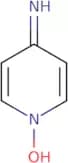
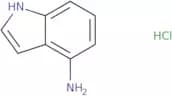
CAS:<p>4-Aminopyridine N-oxide is a white, crystalline solid that is soluble in water and alcohol. It has a molecular weight of 128.2 and formula weight of 135.2. 4-Aminopyridine N-oxide reacts with acid solutions to produce nitrous acid and ammonia gas. The rate of the reaction depends on the concentration of aminopyridine and aniline, as well as the pH of the solution. The acetylation, diazotisation, and kinetics have also been studied extensively for this compound. Nitrous acid can react with amides to form azulene, which can then react with amines to form a molecule containing nitrogen, oxygen, carbon, hydrogen and one other element or compound from each group (e.g., NHCOCH). This reaction is reversible when solvents are present.br> 4-Aminopyridine N-oxide may be used as a precursor for other organic</p>Formula:C5H6N2OPurity:Min. 95%Color and Shape:Slightly Yellow PowderMolecular weight:110.11 g/mol4-Aminoindole hydrochloride
CAS:<p>4-Aminoindole hydrochloride is a white crystalline solid that can be used as a versatile building block in organic synthesis. It is also used as an intermediate in the production of various pharmaceuticals and other chemical compounds. 4-Aminoindole hydrochloride is soluble in most polar solvents, but insoluble in ethers and oils. This compound is also a useful reagent for the conversion of nitrobenzenes to aminobenzoic acids. CAS Number 174854-93-4</p>Formula:C8H9ClN2Purity:Min. 95%Color and Shape:PowderMolecular weight:168.62 g/mol5-Amino-1-phenylpyrazole-4-carboxamide
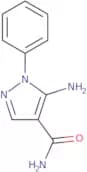
CAS:5-Amino-1-phenylpyrazole-4-carboxamide (APC) is a synthetic compound that has been shown to have potential as an antitumor agent. This compound has been shown to inhibit the growth of cancer cells in vitro, with cytometric analysis showing that it inhibits DNA synthesis and cell proliferation. It also has antibacterial activity, which may be due to its ability to inhibit bacterial DNA gyrase and topoisomerase IV. APC has been found in wastewater at concentrations of 2.6 μg/L, indicating that it is currently being produced and used for industrial purposes. APC can be synthesized by reacting 1-(3-aminopropyl)piperazine with 3-(2H)-furanone and triethylamine to form 5-amino-1-[(2H)-pyridin-2-yl]pyrazole-4-- carboxylic acid chloride, which can thenFormula:C10H10N4OPurity:Min. 95%Color and Shape:PowderMolecular weight:202.21 g/mol12-Amino-1-dodecanol
CAS:12-Amino-1-dodecanol is a monolayer that has been synthesized by reacting dodecanol with phosphorus pentoxide in the presence of diacetate. 12-Amino-1-dodecanol is an amphiphilic molecule, which means it can form both hydrophobic and hydrophilic regions. This property allows it to form a monolayer on the surface of cells, such as the Caco2 cell line. The film is composed of fatty acids and contains functional groups that provide phosphatase activity and neutral pH. 12-Amino-1-dodecanol may be used for drug delivery, specifically for the treatment of intestinal disorders or cell monolayers.Formula:C12H27NOPurity:Min. 95%Color and Shape:PowderMolecular weight:201.35 g/mol4-[(5-Ethyl-1,2,4-oxadiazol-3-yl)methoxy]piperidine
CAS:Versatile small molecule scaffoldFormula:C10H17N3O2Purity:Min. 90%Color and Shape:Clear LiquidMolecular weight:211.26 g/mol10-Amino-1-decanol
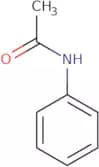
CAS:10-Amino-1-decanol is a synthetic compound that has been shown to be neuroprotective and estrogenic. It also inhibits the growth of MCF-7 cells by interacting with the cell's signalling pathways. This molecule was synthesized by ozonides and contains ether linkages, which may be responsible for its inhibitory activity. The molecular modelling of this molecule shows that it contains an iron chelating group, which may be responsible for its ability to interact with other molecules containing iron. 10-Amino-1-decanol interacts with proteins in a similar way to tamoxifen, inhibiting their activity.Formula:C10H23NOPurity:Min. 95%Color and Shape:White PowderMolecular weight:173.3 g/molAcetanilide
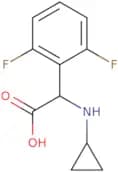
CAS:<p>Aniline derivative; analgesic; anti-pyretic; electroosmotic flow marker</p>Formula:C8H9NOPurity:(Titration) Min. 99.20%Color and Shape:White PowderMolecular weight:135.16 g/mol2-(Cyclopropylamino)-2-(2,6-difluorophenyl)acetic acid
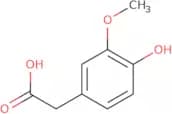
CAS:Versatile small molecule scaffoldFormula:C11H11F2NO2Purity:Min. 95%Color and Shape:PowderMolecular weight:227.21 g/molHomovanillic acid
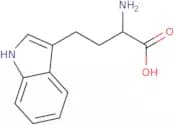
CAS:<p>Homovanillic acid is widely used as a fluorogenic substrate of peroxidase. The reaction is however not specific and has been shown to react also with soybean lipoxygenase in the presence of hydrogen peroxide. Excitation and emission wavelengths for homovanillic acid are 312 and 420 nm, respectively.</p>Formula:C9H10O4Purity:Min. 97.5 Area-%Color and Shape:Red PowderMolecular weight:182.17 g/molD,L-Homotryptophan
CAS:<p>D,L-Homotryptophan is a fine chemical that is used as a building block in the synthesis of complex compounds. It has been used as a reagent, speciality chemical, and intermediate. D,L-Homotryptophan is also versatile in its use as a building block for the synthesis of various chemicals. This compound has been shown to react with other chemicals to form useful scaffolds.</p>Formula:C12H14N2O2Purity:Min. 95%Color and Shape:PowderMolecular weight:218.25 g/mol4-Aminohippuric acid
CAS:<p>4-Aminohippuric acid (4-AHA) is a substance that is used as an analytical tool to measure the amount of inulin in the blood. It is injected intravenously, and the 4-aminohippuric acid enters cells via facilitated transport. In cells, 4-aminohippuric acid binds to pyrazinoic acid to form a fluorescent product that can be detected by a spectrophotometer. This test has been used to study the role of various compounds in the angiotensin system and their effect on renal function.</p>Formula:C9H10N2O3Color and Shape:PowderMolecular weight:194.19 g/molHomogentisic acid
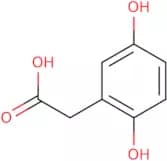
CAS:<p>Precursor of melanine synthesis in bacteria</p>Formula:C8H8O4Purity:Min 96%Color and Shape:White PowderMolecular weight:168.15 g/mol2-(Aminomethyl)benzamide hydrochloride
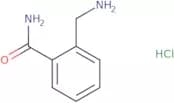
CAS:2-(Aminomethyl)benzamide hydrochloride is a research chemical with high quality and versatile building block properties. It is a useful intermediate in the synthesis of complex compounds, and can be used as a reagent for the production of speciality chemicals. 2-(Aminomethyl)benzamide hydrochloride is also an important reaction component in the synthesis of some fine chemicals, such as pharmaceuticals, dyes, pesticides, and perfumes. 2-(Aminomethyl)benzamide hydrochloride has CAS No. 1187927-15-6 and can be purchased from chemical suppliers worldwide.Formula:C8H10N2O·HClPurity:Min. 95%Color and Shape:White PowderMolecular weight:186.64 g/molD-Alanine benzyl ester p-toluenesulfonate salt
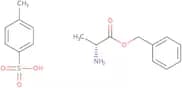
CAS:D-Alanine benzyl ester p-toluenesulfonate salt is a fine chemical that is used in research and development. It is a versatile building block that can be used as an intermediate or a reaction component. D-Alanine benzyl ester p-toluenesulfonate salt has been shown to have high quality, which makes it useful for the production of complex compounds. This compound can be used as a speciality chemical or as a reagent in research.Formula:C10H13NO2·C7H8O3SPurity:Min. 95%Color and Shape:PowderMolecular weight:351.42 g/mol4D-Hydroxysphinganine
CAS:<p>Sphingolipid; cell membrane component; anti-inflammatory agent</p>Formula:C18H39NO3Purity:Min. 97 Area-%Color and Shape:White PowderMolecular weight:317.51 g/molAMP
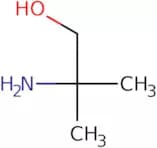
CAS:<p>AMP, also known as 2-Amino-2-methyl-1-propanol, is a buffering agent with an optimal pH range of 9.0-10.5 and a pKa of 9.7. It is used in biochemical assays, enzyme activity tests, and cosmetic formulations.</p>Formula:C4H11NOPurity:Min. 95%Color and Shape:Colorless Clear LiquidMolecular weight:89.14 g/molACES
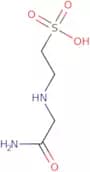
CAS:<p>ACES, also known as N-(2-Acetamido)-2-aminoethanesulfonic acid, is an acetamido buffer that is used in culture media and protein extractions. It also forms metal complexes and has an optimal pH range of 6.1-7.5 and a pKa of 6.78.</p>Formula:C4H10N2O4SPurity:Min. 95%Color and Shape:White PowderMolecular weight:182.2 g/mol



![4-[(5-Ethyl-1,2,4-oxadiazol-3-yl)methoxy]piperidine](/_next/image/?url=https%3A%2Fstatic.cymitquimica.com%2Fproducts%2F3D%2Fthumb-webp%2FBAC08222.webp&w=3840&q=75)