Building Blocks
This section contains fundamental products for the synthesis of organic and biological compounds. Building blocks are the essential starting materials used to construct complex molecules through various chemical reactions. They play a critical role in drug discovery, material science, and chemical research. At CymitQuimica, we offer a diverse range of high-quality building blocks to support your innovative research and industrial projects, ensuring you have the essential components for successful synthesis.
Subcategories of "Building Blocks"
- Boronic Acids & Boronic Acid Derivatives(5,778 products)
- Chiral Building Blocks(1,243 products)
- Hydrocarbon Building Blocks(6,098 products)
- Organic Building Blocks(61,057 products)
Found 200716 products of "Building Blocks"
Sort by
Purity (%)
0
100
|
0
|
50
|
90
|
95
|
100
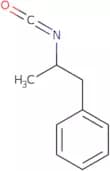
(2-Isocyanatopropyl)benzene
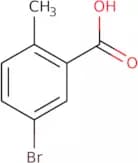
CAS:<p>Versatile small molecule scaffold</p>Formula:C10H11NOPurity:Min. 95%Color and Shape:PowderMolecular weight:161.2 g/mol5-Bromo-2-methylbenzoic acid
CAS:<p>Intermediate in the synthesis of canagliflozin</p>Formula:C8H7BrO2Purity:Min. 95%Color and Shape:White PowderMolecular weight:215.04 g/mol1-Hydroxyisoquinoline
CAS:<p>1-Hydroxyisoquinoline is a molecule with a carbonyl group and is found in heart tissue. It has been proposed as a treatment for herpes simplex virus, but no studies have been done to confirm this. 1-Hydroxyisoquinoline can be prepared by reacting hydrochloric acid with sodium salts. This molecule also has the ability to inhibit cancer cells and may have potential as an anticancer agent. It also has anti-inflammatory properties, which may be due to its inhibition of prostaglandin synthesis. The mechanism of action for 1-hydroxyisoquinoline is not yet fully understood, but it inhibits the replication of DNA and RNA in cancer cells.</p>Formula:C9H7NOPurity:Min. 98 Area-%Color and Shape:White PowderMolecular weight:145.16 g/mol2-Hydroxyisoquinoline-1,3(2H,4H)-dione
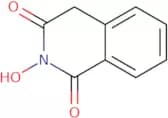
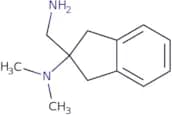
CAS:<p>2-Hydroxyisoquinoline-1,3(2H,4H)-dione (2HIQ) is a potent anti-viral agent that has been shown to inhibit the replication of viruses in cell cultures. 2HIQ inhibits viral replication by binding to the enzyme reverse transcriptase and inhibiting its ability to synthesize DNA from RNA. This drug also has inhibitory properties against human immunodeficiency virus type 1 (HIV-1) and hepatitis C virus (HCV). 2HIQ binds to the active site of the enzyme HIV reverse transcriptase, which is a key enzyme in viral replication. It also binds to HCV NS5B polymerase, which is an essential protein in HCV replication. These interactions lead to inhibition of viral replication and thus prevention of disease progression.</p>Formula:C9H7NO3Purity:Min. 95%Color and Shape:Off-White To Brown SolidMolecular weight:177.16 g/mol2-(Aminomethyl)-N,N-dimethyl-2,3-dihydro-1H-inden-2-amine
CAS:Versatile small molecule scaffoldFormula:C12H18N2Purity:Min. 95%Color and Shape:PowderMolecular weight:190.28 g/mol1-Phenyl-1,3-diazinane-2,4-dione
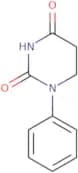
CAS:<p>1-Phenyl-1,3-diazinane-2,4-dione is a synthetic molecule that has been found to be active against influenza virus. It inhibits the replication of influenza A and B viruses by inhibiting the enzyme dihydropyrimidinase. This compound also has an effect on parasitic worms and animal health. 1-Phenyl-1,3-diazinane-2,4-dione is used in research for the development of new drugs. The chemical properties of this drug are similar to β-amino acids that are known to inhibit the synthesis of proteins such as rna polymerase and transporter proteins.</p>Formula:C10H10N2O2Purity:Min. 95%Color and Shape:PowderMolecular weight:190.2 g/mol2-{1-[(Pyridin-3-yl)methyl]piperidin-2-yl}ethan-1-ol
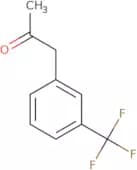
CAS:<p>Versatile small molecule scaffold</p>Formula:C13H20N2OPurity:Min. 95%Color and Shape:PowderMolecular weight:220.31 g/mol3-(Trifluoromethyl)phenylacetone
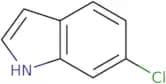
CAS:<p>3-(Trifluoromethyl)phenylacetone is a chiral iminium-type organocatalyst that is used in asymmetric organic reactions. This compound has been shown to be effective for the synthesis of chiral amines and hydroxyl groups, as well as biotransformations. 3-(Trifluoromethyl)phenylacetone binds to substrates through hydrogen bonding, steric interactions, and electrostatic interactions. It also has a high affinity for hydroxides and isosteres. 3-(Trifluoromethyl)phenylacetone can be used as an alternative to L-proline in certain biotransformations because it binds more tightly to the enzyme than L-proline does.</p>Formula:C10H9F3OPurity:Min. 95%Color and Shape:Clear LiquidMolecular weight:202.17 g/mol6-Chloroindole
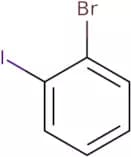
CAS:<p>A 6-chloroindole is an organic compound that contains a six-membered ring with a chlorine atom at one of the carbons. The compound is a synthetic intermediate that has been used to synthesize other molecules. It is also used in chemical reactions to introduce the phosphate group, which can be useful when studying protein–protein interactions. 6-Chloroindole has been shown to have a predictive model for identifying organic anion transporters in rat kidneys and can be used in asymmetric synthesis to produce the desired product.</p>Formula:C8H6ClNPurity:Min. 95%Color and Shape:White PowderMolecular weight:151.59 g/mol1-Bromo-2-iodobenzene
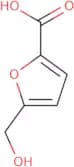
CAS:1-Bromo-2-iodobenzene is an aryl halide that is used in analytical chemistry as a model system for copper chloride. It is also used to study the interaction of 5-HT1A receptors with aromatic hydrocarbons and has been shown to be effective in treating cervical cancer. The light emission from 1-Bromo-2-iodobenzene can be used as a probe for asymmetric synthesis, and it can also be used in metathesis reactions to isolate yield. 1-Bromo-2-iodobenzene binds to lysine residues on proteins and blocks the activity of enzymes by forming covalent bonds with amino acid residues in the active site.Formula:C6H4BrIPurity:Min. 98%Color and Shape:Yellow Clear LiquidMolecular weight:282.9 g/mol5-Hydroxymethyl-2-furancarboxylic acid
CAS:<p>5-Hydroxymethylfurfural (5-HMF) is a structural analysis of the high values obtained in the reaction solution. 5-HMF is a polymerase chain reaction product that is obtained from p-hydroxybenzoic acid and malonic acid during the enzymatic conversion of carbohydrates. It can be used as a biocompatible polymer. The reaction mechanism for this process has been proposed to be through the formation of pyrazinoic acid, followed by an elimination reaction with chlorogenic acids. This mechanism is supported by modeling studies, which show that pyrazinoic acid is a key intermediate in the conversion of glucose to 5-HMF.</p>Formula:C6H6O4Purity:Min. 95%Color and Shape:White PowderMolecular weight:142.11 g/mol4-Bromo-3,5-dimethoxybenzoic acid
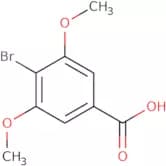
CAS:<p>4-Bromo-3,5-dimethoxybenzoic acid is a synthetic molecule that has been shown to have catalytic properties. It was generated by the reaction of resorcinol and dimethoxybenzoic acid in the presence of copper(II) acetate. This compound has also been shown to be bioinspired by its similarity to natural products such as 3,5-dihydroxybenzoic acid. 4-Bromo-3,5-dimethoxybenzoic acid has been used for the synthesis of bioactive molecules with cyclic structures. These advances are important for sustainable development and may help in the discovery of new natural products.</p>Formula:C9H9BrO4Purity:Min. 95%Color and Shape:PowderMolecular weight:261.07 g/mol6-Methoxy-2-methyl-1,2,3,4-tetrahydroquinoline
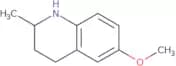
CAS:<p>Versatile small molecule scaffold</p>Formula:C11H15NOPurity:Min. 95%Color and Shape:PowderMolecular weight:177.24 g/molTris(phenylthio)methane
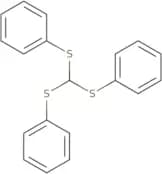
CAS:<p>Tris(phenylthio)methane is a formylating reagent that reacts with ethyl formate to produce the nitro compound. It is used in the preparation of β-amino acids and as an asymmetric synthesis catalyst. Tris(phenylthio)methane can be used as a polymerization initiator for metathesis reactions, such as the Suzuki reaction. It has been shown to be a good nucleophile and polymerizing agent when combined with hydrochloric acid or silver trifluoromethanesulfonate. Tris(phenylthio)methane may also react with chloride in the presence of base to produce phosphoric acid esters.</p>Formula:C19H16S3Purity:Min. 95%Color and Shape:Off-White PowderMolecular weight:340.53 g/mol4-Hydroxy-3-nitrobenzaldehyde
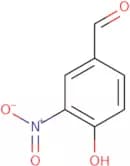
CAS:<p>4-Hydroxy-3-nitrobenzaldehyde (4NBA) is a chemical compound that belongs to the class of aromatic compounds. It is an intermediate in the synthesis of various pharmaceuticals, including benzocaine and nitroglycerin, and has been researched for its potential use in cancer diagnosis. 4NBA has shown optical properties that allow it to be used as a model system for studying the interactions between water and benzyl groups. It also possesses anti-inflammatory properties due to its ability to inhibit the production of inflammatory cytokines such as IL-1β, IL-6, and TNFα.</p>Formula:C7H5NO4Purity:Min. 95%Color and Shape:PowderMolecular weight:167.12 g/mol1,1,1,3,3,3-Hexafluoro-2-propanol
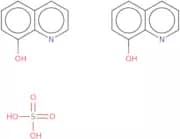
CAS:Hexafluoroisopropanol is a chemical compound that is used in the laboratory to study biological properties. It reacts with hydrogen fluoride, forming hydrogen hexafluoride gas and a fluorescent derivative. This reaction solution can be titrated using calorimetric techniques, which involves measuring the heat released by the reaction. Fluorescence probe studies can also be done to determine the conformational properties of hexafluoroisopropanol. Studying this molecule under different conditions can yield important thermodynamic data for its use in structural biology and fluorescence probe experiments.Formula:C3H2F6OPurity:Min. 98.5%Color and Shape:Clear LiquidMolecular weight:168.04 g/mol8-Hydroxyquinoline sulfate
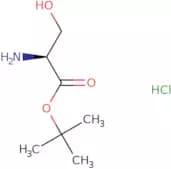
CAS:<p>8-Hydroxyquinoline sulfate is a drug that has been used to study the cancer tissue response to various drugs. The 8-hydroxyl group in the molecule interacts with metals and forms chelate complexes, which may be the reason for its cytotoxic effect. 8-Hydroxyquinoline sulfate also inhibits mitochondrial membrane potential and blocks the receptor activity of some cell types. It has been shown to be significantly cytotoxic to HL-60 cells, as well as other cell lines.</p>Formula:C18H14N2O2·H2SO4Purity:Min. 95%Color and Shape:Yellow PowderMolecular weight:388.4 g/molL-Serine tert-butyl ester hydrochloride
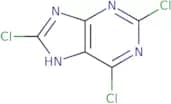
CAS:<p>L-Serine tert-butyl ester hydrochloride is a conditionally catalytic reagent that is used to synthesize aromatic compounds. It is an effective catalyst for toluene hydroxylation, and can be used in the synthesis of L-serine from serine. The tert-butyl group on the molecule prevents side reactions by sterically hindering other molecules from reacting with the reagent.</p>Formula:C7H15O3N·HClPurity:Area-% Min. 95 Area-%Color and Shape:White PowderMolecular weight:197.66 g/mol2,6,8-Trichloropurine ammonium salt
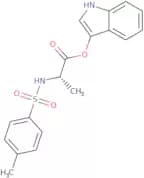
CAS:2,6,8-Trichloropurine ammonium salt is a reaction product of 2,6,8-trichloropurine and ammonium hydroxide. It has been shown to inhibit the synthesis of protein in tissue cultures and to be cytotoxic.Formula:C5HCl3N4NH4Purity:Min. 95%Molecular weight:241.49 g/molN-Tosyl-L-alanine 3-indoxyl ester
CAS:<p>N-Tosyl-L-alanine 3-indoxyl ester is applied specifically to urine samples. In the presence of leukocyte esterase, N-Tosyl-L-alanine-3-indoxyl ester will be hydrolysed to afford indoxyl. The sample is later exposed to diazonium salts that form azo dyes with the indoxyl. If sufficent indoxyl is formed, it indicates elevated numbers of white blood cells in the urine sample and this indicates that the host has contracted a urinary tract infection.</p>Formula:C18H18N2O4SPurity:Min. 98.0 Area-%Molecular weight:358.42 g/mol


![2-{1-[(Pyridin-3-yl)methyl]piperidin-2-yl}ethan-1-ol](/_next/image/?url=https%3A%2Fstatic.cymitquimica.com%2Fproducts%2F3D%2Fthumb-webp%2FZZB80618.webp&w=3840&q=75)