Building Blocks
This section contains fundamental products for the synthesis of organic and biological compounds. Building blocks are the essential starting materials used to construct complex molecules through various chemical reactions. They play a critical role in drug discovery, material science, and chemical research. At CymitQuimica, we offer a diverse range of high-quality building blocks to support your innovative research and industrial projects, ensuring you have the essential components for successful synthesis.
Subcategories of "Building Blocks"
- Boronic Acids & Boronic Acid Derivatives(5,778 products)
- Chiral Building Blocks(1,243 products)
- Hydrocarbon Building Blocks(6,098 products)
- Organic Building Blocks(61,057 products)
Found 200716 products of "Building Blocks"
Sort by
Purity (%)
0
100
|
0
|
50
|
90
|
95
|
100
4-Hydroxyacetophenone oxime
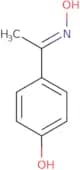
CAS:<p>4-Hydroxyacetophenone oxime is a reactive amide that can be synthesized by the Suzuki coupling of 4-hydroxyacetophenone and an allyl bromide. This product reacts with aluminium, chloride, and hydrochloric acid to produce a nucleophilic attack. The reaction products are alkanoic acids, which are recycled for use in the next process in this synthetic process. Trifluoroacetic acid is used as a catalyst, protonating the 4-hydoxyacetophenone oxime and producing trifluoroacetic anhydride.</p>Formula:C8H9NO2Purity:Min. 95%Color and Shape:PowderMolecular weight:151.16 g/molL-Histidine monohydrochloride monohydrate
CAS:L-Histidine monohydrochloride monohydrate is a histidine derivative that is used in the treatment of chronic oral and bowel diseases. L-histidine has been shown to activate phospholipase A2, which releases arachidonic acid from phospholipids. Arachidonic acid then reacts with other molecules to form prostaglandins and leukotrienes. L-histidine also inhibits the release of tumor necrosis factor (TNF) by blocking the activity of lipoxygenase, or it can stimulate the production of prostaglandins and leukotrienes that suppress inflammation in animal models. L-histidine monohydrochloride monohydrate has been shown to have an anti-inflammatory effect in animals with inflammatory bowel disease due to its ability to inhibit the production of prostaglandin E2 (PGE2). This drug has also been shown to be capable of neutralizing acidic ph by forming a salt withFormula:C6H9N3O2·HCl·H2OColor and Shape:White PowderMolecular weight:209.63 g/mol2,6-Diaminopurine
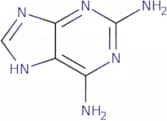
CAS:<p>2,6-Diaminopurine is a nucleotide analogue that is synthesized from guanosine. It inhibits the enzyme ribonucleotide reductase and blocks the synthesis of DNA precursors, which are necessary for viral replication. 2,6-Diaminopurine has been shown to inhibit hiv infection in tissue culture and animal models by decreasing the levels of nucleotides in cells. This drug can be used as an anti-viral agent against HIV and other retroviruses. 2,6-Diaminopurine has also been shown to be effective against murine sarcoma virus. The compound binds to the enzyme ribonucleotide reductase, which is important for DNA synthesis, and prevents its activity by mimicking adenosine triphosphate (ATP). The binding of 2,6-diaminopurine to ATP results in a coordination geometry that causes a long hydrogen bond with one oxygen</p>Formula:C5H6N6Purity:Min. 95%Color and Shape:PowderMolecular weight:150.14 g/mol5-Hydroxyindole-3-acetic acid
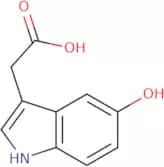
CAS:<p>Reduces brain amyloid plaques; induces neprilysin expression</p>Formula:C10H9NO3Purity:Min. 95%Color and Shape:Off-White PowderMolecular weight:191.18 g/moltrans-3-Hydroxy-L-proline
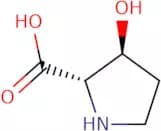
CAS:<p>Please enquire for more information about trans-3-Hydroxy-L-proline including the price, delivery time and more detailed product information at the technical inquiry form on this page</p>Formula:C5H9NO3Purity:Min. 95%Color and Shape:White PowderMolecular weight:131.13 g/mol2,4-Dimethoxybenzoic acid
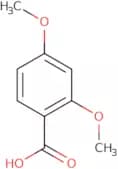
CAS:<p>2,4-Dimethoxybenzoic acid is a phenolic compound that has been shown to bind to the ferrocene carboxylate of protocatechuic acid. The resulting complex was shown to be able to react with chloride ions in an acylation reaction. The kinetic study showed that the rate of reaction increased with increasing concentration of 2,4-dimethoxybenzoic acid. The protonation of 2,4-dimethoxybenzoic acid also increases its ability to react with chloride ions. This acidic compound can also react with amines and other compounds containing nitrogen in a similar manner as acetic anhydride. Addition of alkali hydrolysis may cause the cleavage of the hydrogen bond between 2,4-dimethoxybenzoic acid and protocatechuic acid, releasing 2,4-dimethoxybenzoic acid and protocatechuic acid.</p>Formula:C9H10O4Purity:Min. 95%Color and Shape:White PowderMolecular weight:182.17 g/mol4,5-Dimethoxy-2-hydroxyacetophenone
CAS:<p>4,5-Dimethoxy-2-hydroxyacetophenone is a versatile building block that belongs to the group of complex compounds. It has been used as a reagent in organic synthesis and as a speciality chemical. This compound is also useful for the synthesis of pharmaceuticals, agricultural chemicals, and other industrial products. The high quality and usefulness of this compound make it an important intermediate for the production of other compounds. This product can be used to synthesize many different types of compounds with different properties, depending on the reaction conditions used.</p>Formula:C10H12O4Purity:Min. 95%Color and Shape:Off-White PowderMolecular weight:196.2 g/mol2,5-Dichlorobenzoic acid methyl ester
CAS:<p>2,5-Dichlorobenzoic acid methyl ester is a synthetic chemical compound that belongs to the class of aryl chlorides. It is soluble in organic solvents and can be polymerized using the vibrational method. 2,5-Dichlorobenzoic acid methyl ester has been shown to inhibit the growth of various bacteria strains by binding to sulfhydryl groups on proteins and inhibiting protein synthesis. This chemical also inhibits the uptake of sulfate ions by inhibiting the enzyme sulfate adenylyltransferase.</p>Formula:C8H6Cl2O2Purity:Min. 95%Color and Shape:PowderMolecular weight:205.04 g/mol3,5-Dibromo-4-hydroxybenzoic acid
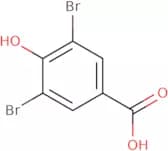
CAS:<p>3,5-Dibromo-4-hydroxybenzoic acid is a chemical that is used as a herbicide and insecticide. It inhibits the growth of plants by preventing protein synthesis in cells. 3,5-Dibromo-4-hydroxybenzoic acid has been found to be effective against bacteria such as Escherichia coli, Pseudomonas aeruginosa, and Klebsiella pneumoniae. The compound also has an inhibitory effect on the growth of industrial chemicals such as ethylene oxide and acetaldehyde. 3,5-Dibromo-4-hydroxybenzoic acid is produced from p-hydroxybenzoic acid by the action of corrin (a bacterial enzyme).</p>Formula:C7H4Br2O3Purity:Min. 98 Area-%Color and Shape:PowderMolecular weight:295.91 g/mol2',5'-Dimethylacetophenone
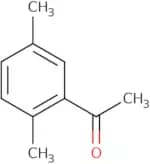
CAS:<p>2,5-Dimethylacetophenone is an alcohol with a chiral center. It is synthesized by reacting chlorinating agents with the ligand periconia, which leads to high yield and regiospecificity. The reaction system can be carried out in solvents such as diethyl ether or dichloromethane. The product is obtained as a mixture of two stereoisomers (R and S) with the R form being more abundant than the S form due to steric effects.<br>2,5-Dimethylacetophenone has been shown to react with naphthylamine in the presence of a base to give N-(2,5-dimethylphenyl)naphthalene-1,4-diamine in good yield.</p>Formula:C10H12OPurity:Min. 95%Color and Shape:Clear LiquidMolecular weight:148.2 g/molUracil
CAS:<p>Pyrimidine nucleobase; allosteric regulator and coenzyme for reactions</p>Formula:C4H4N2O2Purity:Min. 98 Area-%Color and Shape:White Off-White PowderMolecular weight:112.09 g/mol2,5-Dimethoxycinnamic acid
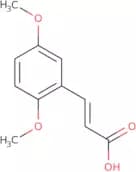
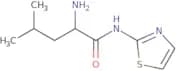
CAS:2,5-Dimethoxycinnamic acid is an unsymmetrical phenolic compound that is synthesized from caffeic acid. It has been shown to have a number of biological activities such as anti-inflammatory, coagulation, and inhibitory effects on platelet aggregation. 2,5-Dimethoxycinnamic acid has also been shown to be a potent inhibitor of platelet aggregation and thrombosis formation in vitro. This natural compound is also found in plants such as green tea leaves which contain the polyphenols epigallocatechin gallate and hydroxyanisole. The chromophore group in the molecule is responsible for the yellow color of this substance.Formula:C11H12O4Purity:Min. 95%Color and Shape:PowderMolecular weight:208.21 g/mol2-Amino-4-methyl-N-(1,3-thiazol-2-yl)pentanamide
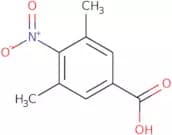
CAS:<p>Versatile small molecule scaffold</p>Formula:C9H15N3OSPurity:Min. 95%Color and Shape:PowderMolecular weight:213.3 g/mol3,5-Dimethyl-4-nitrobenzoic acid
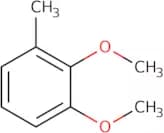
CAS:<p>3,5-Dimethyl-4-nitrobenzoic acid is a synthetic compound that has been used in the synthesis of other organic compounds. It is not currently used as a drug, but it has been shown to inhibit the growth of bacteria in vitro. The mechanism of action for this compound is unclear. 3,5-Dimethyl-4-nitrobenzoic acid has been shown to be active against the bacterium Typhimurium and may inhibit bacterial growth by being metabolised into nitrite or nitrate ions. This chemical can also be converted into a reactive intermediate that reacts with oxygen to form superoxide anion radicals, which are known to have antibacterial effects.</p>Formula:C9H9NO4Purity:Min. 95%Color and Shape:PowderMolecular weight:195.17 g/mol2,3-Dimethoxytoluene
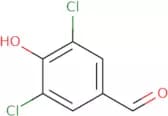
CAS:<p>2,3-Dimethoxytoluene is a chemical used in food chemistry and analytical methods. It is the product of the reaction between 2-methoxybenzaldehyde and formaldehyde. 2,3-Dimethoxytoluene is used as an intermediate for the synthesis of papaverine, a drug that has analgesic properties. This chemical also reacts with an acid to produce dimethoxytoluene, a chemical that contains two methoxy groups on opposite sides of the benzene ring.</p>Formula:C9H12O2Purity:Min. 95%Color and Shape:PowderMolecular weight:152.19 g/mol3,5-Dichloro-4-hydroxybenzaldehyde
CAS:<p>3,5-Dichloro-4-hydroxybenzaldehyde is a triiodomethane derivative that reacts with chlorine to form a chlorinated aldehyde. It is used as an intermediate in the production of 4-hydroxybenzoic acid from phenylacetic acid and 4,4'-dichlorodiphenyl sulfone. 3,5-Dichloro-4-hydroxybenzaldehyde can be decarboxylated at elevated temperatures to produce formic acid. This compound has been used in wastewater treatment as it can remove chlorine byproducts and other pollutants such as nitrates, nitrites, and iron ions. The reaction kinetics of 3,5-dichloro-4-hydroxybenzaldehyde have been studied using hydroxymethyl groups and formyl groups to determine the rate of demethylation. The rates were found to be dependent on temperature.</p>Formula:C7H4Cl2O2Purity:Min. 95%Color and Shape:White PowderMolecular weight:191.01 g/mol2,6-Dimethoxy-4-methylbenzaldehyde
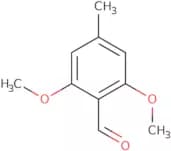
CAS:<p>2,6-Dimethoxy-4-methylbenzaldehyde (DMMB) is a useful chemical that is used as a building block in the synthesis of complex compounds. It has been shown to be an effective chemical intermediate and can be used in the synthesis of various products, such as pharmaceuticals and pesticides. DMMB can also be used to produce high quality research chemicals.</p>Formula:C10H12O3Purity:Min. 95%Color and Shape:PowderMolecular weight:180.2 g/mol3,5-Dihydroxycinnamic acid
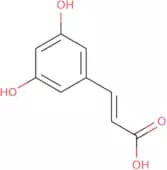
CAS:<p>3,5-Dihydroxycinnamic acid is a metabolite of the amino acid tyrosine and an intermediate in the biosynthesis of phenylalanine. It has been shown to have anti-inflammatory properties that may be due to its ability to inhibit prostaglandin synthesis. 3,5-Dihydroxycinnamic acid has also been identified as a carcinogen and is associated with an increased risk of cancer in women. 3,5-Dihydroxycinnamic acid is found in urine samples at concentrations between 2 and 10 µmol/L.</p>Formula:C9H8O4Purity:Min. 98 Area-%Color and Shape:PowderMolecular weight:180.16 g/mol2,5-Difluoro-3-methylbenzoic acid methyl ester
CAS:<p>2,5-Difluoro-3-methylbenzoic acid methyl ester is a high quality, complex compound that can be used as a versatile building block in synthesis. It acts as a reagent and can be used as a research chemical. 2,5-Difluoro-3-methylbenzoic acid methyl ester is an intermediate in the production of other chemicals and can also be used as a reaction component or useful scaffold.</p>Formula:C9H8F2O2Purity:Min. 95%Color and Shape:PowderMolecular weight:186.16 g/mol2,4-Dihydroxy-3-methylbenzoic acid
CAS:<p>2,4-Dihydroxy-3-methylbenzoic acid (2,4-DMB) is a potent compound that has been shown to have chemotherapeutic properties. It is a DNA repair agent that also inhibits the activity of topoisomerase II and DNA polymerase III. 2,4-DMB can be used in the treatment of radiation and ionizing radiation induced cancers. The pharmacophore of 2,4-DMB has been identified as being composed of three hydrophobic regions and one hydrophilic region. This pharmacophore has been used to design other potent compounds with similar activity against cancer cells.</p>Formula:C8H8O4Purity:Min. 95%Color and Shape:PowderMolecular weight:168.15 g/mol