Building Blocks
Subcategories of "Building Blocks"
- Boronic Acids & Boronic Acid Derivatives(5,778 products)
- Chiral Building Blocks(1,243 products)
- Hydrocarbon Building Blocks(6,098 products)
- Organic Building Blocks(61,036 products)
Found 205240 products of "Building Blocks"
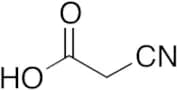
Cyanoacetic Acid
CAS:Controlled ProductApplications Cyanoacetic acid is a dangerous compound that is commonly used as a synthetic intermediate. Cyanoacetic acid has also been found to have teratogenic effects on rat embryos.
Not a dangerous good if item is equal to or less than 1g/ml and there is less than 100g/ml in the package
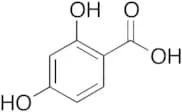
References Simpson, M., et al.: Food Chem. Toxicol., 24, 634 (1986)Formula:C3H3NO2Color and Shape:NeatMolecular weight:85.062,4-Dihydroxybenzoic Acid
CAS:Applications 2,4-Dihydroxybenzoic acid is a useful synthetic intermediate. An organic building block for plastics and rubber products.
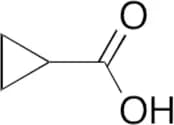
References Gautam, R., et al.: Cryst. Growth Des., 18, 1501 (2018); Shvedene, N. V., et al.: J. Anal. Chem., 72, 95 (2017);Formula:C7H6O4Color and Shape:White To Off WhiteMolecular weight:154.12Cyclopropanecarboxylic Acid
CAS:Applications Cyclopropanecarboxylic Acid is used as a reagent in the synthesis of substituted 4-(thiophen-2-ylmethyl)-2H-phthalazin-1-ones as potent PARP-1 inhibitors. Also used as a reagent in the synthesis of 2-alkyloxazoles as potent and selective PI4KIIIβ inhibitors demonstrating inhibition of HCV replication.
Not a dangerous good if item is equal to or less than 1g/ml and there is less than 100g/ml in the package
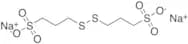
References Wang, L., et al.: Bioorg. Med. Chem. Lett., 24, 3739 (2014); Keaney, E.P., et al.: Bioorg. Med. Chem. Lett., 24, 3714 (2014)Formula:C4H6O2Color and Shape:NeatMolecular weight:86.093,3'-Dithiobis-1-Propanesulfonic Acid Disodium Salt
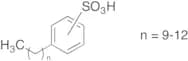
CAS:Controlled ProductFormula:C6H12Na2O6S4Color and Shape:NeatMolecular weight:354.4Dodecylbenzenesulfonic Acid (mixture of isomers) (Technical Grade)
CAS:Controlled ProductApplications 4-Dodecylbenzenesulfonic acid
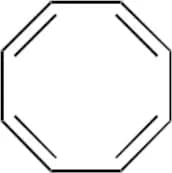
Not a dangerous good if item is equal to or less than 1g/ml and there is less than 100g/ml in the packageFormula:C18H30O3SColor and Shape:NeatMolecular weight:326.49Cyclooctatetraene
CAS:Controlled ProductApplications Cyclooctatetraene is used as a reactant in the synthesis of tricyclo[4.2.2.02,5]dec-9-ene-3,4,7,8-tetracarboxylic acid diimide, an antitumor drug.
Not a dangerous good if item is equal to or less than 1g/ml and there is less than 100g/ml in the package
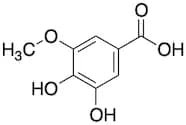
References Vishnuvajjala, B.R., Cradock, J.C.: J. Pharm. Sci., 75, 301 (1986)Formula:C8H8Color and Shape:NeatMolecular weight:104.1493,4-Dihydroxy-5-methoxybenzoic Acid
CAS:Applications 3,4-Dihydroxy-5-methoxybenzoic acid (cas# 3934-84-7) is a useful research chemical.
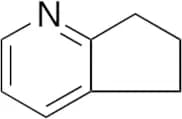
Formula:C8H8O5Color and Shape:NeatMolecular weight:184.152,3-Cyclopentenopyridine
CAS:Controlled ProductApplications 2,3-Cyclopentenopyridine is used as reactant/reagent for ruthenium-mediated dual catalytic reactions of isoquinoline via C-H activation and dearomatization for isoquinolone.
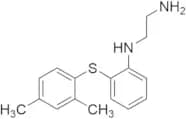
References Wang, T., et al.: Adv. Synth. Catal., 358, 2751-2758 (2016)Formula:C8H9NColor and Shape:NeatMolecular weight:119.16N1-(2-((2,4-Dimethylphenyl)thio)phenyl)ethane-1,2-diamine
CAS:Controlled ProductFormula:C16H20N2SColor and Shape:NeatMolecular weight:272.408Methyl 9-Oxononanoate (>90%)
CAS:Controlled ProductStability Air Sensitive, Hygroscopic
Applications Methyl 9-Oxononanoate is a linseed oil-based coating. It is solventless polymeric protective.
References Thomas, F., et al.: J. Coating. Technol., 51, 51 (1979); McManis, G., et al.: J. Paint Technol., 43, 53 (1971)Formula:C10H18O3Purity:90%Color and Shape:NeatMolecular weight:186.25Diallylmalonic Acid
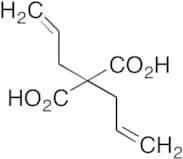
CAS:Controlled ProductApplications Diallylmalonic Acid is an intermediate in the synthesis of metabolites of Valproic Acid (V094750) as anticonvulsant agents. It can also be used for the synthesis of Velbanamine.
References Zielinski, G. K., et al.: Org. Biomolec. Chem., 13, 2684 (2015):Formula:C9H12O4Color and Shape:NeatMolecular weight:184.19Diallyl Tetrasulfide (>85%)
CAS:Controlled ProductFormula:C6H10S4Purity:>85%Color and Shape:NeatMolecular weight:210.404Dimethylglyoxime
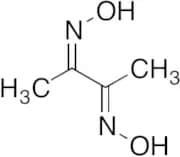
CAS:Applications Dimethylglyoxime is a chelating agent which forms complexes with metals such as copper, nickel, and palladium..
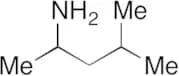
Not a dangerous good if item is equal to or less than 1g/ml and there is less than 100g/ml in the packageFormula:C4H8N2O2Color and Shape:WhiteMolecular weight:116.121,3-Dimethylbutylamine Hydrochloride
CAS:Controlled ProductFormula:C6H16ClNColor and Shape:NeatMolecular weight:137.65α,α-Bis[4-(dimethylamino)phenyl]-4-(methylamino)-benzenemethanol (>75%)
CAS:Stability Light Sensitive, Unstable in Solution
Applications α,α-Bis[4-(dimethylamino)phenyl]-4-(methylamino)-benzenemethanol is a product from degradation of methyl green.
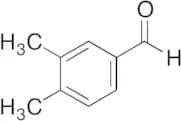
References Chen, C., et al.: Environ. Sci. Technol., 41, 4389 (2007)Formula:C24H29N3OPurity:>75%Color and Shape:NeatMolecular weight:375.513,4-Dimethylbenzaldehyde
CAS:Controlled ProductApplications 3,4-Dimethylbenzaldehyde is used in the study of Penicillium expansum for growth and the effects to nonvolatile and volatile compounds.
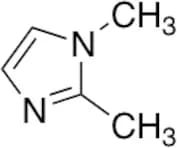
References Wang, Y. et al.: Food Chem. 228, 211-18 (2017)Formula:C9H10OColor and Shape:NeatMolecular weight:134.181,2-Dimethylimidazole
CAS:Controlled ProductApplications 1,2-DIMETHYLIMIDAZOLE (cas# 1739-84-0) is a useful research chemical.
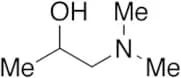
Formula:C5H8N2Color and Shape:Light Yellow To Light BeigeMolecular weight:96.131-Dimethylamino-2-propanol (Dimepranol)
CAS:Applications Dimepranol is a component of Inosine pranobex (I822350) that produces a small but significant inhibition of the histamine release from human mast cells. Dimepranol is one of the compounds used to identify the illegal manufacture of methadone.cv
Not a dangerous good if item is equal to or less than 1g/ml and there is less than 100g/ml in the package
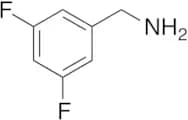
References Gielsdorf, W. et al.: Arch. Kriminol., 164, 83 (1979); Schmutzler, W. et al.: Int. Arch. Allergy Appl. Immunol., 88, 244 (1989);Formula:C5H13NOColor and Shape:Colourless To Light YellowMolecular weight:103.163,5-Difluorobenzylamine
CAS:Applications 3,5-Difluorobenzylamine is a useful reagent for reductive amination.
Not a dangerous good if item is equal to or less than 1g/ml and there is less than 100g/ml in the package
References Cantrill, S., et al.: J. Org. Chem., 66, 6857 (2001);Formula:C7H7F2NColor and Shape:NeatMolecular weight:143.13



![α,α-Bis[4-(dimethylamino)phenyl]-4-(methylamino)-benzenemethanol (>75%)](/_next/image/?url=https%3A%2Fstatic.cymitquimica.com%2Fproducts%2FTR%2Fthumb-webp%2FD471285.webp&w=3840&q=75)