Building Blocks
This section contains fundamental products for the synthesis of organic and biological compounds. Building blocks are the essential starting materials used to construct complex molecules through various chemical reactions. They play a critical role in drug discovery, material science, and chemical research. At CymitQuimica, we offer a diverse range of high-quality building blocks to support your innovative research and industrial projects, ensuring you have the essential components for successful synthesis.
Subcategories of "Building Blocks"
- Boronic Acids & Boronic Acid Derivatives(5,778 products)
- Chiral Building Blocks(1,243 products)
- Hydrocarbon Building Blocks(6,097 products)
- Organic Building Blocks(61,048 products)
Found 203115 products of "Building Blocks"
Sort by
Purity (%)
0
100
|
0
|
50
|
90
|
95
|
100
1,8-Diazaspiro[4.5]decan-2-one dihydrochloride
CAS:Versatile small molecule scaffoldFormula:C8H14N2O•(HCl)2Purity:Min. 95%Color and Shape:PowderMolecular weight:227.13 g/mol2,4,6-Trihydroxytoluene
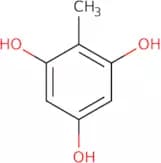
CAS:<p>2,4,6-Trihydroxytoluene is a phenolic compound with an intense yellow color. It is used for the preparation of dryopteris and as a fabric dye. 2,4,6-Trihydroxytoluene is also used in the production of pharmaceuticals and as a chemical intermediate. 2,4,6-Trihydroxytoluene has been shown to inhibit the growth of bacteria by binding to one or more hydroxyl groups on the bacterial cell wall. This binding prevents the formation of an antibiotic-inhibitor complex with the enzyme cell wall synthesis that is required for cell wall biosynthesis, inhibiting protein synthesis and cell division.</p>Formula:C7H8O3Purity:Min. 95%Color and Shape:Red PowderMolecular weight:140.14 g/mol2-Hydroxy-6-(methoxymethoxy)benzaldehyde
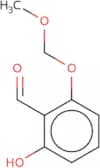
CAS:2-Hydroxy-6-(methoxymethoxy)benzaldehyde is a chemical intermediate that can be used in the synthesis of a wide range of compounds. It is an aromatic compound which has two hydroxyl groups on the benzene ring. This product is a versatile building block, and is useful in the synthesis of complex compounds with high purity. 2-Hydroxy-6-(methoxymethoxy)benzaldehyde can be obtained as a white solid with a melting point of 57°C.Formula:C9H10O4Purity:Min. 95%Color and Shape:Clear LiquidMolecular weight:182.17 g/mol2,4-Dihydroxy-3-methylbenzoic acid
CAS:<p>2,4-Dihydroxy-3-methylbenzoic acid (2,4-DMB) is a potent compound that has been shown to have chemotherapeutic properties. It is a DNA repair agent that also inhibits the activity of topoisomerase II and DNA polymerase III. 2,4-DMB can be used in the treatment of radiation and ionizing radiation induced cancers. The pharmacophore of 2,4-DMB has been identified as being composed of three hydrophobic regions and one hydrophilic region. This pharmacophore has been used to design other potent compounds with similar activity against cancer cells.</p>Formula:C8H8O4Purity:Min. 95%Color and Shape:PowderMolecular weight:168.15 g/mol4-(Dimethylamino)benzaldehyde
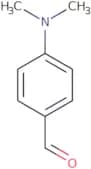
CAS:4-(Dimethylamino)benzaldehyde (4DMAB) is an analytical reagent used to identify sulfa drugs. It has been shown to react with sulfonamides by the formation of a complex ion, which can be detected by analytical methods such as electrochemical impedance spectroscopy or ultraviolet spectroscopy. 4DMAB has also been studied for its anticarcinoid properties. The carcinoid syndrome is characterized by a tumor that releases serotonin and other substances into the bloodstream, causing severe diarrhea, flushing, and bronchial spasms. Studies have shown that 4DMAB inhibits the release of serotonin in this condition. As a result, it may be effective against carcinoid syndrome.Formula:C9H11NOPurity:Min. 95%Color and Shape:White Slightly Yellow PowderMolecular weight:149.19 g/mol3,4-Dihydroxybenzylamine hydrobromide
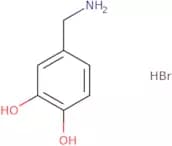
CAS:<p>3,4-Dihydroxybenzylamine hydrobromide is a chemical that reacts with hydrogen peroxide to produce light. It is used as a nutrient for the chemiluminescent reaction in a nutrient solution to detect dopamine, chlorogenic acids, and trifluoroacetic acid. 3,4-Dihydroxybenzylamine hydrobromide can also be used as an analytical method for the measurement of cortisol concentration in plasma and saliva samples. This chemical analogically reacts with monoamine neurotransmitters such as dopamine and gamma-aminobutyric acid (GABA) to form fluorescent probes. 3,4-Dihydroxybenzylamine hydrobromide is not toxic or mutagenic and has been shown to be safe for use in humans.</p>Formula:C7H10BrNO2Purity:Min. 95%Color and Shape:PowderMolecular weight:220.06 g/mol2-Bromobenzaldehyde
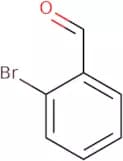
CAS:<p>2-Bromobenzaldehyde is an important aryl aldehyde that can be synthesized through the copper-catalyzed coupling of 2-bromobenzyl bromide and phenylacetone. The synthesis of 2-bromobenzaldehyde has been used to study the effects of physiological activities on the coordination geometry. It is also used as a fluorescent probe for amines and esters, which are commonly found in bioinorganic chemistry. The compound is characterized by intermolecular hydrogen bonding and hydrogen bonding between the hydroxy group and chloride, which are associated with its acidity.<br>2-Bromobenzaldehyde has been shown to have antiinflammatory properties, which may be due to its ability to inhibit prostaglandin synthesis.</p>Formula:C7H5BrOPurity:Min. 95%Color and Shape:Off-White PowderMolecular weight:185.02 g/mol2,4,6-Trimethoxybenzaldehyde
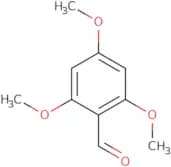
CAS:<p>2,4,6-Trimethoxybenzaldehyde is a chemical compound that is used as an intermediate in organic chemistry. It has been shown to have antiviral effects on influenza A virus by inhibiting the enzyme neuraminidase. This inhibition prevents the release of viruses from infected cells and thus prevents viral replication. 2,4,6-Trimethoxybenzaldehyde also inhibits the growth of cancer cells in vitro and has minimal toxicity to normal cells. This chemical has been shown to inhibit the reaction mechanism of proton pumps in mammalian cells, which may be due to its ability to inhibit p2y receptors or nitrogen atoms. 2,4,6-Trimethoxybenzaldehyde can also be used as a solvent for pharmaceutical preparations and as a reagent in x-ray diffraction data analysis.</p>Formula:C10H12O4Purity:Min. 95%Color and Shape:PowderMolecular weight:196.2 g/molN-a-Benzoyl-L-arginine
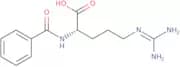
CAS:N-a-Benzoyl-L-arginine is a fluorescent substrate for soybean trypsin. It is hydrolyzed by the enzyme to release an amide and p-nitrophenyl phosphate. The amide is then hydrolyzed by esterase to produce caproic acid, which can be detected at an excitation wavelength of 340 nm and emission wavelength of 495 nm. N-a-Benzoyl-L-arginine has been shown to have proteolytic activity in cell culture, with a pH optimum of 6.8 and temperature optimum of 37 degrees Celsius. This product has been shown to be effective in women as well as in men.Formula:C13H18N4O3Purity:Min. 95%Color and Shape:White PowderMolecular weight:278.31 g/mol2-Benzofurancarboxylic acid
CAS:<p>2-Benzofurancarboxylic acid is a potent antimicrobial agent that inhibits the growth of bacteria by binding to amines, carthamus tinctorius, coumarin derivatives, and reaction mechanism. It has been shown to be effective against several types of cancer cells and autoimmune diseases. 2-Benzofurancarboxylic acid binds reversibly to the active site of an enzyme with high affinity for amines, carthamus tinctorius, coumarin derivatives, and reaction mechanism. This binding prevents the enzyme from performing its normal function.<br>2-Benzofurancarboxylic acid has also been shown to inhibit bacterial growth in a microgravity environment and was found to be more effective than its analogs in a molecular docking analysis.</p>Formula:C9H6O3Purity:Min. 98 Area-%Color and Shape:PowderMolecular weight:162.14 g/molL-Seleno-L-methionine
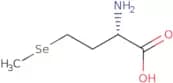
CAS:<p>L-Seleno-L-methionine is a selenium-containing amino acid that is found in the proteins of some plants and animals. It functions as an enzyme cofactor and aids in energy metabolism, protein synthesis, and other biochemical processes. Seleno-L-methionine has been shown to have a protective effect against oxidative damage by scavenging free radicals. It also increases mitochondrial membrane potential and prevents the release of proapoptotic factors from mitochondria into the cytosol. Seleno-L-methionine has been used for analytical purposes as well as to evaluate changes in cell signaling pathways due to chemiluminescence methods or chemical inhibitors. Seleno-L-methionine also has an antioxidant activity that reduces the production of reactive oxygen species (ROS) by reacting with hydroxyl radicals, hydrogen peroxide, nitric oxide, singlet oxygen, and peroxynitrite. Seleno-L-m</p>Formula:C5H11NO2SePurity:(Hplc) Min. 98%Color and Shape:White PowderMolecular weight:196.11 g/molCaffeic acid
CAS:<p>Caffeic acid is naturally produced by the metabolism of plants and fungi. Caffeic acid has an antioxidant activity that can be higher than tocopherol in oil-in-water emulsions. Caffeic acid has proven antimicrobial activity against Staphylococcus aureus. In mice, caffeic acid inhibits the enzyme 5-lipoxygenase thus inhibititing the biosynthesis of the inflammatory mediators leukotrienes.</p>Formula:C9H8O4Purity:Min. 98 Area-%Color and Shape:PowderMolecular weight:180.16 g/molHexachlorocyclopentadiene
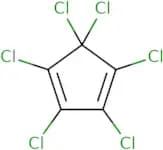
CAS:Only available for delivery in the Europe. Prohibited for transport by air. The substantial reactivity and versatility of Hexachlorocyclopentadiene in facilitating multiple synthetic pathways make it indispensable in both agrochemical and industrial sectors.Formula:C5Cl6Purity:Min. 97 Area-%Color and Shape:Clear LiquidMolecular weight:272.77 g/mol5-Hydroxyoxindole
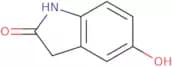
CAS:<p>5-Hydroxyoxindole (5HO) is a naturally occurring molecule that is found in oxindole and other indoles. It has been shown to have regulatory effects on inflammatory diseases, notably in the treatment of colitis. 5HO possesses significant cytotoxicity against carcinoma cells and also has radical scavenging activity. This compound can be synthesized using a solid-phase synthesis method. The presence of 5HO in skin cells has been correlated with the production of skin pigment called melanin. In addition, this molecule has been shown to bind to picolinic acid, which may contribute to its anti-inflammatory properties. 5HO is also present in neurologic disorders such as Alzheimer's disease, Parkinson's disease, and amyotrophic lateral sclerosis.</p>Formula:C8H7NO2Purity:Min. 95%Color and Shape:Beige PowderMolecular weight:149.15 g/mol3-Bromofuran
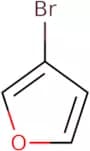
CAS:<p>3-Bromofuran is a synthetic chemical that can be used to treat cancer, specifically as an anti-cancer agent. 3-Bromofuran has been shown to inhibit the growth of tumour cells in culture. It also selectively inhibits antigen expression and induces apoptosis in tumour cells. 3-Bromofuran is synthesized by a Sharpless asymmetric dihydroxylation of hippuric acid and efficiently undergoes cross coupling reactions with electron deficient polyatomic molecules such as organoaluminium compounds. The major metabolite of 3-bromofuran is 3,4-dihydroxybenzoic acid (3,4-DHBA), which has been found to have antiviral and antibacterial properties.</p>Formula:C4H3BrOPurity:Min. 95%Color and Shape:Clear LiquidMolecular weight:146.97 g/mol1-(4-Methoxyphenyl)acetophenone
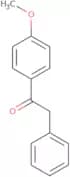
CAS:1-(4-Methoxyphenyl)acetophenone is an enantiomer of the naturally occurring compound melatonin. It has been shown to have insecticidal activities and is effective against insects at temperatures below 10°C. 1-(4-Methoxyphenyl)acetophenone undergoes a cyclodehydration reaction with loss of water and formation of a six-membered ring, which is catalysed by acid, inorganic bases, or metal salts. This reaction can be modified by substituting diacids, halides, or electrolysing agents for water. The resulting products are unsymmetrical and soluble in organic solvents.Formula:C15H14O2Purity:Min. 95%Color and Shape:PowderMolecular weight:226.27 g/mol2-Bromothiazole
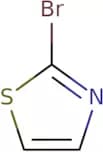
CAS:<p>2-Bromothiazole is an anticancer agent that can be prepared by coupling of 2-bromo-1,2-dithiolane and thiourea. This chemical has been found to be effective against a number of cancers in both animal and human studies. It is also used as a reagent in the industrial preparation of pesticides and dyes. 2-Bromothiazole is highly reactive with nucleophiles such as amines, alcohols, and phenols, which makes it a powerful catalyst for cross-coupling reactions. It can be used to make other organic compounds that have not been available from commercial sources due to its high reactivity. The compound's anti-inflammatory properties may be related to its ability to inhibit prostaglandin synthesis by inhibiting cyclooxygenase activity.</p>Formula:C3H2BrNSPurity:Min. 95%Color and Shape:PowderMolecular weight:164.02 g/moltert-Butyl N-[2-(aminooxy)ethyl]carbamate
CAS:tert-Butyl N-[2-(aminooxy)ethyl]carbamate is a fine chemical that can be used as a versatile building block in the synthesis of complex compounds. It can also be used to synthesize useful scaffolds, which are chemical substances that form the basis for the design of new drugs. This compound has CAS No. 75051-55-7 and is a useful intermediate, research chemicals, and reaction component for speciality chemicals. Tert-butyl N-[2-(aminooxy)ethyl]carbamate has been shown to have high quality and is an excellent reagent in organic synthesis.Formula:C7H16N2O3Purity:Min. 95 Area-%Color and Shape:Clear LiquidMolecular weight:176.2 g/mol6-Oxa-1-azaspiro[3.5]nonane hydrochloride
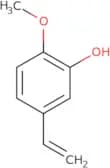
CAS:6-Oxa-1-azaspiro[3.5]nonane hydrochloride is a fine chemical that can be used as a versatile building block, useful intermediate, and a reaction component in research and development. It has been shown to have high quality and is a reagent that can be used in the synthesis of complex compounds. CAS No. 1956324-37-0.Formula:C7H14ClNOPurity:Min. 95%Color and Shape:PowderMolecular weight:163.64 g/mol5-Ethenyl-2-methoxyphenol
CAS:<p>5-Ethenyl-2-methoxyphenol is a volatile compound that has been isolated from the bark of the cinnamon tree. It has shown anticancer activities "in vitro" and "in vivo". 5-Ethenyl-2-methoxyphenol has been shown to be demethylated by cytochrome P450 enzymes, which may result in its antitumor activity. This active compound can also be detected in postharvested fruit and vegetables as well as processed foods such as apple juice, tomato sauce, and dried fruits. 5-Ethenyl-2-methoxyphenol is responsible for the characteristic flavor of cinnamon, so it is often used as a flavoring agent in food processing.</p>Formula:C9H10O2Purity:Min. 95%Color and Shape:PowderMolecular weight:150.17 g/mol
![1,8-Diazaspiro[4.5]decan-2-one dihydrochloride](/_next/image/?url=https%3A%2Fstatic.cymitquimica.com%2Fproducts%2F3D%2Fthumb-webp%2FGDD38984.webp&w=3840&q=75)




![tert-Butyl N-[2-(aminooxy)ethyl]carbamate](/_next/image/?url=https%3A%2Fstatic.cymitquimica.com%2Fproducts%2F3D%2Fthumb-webp%2FADA05155.webp&w=3840&q=75)
![6-Oxa-1-azaspiro[3.5]nonane hydrochloride](/_next/image/?url=https%3A%2Fstatic.cymitquimica.com%2Fproducts%2F3D%2Fthumb-webp%2FGDD32437.webp&w=3840&q=75)