Building Blocks
This section contains fundamental products for the synthesis of organic and biological compounds. Building blocks are the essential starting materials used to construct complex molecules through various chemical reactions. They play a critical role in drug discovery, material science, and chemical research. At CymitQuimica, we offer a diverse range of high-quality building blocks to support your innovative research and industrial projects, ensuring you have the essential components for successful synthesis.
Subcategories of "Building Blocks"
- Boronic Acids & Boronic Acid Derivatives(5,778 products)
- Chiral Building Blocks(1,243 products)
- Hydrocarbon Building Blocks(6,097 products)
- Organic Building Blocks(61,048 products)
Found 203115 products of "Building Blocks"
Sort by
Purity (%)
0
100
|
0
|
50
|
90
|
95
|
100
4-Amino-3-hydroxybenzoic acid
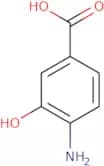
CAS:<p>4-Amino-3-hydroxybenzoic acid is a small molecule that has been shown to inhibit the activity of epidermal growth factor receptor (EGFR) and human epidermal growth factor (HER2). It is also an inhibitor of cytochrome P450 enzymes, which are involved in the metabolism of drugs. 4-Amino-3-hydroxybenzoic acid is used in vitro as an antifungal agent for Candida albicans and other pathogenic fungi. This drug inhibits the growth of cancer cells by binding to specific cell surface receptors, causing them to detach from their surroundings and die. 4-Amino-3-hydroxybenzoic acid may have potential as a drug for treating metastatic colorectal cancer. The mechanism of action is not yet fully understood but it may be related to the inhibition of intermolecular hydrogen bonding and water permeability.</p>Formula:C7H7NO3Purity:Min. 97.5 Area-%Color and Shape:Off-White PowderMolecular weight:153.14 g/mol3-Azido-7-hydroxycoumarin
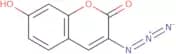
CAS:<p>3-Azido-7-hydroxycoumarin is a water soluble coumarin derivative. 3-Azido-7-hydroxycoumarin is able to undergo highly selective and high yielding Cu(I) catalysed cycloaddition reactions with terminal alkynes (Huisgen cycloaddition or “click” chemistry) to afford the corresponding 1,2,3-triazole under relatively mild reaction conditions. The triazoles thus formed, like 7-hydroxycoumarine, are highly fluorescent and, as 3-azido-7-hydroxycoumarin itself does not fluoresce, terminal alkyne containing molecules can be effectively tagged and visualised by fluorescence spectroscopy.</p>Formula:C9H5N3O3Purity:Min. 98 Area-%Color and Shape:PowderMolecular weight:203.15 g/molL(+)-Amethopterin hydrate
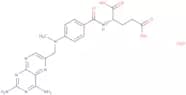
CAS:<p>L(+)-Amethopterin hydrate is an immunosuppressant that suppresses the immune system by inhibiting RNA synthesis. It is a structural analogue of folic acid and has been shown to be effective in treating autoimmune diseases, such as rheumatoid arthritis. L(+)-Amethopterin hydrate is a neutral compound that is soluble in water and microsomal membranes, making it more easily absorbed through the gut than other compounds of this class. It also has been shown to have no toxic effects on cardiac cells at therapeutic concentrations. These properties make L(+)-Amethopterin hydrate an attractive candidate for treating autoimmune diseases when other treatments have failed.</p>Formula:C20H22N8O5·xH2OPurity:Min. 98 Area-%Color and Shape:Yellow PowderMolecular weight:454.44 g/mol(1S,4R)-4-Amino-2-cyclopentene-1-methanol hydrochloride
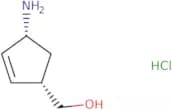
CAS:<p>(1S,4R)-4-Amino-2-cyclopentene-1-methanol hydrochloride is a reagent and building block for the synthesis of many different compounds. It is a useful scaffold for synthetic organic chemistry, producing a wide range of high quality research chemicals. (1S,4R)-4-Amino-2-cyclopentene-1-methanol hydrochloride is an intermediate in the synthesis of complex compounds and fine chemicals. This compound is also used as a reactant in chemical reactions to produce other compounds.</p>Formula:C6H11NO·HClPurity:Min. 97 Area-%Color and Shape:PowderMolecular weight:149.62 g/mol2-Amino-3-sulfanylpropanamide hydrochloride
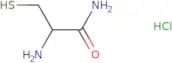
CAS:2-Amino-3-sulfanylpropanamide hydrochloride is an organic chemical compound that can be used as a reaction component, reagent, or useful scaffold. It has the CAS number 867-85-6 and is classified as a speciality chemical. This product is versatile and can be used as a building block for complex compounds or fine chemicals.Formula:C3H9ClN2OSPurity:Min. 95%Color and Shape:PowderMolecular weight:156.64 g/mol1-(Azidomethyl)-4-ethenylbenzene
CAS:<p>1-(Azidomethyl)-4-ethenylbenzene is a vinyl alcohol that can be used to enhance the properties of polymers. This compound has been shown in FT-IR spectroscopy to react with carbon tetrachloride and nitrogen atoms to form a functional group. The copolymerization of styrene with 1-(azidomethyl)-4-ethenylbenzene can be used for patterning. This compound also has fluorescence properties, enabling it to be used as a fluorescent tag in microscopy and other imaging techniques.</p>Formula:C9H9N3Purity:Min. 95%Color and Shape:PowderMolecular weight:159.19 g/mol2-Amino-5-nitrobenzoic acid
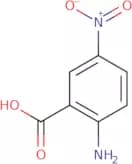
CAS:<p>2-Amino-5-nitrobenzoic acid is a plant metabolite that contains a nitro group. It has been found to be an effective inhibitor of glutamate dehydrogenase, one of the enzymes involved in the metabolism of amino acids. 2-Amino-5-nitrobenzoic acid has also been shown to have no effect on other enzyme activities such as amines and nitrosamines. This natural product has been shown to be useful as a model system for understanding how hydrochloric acid interacts with plants, by inhibiting their growth.</p>Formula:C7H6N2O4Purity:Min. 97.5%Color and Shape:Yellow PowderMolecular weight:182.13 g/mol2-tert-Butylcyclobutan-1-one
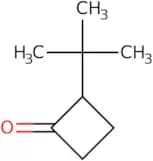
CAS:2-tert-Butylcyclobutan-1-one is a research chemical that is used to study the regioselectivity and carbonyl reactivity of nucleophilic substitution reactions. This compound is synthesized by the reaction of benzannulation with cyclobutanone and stabilizes reactive carbonyl groups, which can be used for mechanistic studies. The mechanism of this reaction has been studied and it has been found that the stabilization of the carbonyl group is due to an intramolecular hydrogen bond between the carbonyl oxygen and the hydroxyl group on C2. 2-tert-Butylcyclobutan-1-one can be used as a biomolecular building block in synthetic organic chemistry.Formula:C8H14OPurity:Min. 95%Color and Shape:Clear LiquidMolecular weight:126.2 g/molL-Alaninamide hydrochloride
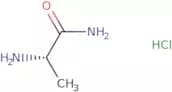
CAS:<p>L-Alaninamide hydrochloride is a hydrogen bond donor that has been shown to have anti-inflammatory properties. L-Alaninamide hydrochloride is able to crosslink hyaluronic acid, which can act as an immunosuppressant and inhibit the production of proinflammatory cytokines. In addition, L-alaninamide hydrochloride has been found to be effective in the treatment of amyloid protein aggregation diseases such as Alzheimer's disease. The drug binds to amyloid proteins by binding to their receptor site and inhibits the formation of amyloid fibrils by preventing cross-linking reactions between polypeptides. L-alaninamide hydrochloride also inhibits the formation of benzimidazole compounds, which are used in the treatment of rheumatoid arthritis.br>br><br>The structure of L-alaninamide hydrochloride is an intramolecular hydrogen bond donor with a carbonyl group. It</p>Formula:C3H8N2O•HClPurity:(Titration) Min 98%Color and Shape:PowderMolecular weight:124.57 g/mol2-Amino-6-chlorobenzoic acid
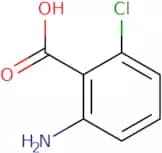
CAS:2-Amino-6-chlorobenzoic acid is a reactive compound that can be used as an antimicrobial agent. It binds to the active site of enzymes and inhibits their function, thereby preventing bacterial growth. 2-Amino-6-chlorobenzoic acid also has acidic properties, which may be due to its ability to hydrolyze esters by acting as a dehydrating agent. This chemical is thermodynamically stable and can be synthesized from malonic acid or other compounds. The chemical reactions of 2-amino-6-chlorobenzoic acid can be followed by NMR spectroscopy, which provides the structural information about the molecule. The reaction mechanism for 2-amino-6-chlorobenzoic acid is similar to that of amides.Formula:C7H6ClNO2Purity:Min. 95%Color and Shape:PowderMolecular weight:171.58 g/molL-Arginine methyl ester dihydrochloride
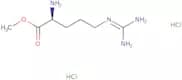
CAS:L-Arginine methyl ester dihydrochloride is a bioactive form of L-arginine, which is an amino acid. L-Arginine methyl ester dihydrochloride has been shown to increase the production of cyclic guanosine monophosphate (cGMP) in mammalian cells. It also causes protein synthesis and cell division in C. neoformans and is a substrate for nitric oxide synthase (NOS). It has been shown to have opioid receptor activity and can act as an alpha-2 adrenergic agonist. L-Arginine methyl ester dihydrochloride can inhibit serine proteases by binding to their active site and preventing them from breaking down proteins such as collagen and elastin.Formula:C7H16N4O2·2HClPurity:Min. 95%Color and Shape:White PowderMolecular weight:261.15 g/mol4-Amino-1-butanol
CAS:<p>4-Amino-1-butanol is a natural compound that is not toxic to humans. It is amide with a hydrophilic interaction chromatography property, and has been shown to have hemolytic activity against human erythrocytes. 4-Amino-1-butanol has been shown to be an inhibitor of the HIV virus, with minimal toxicity. It has also been shown to inhibit the replication of the wild type virus in cells in vitro and in vivo, which is due to its ability to bind with the enzyme ethylene diamine. The inhibition of this enzyme leads to a reduction in biological activity of amines.</p>Formula:C4H11NOPurity:Min. 95%Color and Shape:Slightly Yellow Clear LiquidMolecular weight:89.14 g/mol(S)-3-Amino-3-phenylpropionic acid
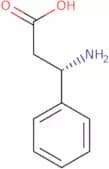
CAS:<p>3-Amino-3-phenylpropionic acid is a β-amino acid that is used in the industrial production of acrylate esters. The acylation reaction of the carboxylic acid group with an alcohol, usually naphthalene or phenol, yields an ester hydrochloride. This is then hydrolyzed to the corresponding amide, which can be further reacted to produce a variety of other compounds. 3-Amino-3-phenylpropionic acid has pharmacokinetic properties that are similar to those of glycine and alanine, but it does not undergo transamination. It also has a very high chloride content and is often used as a reagent for the synthesis of organic chloride salts.</p>Formula:C9H11NO2Purity:Min. 95%Color and Shape:White PowderMolecular weight:165.19 g/mol3-Amino-2-chlorobenzoic acid
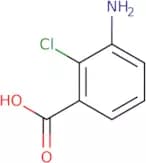
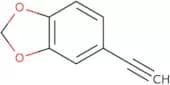
CAS:<p>3-Amino-2-chlorobenzoic acid is a molecule that belongs to the group of acidic compounds. It has been shown to induce apoptosis and inhibit cell proliferation in human immunodeficient virus (HIV) cells, as well as inhibit the growth of cancer cells. 3-Amino-2-chlorobenzoic acid also inhibits histone deacetylase, which is an enzyme that controls gene expression by removing acetyl groups from lysine residues on the N-terminal tails of histones. This inhibition may be responsible for its anticancer activity. 3-Amino-2-chlorobenzoic acid is metabolized by oxidation to chlorinated derivatives and excreted via the kidneys. It has been shown to have a pharmacokinetic profile in rats similar to that observed with other triazines such as atrazine and simazine. The elimination half-life of 3-amino-2-chlorob</p>Formula:C7H6ClNO2Purity:Min. 95%Color and Shape:Off-White PowderMolecular weight:171.58 g/mol5-Ethynylbenzo-1,3-dioxole
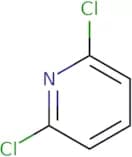
CAS:5-Ethynylbenzo-1,3-dioxole is a terminal alkyne that has two terminal alkyne groups. It can form hydrogen bonds and interactions with other molecules. 5-Ethynylbenzo-1,3-dioxole is a reactive molecule that can be used to create polymers and other chemical compounds. The terminal alkynes are important for the stability of these compounds, as they bind to the polymer chains. 5-Ethynylbenzo-1,3-dioxole is used in organic chemistry to synthesize polymers and other chemical compounds.Formula:C9H6O2Purity:Min. 95%Color and Shape:PowderMolecular weight:146.14 g/mol2,6-Dichloropyridine
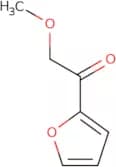
CAS:<p>2,6-Dichloropyridine is an organohalide used as a reagent for asymmetric catalysis. It is use as a precursor for the synthesis of antibacterial agents, for example the synthesis of the antibiotic enoxacin.</p>Formula:C5H3Cl2NPurity:Min. 98%Color and Shape:White To Yellowish To Pink To Grey To Light Brown SolidMolecular weight:147.99 g/mol1-(Furan-2-yl)-2-methoxyethan-1-one
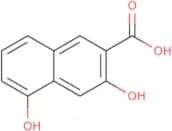
CAS:Versatile small molecule scaffoldFormula:C7H8O3Purity:Min. 95%Color and Shape:Clear LiquidMolecular weight:140.14 g/mol3,5-Dihydroxy-2-naphthoic acid
CAS:<p>3,5-Dihydroxy-2-naphthoic acid (DHNA) is an organic compound with a red shift in the optical spectrum. DHNA is a regulatory domain found in functional groups, such as salicylic acid. It has been shown to inhibit bacterial growth and gram-negative organisms, including Escherichia coli and Pseudomonas aeruginosa. DHNA is also a potent inducer of triticum aestivum lysine carboxypeptidase A and B, which are proteases that function in protein digestion. This property may be due to its ability to bind to receptor subtypes of the epidermal growth factor type 2 receptor family.</p>Formula:C11H8O4Purity:Min. 95%Color and Shape:White PowderMolecular weight:204.18 g/mol6-Methyl-1H-indole-2,3-dione
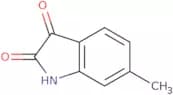
CAS:6-Methyl-1H-indole-2,3-dione is a synthetic molecule that has an amide orientation. The molecule is a crystalline solid and can be found in the form of a white powder. This product also contains impurities such as amino acids, transport molecules, and formic acid. 6-Methyl-1H-indole-2,3-dione is soluble in solvents like formic acid and water. It has been shown to have transport properties for electrons and aldehydes.Formula:C9H7NO2Purity:Min. 95%Color and Shape:PowderMolecular weight:161.16 g/mol6-Mercapto-1-hexanol
CAS:6-Mercapto-1-hexanol is a redox active molecule that has been shown to be a potent inhibitor of human immunodeficiency virus type 1 reverse transcriptase. It has also been shown to inhibit the polymerase chain reaction and transfer reactions, including those mediated by DNA-dependent RNA polymerase. 6-Mercapto-1-hexanol can be detected with high sensitivity in human serum, which is its main application for the diagnosis of HIV infection. This compound reacts with molecular oxygen to form superoxide radicals, which are responsible for its redox potential. The rate constant for this reaction has been shown to be dependent on pH and temperature. 6-Mercapto-1-hexanol can also form stable complexes with proteins such as albumin or human immunoglobulin G (IgG). These complexes have been shown to exhibit electrochemical impedance spectroscopy activity at low concentrations and chemical stability in biological media.Formula:C6H14OSPurity:Min. 96%Color and Shape:Clear LiquidMolecular weight:134.24 g/mol